Measure a hammock from end to end, across its widest point, and between the hanging points for a safe, proper fit.
Learning how to measure a hammock is easier than it first seems, but the right method depends on what you need to know. You may be replacing a hammock, checking whether it fits your trees, choosing a stand, or comparing sleeping space. This guide explains each measurement with simple steps, useful formulas, and practical tips based on common hammock designs.
Why Measuring a Hammock Matters
A hammock can look large enough in a product photo and still feel too short in your yard. Its listed length may include fabric, rope, carabiners, or suspension straps. Those parts do not always represent the usable sleeping area.
Accurate measurements help you:
• Choose the right hammock stand
• Check whether two trees are far enough apart
• Compare different hammock models
• Replace worn fabric with the correct size
• Estimate the space needed for a comfortable lay
• Avoid excessive tension on the hammock and suspension system
The main challenge is that a hammock changes shape when it hangs. Its fabric curves, stretches, and narrows near the ends. For this reason, you should measure it in more than one way.
When learning how to measure a hammock, think of it like measuring a soft blanket rather than a rigid board. You need both its flat dimensions and its installed dimensions.

The Measurements You Need
Most hammock measurements fall into five useful categories. Each one answers a different question.
Overall hammock length
Overall length is the distance from one end of the hammock to the other. Measure from the farthest point on one end to the farthest point on the opposite end.
This measurement may include:
• Fabric body
• End loops
• Gathered ends
• Rope or webbing attached to the fabric
• Carabiners or metal hardware
Always record what your measurement includes. A hammock listed as 11 feet long may refer only to the fabric body, while another brand may include the suspension cords.
Usable bed length
Usable bed length is the portion where your body can rest. It does not include long ropes, straps, or hardware.
For a fabric hammock, lay it flat and measure the fabric from one sewn end to the other. This gives a better idea of sleeping space than measuring the full suspension system.
Width
Width is the distance from one side edge to the other at the widest point. Measure across the middle, not near the ends.
A single hammock often measures about 4 to 6 feet wide. A double hammock is usually wider, often around 6 to 8 feet. These are general ranges, not fixed standards.
Width affects:
• How much room you have to lie diagonally
• How enclosed or open the hammock feels
• Whether the fabric wraps around your shoulders
• How easily two people can fit
A wider hammock is not always more comfortable. Extra fabric can feel secure, but it may also create a deeper, less stable pocket.
Hanging distance
Hanging distance is the straight line between the two anchor points. This may be the distance between two trees, posts, or the end points of a hammock stand.
Measure from the actual attachment points, not from the base of the trees. The height and position of the anchor points affect the fit just as much as the distance.
Hanging height
Hanging height is the vertical distance from the ground to each attachment point. Many gathered end hammocks work well when the suspension points are about 4 to 6 feet above the ground, though the exact height depends on the hammock and user.
The hammock should hang low enough for safe entry but high enough to avoid touching the ground when occupied. A common safety goal is to keep the lowest point about 18 inches above the ground.

How to Measure a Hammock Lying Flat
Measuring a hammock while it is flat is the best way to compare fabric size. Use a clean floor, driveway, deck, or large table.
Follow these steps:
-
Remove all suspension straps, ropes, carabiners, and accessories.
-
Spread the hammock flat without pulling the fabric hard.
-
Smooth out large folds and twists.
-
Measure from the outer fabric edge at one end to the outer fabric edge at the other end.
-
Measure across the widest section for the width.
-
Record the measurements in feet and inches or centimeters.
Do not stretch the fabric to its maximum length. Doing so can create a measurement that is larger than the hammock’s normal size.
For a gathered end hammock, the fabric may bunch together at both ends. Gently open the gathered fabric so the end seam is visible. Measure the fabric body, not the gathered rope unless you are checking the complete suspension length.
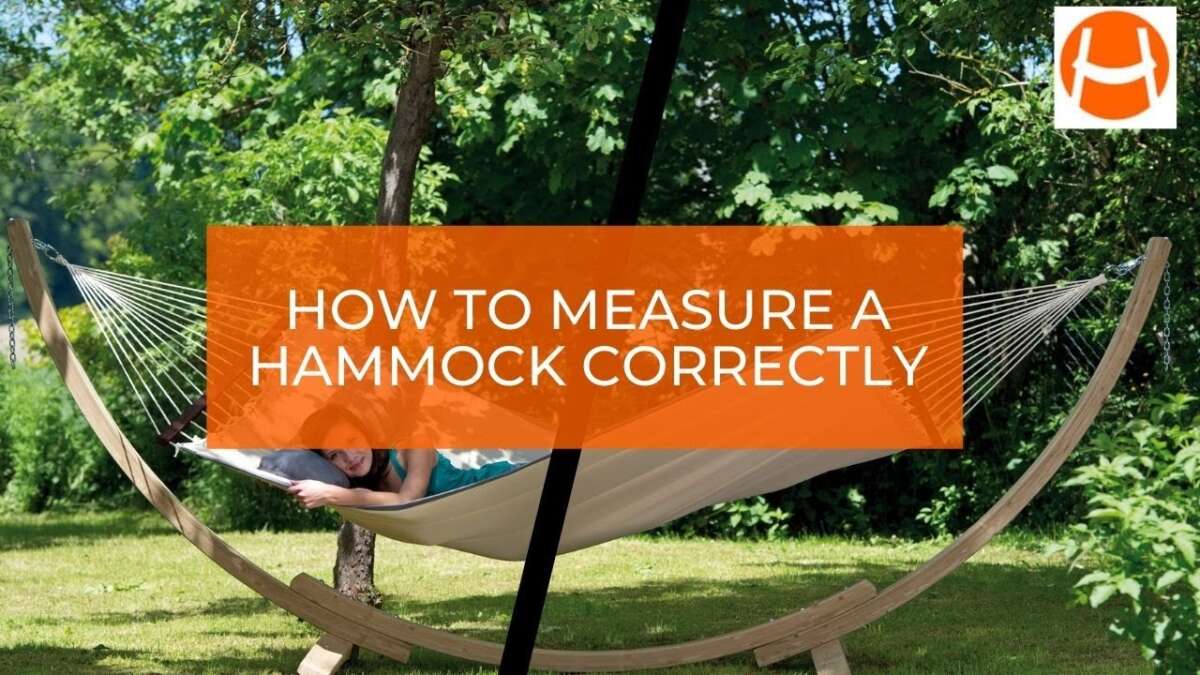
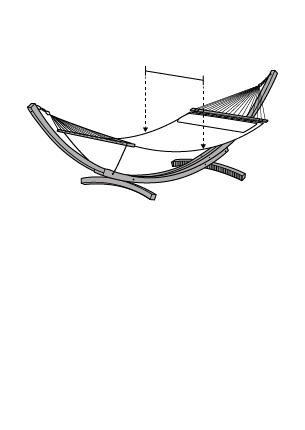
For a spreader bar hammock, measure the fabric body from end to end. Then measure the full length from the outside of one spreader bar to the outside of the other. These numbers may be quite different.
When I check hammock sizes, I use masking tape to mark the two end points on the floor. This makes it easier to measure long fabric without moving the hammock.
How to Measure a Hammock While It Is Hanging
A hanging measurement shows how the hammock fits in real conditions. It is especially useful when checking a tree setup or hammock stand.
First, attach the hammock as you normally would. Use the correct suspension system and make sure both ends sit at a similar height.
Then measure:
• The distance between the two attachment points
• The height of each attachment point
• The length of the hammock from end to end
• The lowest point of the empty hammock
• The lowest point with a person inside
Use a tape measure for the distance between the anchor points. For height, measure from the ground straight up to the strap, hook, or carabiner connection.
Do not measure along the curve of the hammock to estimate the anchor distance. Anchor distance is a straight line. A curved measurement will give you a larger and less useful number.
The empty hammock may hang 2 to 3 feet above the ground at its lowest point. Once someone gets in, the fabric drops. Test it with the user’s weight before relaxing in it.
This practical test often reveals problems that flat measurements miss. A hammock may fit the listed length but still sit too low because the trees are too far apart.

How to Measure a Hammock for a Stand
A hammock stand must be long enough to support the hammock without forcing it into a tight, flat shape.
Measure the hammock’s full fabric length first. If the hammock includes fixed ropes or end loops, measure those too. Then compare the result with the stand’s recommended hammock length range.
A simple starting formula is:
Hammock stand length = hammock body length + suspension space
Many hammock stands allow some adjustment. Even so, you should not assume that every 10 foot hammock fits a 10 foot stand.
Check these points:
• Minimum and maximum stand length
• Maximum weight capacity
• Hook height and position
• Whether the stand is designed for gathered end or spreader bar hammocks
• Whether the hammock needs extra chains or extension straps
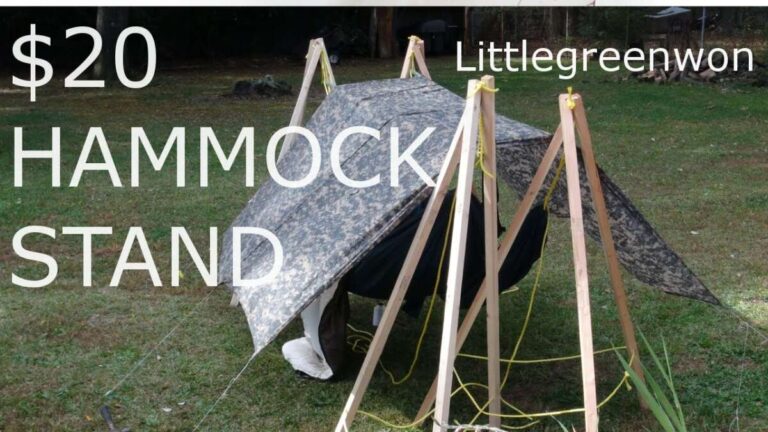
A gathered end hammock usually needs more hanging height and a slightly greater curve. A spreader bar hammock often needs a different stand shape because it stays more open.
If the hammock is too short for the stand, it may be pulled too tight. If it is too long, it may sag deeply or rest near the ground.
For how to measure a hammock for a stand, use the manufacturer’s recommended range whenever it is available. Your own measurements are useful, but the stand’s design still matters.
How to Measure the Correct Hanging Distance
The ideal hanging distance depends on the hammock’s length, suspension system, and preferred sag.
A useful starting formula is:
Hanging distance = hammock length × 0.83
For example, an 11 foot hammock may work well with an anchor distance of about 9.1 feet. This is only a starting point. Many hammocks can work across a wider range when you adjust the straps.
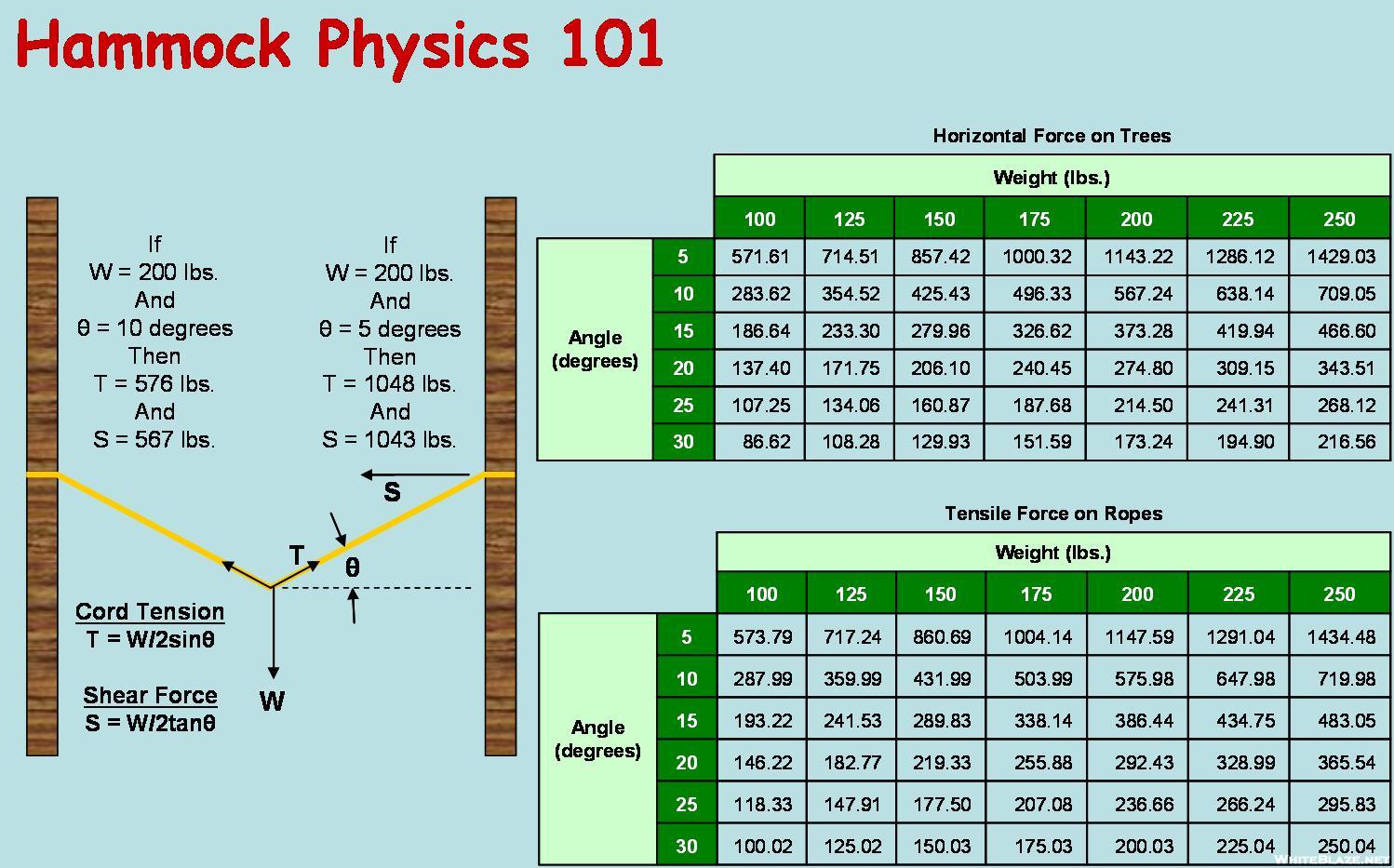
Another common guideline is the 30 degree hang angle. Imagine a line extending from each attachment point toward the lowest part of the hammock. Each side should form an angle of about 30 degrees from the ground.
A flatter hang creates more tension. It may feel tight, but it also places greater force on the suspension system and anchor points. A deeper hang usually reduces tension but may place the user too close to the ground.
Use the following process:
-
Measure the hammock’s full body length.
-
Measure the distance between the anchor points.
-
Attach the hammock with the straps at a safe height.
-
Sit in the hammock and check the lowest point.
-
Adjust the straps until the hammock has a relaxed, comfortable curve.
-
Confirm that the bottom stays at least about 18 inches above the ground when occupied.
Tree distance is often the limiting factor. If the trees are too far apart, use approved extension straps rather than pulling the hammock tight.

How to Measure a Hammock for a Replacement
If your hammock is damaged, measure the original fabric before buying a replacement. Take several measurements because fabric can stretch or shrink over time.
Record:
• Fabric length
• Fabric width
• End loop size
• Rope or webbing length
• Attachment point spacing
• Weight capacity listed on the original label
Pay close attention to the end construction. Two hammocks may have the same fabric length but different end loops. One may use a gathered rope, while another uses sewn webbing.
Never rely on length alone when replacing a hammock. The fabric type, stitching, suspension connection, and weight rating are also important.
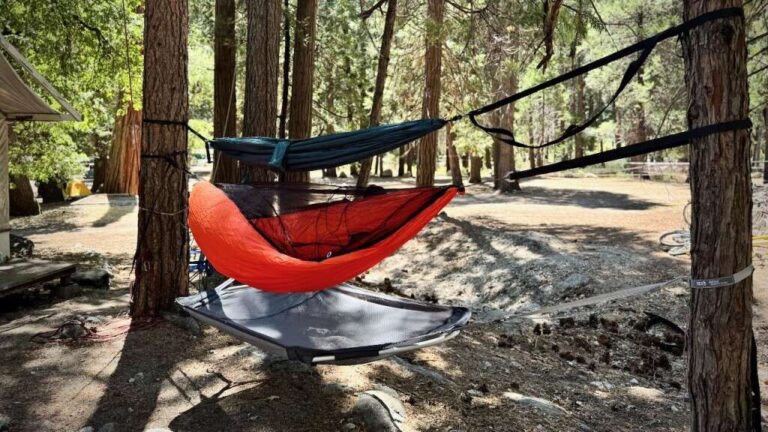
For a camping hammock, measure the body without the ridgeline. Then measure the ridgeline separately if you plan to replace it. A ridgeline controls the shape of the hammock and can affect how flat it feels.
If the original fabric is stretched, compare the measurement with the product label or manufacturer’s specifications. A worn hammock may no longer show its original size accurately.

How to Measure a Hammock Ridgeline
A ridgeline runs between the two ends of some camping hammocks. It helps maintain a consistent curve and can provide space for a bug net or rain tarp.
To measure it:
-
Remove the ridgeline if possible.
-
Lay it flat without stretching it.
-
Measure from one attachment point to the other.
-
Record whether the measurement includes knots, loops, or hardware.
A common ridgeline length is about 83 percent of the hammock body length. For example, an 11 foot hammock may use a ridgeline near 9 feet long.
This ratio is a starting point, not a universal rule. Some manufacturers use a different ratio to create a flatter or deeper lay.
Measure the ridgeline separately from the hammock body. A ridgeline that is too short can pull the ends together and create a tight curve. One that is too long may allow the hammock to sag more than intended.
How Fabric Stretch Changes Your Measurements
Hammock fabric behaves differently based on its weave, fiber, and construction.
Common materials include:
• Polyester, which often has low stretch and good weather resistance
• Nylon, which is light and may stretch more under load
• Cotton, which feels soft but may absorb water and change shape
• Canvas, which is strong and stable but heavier
A hammock’s measured length can change after use. Heat, moisture, body weight, and long periods under tension may all affect the fabric.
This is why how to measure a hammock should include both a relaxed measurement and a loaded check. The flat measurement tells you the product size. The loaded measurement tells you how it behaves.
Avoid guessing based on fabric stretch. A hammock that stretches more than expected may sit too low or place extra stress on its suspension system.
Check the care label and inspect the fabric before use. Look for faded areas, broken threads, pulled seams, or damaged loops. Measurement cannot identify every safety problem.
Common Measuring Mistakes to Avoid
Small measuring errors can lead to a poor fit or an unsafe setup.
Measuring the ropes as usable bed space
Ropes and straps add to the total length but do not give you more room to lie down. Always separate overall length from usable fabric length.
Measuring a curved hammock along the fabric
The curved path is longer than the straight distance. For consistent results, measure the hammock flat or use a straight line between the ends.
Pulling the fabric tight
Stretching the fabric can make the hammock appear longer than it is during normal use. Smooth it flat, but do not pull it under force.
Measuring tree trunks instead of anchor points
The space between tree bases is not the same as the space between attachment points. Measure where the straps or hardware actually connect.
Ignoring suspension hardware
A hammock stand may fit the fabric but not the extra length of chains, ropes, or straps. Include all fixed hardware when checking the full setup.
Forgetting the user’s weight
The hammock may look safe when empty and drop much lower when occupied. Check the height with the intended user inside.
Assuming two-person size means two-person safety
A double hammock may provide more fabric, but its weight limit still controls how many people can use it. Read the manufacturer’s capacity label.
In my own setup checks, the most common mistake is measuring the hammock body but forgetting the suspension length. This usually leads to a stand or tree spacing problem.
A Simple Hammock Measurement Checklist
Use this checklist before buying, replacing, or installing a hammock:
-
Remove loose accessories if you are measuring the fabric body.
-
Lay the hammock flat on a clean surface.
-
Measure the fabric length without stretching it.
-
Measure the widest point across the hammock.
-
Measure the full length, including fixed end loops if needed.
-
Measure the distance between your anchor points.
-
Measure the height of each anchor point.
-
Check the lowest point with the user inside.
-
Compare the measurements with the product or stand specifications.
-
Inspect seams, straps, ropes, and hardware before use.
Write the results down. A small note on your phone can prevent confusion when comparing several hammocks online.
Use the same units throughout the process. If one measurement is in feet and another is in centimeters, convert them before making a decision.
Frequently Asked Questions About How to Measure a Hammock
How do you measure a hammock’s length?
Lay the hammock flat and measure from one fabric end to the other without stretching it. If you need the complete installed length, measure the fabric plus any fixed loops, ropes, or hardware.
How do you measure a hammock for a stand?
Measure the hammock body and compare it with the stand’s stated length range. Also consider the suspension hardware, hook height, weight capacity, and whether the hammock has gathered ends or spreader bars.
What is the ideal distance between two trees for a hammock?
A useful starting point is about 83 percent of the hammock’s body length. The exact distance varies, so adjust the suspension until the hammock has a comfortable curve and stays about 18 inches above the ground when occupied.
Should you measure a hammock when it is hanging or flat?
Use both methods when possible. A flat measurement shows the fabric size, while a hanging measurement shows the real anchor distance, sag, and ground clearance.
How wide should a hammock be?
The right width depends on how you plan to use it. Single hammocks are often about 4 to 6 feet wide, while double hammocks may be about 6 to 8 feet wide, but the manufacturer’s specifications are more reliable than general ranges.
How do you measure a hammock ridgeline?
Remove the ridgeline and measure it from one attachment point to the other without pulling it tight. Many ridgelines are close to 83 percent of the hammock body length, but follow the manufacturer’s design when available.
Can you use a hammock that is too long for a stand?
A hammock that is too long may hang too low or require excessive sag. Use a stand within the manufacturer’s recommended range, or add only approved adjustments that preserve safe clearance and weight capacity.
Conclusion
The best way to measure a hammock is to record its fabric length, usable width, full end-to-end length, anchor distance, and hanging height. Measure it flat for accurate product details, then test it while hanging to confirm sag, comfort, and ground clearance.
Do not stretch the fabric, count ropes as sleeping space, or measure tree bases instead of attachment points. Take a few careful measurements before you buy a stand or replacement, and your hammock will fit more comfortably and safely.
Use the checklist during your next setup, compare your numbers with the manufacturer’s instructions, and share your measurements or questions in the comments.

Zayden Halbrook is a travel enthusiast and gear researcher passionate about making every journey smoother and more enjoyable. With a keen eye for practical travel essentials and real-world tips, he helps readers choose the right gear and travel smarter. When he’s not testing travel kits or exploring new destinations, Zayden shares simple, reliable advice to make every trip stress-free.