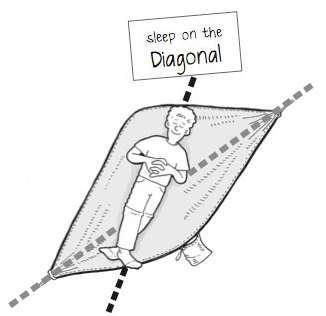
Lie diagonally across the hammock, relax your shoulders, and let the fabric support your back and legs.
Learning how to lay in a hammock is simple, but the right position makes a big difference. A diagonal posture gives you better support, reduces pressure on your back, and helps prevent the tight, folded feeling many beginners notice. This guide explains how to lie in a hammock safely, comfortably, and with confidence, whether you are using a backyard hammock, camping hammock, or hammock chair.

Why Lying Diagonally Works Best
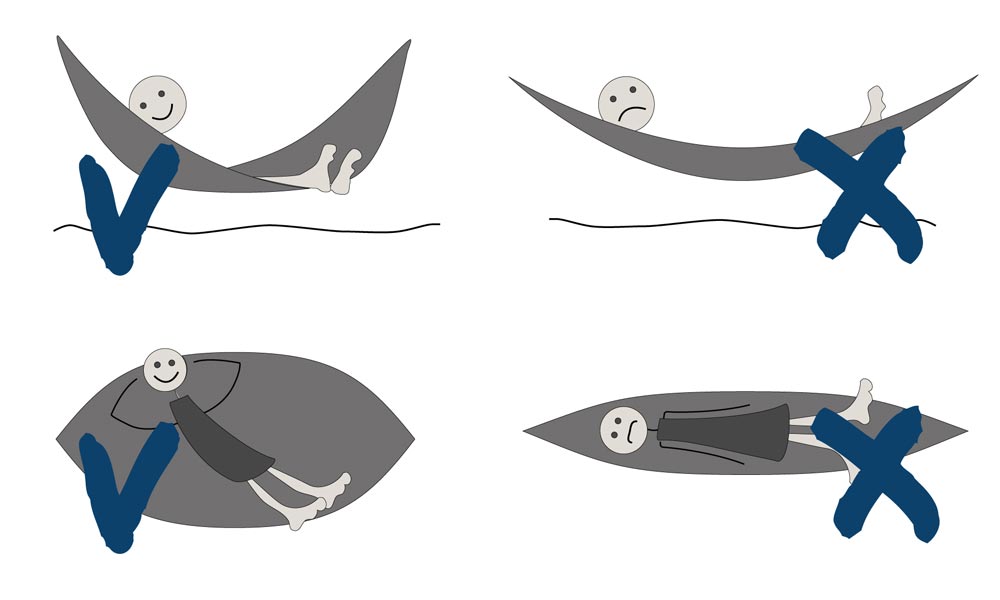
Many people first climb into a hammock and lie straight down the center. This feels natural, but it often creates a deep “banana” shape. Your head and feet rise, while your back sinks into the middle.
That curve can feel tight around your shoulders and knees. It may also make it harder to turn your head or find a relaxed sleeping position.
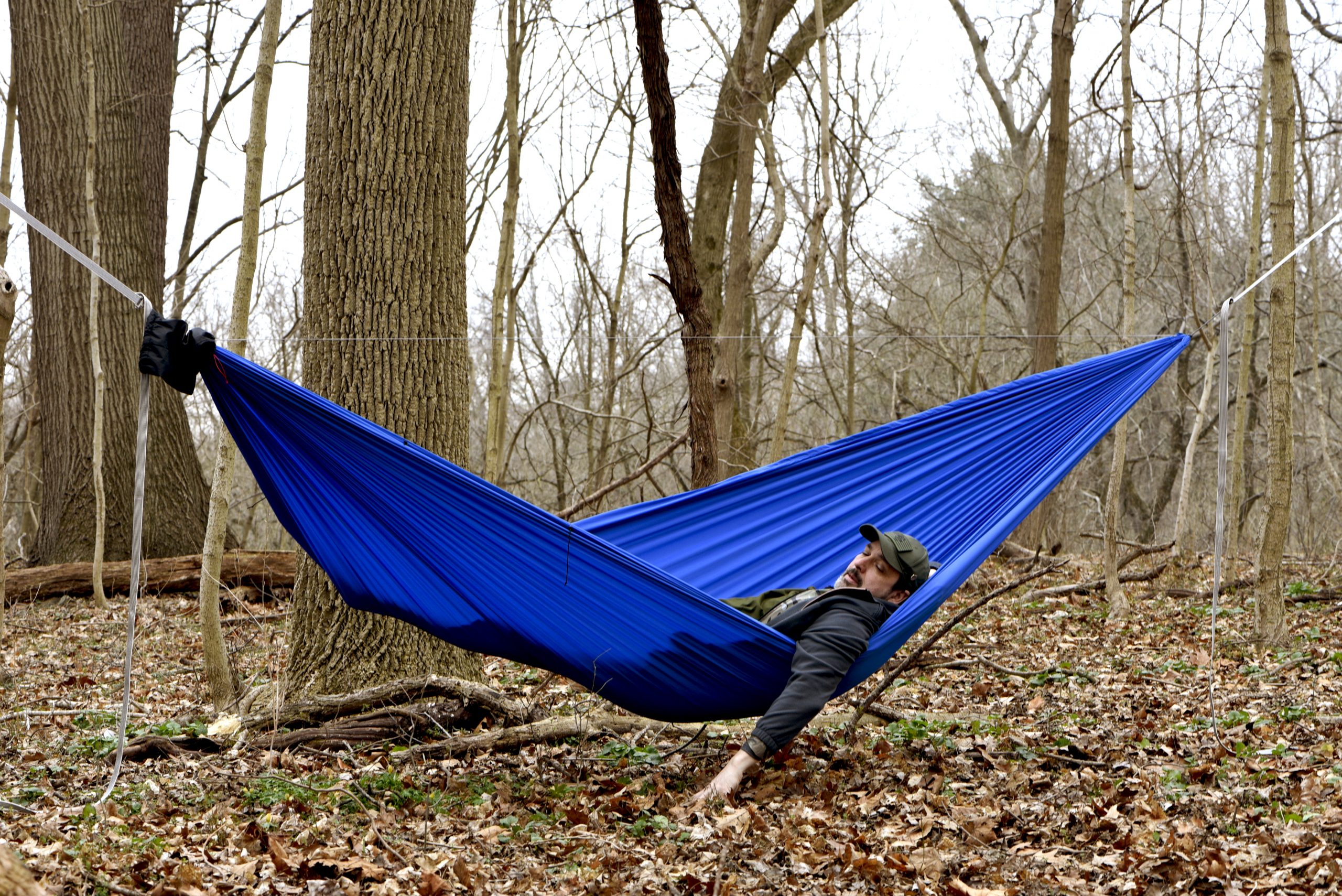
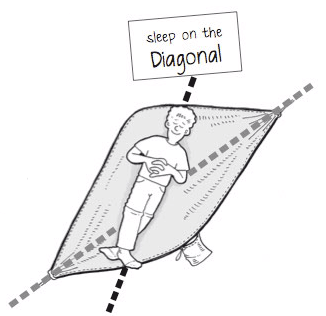
Lying diagonally spreads your weight across more fabric. Your body stays flatter, and the hammock supports you from shoulder to hip to leg. Think of the hammock as a soft cradle. A diagonal position lets the cradle hold you without folding you in half.
The same basic rule explains how to lay in a hammock at home or at a campsite: let the fabric support you instead of forcing it flat.
A diagonal position can also provide these benefits:
• Better back support
• More room to move
• Less pressure behind the knees
• A flatter sleeping surface
• Easier access to a pillow or blanket
You do not need to lie at a perfect 45-degree angle. Start with a small angle, then move your feet and shoulders until your body feels balanced.
How to Lay in a Hammock Step by Step
Follow these steps when you are learning how to lay in a hammock for the first time.
1. Check the hammock before you enter
Look over the fabric, stitching, spreader bars, suspension straps, and carabiners. Do not use the hammock if you see torn fabric, broken stitching, bent hardware, or badly worn straps.
Check the anchor points, too. A strong hammock can still fail if it is attached to a weak tree, damaged post, or loose structure.
2. Stand in the center
Face the hammock and place one hand on the fabric or suspension line for balance. Sit down slowly in the middle, as if you were sitting in a low chair.
Avoid jumping into the hammock. A sudden drop can put extra force on the fabric and anchor points.
3. Lower your upper body
Once you are seated, turn your body so your back faces the hammock. Lower your shoulders and head in a controlled way. Keep one hand on the hammock until your weight is fully supported.
4. Lift your legs
Bring your legs into the hammock one at a time. Keep your knees slightly bent at first. This makes it easier to adjust your position without sliding or twisting.
5. Move into a diagonal position
Shift your shoulders a little to one side and your feet toward the opposite side. Your body should form a gentle diagonal line across the hammock.
Your head should rest near one side of the fabric, while your feet point toward the other side. If the fabric feels tight around your neck or knees, reduce the angle.
6. Relax and make small adjustments
Let your shoulders drop. Unclench your hands and jaw. Move your hips by a few inches until the fabric supports your lower back and thighs evenly.
When learning how to lay in a hammock, small movements work better than large ones. A one-inch shift can change the pressure across your whole body.
The Best Body Position for Comfort
The best hammock position is usually diagonal, slightly reclined, and relaxed. Your spine should feel supported rather than sharply curved.
Try to keep your head, neck, and hips in one comfortable line. Your chin should not be pressed against your chest. If your head falls too far back, place a small, thin pillow under your neck or use a rolled towel.
Your knees may be straight or slightly bent. Choose the position that feels natural. If the hammock presses behind your knees, bend them or move your body a little higher toward the head end.
Use these comfort checks:
• Your shoulders should feel free, not squeezed.
• Your lower back should feel supported.
• Your heels should not hang painfully over the edge.
• Your neck should remain neutral.
• You should be able to breathe deeply without feeling compressed.
A common mistake is trying to stay stiff. The hammock works best when your muscles stop fighting it. Let your weight settle gradually, like sand filling a soft bag.
Once you know how to lay in a hammock, you can adjust your position in seconds instead of constantly shifting your whole body.
How to Enter and Exit a Hammock Safely
Learning how to lay in a hammock also means learning how to get in and out without tipping it.
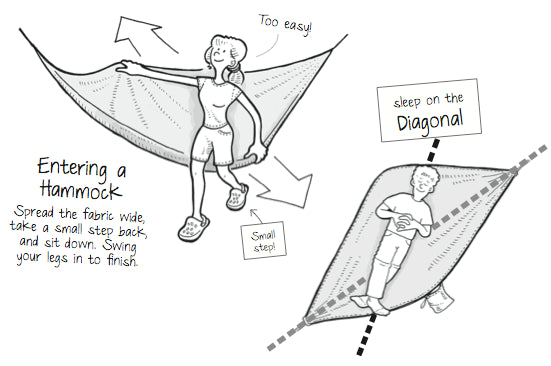
To enter, stand close to the center and hold the fabric or suspension line. Sit first, then turn and lie back. Keep your movements slow and centered.
To exit, roll slightly onto your side and bring your knees toward your chest. Place both feet on the ground before standing. Use your hands for support, but do not pull hard on one side of the hammock.
Avoid these actions:
• Standing up while the hammock is still swinging
• Climbing in from one end
• Placing all your weight on one narrow edge
• Letting children jump into the hammock
• Entering while wearing sharp objects or hard gear
• Using a hammock that hangs too high
A low fall can still cause injury, especially on rocks, roots, concrete, or other hard ground. For outdoor use, choose a clear area with soft, level ground when possible.
Learning how to lay in a hammock safely is just as important as finding a comfortable angle.
Choosing the Right Hammock Height and Sag
Hammock height affects both comfort and safety. A hammock that is too tight may create strong pressure points. A hammock that is too loose may hang close to the ground.
Many camping and suspension guides suggest aiming for a deep, relaxed sag rather than a tight line. When you sit in the center, your body should be low enough for stability but not close enough to touch the ground.
As a general starting point:
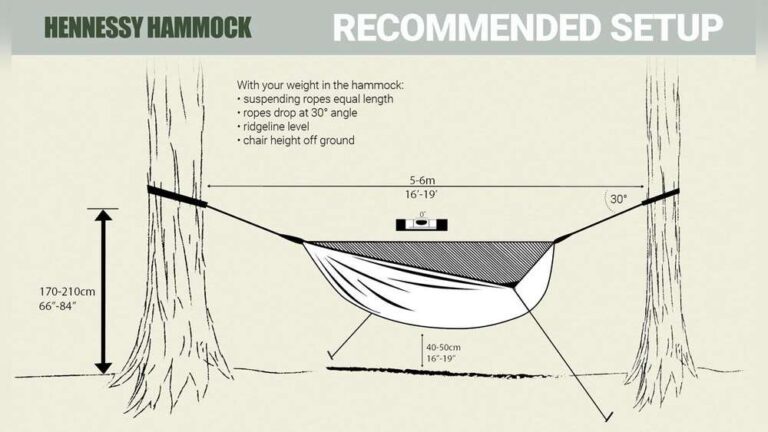
• Hang the ends about 4 to 5 feet above the ground.
• Aim for a center height around 18 inches above the ground when occupied.
• Keep the suspension angle near 30 degrees from the ground.
These are starting points, not strict rules. Adjust them for your hammock design, body weight, and surroundings.
Follow the instructions for your hammock because weight limits and suspension systems vary. A hammock with spreader bars may require a different setup from a gathered-end camping hammock.
Never attach a hammock to a tree with thin cord, wire, or bare rope that can cut into the bark. Use wide tree straps designed for hammock suspension. Many public lands and parks require tree-friendly straps to protect living trees.

How to Lay in a Hammock for Sleeping
A hammock can be comfortable for a nap or overnight trip, but sleeping requires more planning than casual lounging.
Start with a diagonal position. Then place your head slightly higher than your feet if that feels comfortable. A small pillow, stuff sack filled with clothing, or rolled jacket can support your neck.
For cool weather, protect the underside of your body. Air moving beneath the hammock can make you feel cold even when the air temperature seems mild. A sleeping pad, underquilt, or insulated hammock system can help.
For overnight use, also consider:
• A bug net in areas with insects
• A rain tarp in wet weather
• A ridgeline for better shelter setup
• A sleeping bag suited to the expected temperature
• A secure suspension system with a suitable weight rating
Do not sleep in a hammock during severe storms, high winds, or near dead branches. Falling limbs are a serious outdoor hazard. Check the weather and inspect the area above you before settling in.
Knowing how to lay in a hammock for sleep can improve comfort, but proper insulation and weather protection matter just as much.

Common Mistakes to Avoid
Most discomfort comes from setup or positioning errors, not from the hammock itself.
Lying straight down the middle
This creates the deepest curve and often causes pressure behind your knees. Move your upper body and feet in opposite directions to create a gentle diagonal.
Hanging the hammock too tightly
A tight hammock may feel firm at first, but it can increase pressure on your shoulders and calves. Allow a natural sag.
Using a small pillow
A thick pillow can push your head forward and strain your neck. Try a thin pillow or a rolled shirt instead.
Ignoring the weight limit
Every hammock has a maximum load. Count the weight of all users, clothing, gear, and pets. Stay below the stated limit, and do not assume that a strong-looking hammock is automatically safe.
Adjusting too much at once
Large movements can make the hammock swing or twist. Make one small adjustment, pause, and then reassess.
Forgetting the ground
A well-positioned hammock is not safe if it is suspended above sharp rocks, water, roads, or hard surfaces. Choose the landing area before you climb in.
One lesson that comes up often in real-world hammock use is that comfort improves through small corrections. Beginners often keep shifting their whole body when moving one shoulder or bending one knee would solve the problem.

How to Lay in a Hammock With Back Pain
A hammock may feel soothing for some people with mild back discomfort, but it is not a treatment for every back problem. The curved surface can reduce pressure for one person and increase it for another.
Start with a shallow diagonal position. Avoid a deep sag if it rounds your lower back too much. Keep your knees slightly bent and use a thin support under your neck.
Stop if you notice:
• Sharp pain
• Numbness or tingling
• Weakness in an arm or leg
• Pain that travels down the leg
• Trouble breathing
If pain continues after you leave the hammock, speak with a qualified health professional. People with recent surgery, serious spinal conditions, balance problems, or pregnancy-related discomfort should ask a clinician for personal advice before using a hammock.
The safest approach is to treat the hammock as a comfort tool, not a medical device. Your body’s response matters more than any general position guide.

Tips for Different Types of Hammocks
Gathered-end hammocks
These hammocks have fabric that gathers at both ends. They usually work very well for diagonal lying because the fabric can spread around your body.
Move diagonally until your back feels flat and your feet have enough room. A bug net or ridgeline may change how much space you have.
Hammocks with spreader bars
Spreader bars keep the hammock more open and flat. They can feel spacious, but they may be less forgiving if you shift suddenly.
Use extra care when entering and exiting. A spreader-bar hammock can tip more easily than a deep gathered-end hammock.
Hammock chairs
A hammock chair is designed for a seated or partly reclined position. Do not try to lie flat unless the chair is specifically built for it.
Keep your weight centered beneath the hanging point. Check the overhead anchor and hardware before each use.
Double hammocks
A double hammock offers more fabric, but it is not always designed for two people. Confirm the weight rating and manufacturer instructions before sharing it.
Two people can shift the center of gravity and make entry, exit, and balance more difficult.
A Simple Comfort Test
Before spending a long afternoon or night in a hammock, perform a short comfort test.
Lie down for five to ten minutes. Notice where you feel pressure. Then adjust only one part of your body at a time.
Use this quick checklist:
-
Is your head supported?
-
Can you breathe deeply?
-
Does your lower back feel relaxed?
-
Are your knees and heels comfortable?
-
Can you roll slightly without feeling trapped?
-
Is the hammock stable when you move?
If the answer is no, change the setup rather than forcing your body to adapt. Lowering one end slightly, adding a thin pillow, or changing your diagonal angle may solve the issue.
In practice, the biggest improvement usually comes from slowing down. People often expect instant comfort, but a hammock is more like a pair of shoes: the fit depends on small adjustments.
Frequently Asked Questions About How to Lay in a Hammock
Is it better to lie straight or diagonally in a hammock?
Lying diagonally is usually more comfortable because it creates a flatter surface and spreads your weight. Lying straight can pull the fabric tightly around your back, shoulders, and knees.
Should your head or feet be higher in a hammock?
Your head can be slightly higher than your feet if that feels comfortable. Avoid a steep angle, since it may cause you to slide or place pressure on your neck.
How do you stop sliding in a hammock?
Use a moderate diagonal angle and avoid hanging the hammock too tightly. You can also adjust the sag or place a small blanket beneath your knees for extra stability.
Can you sleep overnight in a hammock?
Yes, many people sleep overnight in hammocks designed for camping. Use proper suspension, insulation, weather protection, and a bug net, and avoid severe weather or unsafe anchor points.
Is a hammock good for your back?
A hammock may feel comfortable for some people because it supports the body evenly. However, it can worsen pain for others, so stop if you feel sharp pain, numbness, or lasting discomfort.
How low should a hammock hang?
A common target is about 18 inches from the ground when occupied, with the ends around 4 to 5 feet high. Adjust this range for your hammock design, body weight, and surroundings.
Can two people lie in one hammock?
Only do this if the hammock is rated for the combined weight and the manufacturer allows it. Two people can make the hammock unstable, especially during entry and exit.
Conclusion
The best way to lay in a hammock is to enter slowly, settle into the center, and shift into a relaxed diagonal position. Keep your neck neutral, support your lower back, choose a safe hanging height, and make small adjustments until your body feels balanced.
Inspect the hammock and anchors before every use. For camping, add insulation, rain cover, and insect protection. With the right setup, a hammock can turn a simple outdoor break into a calm, weightless escape.
Try these steps during your next rest, then share your favorite hammock comfort tip or explore more outdoor relaxation guides.

Zayden Halbrook is a travel enthusiast and gear researcher passionate about making every journey smoother and more enjoyable. With a keen eye for practical travel essentials and real-world tips, he helps readers choose the right gear and travel smarter. When he’s not testing travel kits or exploring new destinations, Zayden shares simple, reliable advice to make every trip stress-free.