Hang a toy hammock by securing three strong anchor points at a safe height, then test the net before adding toys.
Learning how to hang a toy hammock is simple when you choose the right wall, anchors, and height. This guide covers the safest setup for bedrooms, playrooms, closets, and nurseries, with practical tips that help the hammock stay secure and easy for children to use.
What You Need to Hang a Toy Hammock
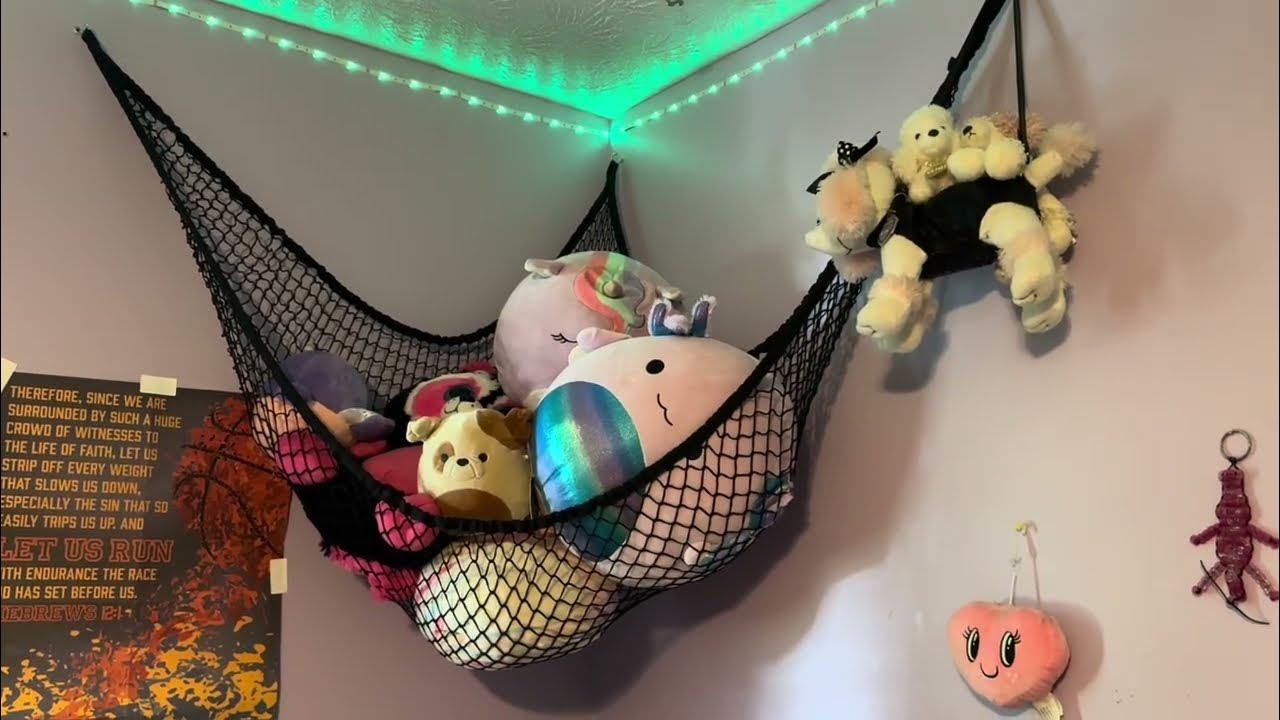
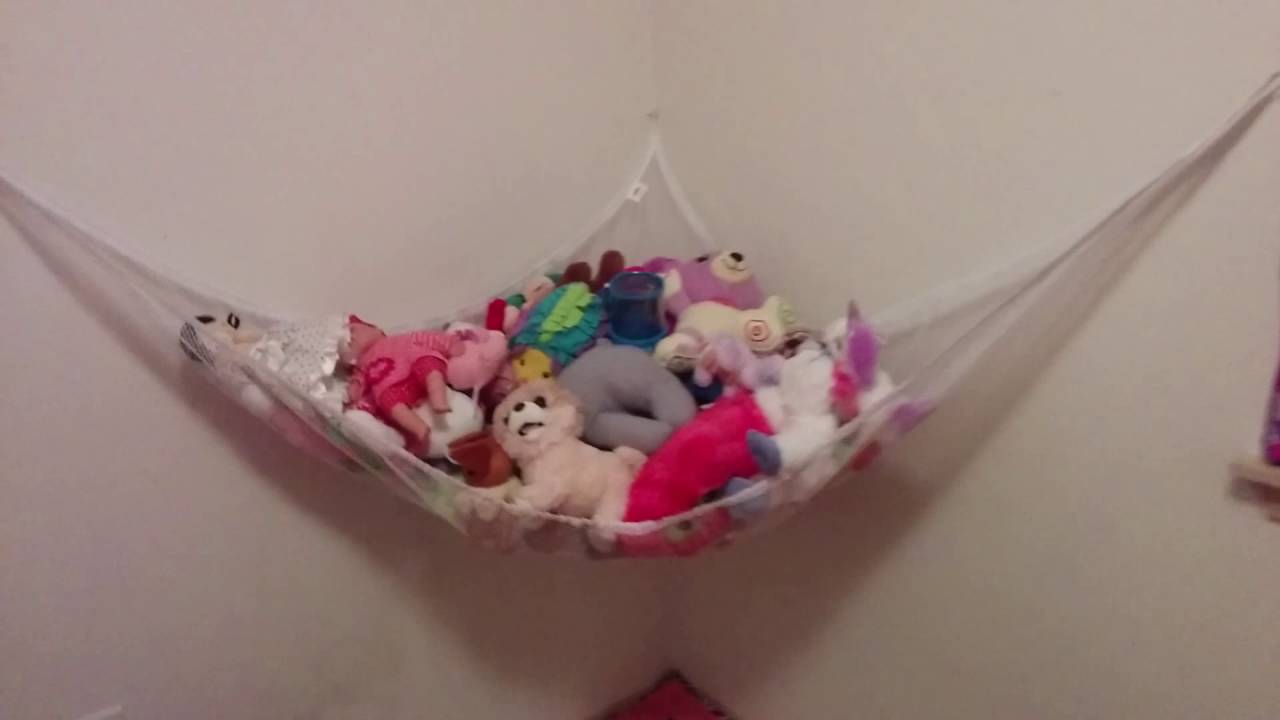
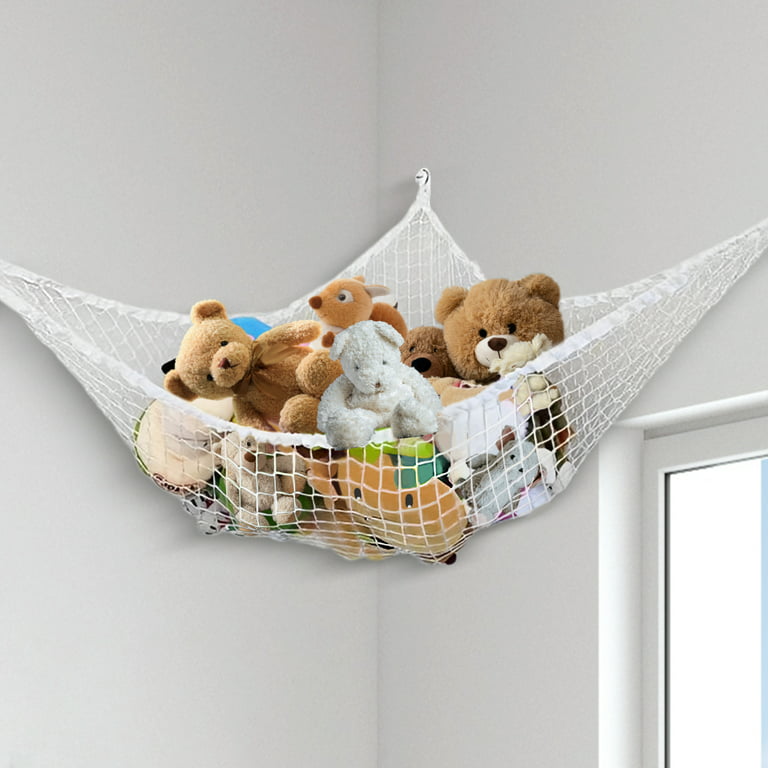
A toy hammock is a stretchy net or fabric sling that stores stuffed animals off the floor. Most models use three points: two upper corners and one lower corner. This three-point design lets the hammock form a gentle cradle.
Before you learn how to hang a toy hammock, gather the right tools. The exact items depend on your wall type and the hardware included with the hammock.
You may need:
- A toy hammock with hooks, loops, or mounting rings
- A pencil
- A tape measure
- A level
- A drill
- A screwdriver
- Wall anchors
- Screws or cup hooks
- A stud finder
- Safety glasses
Read the hammock’s instructions first. Some products include hardware for drywall, while others require separate hooks. Never assume that one type of anchor works for every wall.
For a light load, a standard drywall anchor may work. For a large hammock filled with heavy plush toys, attach at least one hook to a wall stud. A stud is a wood or metal support behind the wall surface.
Choose the Best Location
The best place for a toy hammock is easy to reach, clear of walkways, and high enough to keep toys off the floor. A corner is often ideal because two walls naturally support the upper corners.
Good locations include:
- A bedroom corner
- A playroom corner
- The side of a closet
- A quiet reading nook
- A corner beside a toy shelf
Avoid placing the hammock above a bed, crib, changing table, or chair. If the hammock or its hardware falls, the object below could increase the risk of injury.
Keep the hammock away from:
- Windows and blind cords
- Ceiling fans
- Heaters and radiators
- Door swings
- Stairways
- Electrical outlets
- Sharp furniture edges
Measure the toys you plan to store. A small net may sit well in a child’s room, while a large plush collection may need a wider corner or two storage hammocks.
When deciding how to hang a toy hammock, think about access as well as appearance. Children should be able to place toys inside without climbing on furniture or stretching too far.
Measure the Height and Anchor Points
Careful measuring makes the hammock look neat and helps distribute weight evenly. Do not install the hooks by eye. Small errors can make the net sag to one side or pull loose.
Start by holding the empty hammock in the corner. Ask another adult to help if the net is large. Mark the two upper corners at roughly the same height.
Then mark the lower corner. The lower hook should sit several inches below the upper hooks and slightly toward the center of the corner. Follow the distance in the product instructions if one is provided.
A useful layout looks like this:
- Mark the left upper anchor.
- Mark the right upper anchor.
- Mark the lower anchor between them.
- Check that the three marks form a balanced triangle.
- Use a level to compare the upper marks.
- Hold the hammock against the marks to confirm its shape.
Leave enough space for the net to stretch. A hammock that is pulled tight when empty may become too tense when filled. A hammock that hangs too low may brush the floor or invite children to pull on it.
For many homes, the upper hooks work well about 5 to 6 feet from the floor. However, the right height depends on the child’s age, ceiling height, hammock size, and intended load. The hammock should be reachable without a stool, but not so low that toddlers can pull themselves up on it.
Check the Wall Before Drilling
Wall construction affects the strength of your installation. Drywall, plaster, wood paneling, brick, and concrete each need different hardware.
Use a stud finder to locate a wall stud behind drywall. A stud provides a stronger attachment than drywall alone. If one upper anchor lines up with a stud, use a screw that reaches into the stud.
For drywall without a stud, use a suitable anchor. Common types include:
- Expansion anchors for light loads
- Threaded drywall anchors for moderate loads
- Toggle bolts for stronger support behind hollow walls
For plaster walls, drill slowly to reduce cracking. For brick or concrete, use masonry bits and anchors made for that material. Do not force a standard drywall anchor into masonry.
If you rent your home, check your lease before drilling. Adhesive hooks may seem convenient, but many are not designed for a hammock that holds moving or heavy items. A child pulling on the net can create far more force than the toy weight alone.
Hardware ratings also deserve attention. A stated weight limit is not a guarantee for every wall. The wall condition, anchor type, screw depth, and installation quality all affect real strength.

How to Hang a Toy Hammock Step by Step
Once the marks are ready, install the hammock in a careful sequence. The process usually takes less than 30 minutes.
1. Mark the anchor locations
Use a pencil to mark the two upper points and one lower point. Recheck the spacing before making holes. It is much easier to correct a pencil mark than a misplaced anchor.
2. Drill pilot holes
Choose a drill bit that matches the anchor instructions. Drill straight into the wall and avoid making the hole wider than needed.
Wear safety glasses when drilling. Check for hidden wires and pipes before drilling, especially near outlets, switches, sinks, and plumbing fixtures.
3. Install the anchors
Push or screw each anchor into place as directed. Do not hammer a plastic anchor into a hole that is too small. Do not use a damaged anchor.
If you hit a stud, skip the drywall anchor and drive the screw directly into the stud. The screw should fit firmly without stripping the wood.
4. Attach the hooks
Install the hooks or screws securely. If the hammock uses eye hooks, turn them until the threads are fully seated. The open part of each hook should face in a direction that keeps the hammock loop from slipping out.
5. Attach the hammock
Connect the two upper loops first. Then attach the lower loop. Check that the net is not twisted and that each connection sits fully on its hook.
6. Test the empty hammock
Pull the net gently in several directions. Look for loose hooks, wall movement, cracking, or anchor rotation. Fix any problem before adding toys.
7. Add toys slowly
Place a few light toys inside the hammock. Wait a minute, then inspect the anchor points. Add more toys only if the net and hardware remain stable.
This process is the safest general method for how to hang a toy hammock. Always give priority to the instructions supplied with your specific product.
How High Should a Toy Hammock Be?
The ideal height depends on who will use it. For young children, the hammock should be low enough to reach from the floor. For older children, you can place it higher if they can use it without climbing.
A safe setup should meet these conditions:
- The child can reach the toys with both feet on the floor.
- No chair, bed, or toy box is needed to reach the net.
- The hammock does not block a door or window.
- The bottom of the hammock stays above the floor when loaded.
- The child cannot use the hammock as a climbing aid.
For a nursery, avoid placing a toy hammock within reach of a crib. Storage nets, cords, and loose loops can create hazards around sleeping areas. Keep the hammock in a separate play or storage zone.
A helpful rule is to place the hammock where an adult can inspect it easily. If you cannot see the hooks, wall surface, and net condition, routine checks become less likely.
How Much Weight Can a Toy Hammock Hold?
The safe weight limit varies by product. Some small hammocks are designed for a few lightweight stuffed animals. Larger models may hold more, but the wall hardware may become the limiting factor.
Do not judge capacity by the net’s size alone. A deep net can hold many toys, yet the combined load may place too much force on the anchors.
Consider these factors:
- The hammock’s stated weight rating
- The weight of the toys
- The strength of the wall
- The type of anchor
- The condition of the hooks
- How often children pull on the net
Avoid storing books, shoes, blankets, sports gear, or hard objects unless the manufacturer clearly permits it. These items may be too heavy or may stretch the hammock unevenly.
A toy hammock should store toys, not support a child. Never allow a child to sit, swing, climb, or pull their full body weight on it. A child’s movement creates sudden force, which can loosen an anchor even when the toy load seems light.
Safety guidance for children’s products consistently stresses adult supervision, secure installation, and regular inspection. Product instructions and local building conditions should always guide the final decision.

Common Mistakes to Avoid
Many hammock problems come from small installation errors. Avoiding them can save time and prevent wall damage.
Using weak adhesive strips
Adhesive strips may not hold well on textured paint, dusty walls, wallpaper, or humid surfaces. They can also fail without much warning. Use mechanical fasteners when the manufacturer recommends them.
Skipping the stud check
A stud is often the strongest anchor point available. Before choosing a drywall anchor, check whether a stud sits behind the planned location.
Hanging the hammock too low
A low hammock may look convenient, but it can become a trip hazard. It may also tempt a child to pull, climb, or swing from the net.
Overloading the net
Stuffing every toy into the hammock increases strain on the loops and anchors. Leave some room so the net can support the toys without stretching to its limit.
Installing uneven hooks
Uneven upper hooks can twist the net and shift weight toward one side. Measure both points and use a level.
Ignoring wall damage
Stop using the hammock if you see cracks, loosened anchors, crumbling plaster, or pulled-out screws. Remove the load and repair the wall before reinstalling it.
In my experience helping with room organization, the most common mistake is not the hammock itself. It is treating the anchor as an afterthought. Spending five extra minutes checking the wall usually makes the entire setup safer and cleaner.

How to Make a Toy Hammock Safer
A secure installation is only the first step. Safe use also depends on supervision, toy selection, and regular checks.
Use these habits:
- Keep heavy toys near the center of the net.
- Place small toys away from the edge.
- Remove toys with sharp parts or broken seams.
- Keep the hammock out of reach of babies and toddlers.
- Do not attach extra cords, ribbons, or straps.
- Check the hooks once a month.
- Inspect the net after a child pulls on it.
- Follow the product’s weight limit.
Wash or clean the hammock according to its care label. Dirt and moisture can weaken some fabrics over time. Let the net dry fully before reinstalling it.
Make the storage system easy for children to use. A hammock that is too high will not teach good cleanup habits. A hammock at a safe, reachable height lets children return toys without climbing or dragging furniture across the room.
Think of the hammock as a soft basket attached to the wall. It should hold toys gently, but it should never become playground equipment.

How to Troubleshoot a Loose Toy Hammock
A loose hammock needs attention right away. Remove every toy before checking the installation.
If a hook turns in place, the anchor may be too small, damaged, or installed in the wrong material. Replace it with hardware designed for the wall type. Do not simply tighten the same weak anchor.
If the net leans to one side, check the upper hook height and the toy distribution. Move the heaviest toys toward the center and confirm that all loops are attached correctly.
If the wall is cracked or crumbling, choose a new location or repair the surface first. Reinstalling the hammock in damaged drywall usually leads to another failure.
If the hammock stretches close to the floor, reduce the load. A stretched net may be working beyond its intended capacity, even if the hooks remain tight.
My practical rule is simple: if anything looks different from the day of installation, treat it as a warning. Small changes are easier to fix before a hook pulls out or the wall surface breaks.
A Simple Maintenance Checklist
Regular checks keep a toy hammock useful for years. Inspect it at least once a month, and check it sooner if children use it often.
Look for:
- Frayed netting
- Torn loops
- Bent hooks
- Loose screws
- Spinning anchors
- Cracked drywall
- Uneven stretching
- Excessive sagging
- Toys pressing against the wall
Pull the empty net lightly at each corner. The hooks should stay firm, and the wall should not flex around them. If the hammock makes a new tearing or cracking sound, stop using it.
Replace damaged hardware with parts that match the original design. Avoid mixing a very small hook with a large hammock. When in doubt, contact the manufacturer or a qualified hardware professional.
Frequently Asked Questions About How to Hang a Toy Hammock
Can I hang a toy hammock on drywall?
Yes, but you need anchors rated for drywall and the hammock’s expected load. A stud is preferred, especially for a large hammock or a room where children may pull on the net.
How many hooks does a toy hammock need?
Most corner toy hammocks need three hooks: two at the upper corners and one lower hook. Follow the product instructions because some designs use two hooks or a different mounting system.
How high should I hang a toy hammock?
Hang it high enough to keep toys off the floor but low enough for the intended user to reach without climbing. Never place it above a crib, bed, chair, or other item where a falling hammock could cause harm.
Can I use adhesive hooks for a toy hammock?
Only use adhesive hooks if the manufacturer approves them for that hammock, wall surface, and weight. Mechanical anchors are usually more dependable because children may create sudden pulling force.
How much weight can a toy hammock hold?
Use the manufacturer’s weight limit as the maximum, then consider the wall and anchor strength. Do not let anyone sit, climb, swing, or hang from the hammock.
Why does my toy hammock sag so much?
The hammock may be overloaded, stretched, attached too low, or made from a highly flexible material. Remove some toys, check the anchor points, and replace the hammock if the net or loops show damage.
Conclusion
Learning how to hang a toy hammock takes three main steps: choose a safe location, use wall hardware that matches the surface, and test the hammock before loading it. Keep the net away from cribs, beds, windows, heaters, and walkways, and never treat it as a climbing toy.
Measure carefully, secure the anchors, add toys slowly, and inspect the setup each month. With these simple habits, you can create tidy storage that keeps stuffed animals off the floor and within easy reach. Try the steps above, then share your best toy-storage tips or explore more practical home organization guides.

Zayden Halbrook is a travel enthusiast and gear researcher passionate about making every journey smoother and more enjoyable. With a keen eye for practical travel essentials and real-world tips, he helps readers choose the right gear and travel smarter. When he’s not testing travel kits or exploring new destinations, Zayden shares simple, reliable advice to make every trip stress-free.