Machine wash a backpack only after checking its care label, removing all parts, and using a gentle, cold-water cycle.
Learning how to machine wash a backpack is simple when you treat the bag like technical clothing, not a towel. The right cycle, mild soap, and careful air-drying can remove sweat, dirt, and odors while helping protect zippers, padding, coatings, and seams.

Check Whether Your Backpack Is Machine Washable
Before you machine wash a backpack, find the care label inside the main compartment. The label may show a washing machine symbol, a hand-wash symbol, or a warning against washing. Follow that guidance first, since fabrics and coatings can react in different ways.
Many school backpacks, canvas bags, nylon daypacks, and basic polyester packs can handle a gentle machine wash. However, some travel backpacks, hiking packs, leather bags, and structured laptop bags need hand cleaning instead.
Do not machine wash a backpack if it has:
- Leather, suede, or faux leather panels
- A built-in metal or plastic frame
- Thick foam that can hold water for days
- Glued decorations or delicate embroidery
- Waterproof coatings that the label says to protect
- Electrical parts, heated panels, or built-in USB components
- A hard shell or rigid support system
When the label is missing, inspect the materials and construction. A soft nylon or polyester bag with stitched seams is usually a better candidate than a structured pack with glued parts. If you are unsure, hand washing is the safer choice.
Gather the Right Supplies
You do not need special backpack cleaner for most machine washable bags. Simple supplies work well and reduce the risk of damage.
Prepare:
- A vacuum or soft brush
- A clean cloth
- A small amount of mild liquid laundry detergent
- A laundry bag or clean pillowcase
- A stain remover made for the bag’s fabric
- A clean towel
- A well-ventilated place for drying
Use liquid detergent because it dissolves more easily in cold water. Avoid bleach, fabric softener, harsh powder, and strong scent boosters. These products may weaken fibers, leave residue, or damage water-resistant finishes.
A mild detergent is especially useful for backpacks worn by children or people with sensitive skin. Extra soap does not mean extra cleanliness. In fact, too much detergent can stay trapped in padding and cause a stale smell.

Empty and Inspect the Backpack
Empty every compartment before you machine wash a backpack. Check small pockets, hidden sleeves, pencil holders, and water bottle compartments. A forgotten pen can leak, while a small coin or paper clip can damage the washer or stain the fabric.
Shake the bag upside down over a trash can. Then use a vacuum or soft brush to remove crumbs, sand, hair, and loose dirt. Removing dry debris first helps the wash water clean the fabric instead of turning the debris into muddy residue.
Inspect each zipper, buckle, strap, and seam. Close the zippers, but leave the main compartment slightly open if the care label allows it. Fastened zippers are less likely to catch on the washer drum or other parts of the bag.
Remove anything detachable, such as:
- Shoulder straps
- Hip belts
- Chest straps
- Pencil cases
- Key clips
- Removable padding
* Metal stays - Plastic boards
Wash detachable fabric pieces separately only if their care labels allow it. Place small parts in a mesh laundry bag so they do not get lost.
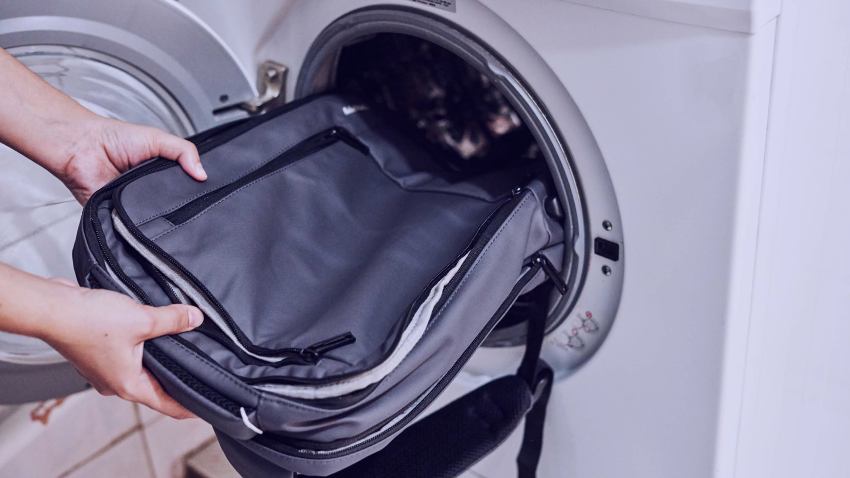
Pre-Treat Stains and Odors
Pre-treat visible marks before putting the backpack in the washer. Mix a small amount of mild detergent with cool water, then dab the mixture onto the stain with a clean cloth. Do not scrub hard, since rough rubbing can spread the stain or raise the fabric fibers.
For food, mud, or drink stains, remove solid material first. Let wet mud dry, brush it away, and then treat the remaining mark. For oily spots, use a tiny amount of mild dish soap only after testing it on a hidden area.
To reduce odor, sprinkle a little baking soda inside the dry bag and leave it for several hours. Shake or vacuum it out before washing. Do not pour large amounts of baking soda into a wet backpack, because it can settle into foam and pockets.
Always test a cleaning product on an unseen seam. This small step can prevent fading, discoloration, or damage to a printed logo.
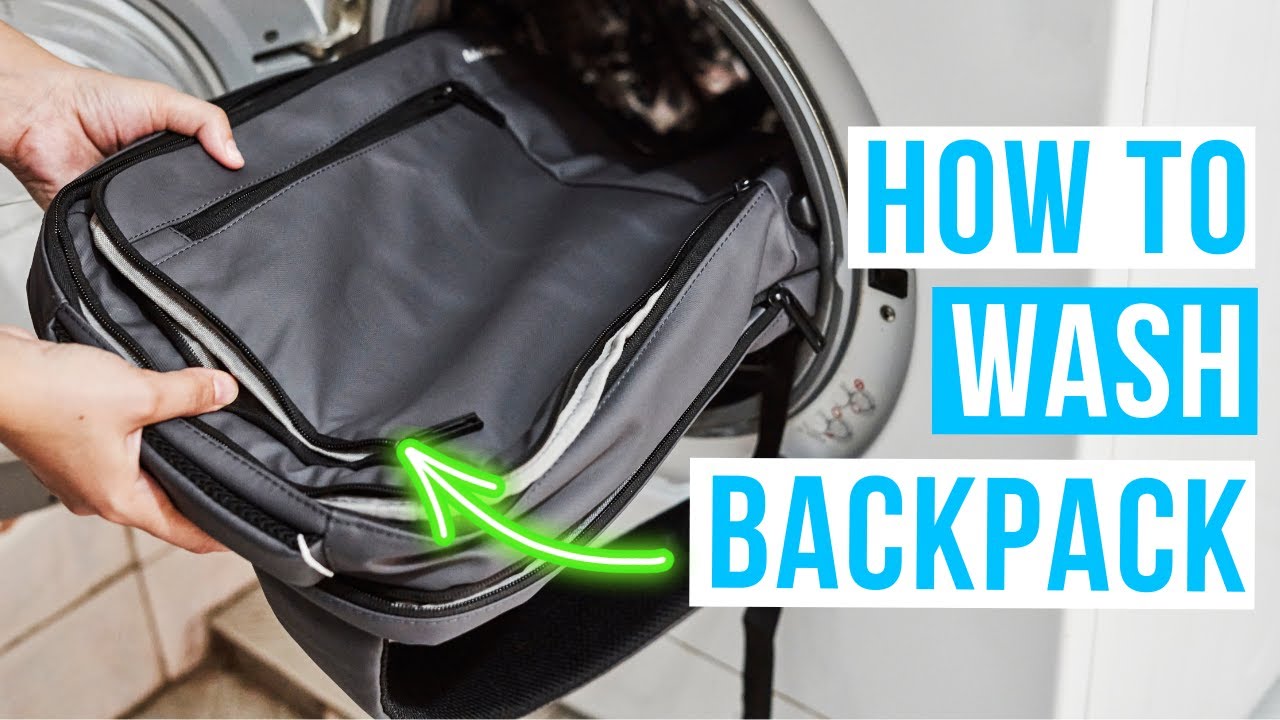
How to Machine Wash a Backpack
Once the bag is empty and pre-treated, follow these steps. This method works well for many soft nylon, polyester, and canvas backpacks that the manufacturer approves for machine washing.
-
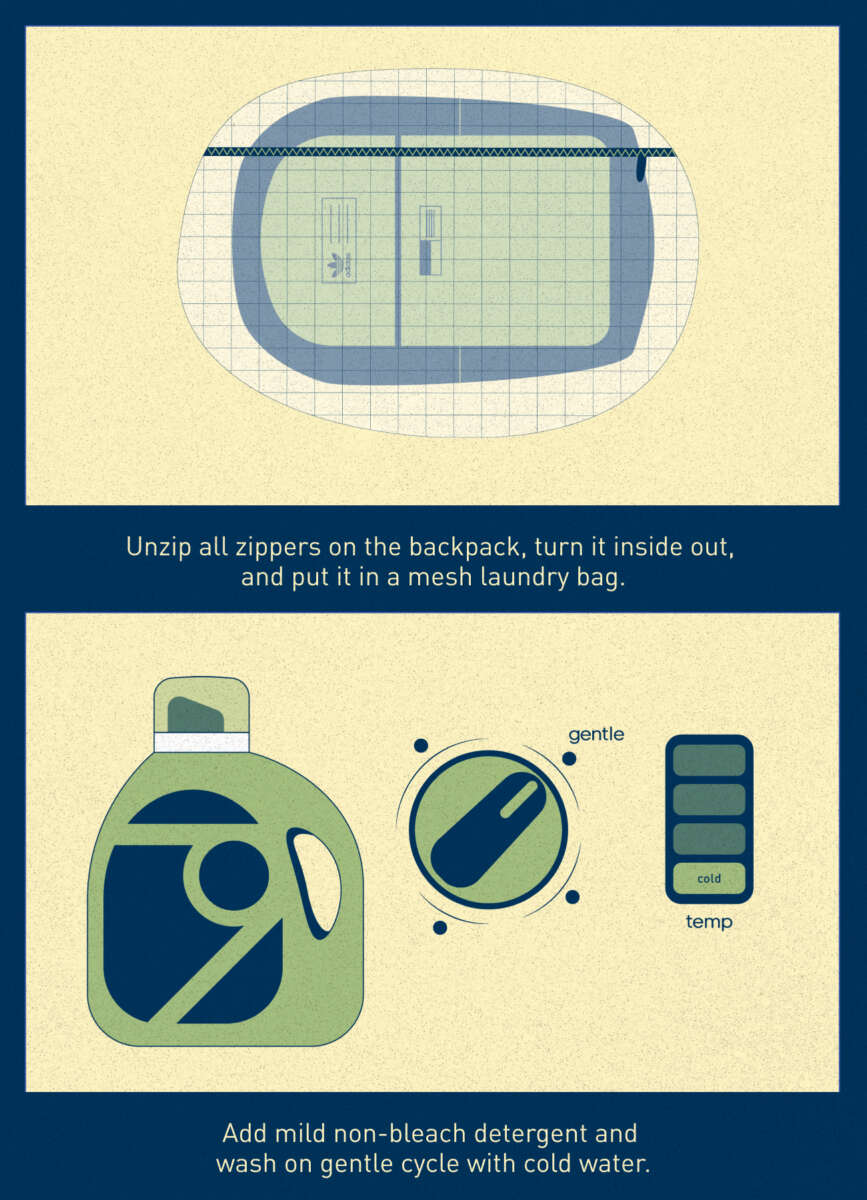
Place the backpack inside a large laundry bag or clean pillowcase. This helps protect straps, buckles, and zippers.
-
Put the bag in the washing machine by itself or with a few soft towels. Avoid washing it with heavy jeans, shoes, or items with hooks.
-
Select a cold-water setting. Cold water helps reduce fading, shrinkage, and damage to coatings.
-
Choose the delicate, gentle, or hand-wash cycle. Use a low spin speed if your machine offers that option.
-
Add a small amount of mild liquid detergent. For one backpack, a teaspoon or two is often enough, depending on the bag’s size and the detergent label.
-
Start the cycle and stay nearby during the first few minutes. If the bag becomes unbalanced or makes loud sounds, pause the machine and reposition it.
-
Remove the backpack as soon as the cycle ends. Do not leave it sitting wet in the washer, because trapped moisture can create a musty smell.
When you machine wash a backpack, the goal is gentle movement rather than intense agitation. The washer should lift away dirt without twisting the bag like a rope. A cold, delicate cycle is usually the best balance between cleaning power and fabric protection.

How to Dry a Backpack After Washing
Drying is just as important as washing. Never place a backpack in a hot dryer unless the care label clearly allows it. Heat can shrink fabric, soften glue, warp plastic, and damage water-resistant coatings.
Start by pressing the bag gently between clean towels. Do not wring or twist it. Open every compartment, pull out padded sections, and spread the straps so air can reach the damp areas.
Hang the backpack upside down or place it upright in a well-ventilated room. Keep it away from direct heat, radiators, fireplaces, and strong sunlight. Direct sun may fade dark fabric and weaken some synthetic materials over time.
Allow the backpack to dry fully before using it. Depending on the padding and weather, this can take 24 to 48 hours. A fan can improve airflow, but it should blow nearby rather than directly into a closed pocket.
A useful test is to smell and feel the padding. If it feels cool, heavy, or damp, it is not ready. Packing a damp backpack can lead to mildew, especially around foam panels and sewn seams.
Common Mistakes to Avoid
The most common washing mistakes come from rushing. A backpack can look dry on the outside while moisture remains trapped inside its padding. Slow, careful drying prevents many problems.
Avoid these errors:
- Washing without reading the care label
- Leaving pens, food, or electronics inside
- Using hot water
- Adding bleach or fabric softener
- Using a heavy spin cycle
- Washing with shoes or rough garments
- Scrubbing coated fabric with a stiff brush
- Putting a wet backpack in a hot dryer
- Storing the bag before it is fully dry
- Using a washing machine for a leather or framed pack
One mistake worth remembering is overloading the washer. A full, heavy drum can press the backpack against other items and strain its seams. Give the bag room to move gently.
Another mistake is assuming that a clean smell means a clean bag. Strong fragrance can cover odor while detergent remains in the padding. Rinse thoroughly and use less soap rather than adding more perfume.
When Hand Washing Is Safer
Machine washing is convenient, but it is not right for every backpack. Hand washing gives you more control over pressure, water temperature, and drying. It is often the best option for expensive, technical, or heavily structured bags.
Choose hand washing when the backpack has a frame, delicate coating, leather trim, or thick foam. Hand cleaning is also safer for bags with many buckles, reflective panels, or glued details.
To hand wash a backpack:
-
Fill a bathtub, basin, or large sink with cool water.
-
Add a small amount of mild liquid detergent.
-
Submerge the empty backpack and gently press the water through the fabric.
-
Use a soft cloth on dirty areas.
-
Rinse with clean water until the water runs clear.
-
Press out excess water with towels.
-
Air-dry the bag with every pocket open.
Hand washing takes more time, but it can extend the life of a bag that would be damaged by machine agitation. Think of it as using a soft brush instead of a power tool.
Special Care for Different Backpack Materials
Backpack material affects the safest cleaning method. Nylon and polyester are often durable, but they may have coatings that need gentle treatment. Canvas can usually tolerate mild washing, yet it may shrink or fade if exposed to heat.
Leather and suede should not go into a washing machine. Use a cleaner designed for that material, and follow the manufacturer’s instructions. Water can stain leather, weaken its finish, or change its shape.
Water-resistant backpacks also need care. Machine washing may reduce the effectiveness of a durable water-repellent finish. After cleaning, check whether water still beads on the surface. If it does not, the manufacturer may recommend a compatible reproofing product.
Laptop backpacks need extra attention. Remove the computer, tablet, charger, and battery before washing. Even if the bag is washable, water trapped near a padded device sleeve can take a long time to dry.
How Often Should You Wash a Backpack?
Most everyday backpacks do not need frequent machine washing. Clean the bag when it has visible dirt, a lasting odor, spilled food, or heavy sweat buildup. For regular use, a deep clean once or twice a year may be enough.
Spot clean small marks between full washes. Wipe the inside with a damp cloth, empty crumbs often, and leave the compartments open after use. These simple habits reduce odor and protect the fabric.
A school backpack may need more frequent cleaning because it often carries snacks, sports clothes, and art supplies. A work or laptop backpack may need less washing but more regular interior wiping.
Wash based on condition, not a strict calendar. Too much washing can cause unnecessary wear, especially on coatings, printed designs, and elastic parts.
Practical Lessons From Backpack Cleaning
A reliable cleaning routine starts before the washer. In real-world use, the bags that stay in good shape are the ones emptied often and dried with patience. Dirt is easier to remove when it has not been pressed into the fabric for months.
One lesson is to photograph the strap setup before removing parts. This is helpful for hiking packs with complex buckles and adjustable webbing. It makes reassembly faster and prevents a strap from being threaded through the wrong loop.
Another useful habit is to clean a small area first. A backpack may have several fabrics, and one section can react differently from another. Testing first is faster than trying to repair a faded panel.
If a backpack smells bad after washing, do not immediately wash it again. Check for damp foam, hidden food, or a wet lining. Let the bag dry fully, then inspect the seams and pockets before choosing another cleaning method.
Frequently Asked Questions About How to Machine Wash a Backpack
Can I put any backpack in the washing machine?
No. Only machine wash a backpack when the care label allows it and the bag has no fragile or rigid parts. Leather, suede, framed, hard-shell, and electronic backpacks usually need another cleaning method.
What wash cycle is best for a backpack?
Use cold water and the delicate, gentle, or hand-wash cycle. Choose low spin when available, and avoid hot water because it can cause fading, shrinkage, and coating damage.
Can I use regular laundry detergent?
You can use a small amount of mild liquid laundry detergent. Avoid bleach, fabric softener, strong stain removers, and excess soap, since these may damage fibers or leave residue in the padding.
Can I put a backpack in the dryer?
Usually, no. Air-dry the backpack with all pockets open and keep it away from direct heat; use a dryer only when the care label clearly approves it.
How long does a machine-washed backpack take to dry?
Most backpacks take about 24 to 48 hours to dry completely. Thick padding, cool rooms, and poor airflow can extend that time, so check the seams and pockets before storing the bag.
How can I remove a bad smell from a backpack?
Empty and vacuum the bag, then wash it with mild detergent if the care label allows. Dry it fully with all compartments open, since trapped moisture is a common cause of lingering odor.
Conclusion
Learning how to machine wash a backpack comes down to checking the label, removing every item, using cold water and a gentle cycle, and allowing plenty of time for air-drying. Mild detergent and careful preparation help protect fabric, padding, zippers, straps, and water-resistant finishes.
When the backpack has leather, a frame, delicate details, or electronic parts, hand washing is the safer choice. Clean small stains early, avoid harsh products, and never store the bag while it is damp.
Give your backpack a careful inspection today, then use the method that matches its material and care label. Share your cleaning results or explore more practical laundry and gear-care guides for simple ways to keep everyday items in better shape.

Zayden Halbrook is a travel enthusiast and gear researcher passionate about making every journey smoother and more enjoyable. With a keen eye for practical travel essentials and real-world tips, he helps readers choose the right gear and travel smarter. When he’s not testing travel kits or exploring new destinations, Zayden shares simple, reliable advice to make every trip stress-free.