
Use a sturdy hammock stand or approved structural anchors, then test the setup gently before relaxing on your balcony.
Learning how to hang a hammock on a balcony takes more than finding two nearby attachment points. You must check the balcony structure, choose safe hardware, allow enough hammock sag, and follow your building rules. This guide explains the safest methods, common mistakes, and simple checks that help create a calm outdoor rest spot without risking damage or injury.
Check Whether Your Balcony Can Support a Hammock
Before learning how to hang a hammock on a balcony, inspect the space and confirm that it can safely handle the load. A hammock does not place weight straight down like a chair. It pulls outward and downward on its anchor points, especially when someone sits down quickly or swings.
A balcony railing may look strong, but appearance is not proof. Many railings are designed to stop falls, not to hold a moving hammock. The force from a hammock can loosen fasteners, bend metal, crack masonry, or damage the balcony edge.
Check these points first:
• Read your lease, condo rules, and local building rules. Some buildings ban hammocks on balconies.
• Look for cracks, loose bolts, rust, water damage, or movement in the railing and walls.
• Identify whether the walls are concrete, brick, wood framing, or a thin exterior finish.
• Ask the property manager or a qualified contractor before drilling or attaching hardware.
• Never attach a hammock to a drainpipe, gutter, balcony screen, decorative post, or weak privacy panel.
A structural engineer is the right person to assess unusual or uncertain attachment points. This is especially important in older buildings, high-rise apartments, and balconies with glass railings.

Choose the Safest Hammock Setup
The safest answer to how to hang a hammock on a balcony is often a freestanding hammock stand. A stand does not require drilling, and you can remove it when needed. It also avoids placing extra force on the building structure.
Choose a stand that fits the balcony and matches the hammock’s length. Many stands are made from powder-coated steel or treated wood. Look for wide feet, locking joints, a stated weight capacity, and non-slip pads that will not damage the floor.
A stand works best when:
• The balcony floor is level and strong.
• The stand fits without blocking the door or emergency exit.
• The feet stay clear of the balcony edge.
• The hammock hangs low enough to use but not so low that it touches the floor.
• The full setup remains inside the balcony boundary.
If you want to attach the hammock to walls, use only structural points that have been approved for this purpose. A professional may recommend engineered eye bolts, rated wall anchors, or a custom mounting system. The correct hardware depends on the wall material, anchor depth, load, and local construction.
Do not assume a large screw is a safe anchor. A screw placed in drywall, thin siding, hollow block, or a surface finish may pull out with little warning.

Measure the Balcony and Hammock
Good measurements make the setup easier and safer. Measure the distance between possible anchor points, the usable floor width, and the height of each attachment point.
Most hammocks need enough space to form a deep curve. A common starting point is to place the suspension points about 8 to 12 feet apart, but the exact distance depends on the hammock design. Always check the manufacturer’s instructions first.
Use these basic measurements:
• Measure from anchor point to anchor point.
• Measure the hammock’s total length from end loop to end loop.
• Check the stand’s minimum and maximum length.
• Leave space for the hammock to sag without touching the floor.
• Keep the hammock away from sharp corners, hot grills, fans, and open doors.
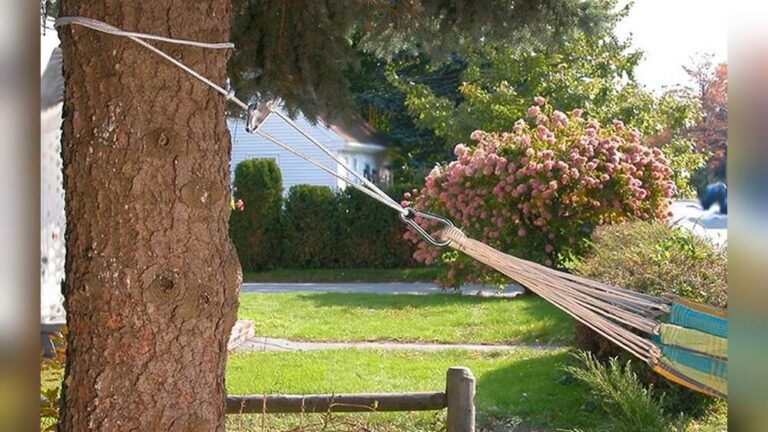
The suspension angle matters. A hammock often works well when each strap or rope forms an angle of about 30 degrees from the floor. A very flat hammock creates much higher sideways force on the anchors. In simple terms, pulling a rope tight can place more stress on the attachment points than allowing a gentle curve.
A safe hammock should also hang high enough to avoid dragging on the floor but low enough for an easy exit. Many setups place the lowest part of the empty hammock about 18 inches above the floor. Adjust this based on the user’s height, the hammock style, and the manufacturer’s directions.

Select the Right Hammock and Suspension Gear
Hammocks vary in shape, fabric, length, and weight rating. A gathered-end hammock usually needs more length and creates a deeper curve. A spreader-bar hammock stays flatter but may be less forgiving if the suspension points are too far apart.
For balcony use, consider:
• A hammock made for outdoor use.
• UV-resistant fabric that can handle sunlight.
• Quick-drying material in damp climates.
• A clearly stated weight limit.
• Wide tree-friendly straps or rated suspension straps.
• Carabiners and connectors designed for hammock loads.
• A stand with a matching or higher weight rating.
Avoid thin utility rope, decorative chain, bargain carabiners, and hardware with no working-load information. Climbing gear and hammock gear are not always interchangeable, so follow the product instructions for each part.
The weight rating must cover the total expected load. Include every person, pet, blanket, and item that may rest in the hammock. A two-person hammock does not automatically mean that every balcony anchor can support two adults.
Inspect the fabric and suspension parts before each use. Sunlight, rain, salt air, and sharp edges can weaken materials over time. Replace any strap or rope that shows cuts, melted spots, severe fading, broken stitching, or crushed fibers.

How to Hang a Hammock on a Balcony With a Stand
A freestanding stand is usually the easiest method for renters and apartment residents. Set it up on a clean, level surface and follow the assembly instructions closely.
-
Assemble the stand on the balcony floor.
-
Lock every joint, pin, screw, and adjustment point.
-
Place the stand away from the balcony edge and door swing.
-
Attach the hammock to the stand using the supplied hardware.
-
Adjust both ends so the hammock hangs evenly.
-
Sit in it slowly while keeping one hand near the stand.
-
Check for movement, sliding, bending, or unusual sounds.
-
Make small height adjustments until the hammock feels stable.
The stand should not rock when you press down on the center. If it shifts, stop using it. Check whether the feet need better non-slip pads or whether the stand is too narrow for the hammock.
Avoid placing heavy planters, storage boxes, or other objects on the stand to stop it from moving. This can create new hazards and may overload the balcony. A properly sized stand should remain stable on its own.
One practical lesson is to test the stand before adding cushions, drinks, or a laptop. A bare setup makes small problems easy to see. Once the hammock passes the test, add comfort items one at a time.
How to Hang a Hammock on a Balcony With Wall Anchors
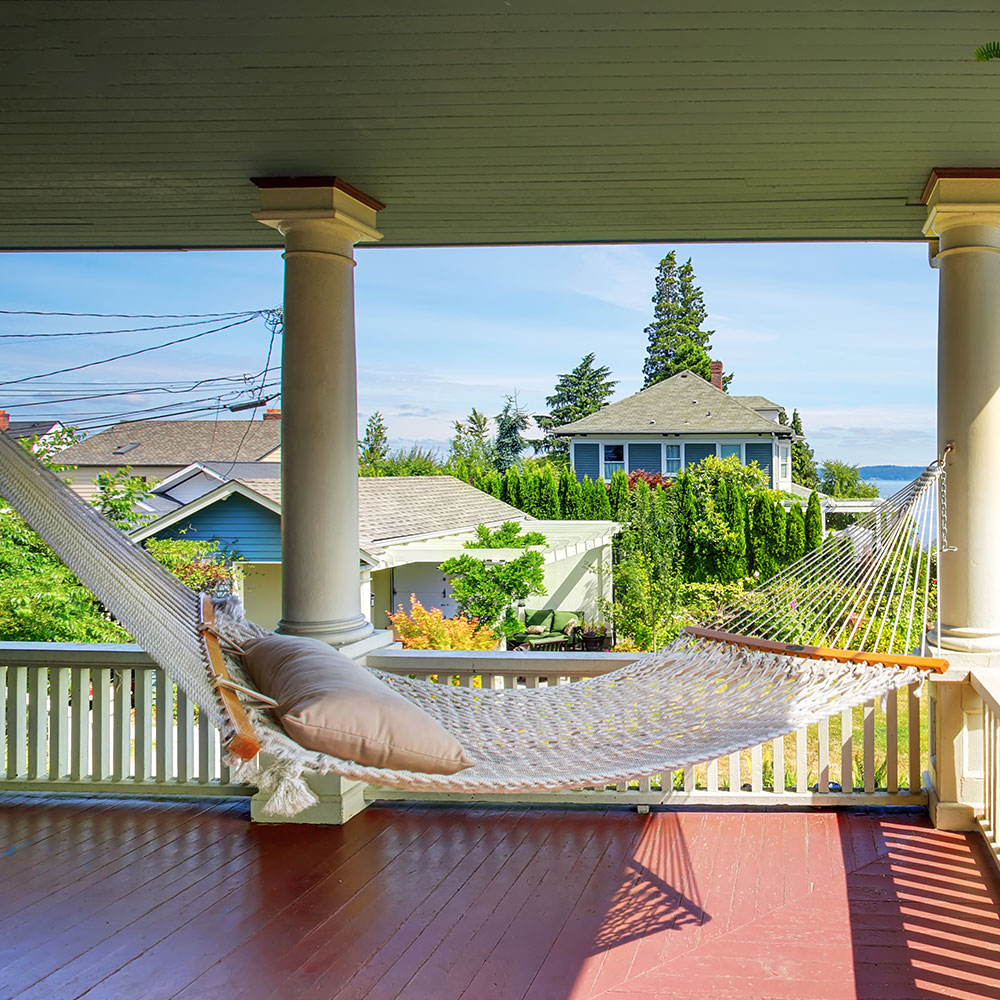
Wall mounting can save floor space, but it requires more care. Only use this method when the wall and anchor design have been approved for hammock use.
First, identify the structural material. Concrete, solid brick, wood studs, and hollow masonry require different anchors. A basic wall scanner may help locate studs, but it cannot confirm the full strength of a building wall.
A safe wall-mounted installation usually involves:
• Finding solid structural support.
• Choosing hardware rated for the expected load and direction of force.
• Drilling the correct hole size and depth.
• Keeping the anchor away from wall edges and cracks.
• Sealing outdoor penetrations against water.
• Tightening hardware to the manufacturer’s torque instructions.
• Testing the connection before full use.
Do not mount into drywall alone. Do not drill into a balcony slab, post, or exterior wall without permission. Drilling can hit electrical wiring, plumbing, waterproofing, or reinforcement steel. It can also cause costly water damage.
If the balcony has two strong side walls, a contractor may be able to install approved eye bolts or a dedicated hammock mounting kit. If there is only one suitable wall, combine it with a properly rated stand rather than improvising with a railing.

Can You Attach a Hammock to a Balcony Railing?
In most cases, attaching a hammock directly to a balcony railing is not a safe choice. Railings are usually designed for a person leaning against them, not for repeated swinging forces from a suspended load.
Never use a railing if it:
• Moves when pushed.
• Has loose fasteners or rust.
• Is made from thin decorative metal.
• Uses glass panels or unsupported sections.
• Has a narrow cap or sharp edge.
• Is attached to a privacy screen or removable panel.
Some purpose-built balcony hammock systems exist, but they must be designed for the exact railing type and installed according to their instructions. Even then, check with the property owner and confirm the product’s working-load rating.
A railing attachment that works in one building may be dangerous in another. Construction methods differ, and hidden corrosion or weak fasteners may not be visible. When in doubt, use a freestanding stand.
How to Test a Balcony Hammock Safely
Testing should happen in stages. Do not climb into a newly installed hammock at full speed. Sudden movement can expose a weak anchor faster than a slow, controlled test.
Use this sequence:
-
Check every connection by hand.
-
Push down on the hammock with both hands.
-
Add a light object, such as a filled backpack, to the center.
-
Watch for movement, slipping, creaking, or fabric strain.
-
Sit down slowly with your feet close to the floor.
-
Remain seated for several minutes.
-
Shift your weight gently from side to side.
-
Exit slowly and inspect every connection again.
If the hammock moves more than expected, stop and correct the problem. Do not try to solve instability by tightening the hammock until it is nearly flat. That can increase force on the anchors.
Keep children and pets away during the first test. Never leave a child unattended in a balcony hammock. Also avoid sleeping in a setup that has not been professionally assessed, especially when the hammock is attached to a building structure.
Common Mistakes to Avoid
Many hammock problems come from small mistakes rather than dramatic failures. A rushed installation can turn a relaxing space into a fall hazard.
Avoid these common errors:
• Hanging the hammock too tightly between distant points.
• Using a railing because it is convenient.
• Drilling without checking for wiring, plumbing, or reinforcement.
• Using indoor hardware outdoors.
• Ignoring the manufacturer’s weight limit.
• Placing the stand close to the balcony edge.
• Letting metal hardware rub against the hammock fabric.
• Leaving the hammock outside during severe wind or storms.
• Blocking an exit or emergency access route.
• Assuming a strong-looking wall can hold a dynamic load.
I once found that a hammock felt comfortable but sat too close to the floor after someone entered it. The fix was not to raise it dramatically. A small adjustment at both ends created better clearance and made getting out easier. This is why gradual testing matters more than guessing from a standing position.
Weather also deserves attention. Wind can make a hammock act like a sail, and rain can keep the fabric damp against a wall or floor. Remove or secure the hammock when strong wind, lightning, or severe weather is expected.
Make Your Balcony Hammock More Comfortable
Once the structure is safe, comfort becomes simple. Add a thin outdoor cushion, a washable pillow, and a small side table that does not interfere with the stand or doorway.
Keep the hammock comfortable with these tips:
• Use a breathable fabric in hot weather.
• Choose quick-drying materials in humid areas.
• Add shade without attaching a sail-like canopy to the hammock.
• Keep drinks in a stable table rather than balancing them beside you.
• Use a soft cover when the hammock is stored.
• Clean the fabric according to the care label.
A hammock should support your body in a relaxed curve. If your back feels strained, change the hanging height or try a different hammock style. A spreader-bar model may feel more open, while a gathered-end model often gives a deeper, cocoon-like shape.
Do not overload a small balcony with furniture. Leave enough room to walk safely and reach the door. A comfortable hammock setup should make the space feel calmer, not crowded.
When a Hammock Is Not Suitable for a Balcony
Some balconies are simply not a good place for a hammock. A narrow balcony may not provide enough clearance. A damaged railing, weak wall, sloped floor, or strict building rule may also make installation unsafe or unlawful.
Choose another option if:
• You cannot confirm the strength of the attachment points.
• The stand would sit near the edge.
• The hammock would block a required exit.
• The building owner does not approve the setup.
• The balcony floor shows structural damage.
• Wind exposure is strong and frequent.
• You cannot keep the hammock dry and protected.
A compact lounge chair, folding recliner, or balcony rocking chair may offer similar comfort with less structural risk. Safety is more important than forcing a hammock into a space that cannot support one.
Frequently Asked Questions About How to Hang a Hammock on a Balcony
Can I hang a hammock from my balcony railing?
Usually, you should not attach a hammock directly to a balcony railing. Railings are not normally designed for the repeated outward and downward forces created by a hammock. Use a freestanding stand unless a qualified professional approves a purpose-built railing system.
What is the safest way to hang a hammock on a balcony?
A properly sized freestanding hammock stand is usually the safest and most renter-friendly option. It avoids drilling and reduces the chance of damaging walls, railings, waterproofing, or hidden utilities.
How high should a hammock be hung on a balcony?
The lowest part of an empty hammock is often placed about 18 inches above the floor, but the correct height depends on the hammock and user. After installation, sit down slowly and make sure you can enter and exit without touching the floor hard.
Can I drill into a concrete balcony wall for a hammock?
Do not drill into a concrete balcony wall without approval and professional guidance. Drilling may damage reinforcement, wiring, plumbing, or waterproofing, and the wall may not be designed for hammock loads.
How far apart should hammock anchors be?
Many hammocks work with anchor points about 8 to 12 feet apart, but the manufacturer’s instructions should come first. The hammock must have a gentle curve rather than being pulled tight between the points.
Can two people use a balcony hammock?
Only if the hammock, stand, anchors, and balcony setup are all rated for the combined weight. Include clothing, pets, cushions, and other items in the total load, and test the setup carefully before normal use.
Should I leave a hammock outside on a balcony?
It is better to remove or cover the hammock during rain, strong wind, snow, and long periods of direct sun. Weather can weaken fabric, corrode hardware, and make the hammock unstable or unpleasant to use.
Conclusion
Learning how to hang a hammock on a balcony starts with safety, not hardware. Check your building rules, inspect the space, measure the hammock, and favor a stable stand over an unapproved railing or wall attachment. If you choose structural mounting, get professional guidance and use hardware rated for the load and environment.
Test the hammock slowly, keep exits clear, inspect it often, and remove it during severe weather. With the right setup, even a small balcony can become a peaceful place to read, rest, and enjoy fresh air. Share your balcony setup or explore more home safety guides before you begin.

Zayden Halbrook is a travel enthusiast and gear researcher passionate about making every journey smoother and more enjoyable. With a keen eye for practical travel essentials and real-world tips, he helps readers choose the right gear and travel smarter. When he’s not testing travel kits or exploring new destinations, Zayden shares simple, reliable advice to make every trip stress-free.