How To Measure A Hammock Stand: Easy Guide

How To Measure A Hammock Stand

Measure the hammock’s total length, stand footprint, hang-point spacing, and height before choosing a compatible hammock stand.

Learning how to measure a hammock stand helps you avoid a poor fit, unsafe setup, and wasted money. The key is to measure both the hammock and the space where the stand will sit, then compare those numbers with the stand’s usable hanging range. This guide explains the process in simple steps, with practical tips for gathered-end hammocks, spreader-bar hammocks, indoor stands, and outdoor frames.

Why measuring a hammock stand matters
Source: youtube.com

Why measuring a hammock stand matters

A hammock stand is not just a frame that holds your hammock. It must support the hammock at the right points, leave enough room for a natural curve, and fit safely in your yard, patio, or room.

If the stand is too short, the hammock may hang too tightly. If it is too long, the fabric may sit too low or fail to create a comfortable sag. Measuring also helps you check whether the stand will fit through doors, around furniture, or inside a storage area.

Understanding how to measure a hammock stand can help you:

• Choose the correct stand length

• Confirm the hammock will reach both hooks

• Keep the hammock off the ground

• Maintain a safe sitting and lying height

• Leave room to enter and exit

• Prevent the stand from crowding nearby objects

A well-measured setup feels balanced. Think of it like fitting a bed into a room: the mattress matters, but so do the frame, clearance, and usable floor space.

What measurements do you need?
Source: theultimatehang.com

What measurements do you need?

Before you start, write down four main measurements:

  1. The hammock’s total length
  2. The stand’s overall length
  3. The distance between the stand’s hanging points
  4. The stand’s height and floor footprint

You may also need the hammock’s width, the distance from the hammock end to its hanging hardware, and the available space around the stand.

The most important measurement is usually the hammock’s total length. Measure from one end loop or attachment point to the other. Do not measure only the fabric body unless the manufacturer specifically tells you to do so.

For a hammock with carabiners, ropes, or chains attached, measure from the center of one hanging connection to the center of the other. This gives you the hammock’s actual hanging length.

Tools for measuring a hammock stand
Source: lazydazehammocks.com

Tools for measuring a hammock stand

You do not need special equipment. Most people can measure a hammock stand with basic household tools.

• A tape measure at least 25 feet long

• A pencil and notepad

• A level surface

• A second person for long measurements

• A phone camera for recording labels and dimensions

• A piece of chalk or painter’s tape for marking floor space

Measure on a flat surface whenever possible. Grass, gravel, and uneven patios can make a stand appear shorter or wider than it really is.

If the stand is already assembled, measure from the farthest outside point on one end to the farthest outside point on the other. Include curved feet, stabilizer bars, and side supports if they extend beyond the main frame.

How to measure a hammock stand step by step
Source: eaglesnestoutfittersinc.com

How to measure a hammock stand step by step

Step 1: Measure the hammock’s total length

Lay the hammock flat without stretching it tightly. Measure from one end attachment point to the other end attachment point.

For a gathered-end hammock, measure from the center of one gathered end to the center of the other. For a spreader-bar hammock, measure from the end of one bar or hanging loop to the matching point on the other side.

Record the measurement in inches or feet. Use one unit throughout the process to prevent mistakes.

For example, a hammock that measures 132 inches from end to end is 11 feet long.

Step 2: Measure the stand’s overall length

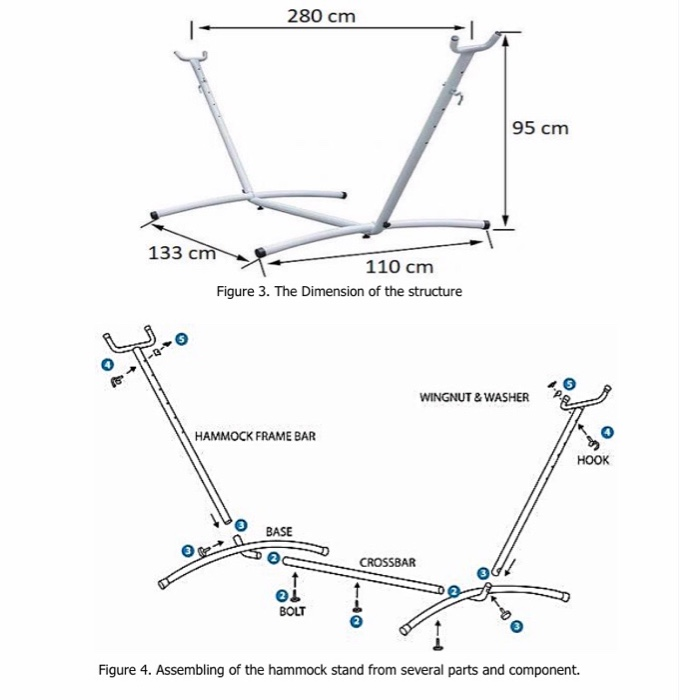
Place the stand on level ground. Measure the full outside length from its farthest left point to its farthest right point.

Do not measure only the distance between the hooks. The overall length tells you how much floor space the stand needs.

Also measure the stand’s width. Some stands have wide feet or curved bases that need extra room. Leave several inches of clearance around the feet so people do not trip over them.

Step 3: Measure the hook-to-hook distance

Measure the straight distance between the two hanging points. This is often called the hanging distance or suspension distance.

Measure from the center of one hook, eye bolt, or hanging notch to the center of the other. If the stand has several height positions, record the distance at the position you plan to use.

The hook-to-hook distance may change when you adjust the stand. A telescoping stand may have a short, medium, and long setting, so measure or check each setting before attaching the hammock.

Step 4: Measure the hanging height

Measure from the ground to the center of each hook. The two hooks should sit at the same height unless the stand design says otherwise.

A common starting point is about 48 to 60 inches from the ground, but the correct height depends on the hammock style, user weight, fabric stretch, and personal comfort.

When someone lies in the hammock, the lowest part should stay safely above the ground. A gentle sag is normal. A hammock that is stretched flat often creates more pressure and can place extra force on the stand.

Step 5: Check the stand’s adjustment range

Many hammock stands use chains, sliding hooks, or telescoping arms. Look for the minimum and maximum hanging distance listed by the maker.

Compare that range with your hammock’s length. The hammock should fit within the range without needing extreme tension.

When learning how to measure a hammock stand, this step is easy to miss. A stand may look large enough, but its usable hook range may be too short for the hammock.

Step 6: Test the floor footprint

Mark the stand’s length and width on the ground with chalk or tape. Add space around it for walking and getting in or out.

Check nearby walls, tables, planters, grills, railings, and tree roots. A stand may fit by measurement but still be hard to use if there is no clear path around it.
How long should a hammock stand be?
Source: chegg.com

How long should a hammock stand be?

Most stands need to be longer than the hammock itself. A common starting point is a stand about 18 to 24 inches longer than the hammock, although the exact amount varies by design.

For example:

• A 10-foot hammock may work with a stand around 11 to 12 feet long

• An 11-foot hammock may need a stand around 12 to 13 feet long

• A 12-foot hammock may need a stand around 13 to 14 feet long

These numbers are general guidelines, not universal rules. Always compare them with the stand manufacturer’s stated hammock range.

A gathered-end hammock often needs more room for a deep curve. A spreader-bar hammock usually requires a more specific distance because the bars keep the fabric open and reduce the amount of natural sag.

The best fit allows the hammock to hang with a relaxed curve while keeping the lowest point off the ground. It should not feel like a tight rope between two posts.
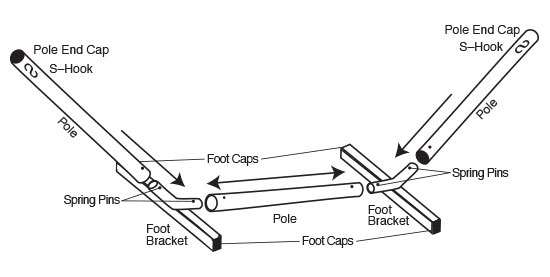
The correct hammock sag and hanging angle
Source: dfohome.com

The correct hammock sag and hanging angle

A properly hung hammock usually forms a soft curve that resembles a smile. This curve is often called a 30-degree sag, although the exact angle is not a strict rule.

The hanging straps or ropes should slope downward from the stand’s attachment points toward the center of the hammock. If the suspension lines are nearly flat, the hammock may be too tight.

A deep sag is not automatically unsafe, but it may place the user very close to the ground. A shallow sag can increase pressure on the stand and make the hammock less comfortable.
Use these visual checks:

• The hammock should not touch the ground when occupied

• The fabric should not be stretched completely flat

• The stand should remain stable when you sit down slowly

• The hooks should not bend or pull sharply

• The hammock should not slide toward one side

A simple height adjustment often fixes an uncomfortable setup. Raise or lower the suspension points in small steps rather than making a large change at once.

Measuring different types of hammocks
Source: lazydazehammocks.com

Measuring different types of hammocks

Gathered-end hammocks

Gathered-end hammocks have fabric that narrows into a rope, loop, or gathered bundle at each end. They are often flexible and forgiving.

Measure from attachment point to attachment point. Because the fabric can stretch and curve, a stand with adjustable hooks is useful.

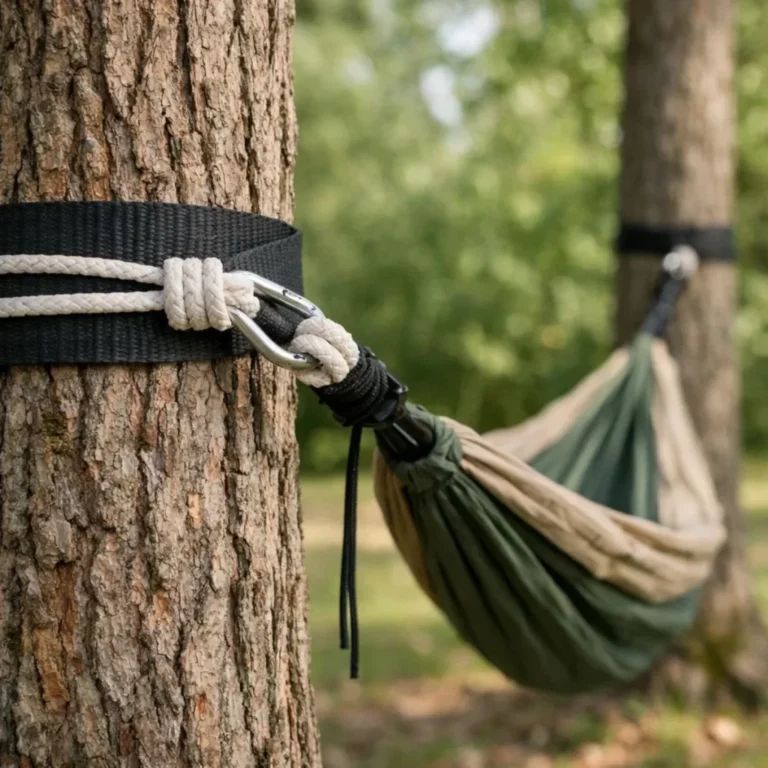
Do not measure only the visible fabric. Include the rope, webbing, or hardware that connects the hammock to the stand.

Spreader-bar hammocks

Spreader-bar hammocks have wooden or metal bars at both ends. These bars keep the hammock more open and flat.

Measure from the center of one hanging point to the center of the other. The stand must match the hammock’s required length closely because there is less room for adjustment.

A stand that is too short may bend the spreader bars or create excessive tension. A stand that is too long may leave the hammock overly loose.

Double hammocks

Double hammocks are wider and often longer than single hammocks. Their extra fabric can add weight and create more stretch.

Check both the hammock length and the stand’s weight capacity. A stand rated for one person may not be suitable for two people, even if the hammock physically reaches both hooks.

Portable and travel hammocks

Portable hammocks often use straps and may not have a fixed stand. If you use one with a stand, measure the full length of the hammock and its suspension straps.

Some travel hammocks need more space than their fabric length suggests because the straps add several feet at each end.

How much space should you leave around a hammock stand?
Source: hammockuniverse.com

How much space should you leave around a hammock stand?

A hammock stand needs more than its exact footprint. You should leave room to walk around it, sit down, and get up without hitting a wall or object.

As a practical guide, leave:

• At least 12 inches of open space around the stand’s feet

• About 24 inches of clear space on the main entry side

• Extra room if children or pets use the area

• Enough overhead clearance for trees, lights, fans, and low roofs

For an indoor hammock stand, check the ceiling height and floor strength. Avoid placing the stand where a swinging motion could hit a wall, window, shelf, or television.

For an outdoor stand, check the ground after rain. Soft soil can allow one foot to sink, which changes the stand’s level and increases the risk of tipping.

Common mistakes when measuring a hammock stand
Source: aosom.com

Common mistakes when measuring a hammock stand

Even a small measurement mistake can affect comfort and safety.

Measuring the fabric only

The fabric body is not the same as the hammock’s hanging length. Always include the attachment points and suspension hardware.

Ignoring adjustment settings

A stand may list a total length, but the useful hanging range may be smaller. Check the hook positions and adjustment holes.

Measuring on uneven ground

A stand can appear level on grass but lean after someone sits down. Test it on firm, even ground.

Forgetting the user’s weight

The hammock, stand, and hardware must support the combined load. Include the weight of every person and any items inside the hammock.

Hanging the hammock too high

A high hammock may seem safer because it cannot touch the ground. In practice, it can make entry and exit harder and increase fall distance.

Stretching the hammock tightly

A tight setup is not always better. It can create more force on the stand and may feel stiff or unstable.

Measuring only the stand length

The stand length alone does not tell you whether the hammock fits. You also need the hook-to-hook distance, hammock length, and available adjustment.

Safety checks after measuring

Correct measurements are important, but you should also inspect the stand before use.

Look for:

• Cracks, bends, rust, or loose welds

• Missing bolts, pins, washers, or locking clips

• Frayed ropes or damaged straps

• Hooks that do not close or sit correctly

• Feet that rock on the ground

• Sharp edges near the hammock fabric

Assemble the stand according to its instructions. Do not replace a load-bearing bolt with a random screw or use a weak rope as a substitute for rated hardware.

Test the stand gradually. First, press down on the hammock with your hands. Next, sit near the center while keeping one foot on the ground. If the stand shifts, creaks sharply, or lifts at one end, get off and correct the setup.

Weight limits vary by product. Treat the manufacturer’s capacity as a maximum, not a target. A safety margin is especially important for double hammocks, children, and frequent use.

A simple measurement example

Suppose your hammock measures 11 feet from one hanging loop to the other. Your chosen stand has an overall length of 12 feet 6 inches and an adjustable hook-to-hook range of 10 feet 6 inches to 12 feet.

This setup may work because the hammock length falls inside the stand’s usable range. However, you should still check the stand height and test the hammock for a safe sag.

Now imagine the same 11-foot hammock on a stand with a maximum hook distance of only 10 feet. The hammock may be pulled too tightly, even if the stand looks long enough from the outside.

This example shows why how to measure a hammock stand involves more than checking one number. The stand’s outside length, hook distance, height, and adjustment range all matter.

My practical lessons from hammock setups

One lesson I have seen repeatedly is that people measure the stand but forget the hammock’s hardware. A few inches from ropes, chains, or carabiners can change the fit.

Another common mistake is setting the hammock at the highest hook position before testing it. A lower setting often creates a better curve and makes getting in easier.

It also helps to take a photo of the stand’s measurement label before buying replacement parts or moving it to another location. Product names can look similar, but their load limits and hook ranges may differ.

The safest approach is slow and simple: measure twice, assemble once, and test the stand with light pressure before relaxing fully.

Frequently Asked Questions

How do I measure a hammock for a stand?

Measure from the center of one attachment point to the center of the other. Include ropes, loops, carabiners, or chains that remain part of the hanging system.

How much longer should a hammock stand be than the hammock?

A stand is often about 18 to 24 inches longer than the hammock, but this varies by model and hammock style. Always check the manufacturer’s recommended hammock length range.

What is the ideal height for a hammock stand?

A common starting height is 48 to 60 inches from the ground to the hanging point. Adjust it so the occupied hammock stays off the ground and remains easy to enter and exit.

Can any hammock fit any stand?

No. Hammocks differ in length, width, suspension style, and weight capacity. The hammock must fit within the stand’s hook range and stay within the stand’s rated load limit.

How do I measure a hammock stand for indoor use?

Measure the stand’s full length and width, then add walking and entry space around it. Also check ceiling height, nearby furniture, door access, and the strength of the floor.

Should a hammock be tight on its stand?

No. A hammock usually needs a relaxed curve rather than a tight, flat line. Excessive tension can reduce comfort and place extra force on the stand and hardware.

How do I know if my hammock stand is too small?

The hammock may sit too tight, the suspension lines may be nearly flat, or the fabric may pull strongly against the hooks. A stand is too small when the hammock falls outside its recommended hanging range.

Conclusion

Measuring a hammock stand means checking more than its total length. Measure the hammock from attachment point to attachment point, confirm the stand’s hook-to-hook range, check the hanging height, and mark the full floor footprint before use.

Leave room for a gentle sag, keep the stand on firm ground, and stay within the manufacturer’s weight limit. Take your time with the measurements, test the setup slowly, and make small adjustments until the hammock feels stable and comfortable. If you found this guide helpful, share your hammock measurements or explore more setup tips before your next relaxing afternoon.

Similar Posts

Leave a Reply

Your email address will not be published. Required fields are marked *