Clean an outdoor umbrella with mild soap, soft brushes, fresh water, and complete air drying.
Learning how to clean an outdoor umbrella helps protect its fabric, frame, and color from sun, rain, pollen, bird droppings, and mildew. With the right method, you can remove stains without damaging the water-resistant finish or forcing dirt deeper into the fabric.
Why You Should Clean an Outdoor Umbrella
Outdoor umbrellas face harsh conditions all year. Dust settles into the fabric, tree sap becomes sticky, and moisture can create mildew in shaded areas. Bird droppings and food stains may also leave acids that weaken or discolor the cloth.
Regular cleaning keeps the umbrella looking fresh. It can also help the fabric last longer and make the patio feel cleaner. A well-kept umbrella is like a good outdoor coat. It works better when it is clean, dry, and stored with care.
I have seen many umbrellas fail early because owners scrubbed them too hard or stored them while damp. Learning how to clean an outdoor umbrella is less about strong chemicals and more about gentle, steady care.

Check the Umbrella Before Cleaning
Start by identifying the umbrella fabric and frame material. Many outdoor umbrellas use solution-dyed acrylic, polyester, olefin, or treated canvas. Each material may have different care rules, so check the sewn-in label or the manufacturer’s instructions first.
Look for damage before adding water. Cleaning can worsen small tears, loose stitching, rust, or broken ribs.
Check these areas:
• Fabric tears, holes, or weak seams
• Loose cords, ties, and pockets
• Rust on metal ribs or the pole
• Cracks in plastic parts
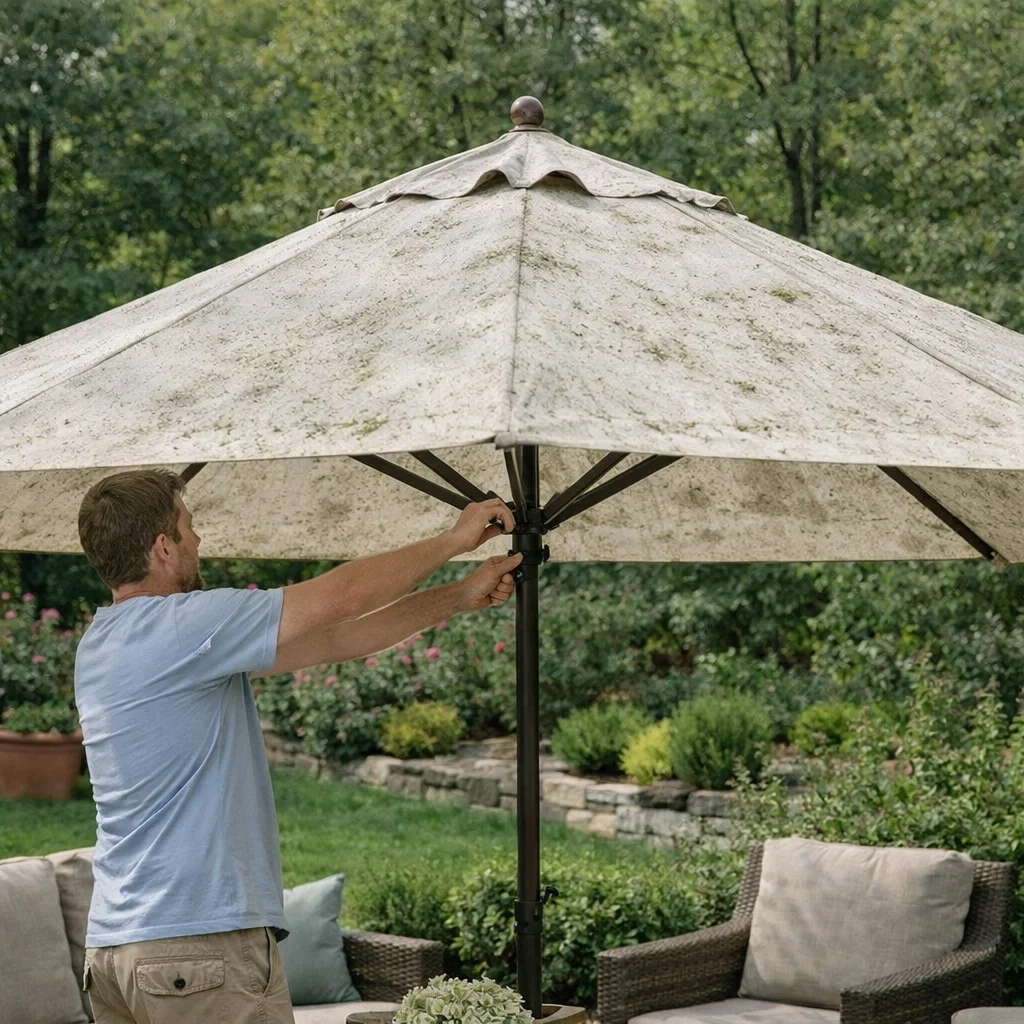
• Mold or mildew under the canopy
• A faded or peeling water-resistant coating
If the umbrella has serious damage, repair it first. Also test any cleaning mix on a hidden spot. This simple test can prevent a large color mark across the canopy.
Gather the Right Cleaning Supplies
You do not need expensive products for most outdoor umbrella stains. Mild cleaning tools are safer than harsh ones and usually work just as well.
Prepare these supplies:
• A garden hose with a gentle spray setting
• A bucket of lukewarm water
• Mild liquid dish soap or gentle laundry detergent
• A soft-bristle brush
• A clean sponge or microfiber cloth
• A soft toothbrush for seams and corners
• A clean towel
• Rubber gloves
• A dry, shaded place for air drying
Avoid steel wool, abrasive pads, pressure washers, and strong solvents. They can scratch the frame or strip protective treatments from the fabric.
Do not mix cleaning chemicals. In particular, never combine bleach with ammonia, vinegar, or other cleaners. Chemical fumes can be dangerous, and the mixture may damage the umbrella.

How to Clean an Outdoor Umbrella Step by Step
The best way to clean an outdoor umbrella is to work from loose dirt to deeper stains. Do not begin with soap while dust and grit are still on the fabric. Wet grit can act like sandpaper when you scrub.
1. Choose a Suitable Day
Pick a mild, dry day with little wind. Avoid cleaning in strong sunlight because soap can dry too fast and leave marks. Avoid cold weather if water may freeze inside the fabric or frame.
Spread a clean tarp or work on a patio that can drain well. Keep the umbrella away from muddy soil while it dries.
2. Remove Loose Dirt
Open the umbrella fully if it is safe to do so. Use a soft brush to sweep away leaves, dust, pollen, and cobwebs. Brush from the top toward the edge so dirt moves off the canopy.
You can also use a vacuum with a soft brush attachment. Keep the suction low, and do not press the nozzle against the fabric.
3. Rinse the Canopy
Rinse the umbrella with a garden hose. Use low or medium water pressure. Start at the top and work toward the bottom edge.
This step removes loose grit and helps reveal the real stains. A pressure washer may seem helpful, but its force can stretch fabric, damage stitching, and push water into seams.
4. Mix a Mild Soap Solution
Add a small amount of mild soap to lukewarm water. A useful starting point is about one tablespoon of mild detergent per gallon of water.
The water should feel slightly soapy, not thick or foamy. Too much soap can leave a film that attracts more dust.
5. Wash Small Sections
Dip a soft brush or sponge into the solution. Clean one small section at a time using gentle circular motions. Let the soap sit for about five to ten minutes, but do not let it dry on the fabric.
Pay close attention to:
• Seams and stitched edges
• The area near the pole
• Folds and fabric pockets
• Spots beneath tree branches
• Areas near outdoor dining tables
When learning how to clean an outdoor umbrella, patience matters. Several light passes are safer than one hard scrub.
6. Treat Stubborn Stains
For food, grease, or bird droppings, apply the mild soap solution directly. Let it work for several minutes, then lift the stain with a soft brush.
Remove bird droppings as soon as possible. Wear gloves, avoid dry brushing, and wash your hands after cleaning. Do not use a kitchen brush for both the umbrella and food preparation.
For tree sap, allow the spot to dry slightly. Carefully lift the residue with a plastic card, then clean the area with mild soap. Avoid scraping with a knife or metal tool.
7. Rinse Very Well
Rinse until the water runs clear and no soap bubbles remain. Soap left in the fabric can attract dirt and may create pale streaks when the umbrella dries.
Rinse both the top and underside of the canopy. Dirt often collects beneath the umbrella, especially around seams and support points.
8. Dry the Umbrella Completely
Leave the umbrella fully open in a well-ventilated, shaded area. Let air move around both sides of the fabric.
Do not close or cover the umbrella while it is damp. Trapped moisture is one of the main causes of mildew and musty odors. Drying may take several hours, depending on humidity and fabric thickness.
This full process explains how to clean an outdoor umbrella without rushing the job or damaging the material.
How to Remove Mildew From an Outdoor Umbrella
Mildew appears as black, gray, green, or white spots. It often grows when an umbrella stays damp in a closed position. A musty smell may appear before visible mildew becomes clear.
First, move the umbrella outdoors. Wear gloves and avoid shaking the fabric near doors, windows, or air vents. Brush away loose surface growth only when the fabric is dry.
For light mildew, try this method: