
Propagate an umbrella plant with a healthy stem cutting, clean tools, moist soil, and bright indirect light.
Learning how to propagate umbrella plant is simple once you understand where new roots form and how much moisture the cutting needs. The umbrella plant, often sold as Schefflera arboricola or Schefflera actinophylla, responds well to stem cuttings, air layering, and seeds. This guide explains each method, shares practical care tips, and helps you avoid the common mistakes that cause cuttings to rot.

What You Need to Know Before You Propagate an Umbrella Plant
Umbrella plants are tropical plants with strong, flexible stems and glossy leaf clusters. Dwarf umbrella plants, or Schefflera arboricola, are the most common houseplant type. Larger Schefflera species can also grow from cuttings, but they may need more space and warmth.
The best way to propagate an umbrella plant for most home growers is through stem cuttings. This method is faster and more reliable than growing from seed. It also creates a new plant that is genetically identical to the parent plant.
A healthy parent plant is the first key to success. Choose one with firm stems, rich green leaves, and no signs of pests or disease. Avoid taking cuttings from a weak plant, because stressed stems often struggle to form roots.
The ideal time to propagate an umbrella plant is during spring or early summer. Warm temperatures and longer days support faster root growth. You can still take cuttings indoors during other seasons, but growth may be slower.
Best Methods to Propagate an Umbrella Plant
You can propagate an umbrella plant in three main ways:
• Stem cuttings are the easiest method for most indoor growers.
• Air layering works well for thick, woody stems and larger plants.
• Seeds are possible but less common and usually take longer.
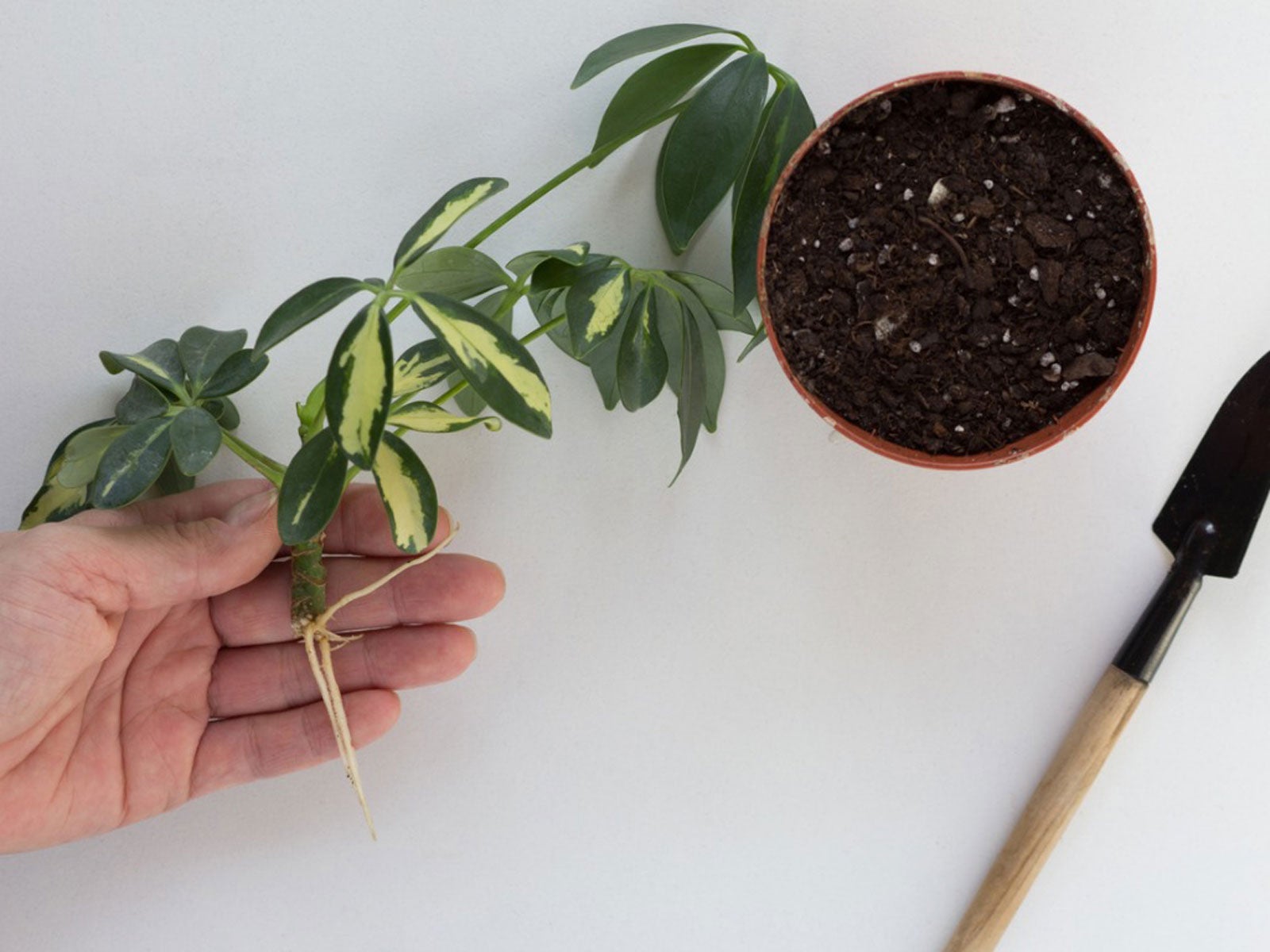
Stem cuttings offer the best balance of speed, cost, and success. A cutting can often begin rooting within a few weeks when it receives warmth, humidity, and soft light.
Air layering is useful when a plant has become tall or bare. It allows roots to form on the stem before you remove the new plant. This method causes less stress to a large cutting because the stem still receives water from the parent plant while roots develop.
Seed propagation is less predictable. Indoor umbrella plants may not flower, and seeds can vary in quality. Seed-grown plants may also differ from the parent plant in size, leaf form, or growth habit.
How to Propagate Umbrella Plant From Stem Cuttings
Stem cuttings are the most popular way to propagate umbrella plant. Follow these steps for a strong start.
1. Gather the right supplies
You need a few basic items:
• A clean, sharp pruning shear or knife
• A small pot with drainage holes
• A loose rooting mix
• Clean water
• A clear plastic bag or humidity dome
• A plant label
For the rooting mix, use a blend that drains well. Equal parts of perlite and peat-free potting mix work well. You can also use perlite mixed with coco coir. The goal is to hold some moisture without becoming wet and heavy.
Clean tools matter. Wipe the blade with rubbing alcohol before and after cutting. A dirty blade can spread bacteria or fungi through the fresh wound.
2. Choose a healthy stem
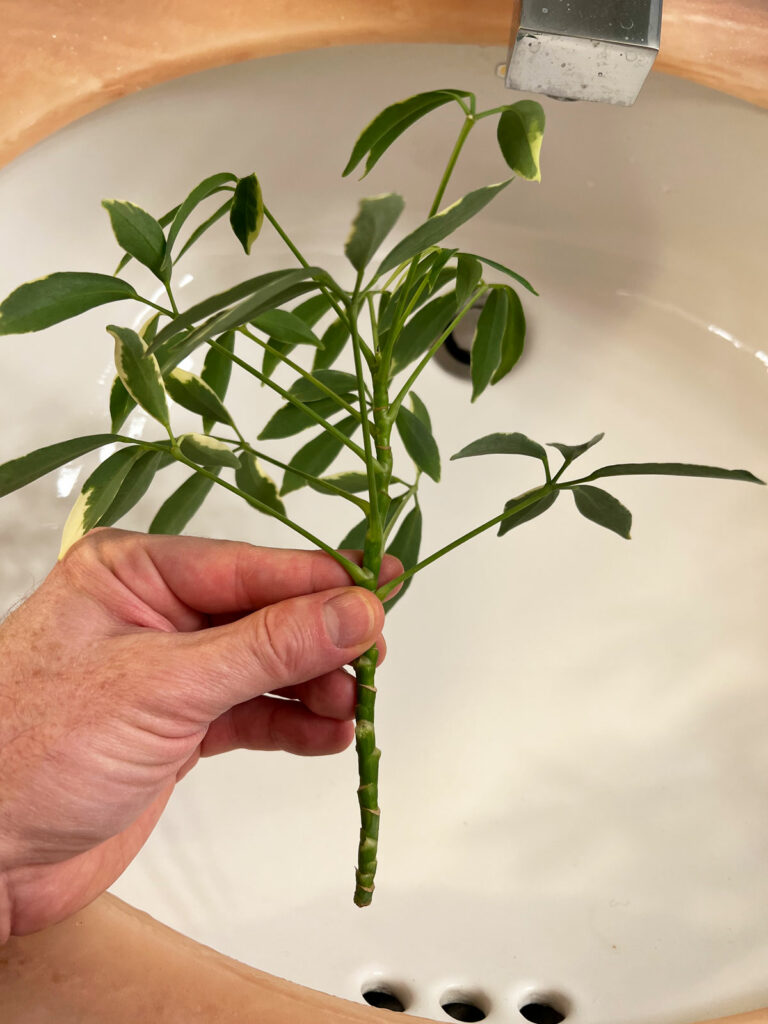
Look for a stem that is firm and partly mature. It should not be very soft, pale, or damaged. A stem with several leaves and at least one node offers the best chance of rooting.
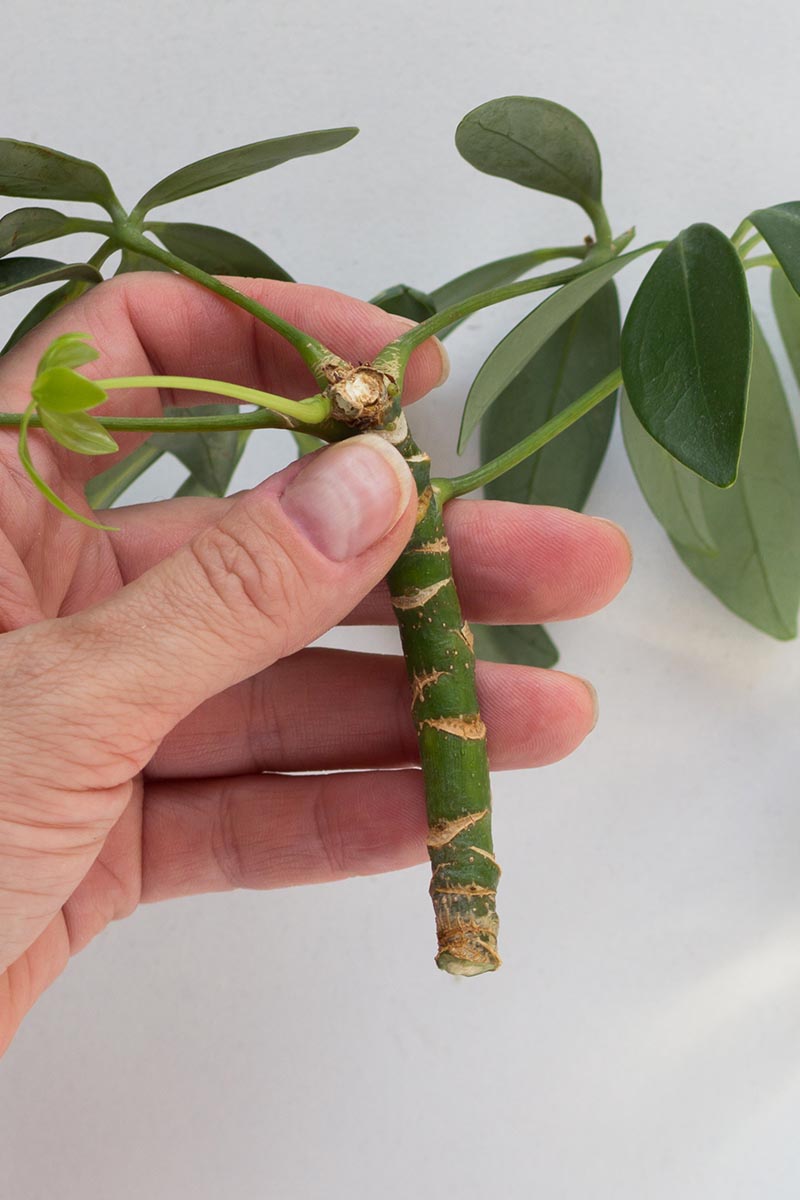
A node is the small point where a leaf joins the stem. New roots often emerge from this area. A cutting without a node usually cannot develop into a complete plant.
Take a cutting that is about 4 to 6 inches long. Make the lower cut just below a node. A clean, angled cut gives you a clear lower end and helps you remember which side goes into the soil.
3. Prepare the cutting
Remove the lower leaves from the stem. Leave two or three leaf clusters at the top. Too many leaves make the cutting lose water faster than it can replace it.
If the remaining leaves are large, you can cut them in half. This reduces water loss and helps the cutting focus its energy on root growth. Do not remove every leaf, because the cutting still needs leaves to make energy.
Some gardeners use rooting hormone. It is optional for umbrella plant cuttings. A small amount of powder or gel may support root formation, but clean conditions, warmth, and correct moisture matter more.
4. Plant the cutting
Make a hole in the rooting mix with a pencil or clean stick. Place the lower node below the surface. Press the mix gently around the stem so it stands upright.
Do not bury the leaves. Leaves under the soil may decay and spread rot. One buried node is often enough, although you can place two nodes below the mix if the stem is long.
Water the mix lightly after planting. It should feel evenly moist but not soaked. If water collects at the bottom of the pot, empty the saucer.
5. Create a warm, humid space
Cover the pot with a clear plastic bag or place it inside a humidity dome. Keep the cover from touching the leaves. A few support sticks can hold the plastic above the cutting.
Place the pot in bright, indirect light. Direct afternoon sun can heat the covered pot and scorch the leaves. A warm windowsill with filtered light or a grow light several inches above the plant works well.
Open the cover for a few minutes each day. This allows fresh air to enter and lowers the risk of mold. If the mix feels wet, wait before watering again.
6. Check for roots
Rooting may take three to eight weeks. Gentle resistance often means roots have started to form. Do not pull the cutting up to check, since fragile roots can break easily.
New leaf growth is another good sign. Once the cutting has several healthy roots and begins growing, move it into a regular houseplant mix. Introduce it to normal room humidity over several days.

How to Propagate an Umbrella Plant in Water
Water propagation is a simple way to watch roots develop. It can work well for umbrella plant cuttings, especially when you are learning how propagation works.
Start with a healthy cutting made just below a node. Remove the lower leaves, then place the stem in a clean glass of room-temperature water. Keep the leaves above the water line.
Place the glass in bright, indirect light. Change the water every few days, or sooner if it becomes cloudy. Clean water gives the cutting more oxygen and reduces the risk of bacterial growth.
Roots may appear in two to six weeks. Wait until the roots are about 1 to 2 inches long before moving the cutting into soil. Short, fragile roots may struggle during the transition.
When you pot the rooted cutting, use moist, well-draining soil. Keep the soil slightly moist for the first week. Water-grown roots are adapted to constant moisture, so they need time to adjust to a soil environment.
Water propagation is useful, but it has limits. Roots formed in water can be thinner and less suited to soil than roots formed directly in a rooting mix. For long-term strength, many growers prefer starting cuttings in soil or perlite.

How to Propagate an Umbrella Plant by Air Layering
Air layering is a good choice for a tall umbrella plant with a bare stem. It lets the stem develop roots before you cut it from the parent plant.
Choose a healthy section of stem with at least one node. Make a shallow cut into the stem just below the node. Do not cut all the way through the stem.
Apply a small amount of damp sphagnum moss around the cut area. Wrap the moss with clear plastic and secure both ends with plant ties or soft wire. The moss should stay damp, but it should not drip water.
Keep the plant in bright, indirect light. Check the moss each week and add a little water if it dries. Roots may take several weeks or longer to appear.
Once you see a good cluster of roots, cut below the new roots. Remove the plastic carefully and plant the rooted section in a small pot. Keep it in warm, indirect light while it adjusts.
Air layering takes more time than a simple cutting, but it can save a leggy plant. It also gives a large stem a better chance to survive than a short cutting with few leaves.
How to Propagate an Umbrella Plant From Seeds
Growing an umbrella plant from seed is less common for indoor gardeners. Seeds must be fresh, and germination can be uneven.
Sow the seeds in a fine, well-draining seed mix. Cover them lightly, since deep planting can prevent small seedlings from reaching the surface. Keep the mix warm and evenly moist.
A clear cover can help retain humidity. Remove it for a short time each day to improve air flow. Bright, indirect light supports healthy seedlings, but strong direct sun can dry the seed mix.
Seedlings may take several weeks to emerge. Once they have a few true leaves, move them into individual pots. Handle the roots gently because young seedlings are delicate.
The main advantage of seed propagation is variety. The main disadvantage is uncertainty. A seed-grown plant may not look exactly like the parent plant, especially if the parent was a selected cultivar.
The Best Soil, Light, and Humidity for New Cuttings
A new umbrella plant needs balance. It needs moisture, but excess water can suffocate roots and encourage rot.
Use a pot with drainage holes and a loose potting mix. A suitable mix may include:
• Two parts quality indoor potting mix
• One part perlite
• One part orchid bark or coco coir
Place new cuttings in bright, indirect light. Light filtered through a sheer curtain is ideal. If the stem becomes weak and stretched, it may need more light. If the leaves turn pale or develop scorched patches, move it farther from the window.
Warmth also supports root growth. Aim for room temperatures between 70 and 80 degrees Fahrenheit when possible. Avoid cold drafts, air-conditioning vents, and sudden temperature changes.
Humidity can help, but a sealed, constantly wet space can cause fungal problems. A loose humidity cover with daily ventilation is safer than trapping still, damp air around the cutting.
Common Problems When You Propagate an Umbrella Plant
Propagation problems often come from too much water, poor light, or an unhealthy cutting.
The cutting turns black or soft
This usually points to stem rot. Remove the cutting from the mix and inspect it. If part of the stem remains firm, cut above the damaged area with a sterilized blade and restart it in fresh mix.
The leaves wilt
Some wilting is normal after taking a cutting. Severe or lasting wilting often means the cutting is losing water too quickly. Remove extra leaves, increase humidity, and keep it away from direct sun.
The cutting does not root
The stem may lack a node, or the plant may be too cold or dark. Check that at least one node is below the soil or water. Keep the cutting warm and give it bright, filtered light.
Mold appears on the soil
Mold often develops when the mix stays too wet and air cannot move. Remove the cover for longer periods, reduce watering, and replace heavily affected mix if needed.
Leaves turn yellow
One yellow leaf is not always serious. Several yellow leaves may indicate overwatering, poor drainage, or stress from a sudden change in conditions. Let the top layer of mix dry slightly before watering again.
In my propagation work, the most common mistake has been treating a cutting like a mature plant. A mature umbrella plant can use a larger amount of water, but a cutting has few or no roots. I get better results when I keep the mix lightly moist rather than fully wet.

When to Transplant a Rooted Umbrella Plant Cutting
Do not rush to transplant. A cutting needs a useful root system before it moves into a larger pot.
Look for these signs:
• New leaves are forming.
• The cutting resists a gentle tug.
• White or light-colored roots fill part of the rooting mix.
• The plant remains firm between waterings.
Move the cutting into a pot only slightly larger than its root ball. A very large pot holds extra water and increases the chance of root rot.
Water the new plant after transplanting, then let excess water drain. Keep it in bright, indirect light for about one week. After that, slowly return it to its normal growing spot.
Fertilize lightly only after the cutting shows active growth. A diluted, balanced houseplant fertilizer can support new leaves. Avoid strong fertilizer on a fresh cutting because its roots are still sensitive.
How to Care for the New Umbrella Plant
Once established, an umbrella plant is fairly easy to care for. Let the top inch of soil dry before watering in most indoor conditions. Water deeply, then allow the excess to drain.
Rotate the pot every week or two. This helps the plant grow evenly instead of leaning toward the window. Prune tall stems above a leaf node if you want a fuller shape.
Watch for common houseplant pests. Spider mites, scale, and mealybugs may appear when plants are stressed or air is very dry. Inspect the leaf undersides and stem joints regularly.
If you see pests, isolate the plant. Wipe the leaves with a damp cloth and use an appropriate insecticidal soap according to its label. Repeat treatment as directed, since one application may not affect every life stage of a pest.
Umbrella plants can be harmful if pets chew them. Their tissues contain calcium oxalate crystals, which may cause mouth irritation, drooling, vomiting, or difficulty swallowing. Keep new and mature plants away from cats, dogs, and children who may chew leaves.
PAA Questions About Umbrella Plant Propagation
Can you propagate an umbrella plant from a leaf?
No, a leaf alone usually cannot grow into a complete umbrella plant. Use a stem cutting with at least one node, because the node contains the tissue needed for new roots and shoots.
How long does it take to propagate an umbrella plant?
Most stem cuttings take about three to eight weeks to root under warm, bright, humid conditions. Growth may take longer in winter or when the cutting receives too little light.
Is it better to propagate an umbrella plant in water or soil?
Both methods can work. Water makes root growth easy to observe, while soil or perlite often produces roots that adjust more easily to long-term pot growth.
Can you propagate an umbrella plant from a bare stem?
Yes, if the bare stem includes a healthy node. Plant the node in moist, well-draining mix and keep the cutting warm with bright, indirect light.
Why is my umbrella plant cutting dying?
The most common causes are stem rot, dry air, cold temperatures, and direct sun. Use a clean cutting, avoid soggy soil, and provide steady warmth with filtered light.
Should you use rooting hormone on an umbrella plant cutting?
Rooting hormone is optional. It may help in some cases, but clean tools, a healthy node, proper moisture, and warm conditions usually have a greater effect on success.
Conclusion
The easiest way to propagate an umbrella plant is to take a healthy stem cutting with at least one node. Root it in water, soil, or perlite, then provide warmth, bright indirect light, moderate humidity, and careful watering. Air layering is a useful option for tall plants, while seeds offer a slower and less predictable path.
Start with one cutting from a healthy parent plant, and do not worry if the first attempt takes time. With patience and steady care, you can turn one attractive umbrella plant into several new plants. Try the method that best fits your space, then share your propagation results or explore more houseplant care guides.

Zayden Halbrook is a travel enthusiast and gear researcher passionate about making every journey smoother and more enjoyable. With a keen eye for practical travel essentials and real-world tips, he helps readers choose the right gear and travel smarter. When he’s not testing travel kits or exploring new destinations, Zayden shares simple, reliable advice to make every trip stress-free.