Yes, you can wash many backpacks safely, but the care label and fabric decide the best method.
A backpack collects dust, sweat, food crumbs, and daily grime, so cleaning it can make a big difference. The key is knowing when to hand wash, when to use a washing machine, and when water could damage the bag.
This guide explains can i wash a backpack safely, with clear steps for canvas, nylon, polyester, leather, and school backpacks. You will also learn how to remove stains, control odors, dry the bag, and avoid common cleaning mistakes.
Can I Wash a Backpack Safely?
In most cases, yes, you can wash a backpack. Many everyday backpacks are made from nylon, polyester, or canvas, which can handle gentle cleaning. However, not every backpack should go into a washing machine.
Before washing, check the care label. It may say “machine washable,” “hand wash only,” or “spot clean only.” If there is no label, treat the backpack gently and choose hand washing.
A backpack may contain parts that do not react well to water, such as:
• Leather trim
• Metal frames
• Foam padding
• Waterproof coatings
• Glued decorations
• Electronic charging ports
• Rigid plastic panels
The safest general rule is simple: use the least aggressive cleaning method that will solve the problem. Light dirt may need only a damp cloth, while deep grime may require a full hand wash.
Check the Backpack Care Label First
The care label gives the best instructions for washing a backpack. Look inside the main compartment, near the side seam, or beneath a small fabric tag.
Pay attention to these common symbols and phrases:
• Hand wash: Clean the bag in a basin with mild soap and cool water.
• Machine wash: Use a gentle cycle, cold water, and a low spin speed.
• Do not wash: Use spot cleaning only.
• Do not bleach: Avoid chlorine and oxygen bleach products.
• Do not tumble dry: Air-dry the backpack instead.
• Do not iron: Heat may melt synthetic fibers or damage coatings.
If the label warns against soaking, do not place the entire bag in water. Instead, clean one area at a time with a damp cloth.
It also helps to test a hidden spot. Apply a small amount of diluted detergent to an inside seam. Wait a few minutes, then check for fading, bleeding, or a sticky texture.
Prepare the Backpack Before Washing
Good preparation lowers the risk of damage. It also makes cleaning faster because you remove loose dirt before adding water.
Follow these steps before you wash a backpack:
-
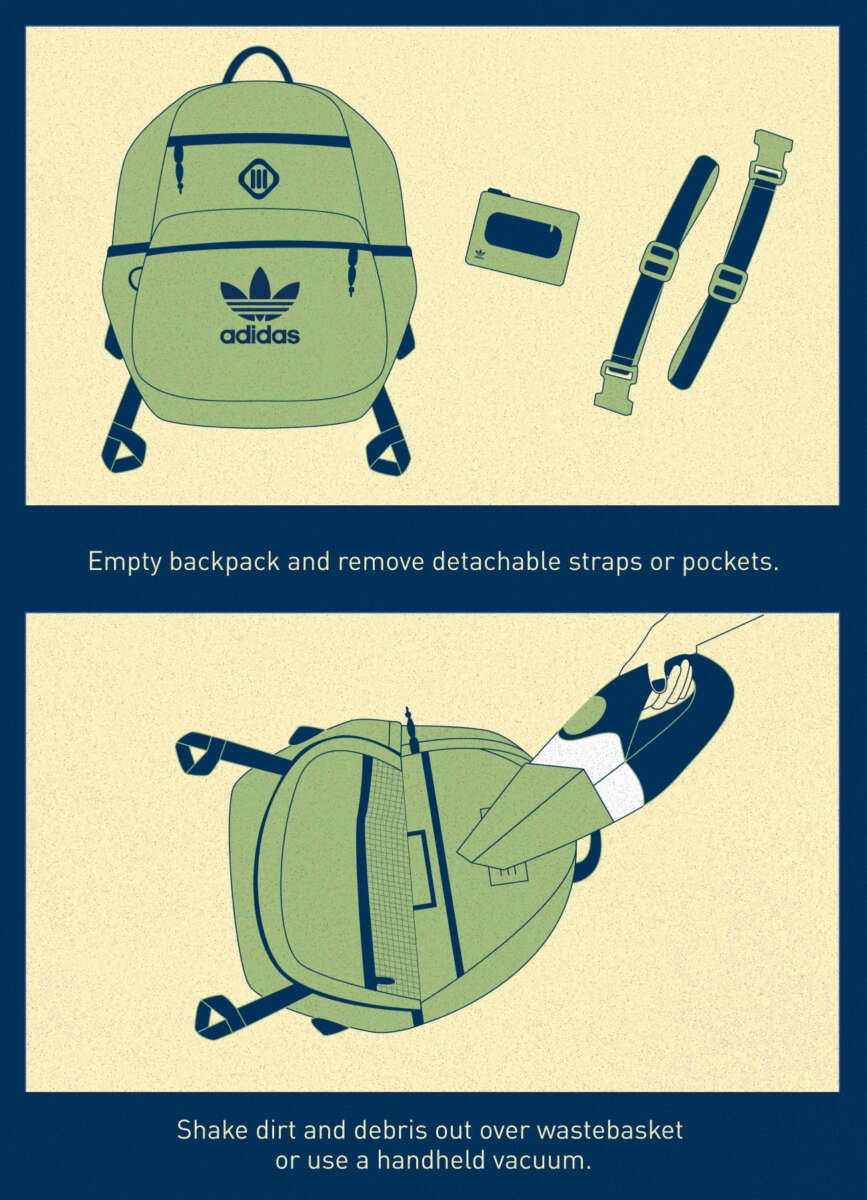
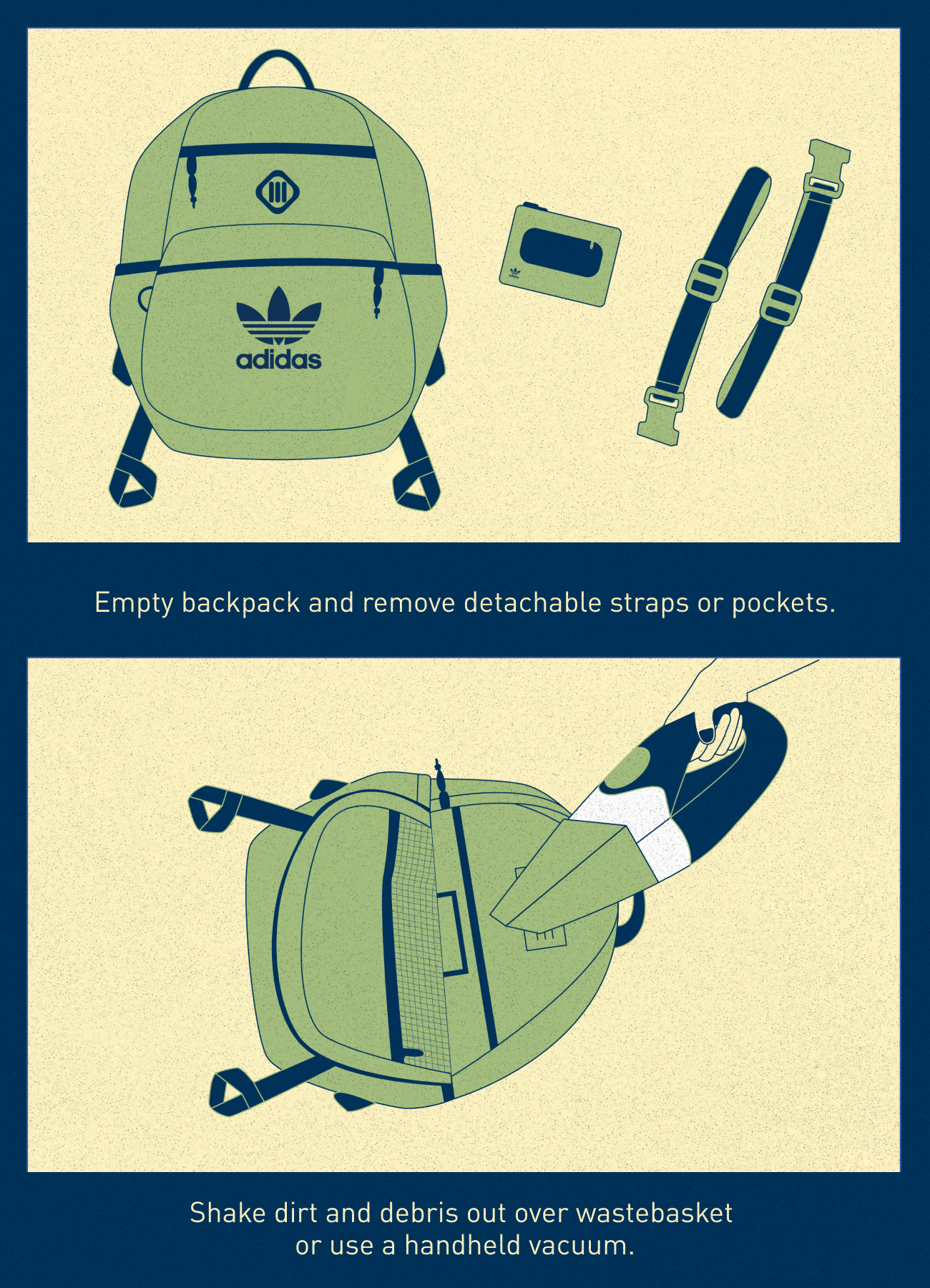
Empty every pocket. Check small zipper areas, laptop sleeves, and hidden compartments.
-
Shake the bag upside down over a trash can to remove crumbs and sand.
-
Use a vacuum with a brush attachment to lift dust from the lining.
-
Remove detachable straps, hip belts, key chains, and hard inserts.
-
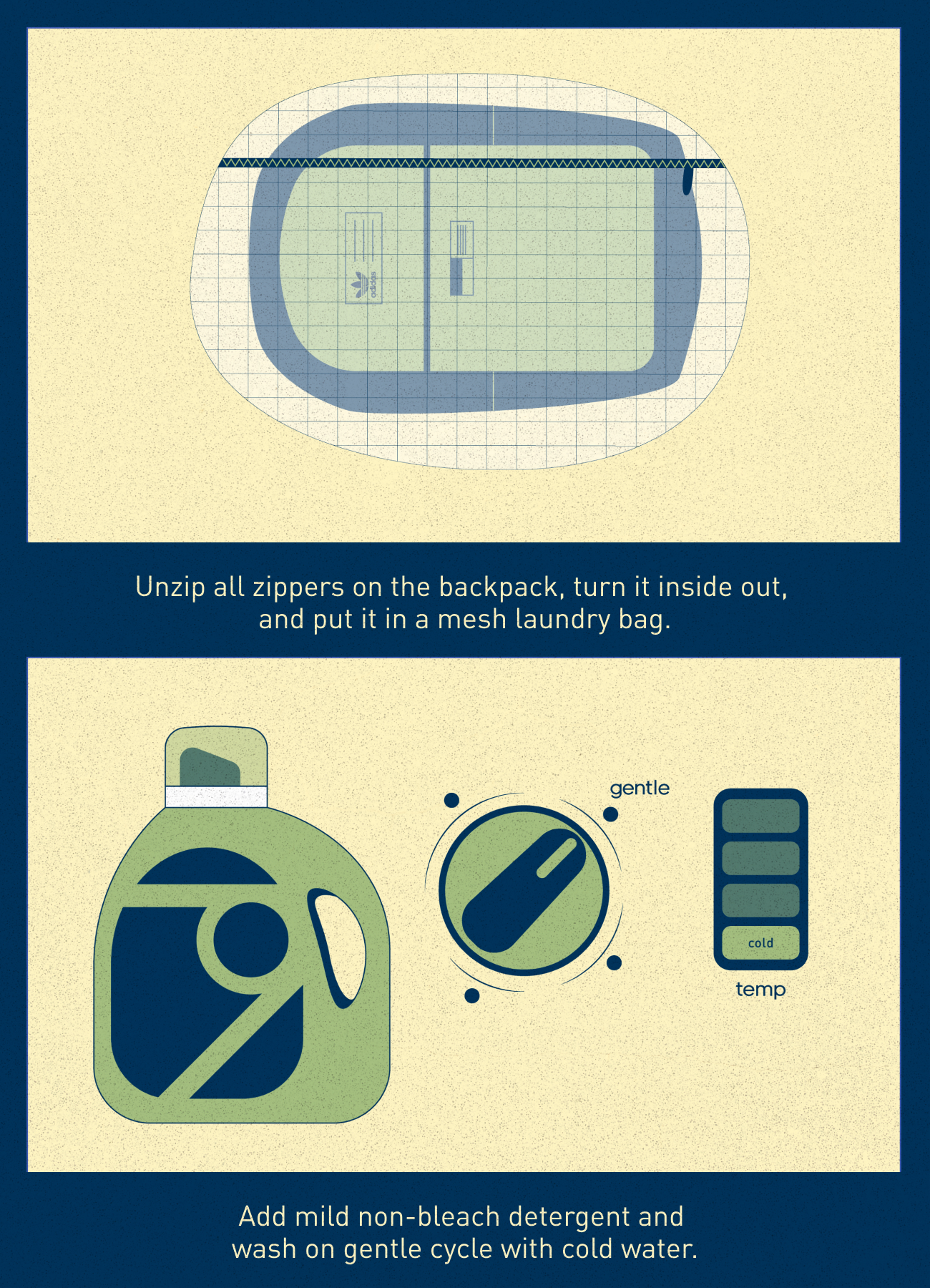
Open all zippers and turn the bag inside out if possible.
-
Brush away dried mud with a soft brush.
-
Treat visible stains before the main wash.
Do not pull hard on loose threads or damaged seams. Washing can make a weak seam open further, much like rain can reveal a small crack in a roof.

How to Hand Wash a Backpack
Hand washing is usually the safest answer to can i wash a backpack. It gives you control over water temperature, pressure, and soaking time.
You will need:
• A bathtub, sink, or large basin
• Cool or lukewarm water
• Mild liquid laundry detergent
• A soft brush or clean toothbrush
• Several clean towels
• A well-ventilated drying area
Use only a small amount of detergent. Too much soap can leave a sticky film inside the bag and may attract more dirt later.
Follow these steps:
-
Fill a basin with cool or lukewarm water.
-
Add a teaspoon of mild detergent and mix it well.
-
Dip a clean cloth into the solution and test the fabric.
-
If the fabric reacts well, gently wet the backpack.
-
Rub dirty areas with a soft brush or cloth.
-
Pay extra attention to shoulder straps, the bottom panel, and pocket edges.
-
Rinse the bag with clean water until no soap remains.
-
Press the backpack between towels to remove excess water.
Avoid twisting or wringing the bag. That pressure can bend the frame, stretch the fabric, and damage the seams.
Can I Wash a Backpack in a Washing Machine?
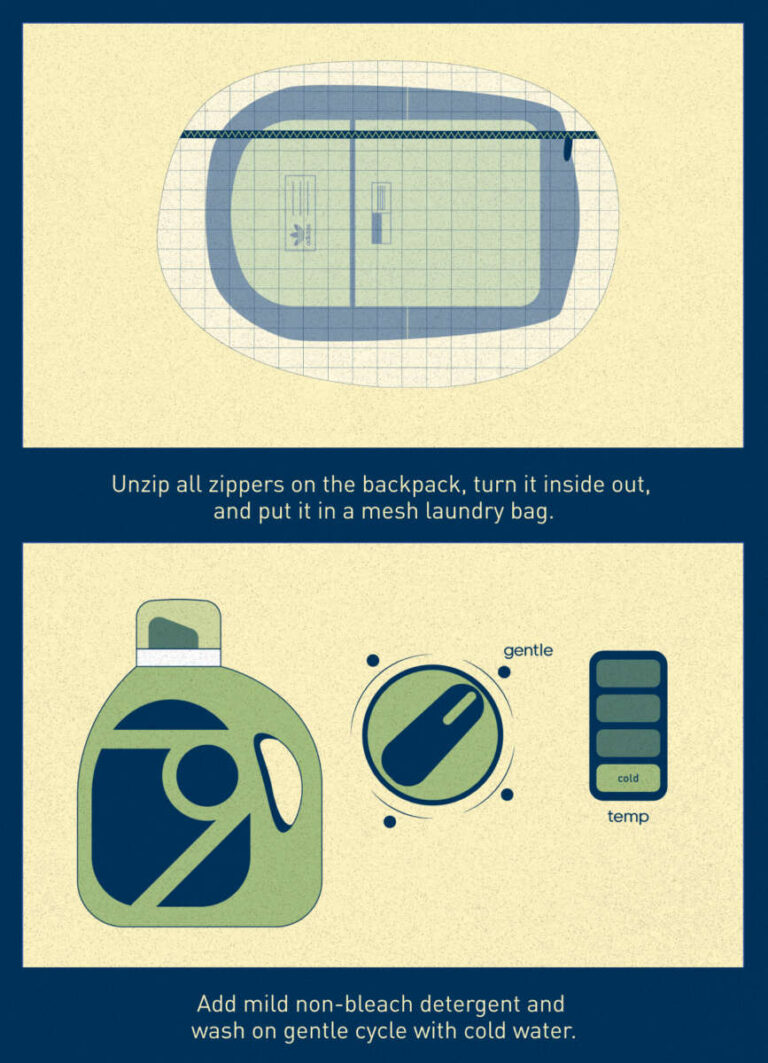
You may be able to wash a backpack in a washing machine if the care label allows it. Soft backpacks made from nylon or polyester often tolerate a gentle cycle. Still, hand washing remains the lower-risk choice.
Before using a washing machine, remove all inserts and accessories. Place the backpack inside a large mesh laundry bag or an old pillowcase. This helps protect zippers and straps from catching on the drum.
Use these settings:
• Cold water
• Gentle or delicate cycle
• Low spin speed
• Mild liquid detergent
• No bleach
• No fabric softener
Do not wash the backpack with heavy items such as jeans, towels, or shoes. These items can hit the bag and cause dents or tears.
When the cycle ends, remove the backpack at once. Do not leave it wet in the washer. A damp, closed bag can develop a musty smell within hours.
How to Remove Backpack Stains and Odors
Different stains need different treatments. Start with gentle cleaning before trying stronger products.
For common stains, use these methods:
• Dirt and dust: Brush the area when dry, then wipe it with diluted detergent.
• Food stains: Remove solid pieces, blot the spot, and clean with mild soap.
• Grease: Apply a small amount of dish soap to the stain, then rinse well.
• Ink: Blot carefully with a damp cloth and test any stain product on a hidden area first.
• Sweat: Wash shoulder straps and back panels with diluted detergent.
• Mildew: Do not hide the smell with fragrance. Clean the bag, rinse it well, and dry it fully in fresh air.
Never mix bleach with ammonia, vinegar, or other cleaners. Dangerous gases can form. Also avoid pouring strong stain removers directly onto colored fabric.
For odors, baking soda can help when used carefully. Sprinkle a small amount inside the dry backpack, leave it overnight, and vacuum it out the next day. Do not use this method if the manufacturer warns against powders.
How to Dry a Backpack After Washing
Drying is just as important as washing. A backpack that stays damp may smell bad, grow mildew, or lose its shape.
After you wash a backpack:
-
Press it gently with clean towels.
-
Open every zipper and pocket.
-
Hang it upside down or place it in a way that supports its shape.
-
Dry it in a shaded, well-ventilated area.
-
Turn it from time to time so air reaches all sides.
Avoid direct high heat. Do not place the backpack in a clothes dryer unless the care label clearly allows it. Do not use a hair dryer on a hot setting, and do not leave the bag on a hot radiator.
Sunlight can help reduce some odors, but strong, long exposure may fade colored fabric and weaken certain coatings. Bright shade with good airflow is often the safest option.
Make sure the inside is fully dry before storing the backpack. Check the bottom corners, padded laptop sleeve, and inner pockets because these areas often hold moisture.
Can I Wash Different Types of Backpacks?
The material affects whether and how you can wash a backpack. Always follow the brand’s instructions when they are available.
Nylon and Polyester Backpacks
Nylon and polyester backpacks are often the easiest to clean. You can usually hand wash them with cool water and mild detergent. Some may be machine washable, but avoid hot water because it can affect coatings, color, or shape.
Canvas Backpacks
Canvas can often be hand washed. It may shrink, fade, or become stiff if exposed to hot water or strong cleaners. Air-dry canvas naturally and reshape it while it is still slightly damp.
Leather Backpacks
Do not soak leather backpacks. Wipe the surface with a soft, slightly damp cloth, then use a leather cleaner or conditioner made for that type of leather. Test the product in a hidden place first.
Suede Backpacks
Suede needs special care. Use a suede brush and a product made for suede. Water can leave marks and change the texture, so full washing is usually not suitable.
School Backpacks
Many school backpacks are nylon or polyester and can be hand washed. Empty pencil crumbs, check every pocket, and pay close attention to the bottom because it often carries the most dirt.
Hiking Backpacks
Hiking backpacks may include frames, technical coatings, and padded support systems. Remove the frame if the design allows it, then follow the manufacturer’s instructions. Avoid harsh detergent because it may reduce water resistance.
Backpacks With Electronics
Never soak a backpack with built-in batteries, charging ports, lights, or speakers. Remove the electronic parts if possible and clean the bag with a barely damp cloth.
How to Protect a Backpack While Cleaning It
A clean backpack should still keep its shape and function. Gentle handling helps protect its useful features.
Keep these tips in mind:
• Do not scrub printed logos with a stiff brush.
• Do not force zippers that are stuck.
• Do not soak bags with glued decorations.
• Do not use fabric softener on water-resistant materials.
• Do not apply waterproofing spray until the backpack is clean and completely dry.
• Do not place heavy objects inside while the bag dries.
If a zipper feels rough after cleaning, let the area dry first. Then apply a zipper lubricant that is safe for the zipper material. Avoid oily products that can stain the fabric.
A backpack’s water resistance may weaken over time, even with careful washing. If water no longer beads on the surface, a compatible waterproofing spray may restore some protection. Follow the product directions and test it first.
Common Mistakes to Avoid When Washing a Backpack
Many backpack problems happen because people clean too aggressively. More soap, hotter water, and harder scrubbing do not always mean better results.
Avoid these mistakes:
• Washing without emptying every pocket
• Using hot water
• Adding too much detergent
• Using bleach on colored fabric
• Scrubbing delicate mesh
• Wringing the backpack
• Drying it on high heat
• Storing it while damp
• Ignoring leather or electronic parts
• Skipping a colorfastness test
One mistake I often see is putting a backpack straight into the washer because it looks like ordinary clothing. The bag may come out clean, but bent padding, damaged straps, or a peeled coating can turn a small cleaning job into an expensive repair.
A slower method usually works better. Clean the dirtiest areas first, use less water, and allow enough time for complete drying.
How Often Should You Wash a Backpack?
There is no single schedule for every backpack. A school bag used every day may need spot cleaning every week and a deeper clean every few months. A travel backpack may need cleaning after each dusty or muddy trip.
Clean your backpack when you notice:
• Visible stains
• A strong odor
• Sticky shoulder straps
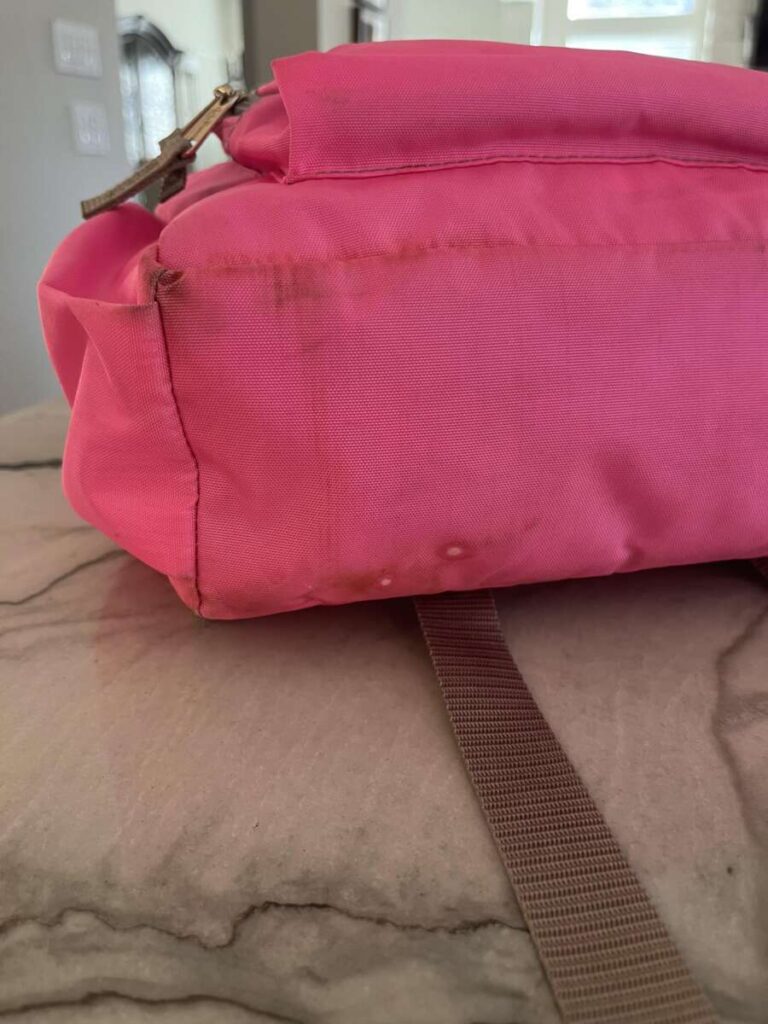
• Dirt along the bottom
• Food residue inside pockets
• Sweat buildup on the back panel
Frequent full washing may shorten the life of some materials. Regular emptying, vacuuming, and spot cleaning can reduce the need for deep washing.
For daily care, wipe small spills quickly. Fresh stains are easier to remove than old stains that have dried into the fibers.
Frequently Asked Questions About Can I Wash a Backpack
Can I wash a backpack with regular laundry detergent?
Yes, but use only a small amount of mild liquid detergent. Strong detergent, bleach, and fabric softener may damage color, coatings, or synthetic fibers.
Can I put a backpack in the dryer?
Usually, no. High heat can shrink fabric, warp padding, damage plastic parts, and weaken waterproof coatings, so air-drying is the safer choice.
Can I wash a backpack without a care label?
Yes, but use the gentlest method. Hand wash with cool water, mild soap, and a soft cloth, then test a hidden area before cleaning the whole bag.
Can I wash a backpack with leather parts?
Do not soak it. Clean the fabric carefully with a damp cloth and treat the leather separately with a suitable leather cleaner.
How long does a backpack take to dry?
A backpack may take 12 to 24 hours to dry, depending on its padding, fabric, and airflow. Open every pocket and do not store it until the thickest areas feel completely dry.
Can I wash a backpack that smells bad?
Yes, if the material allows washing. Clean it with mild detergent, rinse away all soap, and dry it fully in fresh air; persistent mildew may require professional cleaning or replacement.
Conclusion
So, can i wash a backpack? In many cases, yes, but the safest method depends on the care label, material, and construction. Hand washing with cool water and mild detergent is usually the best starting point, while leather, suede, electronics, and rigid frames need extra care.
Empty the bag, test a hidden area, avoid harsh chemicals, and let it air-dry completely. These simple steps can remove dirt and odors without shortening the backpack’s life.
Check your backpack’s care label today, clean it gently, and share your best backpack-care tip in the comments.

Zayden Halbrook is a travel enthusiast and gear researcher passionate about making every journey smoother and more enjoyable. With a keen eye for practical travel essentials and real-world tips, he helps readers choose the right gear and travel smarter. When he’s not testing travel kits or exploring new destinations, Zayden shares simple, reliable advice to make every trip stress-free.