
Stay warm in a hammock by insulating beneath you, blocking wind, layering clothing, and keeping moisture away.
Learning how to stay warm in a hammock is less about adding thick blankets and more about stopping heat loss from below. Your sleeping bag can keep your top warm, but hammock fabric compresses insulation under your body. This guide explains the best hammock insulation, clothing, setup methods, and safety tips for cool-weather camping.
Why Hammocks Feel Colder Than Tents
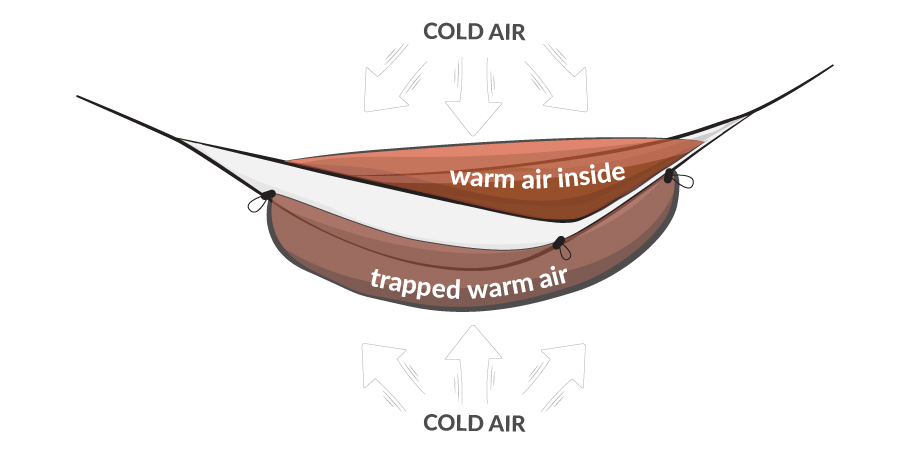
A hammock exposes your body to moving air on every side. In a tent, the ground can block some wind and hold a small amount of heat. In a hammock, cold air flows beneath you and removes warmth through conduction and convection.
The biggest problem is often “cold butt syndrome.” Your sleeping bag may feel warm on top, but your weight crushes the insulation beneath your back and hips. Once that insulation loses its loft, it cannot trap warm air well.
How to stay warm in a hammock starts with understanding the three main ways your body loses heat:
• Conduction happens when your body transfers heat to a cold surface or fabric.
• Convection happens when moving air carries warmth away from your skin.
• Evaporation happens when sweat or damp clothing cools as moisture dries.
Wind makes each problem worse. Even a mild breeze can make a hammock feel much colder than the air temperature suggests.
Use Insulation Under Your Body
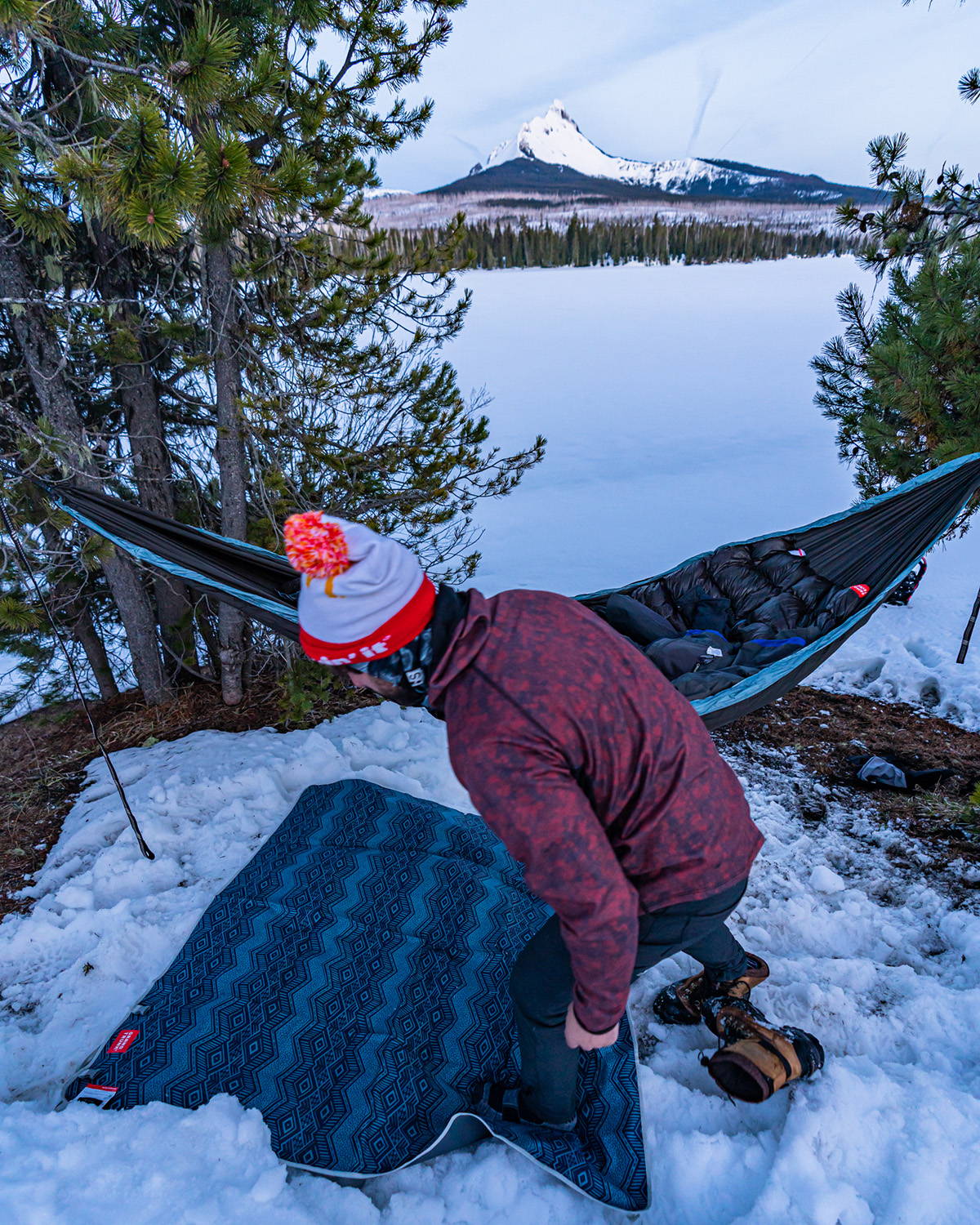
The most important rule for how to stay warm in a hammock is simple: insulate the underside of your body.
A sleeping bag alone is not enough for most cool nights. Your weight compresses the insulation beneath you, leaving little loft to trap warm air. You need a separate layer that stays effective under pressure.
The best options include:
Underquilts
A hammock underquilt hangs outside and beneath the hammock. It wraps around your back, shoulders, and legs without being crushed by your body weight. This allows the insulation to keep its loft.
An underquilt is often the most comfortable solution for regular hammock camping. Choose one that matches the expected temperature, your hammock length, and your body size.
Check these features before buying:
• A snug fit around the hammock edges
• Adjustable shock cords at the head and foot
• Enough width to cover your shoulders
• A temperature rating suited to your trip
• A draft collar or end cinch to block cold air
Sleeping pads
A sleeping pad can work well in a hammock, especially when you already own one. Closed-cell foam pads are affordable and do not lose air. Inflatable pads are lighter and often more comfortable, but they can shift or create a slippery sleeping surface.
Look for a pad with a higher R-value for cold weather. R-value measures resistance to heat flow. A higher number generally means better insulation, although fit and wind protection also matter.
A pad designed for hammock use may have wings or a wider shape. These features help protect your shoulders and hips from cold gaps.
Quilts or blankets
A thick wool blanket, fleece blanket, or emergency bivy can add warmth under you. However, these items may move during the night and leave cold spots. They work best as backup layers rather than your only insulation.
For mild weather, a foam pad plus a light blanket may be enough. For freezing temperatures, a properly fitted underquilt is usually safer and more reliable.

Choose the Right Top Insulation
After insulating below you, protect the top of your body. A sleeping bag, top quilt, or layered blanket can trap warm air around your torso and legs.
A top quilt often works well in a hammock because it has no bulky underside. You can drape it over your body and use the extra space to reduce compression. A sleeping bag also works, but it may feel tight when you lie diagonally.
When choosing top insulation, consider:
• The lowest expected nighttime temperature
• Your personal comfort level
• The difference between a comfort rating and a survival rating
• Whether you sleep warm or cold
• The amount of moisture likely in the forecast
Temperature ratings are not guarantees. Manufacturers may use different testing methods, and women or cold sleepers may need more warmth than a rating suggests. For safety, choose insulation rated below the expected low temperature.
A cold-weather hammock setup may include:
-
A thermal base layer
-
An insulated sleeping bag or top quilt
-
A hat or hood
-
Warm socks
-
An underquilt or insulated pad
Do not rely on a fire, hot drink, or chemical warmer as your main source of warmth. These can help, but your insulation should do most of the work.
Block Wind and Seal Cold Gaps
Wind protection is a major part of how to stay warm in a hammock. Even excellent insulation performs poorly when cold air moves through gaps.
A hammock tarp provides the first layer of protection. Set it low enough to block wind while still allowing air to flow. In bad weather, use doors or extra tarp panels at both ends.
Adjust the tarp based on the conditions:
• Use a wide pitch for airflow in mild weather.
• Lower the sides before strong wind arrives.
• Close the ends during rain, snow, or high wind.
• Keep the tarp above the hammock so condensation can escape.
Your underquilt should touch or nearly touch the hammock without being tightly compressed. If it hangs too low, warm air escapes. If it is pulled too tight, the insulation loses loft.
Check the head and foot ends. Small openings can create strong drafts. Use adjustable end cords, draft collars, or a light blanket tucked around your feet.
Avoid wrapping the hammock tightly in plastic. This can trap moisture and create condensation. A breathable setup is warmer over the full night because it keeps your insulation dry.

Wear the Right Clothing for Hammock Camping
Clothing should support your sleep system, not replace it. Wear loose, dry layers that trap air without restricting blood flow.
A practical sleep clothing system includes:
• A dry wool or synthetic base layer
• A fleece or light insulated midlayer
• Warm socks reserved only for sleeping
• A lightweight hat or hood
• Soft gloves or mitts in very cold weather
Wool remains warm when slightly damp and resists odor. Synthetic fabrics dry fast and often cost less. Cotton is a poor choice for cold camping because it absorbs moisture and loses insulating power when wet.
Keep your sleep clothes dry. Store them in a waterproof bag during the day, then change before bed. This small habit can make a major difference.
Avoid wearing too many tight layers. Tight clothing can reduce circulation and compress insulation. It may also make it harder to pull your quilt close around your shoulders.
If your feet stay cold, add insulation beneath them rather than wearing several tight pairs of socks. You can also place a warm, sealed water bottle near your feet. Make sure the bottle does not leak and never use boiling water in a thin plastic container.

Warm Your Body Before Bed
Going to bed cold makes how to stay warm in a hammock much harder. Your insulation keeps heat in, but it does not create much heat by itself.
Before getting into the hammock, take a short walk or do gentle movements. Try a few squats, arm swings, or slow stretches. Stop before you sweat. Damp clothing can chill you later.
A warm meal can also help. Foods with carbohydrates and fat provide useful energy during a cold night. Drink enough water, since dehydration can affect comfort and physical performance.
A sealed hot water bottle can warm your sleeping system before you climb in. Place it near your core or feet, and keep it inside a protective cover. Remove it if the bottle becomes uncomfortable or leaks.
Avoid alcohol as a warming method. It can make you feel warm while increasing heat loss and reducing judgment. This is especially dangerous in cold, wet, or remote areas.
A useful bedtime routine looks like this:
-
Change into dry sleep clothes.
-
Eat a warm meal or snack.
-
Do light movement without sweating.
-
Preheat the hammock with a safe hot water bottle.
-
Check the tarp, underquilt, and clothing before settling in.

Adjust Your Hammock for Better Warmth
Your hammock position affects warmth and comfort. Lie diagonally instead of straight down the center. This creates a flatter sleeping position and reduces pressure on your back.
A flatter position can also help your insulation cover more of your body. Avoid lying too close to either end, where the fabric may press against your feet or shoulders.
Before bedtime, inspect the complete system:
• Check that the suspension is secure.
• Confirm that the hammock is not dangerously low.
• Make sure the underquilt covers your shoulders and feet.
• Look for gaps between your body and the insulation.
• Check that the tarp blocks the wind direction.
• Keep your gear dry and within reach.
Do not over-tighten the hammock. Excess tension can make the fabric press against your body and may reduce the space available for insulation. It can also increase stress on the suspension system.
Keep your backpack or spare clothing under the hammock if rain is possible. Wet gear can add humidity and make the area feel colder. It is better to keep equipment dry in waterproof bags beneath the tarp.

How to Stay Warm in a Hammock Below Freezing
Cold-weather hammock camping requires more planning than summer trips. Below freezing, small setup errors become uncomfortable or unsafe.
Use a complete insulation system rated for conditions, including:
• A cold-rated underquilt
• A warm top quilt or sleeping bag
• A high R-value sleeping pad if needed
• A wind-blocking tarp
• Dry base layers
• An insulated hat and warm socks
Watch for frost and condensation. Moisture can collect on tarps, quilts, and clothing. Ventilate the tarp when weather allows, but keep the main wind blocked.
Never depend on a thin emergency blanket alone. It reflects some radiant heat, but it does not replace lofted insulation. It can be useful as an extra layer when placed correctly and kept dry.
Know the signs of cold stress. Uncontrolled shivering, confusion, unusual tiredness, clumsy movement, and slurred speech may signal hypothermia. Get into a warmer shelter, replace wet clothing, add dry insulation, and seek emergency help when needed.
If conditions may fall below your equipment’s safe rating, use a tent, cabin, or other shelter instead. Hammock camping is enjoyable, but comfort and safety must come first.
Common Mistakes That Make Hammocks Cold
Many cold nights come from simple mistakes rather than poor equipment. Learning what to avoid is one of the fastest ways to improve your setup.
Using only a sleeping bag
A sleeping bag loses much of its underside insulation when compressed. Add an underquilt or sleeping pad.
Choosing insulation by the daytime temperature
Night temperatures can drop quickly after sunset. Check the forecast for the coldest expected temperature, wind, and rain.
Leaving gaps around the underquilt
Gaps allow warm air to escape. Adjust the quilt until it follows the hammock without squeezing it flat.
Wearing damp clothing
Sweat, rain, and wet socks can cool you for hours. Change into dry sleep clothes before bed.
Ignoring wind direction
A tarp that blocks rain may still allow cold wind to blow under the hammock. Turn the tarp and lower its sides as needed.
Overlooking your feet
Feet often become cold first. Use a properly sized footbox, dry socks, and extra insulation under your lower legs.
Going to bed hungry
Your body needs energy to create heat. Eat a warm, balanced meal before sleep and keep a small snack nearby.
These lessons are common among experienced hammock campers. A setup that feels fine at 60°F may feel very different at 40°F with wind and damp air.

A Simple Warm Hammock Setup Checklist
Use this checklist before every cool-weather trip:
-
Check the forecast, including wind and rain.
-
Select insulation rated below the expected low temperature.
-
Pack a suitable underquilt or sleeping pad.
-
Bring a tarp that can block wind from the sides and ends.
-
Pack dry sleep clothing in a waterproof bag.
-
Test your hammock system at home.
-
Practice adjusting the underquilt before your trip.
-
Carry a backup layer, such as a foam pad or insulated blanket.
-
Pack a safe method for making warm water.
-
Tell someone where you are going and when you plan to return.
Testing your system in the backyard can reveal cold spots before a remote trip. Lie in the hammock for at least 30 minutes after sunset. Move around, check for drafts, and adjust the insulation.
Personal comfort varies. One camper may sleep warmly at 40°F, while another may need winter insulation at 50°F. Record what worked after each trip, then improve your system over time.
Frequently Asked Questions About How to Stay Warm in a Hammock
What is the best way to stay warm in a hammock?
The best method is to use insulation beneath your body, such as an underquilt or sleeping pad. Add a suitable top quilt or sleeping bag, block wind with a tarp, and wear dry layers.
Can a sleeping bag keep me warm in a hammock?
A sleeping bag can keep your upper body warm, but its underside is compressed by your weight. For reliable warmth, pair it with an underquilt or insulated hammock pad.
Do you need an underquilt for hammock camping?
You do not always need an underquilt in hot weather, but it becomes very useful as temperatures drop. It is often the most effective way to prevent cold air from reaching your back.
How cold is too cold for hammock camping?
There is no single temperature limit because comfort depends on gear, wind, moisture, and personal tolerance. Avoid conditions below your equipment rating, and use a solid shelter when weather becomes severe or uncertain.
What should you wear to sleep in a hammock?
Wear dry, loose layers made from wool or synthetic fabric. A base layer, warm socks, and a hat are useful, while cotton and tight clothing should be avoided.
How do you keep your feet warm in a hammock?
Use dry socks, a warm footbox, and extra insulation under your feet. A sealed warm water bottle near your feet can help, but it should be secure and leak-free.
Is a hammock warmer than a tent?
A hammock is not automatically warmer than a tent because cold air can move beneath it. With a well-fitted underquilt and wind-blocking tarp, it can be very comfortable in cool weather.
Conclusion
How to stay warm in a hammock comes down to managing heat loss from below, above, and around your body. Use an underquilt or sleeping pad, choose insulation for the lowest nighttime temperature, block wind, wear dry layers, and warm yourself before bed.
Test your setup before heading into cold conditions. Start with a mild night, note where you feel cold, and adjust one part at a time. With the right system, hammock camping can feel warm, quiet, and remarkably comfortable.
Try these tips on your next trip, and share your favorite hammock-warming method or setup in the comments.

Zayden Halbrook is a travel enthusiast and gear researcher passionate about making every journey smoother and more enjoyable. With a keen eye for practical travel essentials and real-world tips, he helps readers choose the right gear and travel smarter. When he’s not testing travel kits or exploring new destinations, Zayden shares simple, reliable advice to make every trip stress-free.