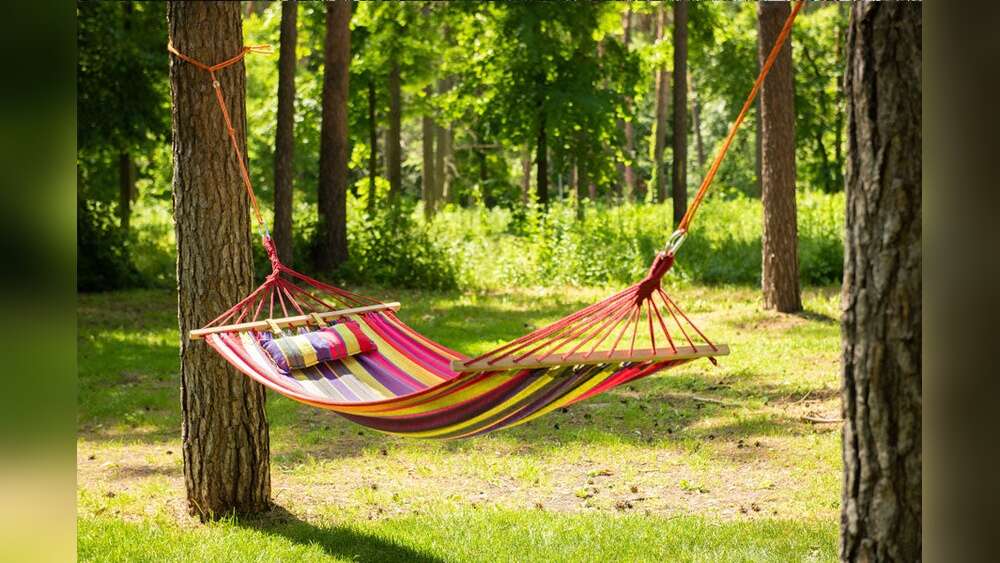
Ood rule is to aim for a “banana shape” when your hammock hangs. You want the lowest point of the hammock (when you sit in it) to be about 18 inches (45 cm) off the ground—roughly chair height. This makes it easy to get in and out and keeps you safely above rocks, roots, or wet ground.
If your hammock hangs too tight (flat), it will feel stiff and may even flip you out. Too much sag and you’ll drag on the ground. Adjust the straps or move them up and down the tree until you get a gentle curve.
Some hammocks have built-in adjusters; otherwise, you might need to reclip the carabiners or shift the webbing.
Why Sag Matters
A little sag is not just about comfort. It also protects your hammock and trees. A tight hammock puts much more force on the anchor points and can damage tree bark or even break straps. Sag also helps you lie diagonally, which is the key to a flat, comfy sleeping position.
Many beginners make the mistake of pulling their hammock as tight as possible, thinking it will be better. In reality, more sag is usually safer and more comfortable.
5. Test Before Using
Before you lie down, do a safety check. Press down on the hammock with your hands, then sit gently in the center. If nothing slips, you can lie back and relax. If you hear creaks, pops, or see the straps slipping, get out and adjust.
Quick Safety Checks
- Are the straps flat against the tree (not twisted)?
- Are carabiners fully closed and locked?
- Is the hammock off the ground with you inside?
- Are there sharp objects or rocks underneath?
I once saw someone rush into a hammock without checking and their strap slipped, dropping them onto a root. It’s better to spend an extra 30 seconds double-checking than risk a bruise (or worse).
Tips For Getting In And Out Safely
Most hammock accidents happen when people get in or out. Here are some tips to keep you safe and comfortable.
- Stand next to the center of the hammock.
- Hold both sides and gently sit down, like sitting in a low chair.
- Shift your weight slowly, keeping your feet on the ground until you’re balanced.
- Swing your feet up and turn your body to lie diagonally.
Getting out is just the reverse. Sit up, swing your feet out, and stand up slowly. If the ground is muddy or slippery, move carefully.
Avoid Common Mistakes
- Jumping into the hammock (easy to flip)
- Entering from one end instead of the center
- Letting kids play roughly or swing too high
- Leaving sharp objects (like keys or knives) in your pockets
Sleeping And Relaxing In A Hammock
Lying in a hammock can be more comfortable than you might think—if you do it right.
The Diagonal Lie
The most important trick is to lie diagonally across the hammock, not straight in line with the ends. This flattens out the fabric and supports your back and legs more evenly. You’ll find you can even sleep on your side this way.
If you lie straight, your body will curve into a “banana” shape, which can strain your back and knees after a while. Lying diagonally gives your body a flatter, more natural position.
Using A Pillow Or Blanket
A small pillow under your neck or knees adds a lot of comfort. You can also bring a light blanket or sleeping bag if it’s cool outside. In very hot weather, a simple sheet can keep you from sticking to the fabric.
Staying Warm
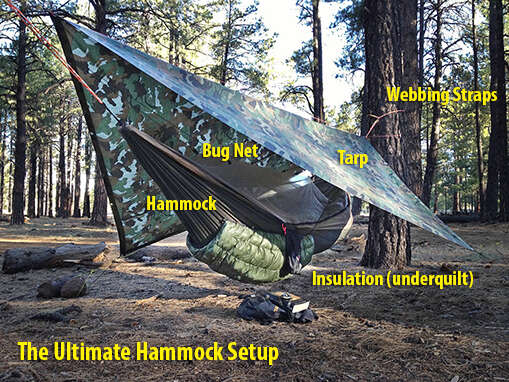
Air circulates under a hammock, which keeps you cool in summer but can make you cold at night, even in warm weather. For camping, consider bringing an underquilt (a special insulated blanket that hangs under your hammock) or a foam pad inside the hammock. This will block cold air and keep you cozy.
Credit: www.yardenvy.com
Protecting Trees And Nature
Hanging a hammock is fun, but it can harm trees if you’re not careful. Here’s how to reduce your impact on the environment.
Use Tree-friendly Straps
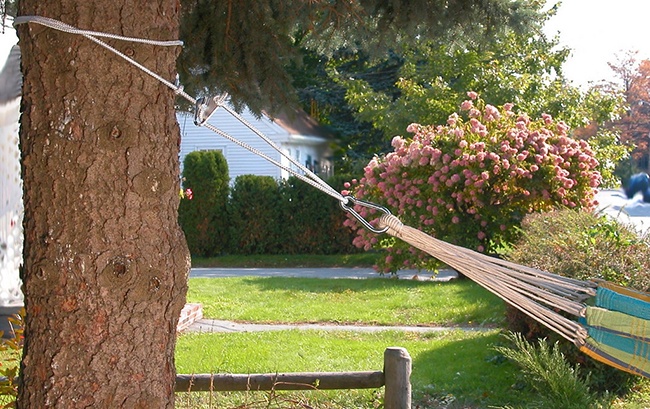
Wide straps (at least 1 inch/2. 5 cm) spread out the pressure and protect bark. Thin ropes can cut into the bark, damaging the tree’s ability to transport water and nutrients. Some parks now ban hammocks with ropes for this reason.
Leave No Trace
- Pick trees that are strong and healthy
- Avoid rare or slow-growing species
- Don’t break branches or clear plants unnecessarily
- Pack out all trash and belongings
If you’re camping, try to use areas where hammocks are allowed and where others have already camped. This minimizes your impact on the environment.
Watch Out For Wildlife
Bird nests, insect hives, and animal burrows can be hidden in trees or under leaves. Always check before setting up. I once found a hornet’s nest above my chosen spot—luckily, I noticed before hanging my hammock.
Weather And Hammocks
Weather can change quickly outdoors. Here’s how to be ready.
Rain
A rainfly or tarp is essential if rain is possible. Hang it above your hammock, tied to the same trees but wider and longer than your hammock. Make sure it forms a tent shape to shed water away from you. Some campers use drip lines (small pieces of string tied to the suspension) to stop water from running down into the hammock.
Sun
Long hours in direct sun can fade and weaken hammock fabric. If possible, pick a spot with dappled shade. If your hammock will be outside for weeks, take it down when not in use.
Wind
Strong wind can flip an empty hammock or even pull the straps loose. If you leave your hammock up, secure it or take it down in storms.
Cold
As mentioned, air under your hammock makes you cooler than sleeping on the ground. Even in mild weather, temperatures can drop at night. Bring extra insulation if you plan to sleep outdoors.
Hammock Camping: Extra Considerations
If you want to sleep overnight in your hammock, you’ll need a few extra tricks.
Bug Protection
Mosquitoes and other insects can ruin your night. Many camping hammocks come with a built-in bug net. If not, you can buy one that zips over your hammock or hangs above it. Always check for holes before your trip.
Staying Dry
A full-coverage tarp or rainfly is key. Make sure it’s large enough to cover your hammock with room to spare. Practice setting it up at home before you need it in the rain.
Storage
Hang your backpack, shoes, or gear on a small loop of cord tied to the tree strap, just under the tarp. This keeps everything off wet ground and away from bugs.
Privacy And Safety
If you’re camping in a public park or new area, pick a spot that’s not visible from main trails. Always let someone know where you’re camping, and keep valuables in your hammock or close by.
Troubleshooting Common Problems
Even experienced hammock users run into problems. Here’s how to fix the most common ones:
Hammock Is Too Tight Or Too Loose
Solution: Adjust the strap height or attachment point. Aim for a gentle curve and seat height about 18 inches above the ground.
Hammock Sags Too Low When You Get In
Solution: Move the straps higher on the tree, or pick trees closer together.
Fabric Or Straps Are Twisted
Solution: Take the hammock down and untwist the webbing. Flat straps last longer and support weight more evenly.
Hammock Flips Or Feels Unstable
Solution: Double-check your attachment points and make sure you’re getting in and out from the center. Avoid sudden movements.
Straps Slip Down The Tree
Solution: Use rough-barked trees and wide straps. On smooth bark, wrap straps twice if they’re long enough.

Credit: www.youtube.com
What Beginners Often Miss
Here are two less obvious things most new hammock hangers overlook:
- Test before full use: Always test your setup with part of your weight before fully sitting or lying down. This gives you a chance to spot a weak branch, bad knot, or slipping strap before a fall.
- Location matters more than you think: The best hammock spot isn’t just about tree distance. It’s also about what’s above, below, and around you. Look for smooth ground, away from anthills, animal trails, or thorny plants. A great view is a bonus, but safety and comfort come first.
Final Thoughts
Hanging a hammock between trees is easy once you know how. Start by picking healthy, well-spaced trees. Use wide straps and strong carabiners. Adjust for the right sag and always check your setup before use. With a little practice, you’ll find the perfect spot and enjoy hours of relaxation or sleep in the fresh air.
If you want to learn more about hammock camping and safety, the [Leave No Trace Center for Outdoor Ethics](https://lnt.org/) has excellent resources on responsible outdoor recreation.
So, grab your hammock, find two strong trees, and enjoy one of life’s simplest pleasures—the gentle sway and peaceful rest that only a hammock can give.

Credit: www.youtube.com

Zayden Halbrook is a travel enthusiast and gear researcher passionate about making every journey smoother and more enjoyable. With a keen eye for practical travel essentials and real-world tips, he helps readers choose the right gear and travel smarter. When he’s not testing travel kits or exploring new destinations, Zayden shares simple, reliable advice to make every trip stress-free.