How To Measure Luggage Size
Traveling can be exciting, but airport rules around luggage can make anyone nervous. Airlines have strict size limits, and if your bag is too big, you might pay extra fees or even have to leave items behind. I remember feeling stressed at the airport when the staff said my suitcase was “too big,” even though I thought it was fine.
Since then, I measure my luggage carefully before every trip, and now I want to share everything I know about it. Knowing how to measure your luggage size is simple, but you need to do it right. This guide will help you avoid surprises and travel with confidence.
Why Measuring Luggage Size Is Important
Airlines have clear rules about luggage size for good reasons. Cabin space is limited, and each bag must fit in the overhead bin or under the seat. Oversized luggage can cause delays and extra costs. For checked bags, a few inches over the limit can mean paying a lot more. I once saw a traveler repack their bag on the airport floor just because it was one inch too tall.
Another key point is that luggage size rules are not the same for every airline. Domestic and international flights often have different limits. Even within the same airline, economy class and business class can have separate rules. Measuring your bag at home helps you avoid confusion and stay within the rules.
Understanding Airline Luggage Size Limits
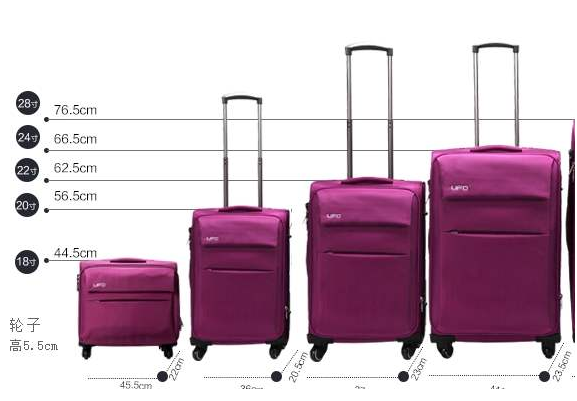
Before you start measuring, it’s good to know what airlines mean by “luggage size.” They usually look at the total linear dimensions—that means the sum of length, width, and height. For example, if an airline says the limit is 62 inches, you add up all three sides, and the total must not be more than 62 inches.
Here are the most common airline size limits:
| Bag Type | Common Limit (inches) | How Measured |
|---|---|---|
| Carry-on | 22 x 14 x 9 | Length + Width + Height |
| Checked | 62 linear inches | Length + Width + Height |
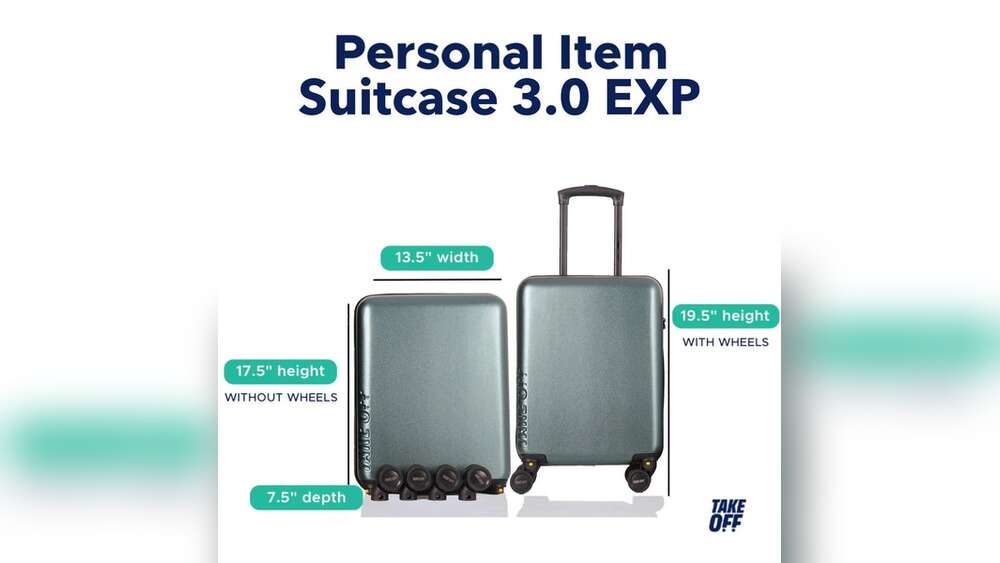
| Personal Item | 17 x 10 x 9 | Length + Width + Height |
Always check your airline’s website before you pack, because rules can change. For example, some budget airlines have smaller limits.
Credit: www.vastchip.com
What Tools You Need
You don’t need fancy equipment to measure your luggage. Here’s what works best:
- Tape Measure: A soft tape measure (like for sewing) wraps around your bag easily. A metal one works, too.
- Ruler or Yardstick: Good for hard-sided suitcases.
- Flat Surface: Measuring on a hard, flat floor gives the best results.
- Notebook or Phone: Write down the numbers as you go.
I use a soft tape measure because it’s flexible and easy to pack, so I can double-check at the hotel if I buy new items.
Step-by-step: How To Measure Luggage Size
Let’s break down the process so you can do it with any suitcase, backpack, or duffel bag.
1. Place The Bag Upright
Set your bag on a flat, hard surface like your floor. Make sure the handle is pushed down and all pockets are zipped.
2. Measure The Length
Find the longest side from top to bottom. Place the tape measure at the bottom of the wheels (if there are any) and measure to the very top, including the handle if it doesn’t retract.
Tip: Always include wheels and non-removable handles, because airlines do.
3. Measure The Width
Turn the bag so you can see the side. Measure across the bag at its widest point, including any side pockets, handles, or bulges.
4. Measure The Height (depth)
Lay the bag flat and measure from the front to the back at the thickest part. Include any extra pockets that stick out.
5. Add The Numbers
Add length, width, and height. This is your bag’s total linear inches.
6. Compare To Airline Limits
Check your numbers with your airline’s rules. If your bag is even a little over, you could face charges or have to check the bag instead of carrying it on.
7. Double-check With Your Items Inside
Pack your bag with your travel items before you measure. Sometimes, a stuffed bag is bigger than an empty one. I once thought my suitcase was fine, but after packing, the front pocket bulged and put me over the size limit.
Common Luggage Shapes And Their Challenges
Not all bags are shaped like boxes. Some have odd shapes, soft sides, or extra zippers. Here’s how to handle different types:
Hard-sided Suitcases
Usually keep their shape, so measuring is easy. Just make sure to include wheels and handles.
Soft-sided Bags
These can stretch when packed. Measure after packing to get the true size.
Backpacks
Look at the widest points, including straps or side pockets. Airlines count these parts even if they seem small.
Duffel Bags
Lay flat and measure the longest length, then the width and height at the fullest points.
Garment Bags
Fold them as you would for travel, then measure the overall size. Some airlines have special rules for these bags.
How Airlines Check Luggage Size
At the airport, staff may use a metal frame called a “sizer” for carry-on bags. If your bag fits inside, you’re good to go. For checked bags, they often use a tape measure. Always account for wheels and handles, because the sizer will include them.
Sometimes, you can get away with a bag that’s slightly over, but it’s risky. I saw someone’s bag pass the sizer when empty, but after shopping abroad, it wouldn’t fit. They had to pay extra on the way home.
Sample Measurement: Real Example
Let’s say you have a suitcase with these measurements:
- Length: 24 inches (including wheels)
- Width: 16 inches (with side pocket)
- Height: 10 inches (after packing)
Add them up: 24 + 16 + 10 = 50 inches
If your airline allows 62 inches for checked bags, you’re fine. For a carry-on, most airlines want each side under 22 x 14 x 9 inches, so this bag would be too big for the cabin.
How To Measure Oddly Shaped Luggage
Some items, like musical instruments or sports gear, don’t fit in a standard suitcase. In these cases, measure the longest dimension first, then the widest point, and finally the thickest part. Add all three. If your item is still too big, contact the airline before your trip—special rules may apply.
International Vs. Domestic Size Limits
Airlines outside the US often have smaller limits, especially for carry-ons. For example, many European airlines allow only 21 x 13 x 8 inches for cabin bags. Always check your ticket or the airline’s website before flying.
Here’s a quick comparison:
| Airline Type | Carry-on Limit (inches) | Checked Bag Limit (inches) |
|---|---|---|
| US Domestic | 22 x 14 x 9 | 62 (total) |
| European | 21 x 13 x 8 | 62 (total) |
| Asian | 21 x 14 x 9 | 62 (total) |
Some low-cost airlines have even stricter rules. Always check before you fly.
Measuring Luggage Weight Vs. Size
Many people focus only on size and forget about weight. Airlines have limits for both. A bag that fits the size rules but is too heavy can still cost you. For example, most US airlines have a 50-pound (23 kg) weight limit for checked bags.
Always weigh your bag after packing.
How To Measure Expandable Luggage
Many suitcases have a zipper that lets you expand them. If you use this feature, measure your bag in its expanded state. Airlines measure your bag at its largest, not smallest, size.
Tips To Stay Within Luggage Limits
Here are some tips I’ve learned from years of travel:
- Measure every side—even if it looks small, measure it.
- Pack first, then measure—bags grow when full.
- Don’t rely on manufacturer tags—they often don’t include wheels or handles.
- Use a soft tape measure—it’s more accurate for curves.
- Take a picture of your bag and its size for proof.
- Leave a little space—don’t pack to the absolute limit in case you shop while traveling.

Credit: safaribags.com
What Happens If Your Luggage Is Oversized
If your bag is too big, the airline might:
- Charge a high oversize fee
- Make you check your carry-on at the gate
- Refuse to carry the bag
Fees can be $75 to $200 or more, depending on the airline. Sometimes, you must remove items to make your bag fit. I once saw someone miss their flight because their bag was too big, and they had to repack at the last minute.
Luggage Size And Security
After 9/11, security checks became stricter. Bags that fit the rules are easier to scan and handle. Oversized bags may get extra checks, which can slow you down. Always follow the size rules to avoid extra stress.
Using Luggage Size Apps
There are smartphone apps that help you measure your bag using your camera. These can be handy, but I find a tape measure is more accurate. Still, apps can be a good backup if you don’t have tools handy.
How To Measure Luggage For Trains And Buses
Trains and buses often have their own rules. For example, Amtrak allows bags up to 28 x 22 x 14 inches. International bus lines may be stricter. Always check before you go, because over-sized luggage might not be allowed on board.
Storing And Measuring Luggage At Home
Keep your tape measure and a small notebook with your travel gear. Measure your bags when you buy them and write down the numbers. This helps when you pack for each trip. I keep a note on my phone with my suitcase sizes, so I never have to guess.
How To Measure Luggage For Shopping Online
If you buy a suitcase online, check the listed dimensions. Look for “overall dimensions” or “including wheels and handles. ” If the measurements are for the inside only, the bag may be bigger than you think. Read reviews to see if other travelers had problems with the size.
What To Do If You’re Not Sure
If you’re not sure if your bag fits the rules, call the airline. Customer service can answer questions about odd-sized items. You can also find helpful guides on airline websites. If you have a special item, ask for written confirmation that your bag is allowed.
How To Handle Luggage At The Airport
When you get to the airport, weigh and measure your bag at a self-service kiosk if available. Some airports have free “sizers” you can use. If your bag doesn’t fit, you’ll have time to repack or shift items to another bag.
Luggage Size And Travel Insurance
Some travel insurance plans cover lost or damaged bags, but not all cover oversize or overweight fees. Read your policy before you fly. If your bag is oversized and gets lost, you might not get a full refund.
Common Mistakes Travelers Make
Here are mistakes I’ve seen (or made myself):
- Forgetting to measure wheels and handles
- Not measuring after packing
- Trusting the tag on the suitcase
- Assuming one airline’s rules are the same as another’s
- Not checking international rules
Avoid these errors to save time and money.
Luggage Size And Group Travel
If you’re traveling with family or a group, measure every bag. Some airlines add up the size and weight for all your bags. Pack smart by sharing items across bags, so no single bag is too big.
Measuring Kids’ Luggage
Children’s bags must follow the same rules as adults’ bags. Measure the same way, and make sure to include all stuffed animals or gear.

Credit: itluggage.com
Measuring Luggage For Cruises
Cruise ships are less strict than airlines, but you still need to get your bags to the port. Many cruise lines suggest suitcases no bigger than 30 x 20 x 12 inches. Check with your cruise line for details.
When To Buy A New Bag
If your bag is always a little too big, it might be time for a new one. Look for suitcases that list “overall size” and are a bit smaller than the airline limit. This gives you room for souvenirs or gifts. Read reviews on trusted sites like Consumer Reports for the most accurate information.
How To Measure Luggage With Built-in Expanders
Some bags have built-in expanders. Make sure you measure your bag with the expander open if you plan to use it. Airlines check the largest size.
Practical Examples From Experience
A while ago, I bought a suitcase that claimed to be “carry-on size. ” When I measured it at home, it was 1 inch over the limit with the wheels included. I called the airline, and they told me the wheels counted.
I had to buy a smaller bag before my trip. Another time, I saw a couple at the airport who used a soft tape measure to check their bags after shopping abroad—they avoided extra fees because they caught the problem early.
Frequently Asked Questions
How Do I Measure Luggage With Curved Or Rounded Edges?
Use a soft tape measure and wrap it gently around the curved edge. Measure at the widest point, including all bulges, pockets, and handles. Always round up to the next inch if you’re unsure.
Do Airlines Include Wheels And Handles In Luggage Size?
Yes, airlines always include wheels and handles in the total size. Measure from the bottom of the wheels to the top of the handle for length, and include all side handles for width.
What Happens If My Bag Is Slightly Over The Limit?
If your bag is just a little over, some airlines may let it pass, but many will charge an oversize fee or make you check the bag. It’s safer to stay within the rules to avoid costs or delays.
Is The Inside Or Outside Size Of The Bag Important?
Airlines care about the outside (overall) size, including all parts that stick out. The inside measurement is only useful for knowing how much you can pack.
Can I Use A Suitcase Size Listed On The Manufacturer’s Tag?
Be careful. Manufacturer tags often show the inside size or leave out the wheels and handles. Always measure the outside of your bag to be sure.
Travel is much smoother when you know your luggage fits the rules. Measuring your suitcase is simple and takes only a few minutes, but it can save you time, stress, and money. With these steps, you’ll be ready for your next trip—no surprises, no extra fees, just smooth travel.
Safe journeys!

Zayden Halbrook is a travel enthusiast and gear researcher passionate about making every journey smoother and more enjoyable. With a keen eye for practical travel essentials and real-world tips, he helps readers choose the right gear and travel smarter. When he’s not testing travel kits or exploring new destinations, Zayden shares simple, reliable advice to make every trip stress-free.