Wine rarely explodes in checked luggage, but pressure, freezing temperatures, and rough handling can break a bottle.
If you are asking, “will wine explode in checked luggage,” the practical answer is usually no. Modern aircraft cargo holds are pressurized, and ordinary still wine is generally safe to pack when wrapped well. However, bottles can crack, leak, or burst if they freeze, collide with hard items, or suffer a sudden impact. This guide explains the risks, airline rules, and safest packing methods so your wine arrives in good shape.
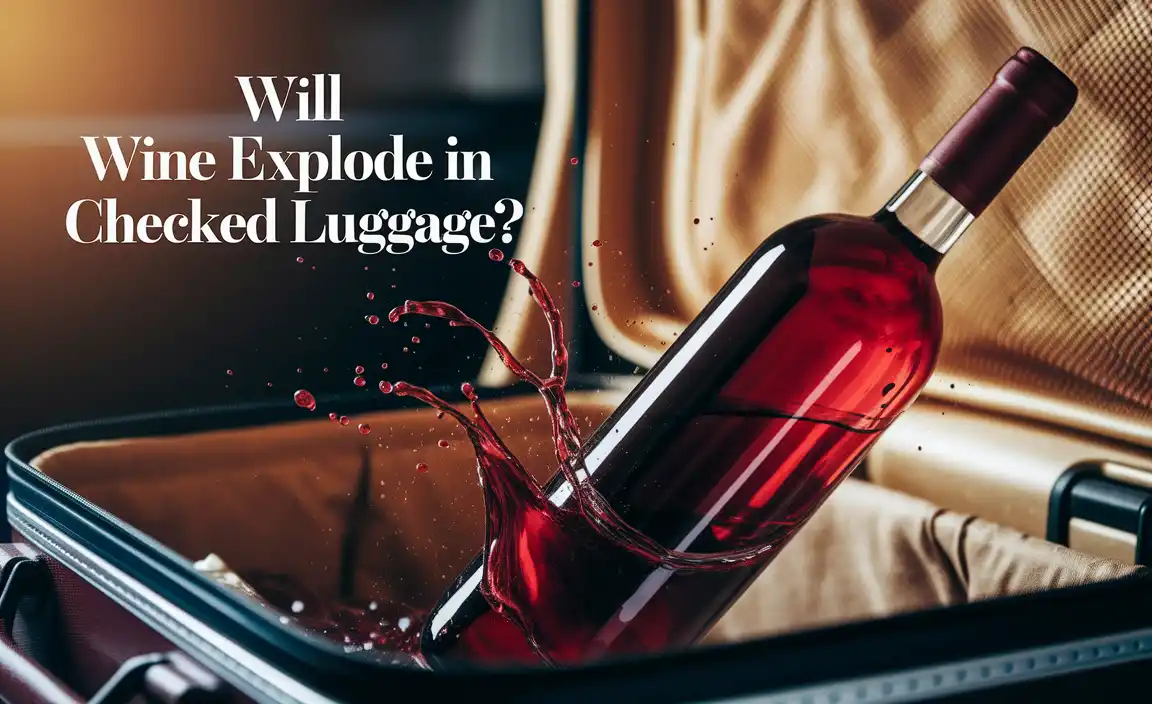
Will Wine Explode in Checked Luggage?
Will wine explode in checked luggage? In most cases, no. A standard bottle of still wine is not likely to explode simply because it travels in an airplane’s cargo hold.
The cargo area of a commercial passenger aircraft is pressurized. It is not the same as an unpressurized space high above the clouds. The pressure change is usually too small to make a normal wine bottle burst.
Still, air travel can be rough on bottles. Bags may be dropped, stacked, pushed, or squeezed. A bottle that hits a suitcase frame or another hard object may break even when the air pressure is normal.
The greatest risks are:
• Impact from baggage handling
• Freezing temperatures during part of the journey
• Weak, damaged, or poorly sealed bottles
• Pressure inside sparkling wine bottles
• Loose glass moving inside the suitcase
A bottle does not need to explode to ruin your trip. A small crack can release wine across clothing, passports, electronics, and other bags.

Why Wine Bottles Can Break on a Flight
To understand will wine explode in checked luggage, it helps to separate air pressure from other travel risks. Pressure is only one small part of the problem.
Air pressure
Passenger aircraft cabins and cargo holds are pressurized during flight. The pressure is lower than at sea level, but it is not low enough to normally burst a wine bottle.
A sealed bottle contains air in the small space above the wine. That air expands slightly as outside pressure drops. In a strong glass bottle with a sound cork or screw cap, this change is usually harmless.
Wine bottles are made to handle normal pressure changes. A still wine bottle has no meaningful internal pressure beyond the air space and the liquid itself.
Cold temperatures
Freezing is a more serious concern. Water expands when it freezes, and wine contains a large amount of water. If the wine becomes cold enough to freeze, the liquid can push against the glass or force out the cork.
Cargo temperatures vary by aircraft, route, loading area, and flight length. Many holds are pressurized, but not all parts of the baggage system are temperature controlled in the same way. A long winter trip or a delay on a cold airport ramp can increase the risk.
Wine usually freezes below 32°F because alcohol lowers its freezing point. The exact point depends on the wine’s alcohol content and sugar level. A typical wine may begin to freeze around 15°F to 25°F, though conditions differ.
Rough handling
Baggage handling is often the main reason a bottle breaks. Suitcases can fall from conveyor belts or land hard on the loading surface.
A bottle placed near the outside wall of a suitcase has little protection. A bottle placed between soft clothing layers has a much better chance of surviving.
This is why the answer to will wine explode in checked luggage depends more on packing quality than on altitude.
Does Sparkling Wine Have a Higher Risk?
Sparkling wine needs extra care because it already contains carbon dioxide under pressure. Champagne, prosecco, cava, and other sparkling wines can have internal pressure of several atmospheres.
A sound sparkling wine bottle is designed to hold that pressure. It should not burst just because it is placed in checked luggage. However, a damaged bottle, loose cork, or severe impact can create a greater risk than with still wine.
Temperature also matters. Warm conditions can raise pressure inside the bottle. Cold conditions can weaken the glass through freezing. Sudden temperature changes may add stress, especially if the bottle has a tiny defect.
To carry sparkling wine more safely:
• Keep the bottle cool, but do not freeze it.
• Place it in a sealed wine travel sleeve.
• Wrap it with thick clothing or bubble wrap.
• Put it in the center of the suitcase.
• Keep the bottle away from shoes, toiletries, and hard electronics.
• Do not pack a bottle with a cracked neck or damaged foil.
If you are wondering will wine explode in checked luggage, sparkling wine is the type that deserves the most caution. Even then, proper packing usually prevents problems.
Airline and Security Rules for Checked Wine
In the United States, wine is generally allowed in checked baggage. Standard wine has an alcohol content below 24% by volume, so it is not treated like high-proof spirits under common aviation security rules.
Alcohol between 24% and 70% alcohol by volume is often limited to five liters per passenger and must remain in its original retail packaging. Alcohol above 70% is generally not permitted on passenger aircraft.
Wine is usually well below these limits. However, airline policies can differ, especially for:
• The total number of bottles
• Weight limits
• Special packaging rules
• International routes
• Connections through another country
• Duty-free purchases
Security rules also do not replace customs rules. When entering another country, you may need to declare the wine, pay duty, or follow limits set by the destination country.
Before packing, check:
-
Your airline’s baggage policy.
-
The airport security rules for your departure country.
-
Customs rules for your destination.
-
The laws of any country where you will make a connection.
The answer to will wine explode in checked luggage may be simple, but whether you can legally bring the wine depends on your route and airline.
How to Pack Wine in Checked Luggage
The safest method uses several layers of protection. Think of your suitcase as a padded box, not a simple container.
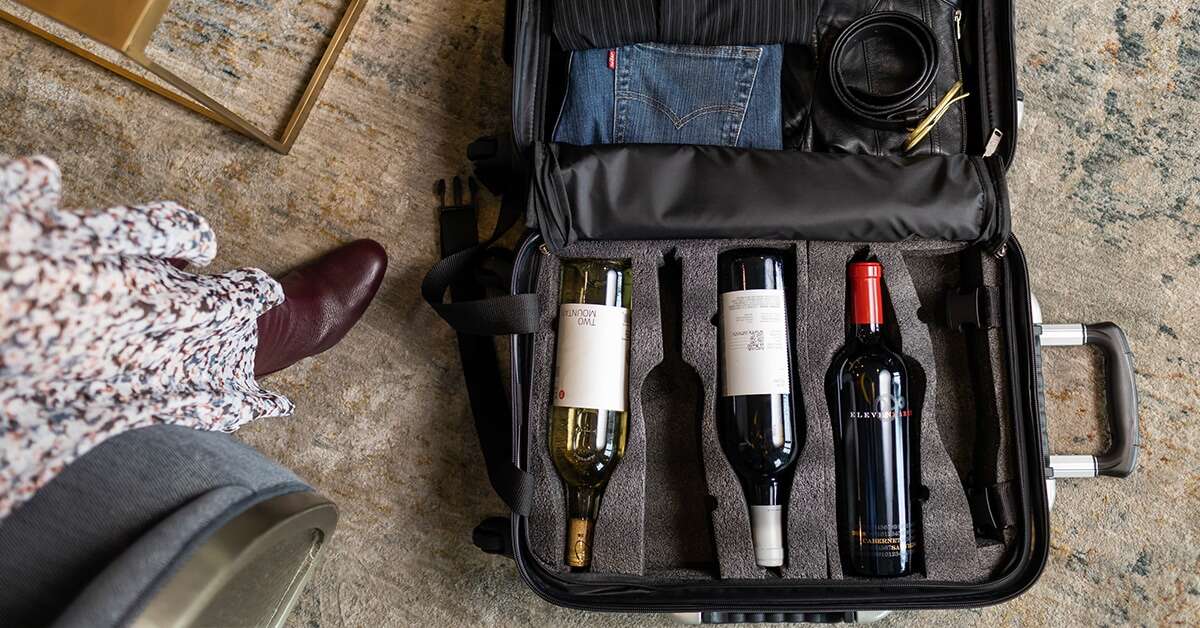
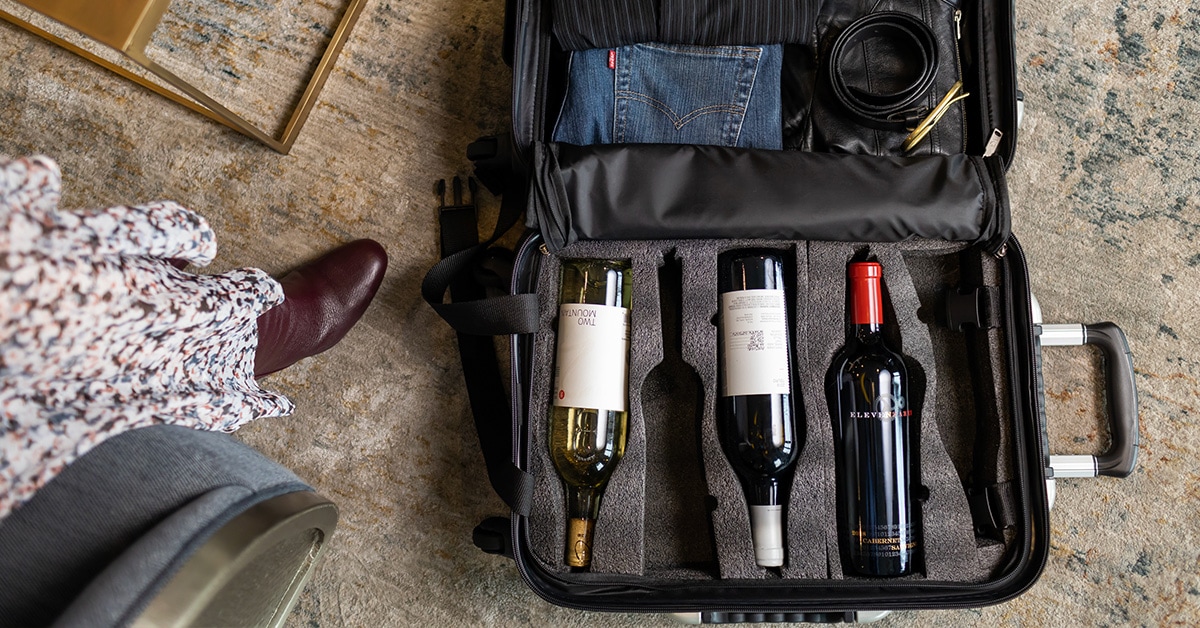
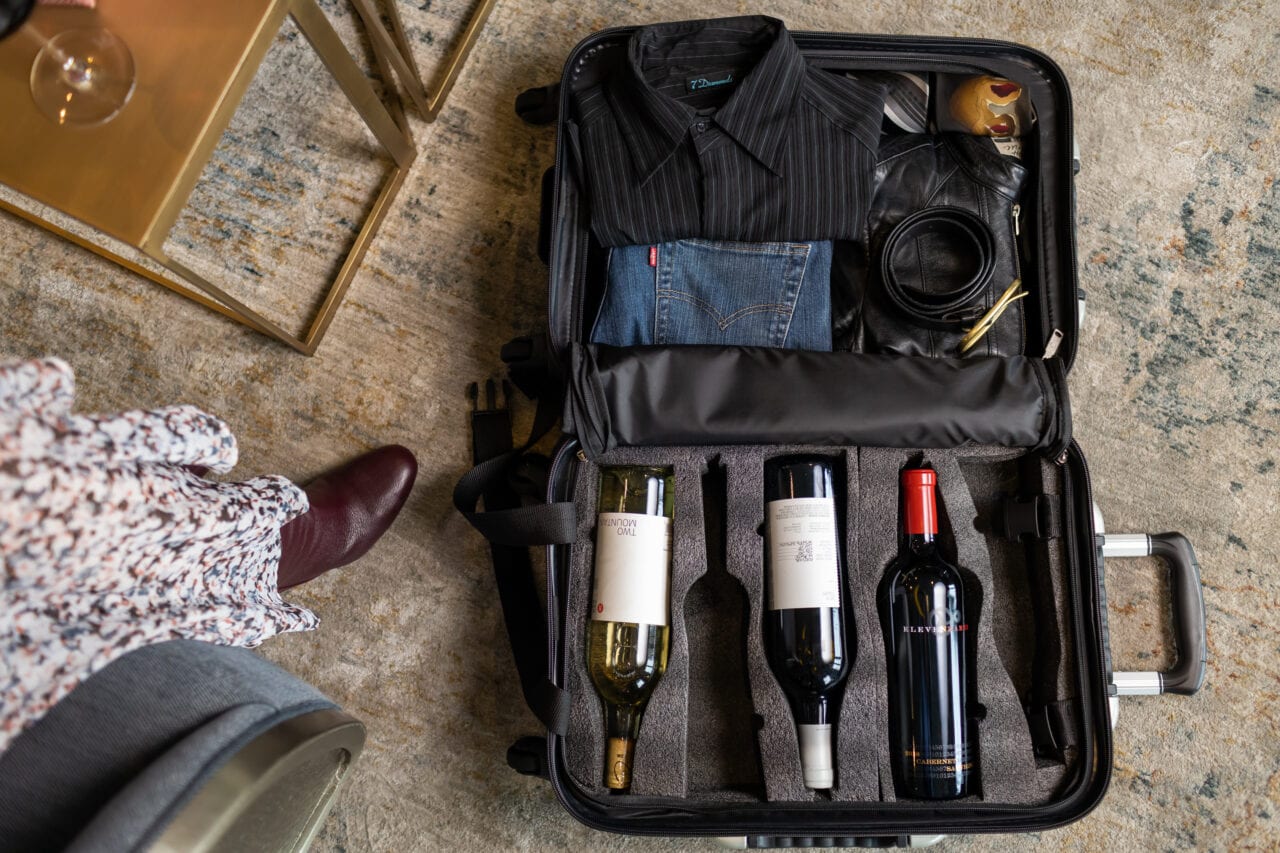
Use a wine bottle protector
A commercial wine sleeve is one of the best options. Many sleeves have absorbent material and a sealed outer bag. If the bottle breaks, the sleeve may contain much of the liquid.
A plastic grocery bag is better than nothing, but it is not a true leakproof solution. For valuable bottles, use a purpose-built wine travel bag or an approved wine shipping case.
Wrap the bottle well
Wrap each bottle separately. Do not let two glass bottles touch.
Use:
• A padded wine sleeve
• Bubble wrap
• Thick socks
• Sweaters or jeans
• A sealed plastic bag
Place the wrapped bottle in the center of your suitcase. Surround it with soft clothing on every side.
Protect the neck and base
The neck and base are common weak points. Add extra padding around both areas. Do not place pressure directly on the cork or capsule.
A bottle should not move when you gently shake the suitcase. Movement allows the bottle to build force during impact.
Choose a hard-sided suitcase
A hard-sided suitcase offers more protection than a soft bag. It can help prevent crushing from other luggage.
However, hard luggage does not make wine indestructible. A bottle can still break if it sits against the suitcase shell without padding.
Keep bottles away from heavy items
Shoes, books, toiletry kits, and electronics can act like rocks inside a suitcase. Keep them in separate sections.
Never place a bottle beside a laptop, camera, glass container, or other fragile item. If the bottle breaks, it may damage everything around it.
Pack a backup layer
After sealing the bottle in a wine sleeve, place it inside two strong plastic bags. This will not stop breakage, but it can reduce leaks.
A sealed bag also helps contain the smell of wine if a small leak occurs. It may save your clothes and make cleanup easier.
A Simple Packing Method That Works
Will wine explode in checked luggage when packed correctly? The risk becomes much lower, although no method can guarantee safety.
Follow these steps:
-
Inspect the bottle for chips, cracks, or damage.
-
Place the bottle in a leakproof wine travel sleeve.
-
Add bubble wrap around the sleeve.
-
Put the wrapped bottle inside a strong plastic bag.
-
Place the bottle in the middle of a hard-sided suitcase.
-
Surround it with thick clothing on all sides.
-
Keep the bottle away from the suitcase edge.
-
Add a second plastic bag around the clothing area.
-
Make sure the suitcase closes without crushing the bottle.
-
Mark your own packing plan so you can unpack carefully at your destination.
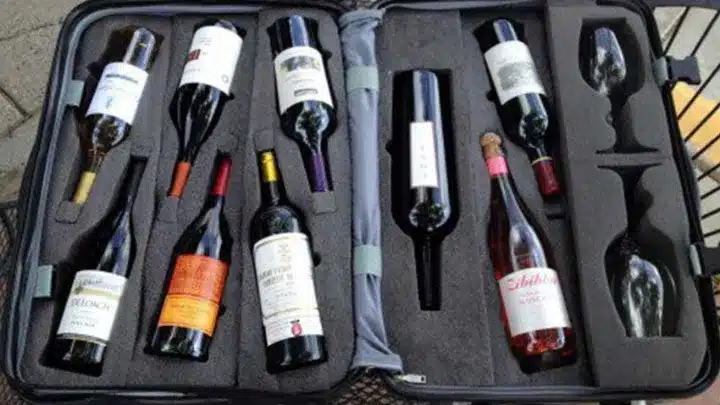
For two or more bottles, use a molded wine shipper or a purpose-built wine luggage insert. Do not place several loose bottles together in one suitcase.

Should You Pack Wine in the Original Box?
A sturdy original wine box can help, but a thin cardboard box alone is not enough. The box may protect the glass from scratches, yet it will not absorb a hard impact very well.
If you use the original box:
• Keep the bottle in its molded insert.
• Add padding around the box.
• Put the box inside a sealed plastic bag.
• Place it in the center of the suitcase.
• Avoid overfilling the suitcase.
Some wineries sell wine in shipping boxes made from molded foam or heavy pulp. These are safer than ordinary retail cartons. A professional wine shipping case is usually the best choice for expensive or rare bottles.
If the wine has sentimental or financial value, consider shipping it through a wine transport service instead of placing it in checked luggage. Shipping may offer stronger packaging, tracking, and insurance options.

What Happens if Wine Freezes in Checked Luggage?
Frozen wine may expand enough to push out the cork or crack the bottle. The wine may still be drinkable after thawing, but its quality can change.
Sparkling wine can lose carbonation if the cork shifts. A bottle with a screw cap may leak around the seal. Glass can also develop a small crack that is hard to see until the wine warms.
Signs of freezing include:
• A cork that has moved upward
• Wine residue around the capsule
• A cracked or cloudy bottle
• A lower fill level
• A broken seal
Do not open a bottle that looks damaged. Put it in a sink or container first. Glass may fail when the pressure changes or when you handle it.
Cold weather is one reason the question will wine explode in checked luggage has no single answer. The flight itself may be safe, while the time spent outdoors on the ground creates the real danger.
How to Reduce the Risk on Winter Flights
Winter travel calls for extra planning. You cannot control the temperature of every baggage area, but you can reduce the time your wine spends in the cold.
Consider these steps:
• Avoid checking wine during severe cold when possible.
• Use a direct flight to reduce handling and delays.
• Pack wine in the center of your suitcase.
• Use a quality insulated wine carrier.
• Avoid leaving the suitcase outside for long periods.
• Ask the airline about temperature-sensitive baggage before traveling.
• Let the bottle warm slowly if you suspect freezing.
Do not place a cold bottle near a heater or use hot water to warm it. A sudden temperature change can stress the glass. Let it reach room temperature gradually.
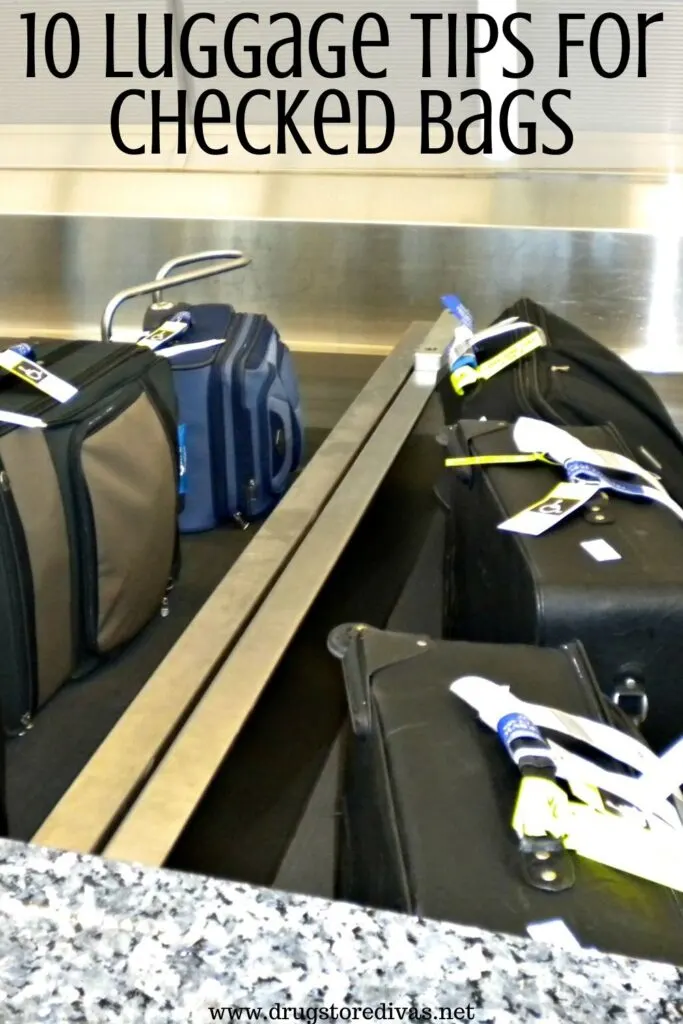
Checked Luggage Versus Carry-On Wine
Carry-on rules can be stricter because liquids in containers larger than 3.4 ounces generally cannot pass through airport security in the United States. A full wine bottle usually must go in checked baggage unless it was purchased after the security checkpoint.
Duty-free wine may be allowed in carry-on baggage when it remains sealed in the required security bag and you follow the rules for your route. Connections can complicate this process, so keep the receipt and packaging.
Checked luggage gives you more room, but it also exposes the bottle to impact. Carry-on luggage lets you control the bottle, but security limits the liquid size.
For most travelers, a well-packed checked bag is the practical choice for standard wine. The key is strong protection and compliance with airline and customs rules.
Common Mistakes to Avoid
Many broken bottles result from simple packing errors. Avoid these common mistakes:
• Packing a bottle without padding
• Wrapping several bottles together
• Putting wine next to shoes or hard objects
• Using only a thin plastic bag
• Placing the bottle against the suitcase wall
• Overpacking and crushing the glass
• Checking damaged or previously cracked bottles
• Forgetting customs declarations
• Packing expensive wine without insurance
• Assuming airline rules are the same everywhere
One mistake I often see in travel advice is treating a suitcase like a shipping crate. It is not. A suitcase moves through many hands and machines, so every bottle needs its own buffer of soft material.
The best answer to will wine explode in checked luggage is not simply “yes” or “no.” It is “usually not, if the bottle is sound and packed to handle impact, cold, and movement.”
What to Do if Your Wine Breaks
If you discover a broken bottle at baggage claim, handle the suitcase with care. Glass may be hidden under clothing.
Take these steps:
-
Move away from crowded foot traffic.
-
Do not reach into the bag without checking for glass.
-
Photograph the suitcase and damaged items.
-
Report the damage to the airline baggage desk.
-
Keep receipts for valuable wine and damaged belongings.
-
Ask about the airline’s baggage damage process.
Airlines may limit liability for fragile items, especially when passengers pack glass in ordinary luggage. This is another reason to use a protective travel case and check the airline’s conditions before departure.
If the suitcase smells strongly of wine but no bottle is visible, open it carefully in a safe area. Use gloves if available, and keep children away from the broken glass.
Frequently Asked Questions About Will Wine Explode in Checked Luggage
Will a normal bottle of wine explode on an airplane?
A normal bottle of still wine is unlikely to explode in checked luggage because aircraft cargo holds are pressurized. It can still break from impact, freezing, or poor packing.
Is it safe to pack red wine in checked luggage?
Yes, red wine can usually travel in checked luggage when it is sealed and well protected. Place it inside a leakproof sleeve, wrap it with clothing, and keep it in the center of the suitcase.
Can sparkling wine explode in checked luggage?
Sparkling wine has internal pressure, so it needs more protection than still wine. A sound bottle should not explode during a normal flight, but rough handling or severe temperature changes can cause breakage.
Can wine freeze in checked baggage?
Wine can freeze during very cold travel conditions, especially during long delays or ground handling. Expansion may push out the cork or crack the bottle.
Should wine be packed upright or on its side?
For a short flight, the position matters less than the padding and stability. Keep the bottle from moving, and place it in the center of the suitcase with protection around the base and neck.
Can I bring homemade wine in checked luggage?
Homemade wine may be allowed, but it must be sealed in a strong, leakproof container and comply with airline and customs rules. Avoid fragile containers and check the destination’s alcohol laws before traveling.
Conclusion
Wine rarely explodes in checked luggage, but bottles can break when they face impact, freezing temperatures, or internal pressure. Still wine is usually low risk, while sparkling wine needs extra care because it contains carbon dioxide under pressure.
Use a padded wine sleeve, sealed plastic bags, and a hard-sided suitcase. Keep every bottle in the center, separate it from hard objects, and review airline and customs rules before leaving.
With the right preparation, you can bring home a favorite bottle without turning your suitcase into a soggy mess. Pack carefully, travel smart, and share your own wine travel tips in the comments.

Zayden Halbrook is a travel enthusiast and gear researcher passionate about making every journey smoother and more enjoyable. With a keen eye for practical travel essentials and real-world tips, he helps readers choose the right gear and travel smarter. When he’s not testing travel kits or exploring new destinations, Zayden shares simple, reliable advice to make every trip stress-free.