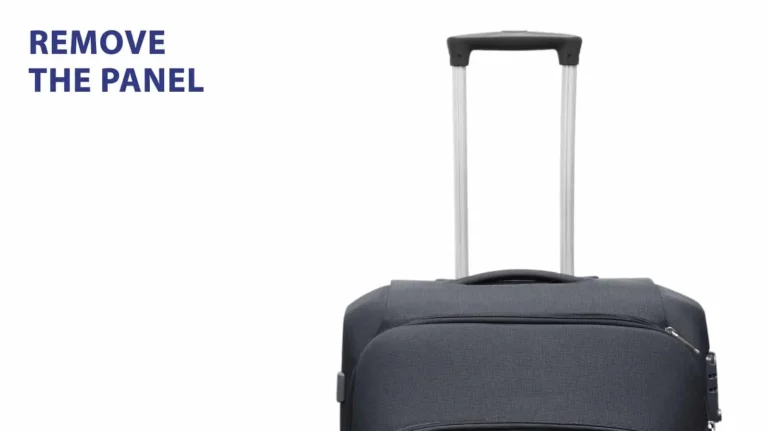

Yes, you can often ship a suitcase without putting it inside a cardboard box. In the United States, many carriers accept a suitcase as the outer shipping container if it is strong, closed, labeled, and allowed by the service you choose.
However, a suitcase is not always treated like a normal package. Its handles, wheels, straps, and uneven shape can catch on conveyor belts. The case may also suffer scratches, broken parts, or dirt during transit. Before shipping, check the carrier’s current rules, protect the suitcase, and buy coverage if the contents are valuable.

Can You Ship a Suitcase Without a Box?
You can ship a suitcase without a box when the carrier accepts it as a secure, irregular package. The suitcase must be able to hold its contents, stay closed, and carry a shipping label through the full journey.
A hard-shell suitcase usually works better than a soft-sided bag. It offers more protection and has fewer loose parts. A soft suitcase may still be accepted, but it needs extra protection around zippers, pockets, wheels, and handles.
Shipping a suitcase without a box is most practical when:
- The suitcase is sturdy and in good condition.
- The contents are not fragile.
- The suitcase has a built-in lock or strong zipper.
- You can attach a label so it will not fall off.
- The carrier allows irregular or nonstandard packages.
- You accept that the suitcase may arrive with cosmetic damage.
A cardboard box is safer when the suitcase is new, valuable, fragile, or likely to be handled by automated equipment. A box also lets you add padding and protects the case from rain, dirt, and scuffs.
Suitcase shipping versus airline baggage
Shipping a suitcase is different from checking it on a flight. An airline may accept a bag because it is designed for airport baggage systems. A parcel carrier may use different sorting equipment, size limits, surcharges, and handling rules.
Do not assume that a suitcase accepted as checked baggage will also qualify for standard parcel service. Check the specific carrier and service before paying for the label.

Which U.S. Carriers Accept an Unboxed Suitcase?
Carrier acceptance depends on the service, package size, shape, destination, and condition of the suitcase. Policies can change, so confirm the rules on the carrier’s official website or with a staffed shipping location.
USPS
The United States Postal Service requires mail to be packaged in a way that protects the contents and allows safe handling. A suitcase may be accepted as the outer package, but acceptance can depend on its shape, closure, weight, and the local office’s processing limits.
For USPS:
- Remove old labels and barcodes.
- Attach the new address label to a flat area.
- Add a second address card inside the suitcase.
- Use strong tape over the label if the label material allows it.
- Ask the post office whether the suitcase can enter the selected service.
- Keep the receipt and tracking number.
USPS may be a useful option for smaller suitcases that fit within the service’s size and weight limits. Large or unusual luggage may be subject to dimensional rules or may not be suitable for regular automated processing.
UPS
UPS commonly handles luggage and other irregular packages, but its packaging rules can be strict. A UPS location may require a suitcase to be placed inside a shipping box, especially if the case has exposed wheels, straps, handles, or weak seams.
UPS also applies additional handling rules to some large, heavy, or irregular packages. These fees can change the price enough to make a box, luggage-shipping service, or another carrier more practical.
Before using UPS, ask:
- Can this exact suitcase travel without an outer box?
- Will the package receive an additional handling charge?
- What size and weight limits apply?
- Is the label attached in an approved way?
- Does the declared value or insurance cover the contents?
FedEx
FedEx may accept luggage as a shipment, but the package must be securely closed and prepared for parcel handling. FedEx guidance may call for an outer box or additional protection in some situations.
A FedEx Office or staffed shipping center can inspect the suitcase before accepting it. A drop box is not suitable for an unboxed suitcase. Staff may refuse a package if the case has loose parts, a poor closure, exposed straps, or a label that cannot stay attached.
Luggage-shipping companies
Specialist luggage-shipping services may offer pickup, delivery, and tracking for suitcases. Some use a protective bag, while others require or supply a box.
These services can be easier for travelers, but they are not automatically cheaper. Compare the complete price, including:
- Pickup fees
- Delivery fees
- Fuel or residential surcharges
- Oversize fees
- Insurance or declared-value coverage
- Delivery time
- Signature service

How to Ship a Suitcase Without a Box
Prepare the suitcase as if it will be turned, stacked, pushed, and exposed to weather. The goal is to keep the case closed, protect the label, and prevent parts from catching on equipment.
1. Check the carrier’s rules first
Measure the suitcase after packing it. Record its length, width, and height in inches. Then weigh it in pounds.
Ask the carrier about:
- Maximum weight
- Maximum dimensions
- Irregular-package fees
- Packaging requirements
- Prohibited contents
- Declared-value coverage
- Delivery signature options
Do this before printing a label. A package that exceeds a limit may be refused or charged a higher rate.
2. Empty every pocket
Check all outside and inside pockets. Remove:
- Passports and identity documents
- Cash and credit cards
- Medication
- Keys
- Batteries
- Lighters
- Aerosols
- Food that can leak
- Jewelry and electronics
- Old luggage tags
- Old shipping labels
A suitcase can be opened during a carrier inspection. Do not ship anything you cannot legally or safely send by parcel.
3. Protect the contents
Use clothing or soft packing material to stop items from moving. Place fragile items in a separate rigid container inside the suitcase. Do not rely on the suitcase shell alone to protect glass, cameras, computers, or other delicate goods.
Keep heavy objects near the bottom and center of the case. Avoid overfilling it. A stressed zipper or cracked shell can fail during handling.
4. Secure the suitcase
Close every zipper fully. If the suitcase has zipper pulls, connect them with a cable tie or another carrier-acceptable fastener. Do not use a lock that security or carrier staff cannot open when inspection is required.
For a soft suitcase, place strong stretch wrap around the body. Add extra wrap around:
- Handles
- Wheel assemblies
- External pockets
- Straps
- Zipper areas
Stretch wrap helps hold loose parts in place. It does not replace a box or make a weak suitcase strong.
5. Protect wheels and handles
Wheels and handles are common failure points. Cover them with cardboard, bubble wrap, or thick padding, then secure the protection with tape or stretch wrap.
Do not cover a required barcode or make the package impossible for staff to inspect. If the carrier says that exposed wheels or handles are not allowed, use an outer box.
6. Attach the address label
Place the label on the largest flat surface. Do not place it over a seam, zipper, handle, wheel, or curved corner.
Use a clear pouch or label sleeve when available. If you cover the label with tape, keep the barcode flat and easy to scan. Tape that creates glare, wrinkles, or folds can cause scanning problems.
Put a second card inside the suitcase with:
- Recipient’s name
- Delivery address
- Sender’s name
- Sender’s address
- Phone number
- Tracking number
The inside card can help identify the suitcase if the outside label is damaged.
7. Photograph the shipment
Take clear photos of the suitcase before handing it over. Photograph:
- All sides
- The wheels and handles
- The label
- The packed interior
- Any existing damage
These photos do not guarantee a successful claim. They do create a useful record of the suitcase’s condition and contents at the time of shipment.
8. Hand it to a staffed location
Use a staffed carrier location instead of leaving an unboxed suitcase in a drop box or unattended pickup area. Ask for a receipt that shows acceptance, tracking, weight, and any special handling status.
A staffed location can also tell you if the suitcase does not meet the carrier’s packaging rules.

Should You Put the Suitcase in a Box?
Use a box when protection matters more than convenience. A box reduces direct contact with conveyor belts, other packages, rain, and rough surfaces.
A box is usually the better choice for:
- Expensive luggage
- New luggage
- Fragile contents
- Leather or fabric cases
- Suitcases with weak zippers
- Cases with exposed wheels
- Long-distance shipments
- International shipments
- Return shipments where appearance matters
To box a suitcase, choose a strong corrugated box with room for padding. Wrap the suitcase, protect the corners, fill empty space, and seal every seam with pressure-sensitive shipping tape.
Do not use a box that barely fits. A tight box can split when the suitcase presses against its sides. A box that is much too large may increase dimensional weight and shipping cost.
Boxed versus unboxed suitcase
| Option | Main benefit | Main drawback | Best use |
|---|---|---|---|
| Unboxed suitcase | Less packing work and less material | More risk of scuffs, label loss, or part damage | Strong, ordinary luggage |
| Boxed suitcase | Better protection and easier carrier handling | More weight, size, and packing cost | Fragile or valuable luggage |
| Protective shipping bag | Shields against dirt and light moisture | Does not add much impact protection | Soft luggage and short trips |
| Specialist luggage service | May simplify pickup and delivery | May cost more than standard parcel service | Travelers who want door-to-door handling |
The key trade-off is simple: an unboxed suitcase saves packing effort, while a box provides a stronger protection layer.

How Much Does It Cost to Ship a Suitcase?
The price depends on the suitcase’s packed weight, dimensions, origin, destination, delivery speed, and carrier. Large suitcases can cost more than their scale weight suggests because of dimensional weight.
Dimensional weight estimates the space a package uses. A common U.S. carrier formula is:
Length × width × height ÷ dimensional divisor = dimensional weight
The carrier compares dimensional weight with actual weight and may bill the greater amount. The divisor and rounding rules vary by carrier and service.
Example calculation
Suppose a packed suitcase measures 30 × 20 × 12 inches.
- 30 × 20 × 12 = 7,200 cubic inches
- 7,200 ÷ 139 = about 51.8 pounds
If the suitcase weighs 38 pounds, the carrier may rate it near 52 pounds under that example formula. This is only a calculation example. The actual divisor, billable weight, and fees depend on the carrier and service.
Compare the total cost, not just the base postage. Include:
- Residential delivery
- Pickup
- Fuel
- Additional handling
- Oversize charges
- Declared value
- Signature service
- Packaging
- Delivery speed
A smaller box can reduce dimensional weight, but do not crush or overpack the suitcase to save space.
What Can You Put Inside a Shipped Suitcase?
The contents must follow the carrier’s rules and U.S. law. A suitcase is only the outer package; it does not make restricted items acceptable.