

Umbrella insurance for business adds extra liability protection when a covered claim exceeds your primary policy limits.
If you run a company, one serious accident, lawsuit, or property damage claim can threaten years of hard work. Understanding what is umbrella insurance for business helps you see how this extra layer of protection works, where it applies, and when your company may need it.
What Is Umbrella Insurance for Business?
Umbrella insurance for business is a commercial liability policy that provides extra coverage above the limits of certain underlying insurance policies. It may help pay covered legal costs, settlements, or judgments after the primary policy limit is used up.
For example, imagine your business has a $1 million general liability limit. A customer suffers a serious injury on your property, and the claim reaches $1.4 million. If the loss is covered, your primary policy may pay the first $1 million. A business umbrella policy may help cover the remaining $400,000, subject to its terms and limit.
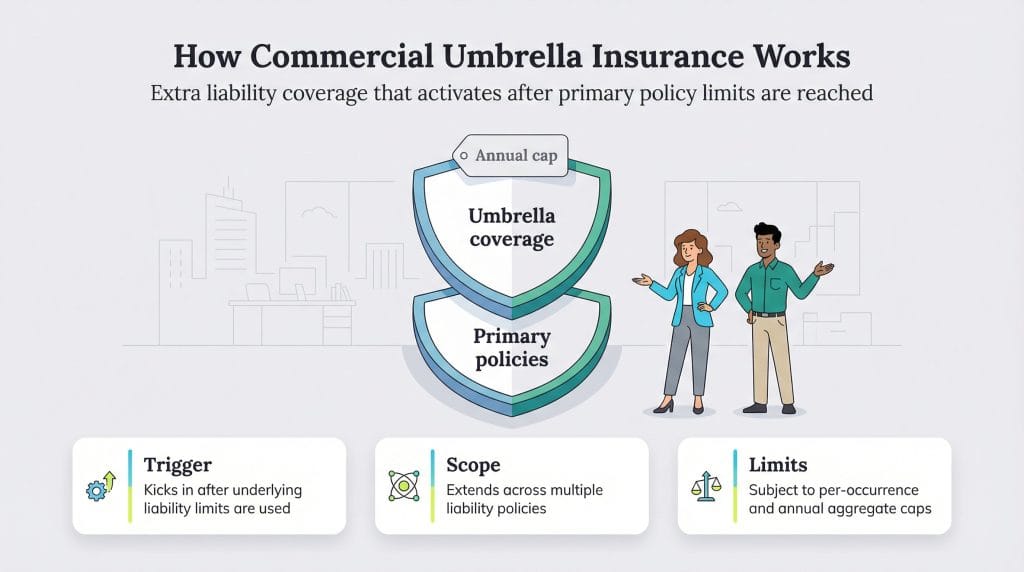
Business umbrella insurance does not replace your main policies. Instead, it sits above them like a second roof. Your company must usually carry specific underlying policies and maintain their required limits before the umbrella policy responds.
How Business Umbrella Insurance Works
A commercial umbrella policy usually follows the basic terms of the policies beneath it. These underlying policies may include:
• Commercial general liability insurance
• Commercial auto liability insurance
• Employers liability insurance
• Liquor liability insurance, when accepted by the insurer
• Other liability policies listed in the umbrella contract
Here is a simple example:
-
A delivery driver causes a major crash while working for your company.
-
The injured parties file a lawsuit for $1.8 million.
-
Your commercial auto policy pays its $1 million liability limit.
-
Your umbrella policy may respond to the remaining $800,000 if the claim is covered.
The umbrella insurer may also help with defense costs, depending on the policy wording. Some policies treat legal defense costs as part of the liability limit. Others may pay defense costs outside the limit. This detail can greatly affect the protection your business receives.
What is umbrella insurance for business in practical terms? It is a backup source of liability protection for large covered losses that exceed the limits of your main policies.
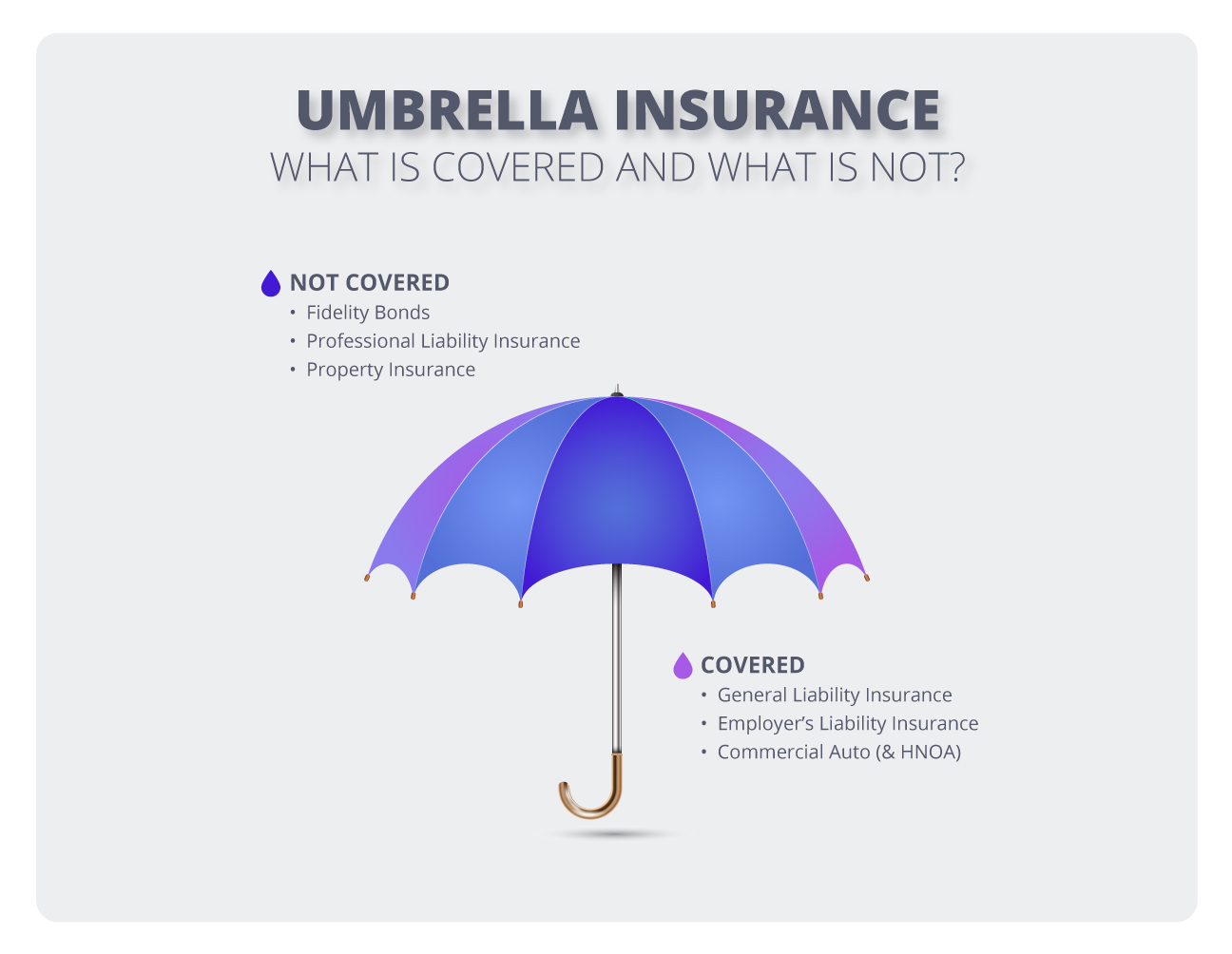
Commercial Umbrella Insurance vs. Excess Liability Insurance
People often use “umbrella insurance” and “excess liability insurance” as if they mean the same thing. They are related, but they are not always identical.
Commercial excess liability insurance generally adds more limits to one specific underlying policy. It often follows that policy’s coverage terms closely.
Commercial umbrella insurance may provide broader protection. In some cases, it can cover certain risks that the underlying policy does not cover. This is often called drop-down coverage. However, the umbrella policy may include a self-insured retention before that extra coverage begins.
The difference depends on the wording of the contract. Do not rely on the policy name alone. Ask the insurer:
• Which underlying policies does the umbrella cover?
• Does it provide broader coverage than the primary policies?
• Is there a self-insured retention?
• Are defense costs inside or outside the policy limit?
• Does the policy cover worldwide claims?
• Are contractual liability and personal injury included?
A careful comparison can prevent an expensive surprise during a claim.

What Does Umbrella Insurance for Business Cover?
The answer depends on the policy and the risks your insurer accepts. Many business umbrella policies may cover excess amounts related to:
Third-party bodily injury
A customer, visitor, or member of the public may suffer an injury linked to your business. Medical costs, lost income, pain and suffering, and legal damages can become expensive quickly.
Third-party property damage
Your business or employee may damage someone else’s building, equipment, vehicle, or other property. An umbrella policy may add protection after the underlying liability limit is exhausted.
Personal and advertising injury
This may include claims involving libel, slander, copyright-related advertising issues, invasion of privacy, or wrongful eviction. Coverage varies, so the policy language matters.
Commercial auto liability
If your company uses cars, vans, or trucks, a serious crash can create a large claim. Some business umbrella policies extend over commercial auto liability, but not all do.
Employer-related liability
Some policies may sit above employers liability coverage. This can matter after a severe workplace injury, but workers’ compensation benefits and employment-related claims usually have complex rules.
Covered losses must meet the policy requirements. An umbrella policy is not a general fund for every business problem.
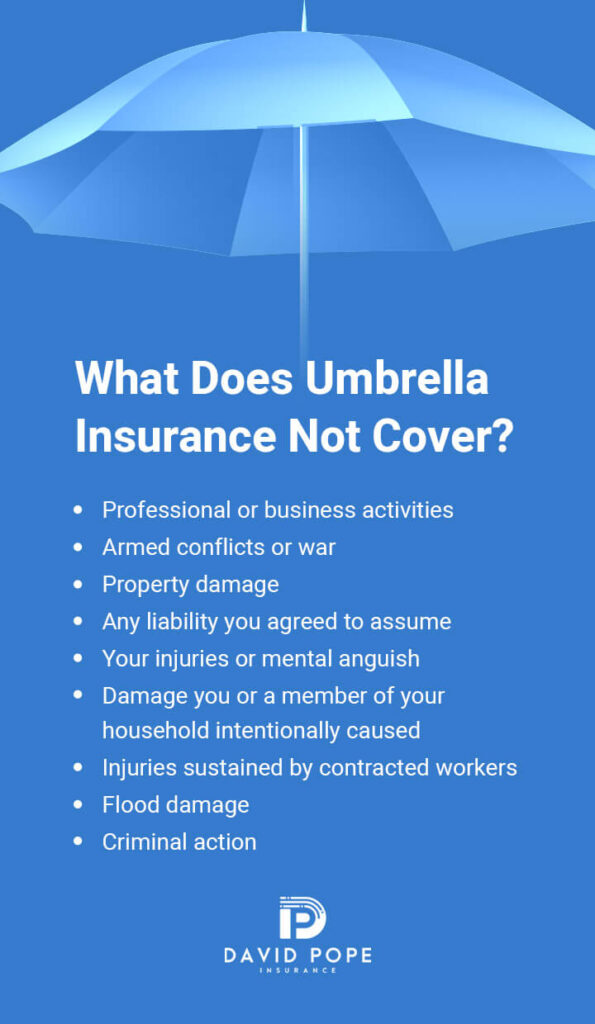
What Does Business Umbrella Insurance Usually Exclude?
Understanding exclusions is just as important as understanding coverage. Common exclusions may include:
• Damage to your own business property
• Professional errors or poor advice
• Employee theft or dishonesty
• Intentional harm
• Pollution claims
• Cyber incidents
• Employment practices claims
• Workers’ compensation benefits
• Damage to products in your care or control
• War, nuclear events, or certain government actions
• Claims that fall outside the underlying policy requirements
A technology consultant, for example, may need professional liability insurance for a client’s financial loss caused by an error. A business umbrella policy may not cover that loss simply because it is expensive.
The same principle applies to cyberattacks. Cyber liability insurance is designed for data breaches, ransomware, notification costs, and related claims. A commercial umbrella policy may not fill that gap.
This is one of the most important lessons about what is umbrella insurance for business: extra limits do not automatically create coverage for every type of risk.
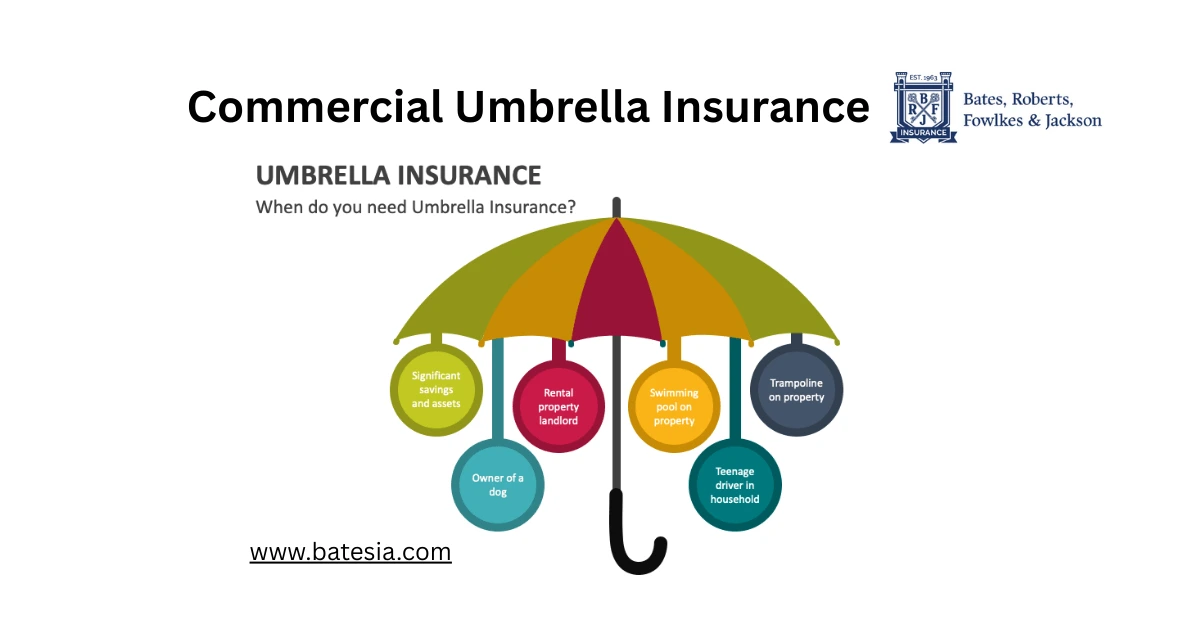
Why Businesses Buy Umbrella Insurance
The main reason companies buy umbrella coverage is to protect their assets and future income from severe liability claims.
Other benefits may include:
Protection from large lawsuits
A major injury claim can exceed the limits of a small business liability policy. Higher limits can give the company more room to defend itself and resolve a covered claim.
Protection for business assets
A lawsuit may put cash, equipment, inventory, and other assets at risk. Insurance cannot prevent every loss, but it may reduce the financial impact of a covered event.
Support for contract requirements
Some landlords, lenders, customers, and government contracts require higher liability limits. A commercial umbrella policy may help meet those requirements.
More confidence when serving customers
Businesses that work in homes, public spaces, construction sites, or crowded venues often face more contact with third parties. Extra liability limits may make that risk easier to manage.
Protection against rising claim severity
Medical care, legal fees, repairs, and settlements can become costly. Even a claim that seems simple at first may grow over time.
In my experience reviewing business risk choices, owners often focus on the chance of a claim rather than its possible size. A rare event can still deserve attention when it could end the company.

Who Needs Commercial Umbrella Insurance?
There is no single rule for every business. The need depends on the company’s operations, contracts, assets, revenue, and exposure to the public.
Umbrella coverage may be especially useful for:
• General contractors and construction companies
• Manufacturers and wholesalers
• Restaurants, bars, and event venues
• Retail stores and shopping centers
• Property owners and landlords
• Delivery and transportation businesses
• Hotels and short-term rental operators
• Medical and health-related businesses
• Companies with many employees or vehicles
• Businesses that work on customer property
A company with modest assets may still face a large liability claim. A company with substantial assets may have more to protect. Both factors matter.
You should also consider how often customers visit your location, whether employees drive for work, and whether your business works with heavy machinery or hazardous materials.

How Much Umbrella Coverage Does a Business Need?
Business umbrella limits often begin at $1 million, but higher limits may be available. The right amount depends on your risk profile rather than a simple industry rule.
Consider these questions:
-
How many people visit your business each day?
-
Do employees drive company vehicles?
-
Could one accident seriously injure several people?
-
What are the total values of your business assets?
-
What liability limit do your contracts require?
-
Does your industry face frequent lawsuits?
-
Could a claim affect your future income?
-
What amount could the company pay after insurance limits run out?
A risk adviser may use a layered approach. For example, a company may carry $1 million in general liability, $1 million in auto liability, and a $2 million commercial umbrella limit. Another company may need much higher limits because it transports goods, manages large buildings, or performs high-risk work.
Do not choose limits based only on the cheapest quote. A low premium may reflect narrow terms, high deductibles, weak underlying limits, or major exclusions.

What Affects the Cost of Business Umbrella Insurance?
The cost of umbrella insurance for business depends on several factors. Insurers may review:
• Industry and business activities
• Annual revenue and payroll
• Number and type of employees
• Vehicle count and driving records
• Claims history
• Geographic operating area
• Underlying policy limits
• Safety programs and risk controls
• Contract requirements
• Chosen umbrella limit
• Deductibles and self-insured retentions
A construction company may pay more than a professional office because construction work can involve greater bodily injury and property damage exposure. A company with repeated auto claims may also face higher pricing or difficulty finding coverage.
You may reduce long-term risk by improving driver training, documenting safety rules, inspecting equipment, and reporting claims promptly. These steps may not guarantee a lower premium, but they can improve the overall quality of your insurance application.
A practical lesson is to request quotes from more than one qualified commercial insurance professional. Ask each one to explain the same limits, exclusions, and underlying requirements so you can compare fairly.
How to Buy Umbrella Insurance for Business
Buying a policy involves more than selecting a dollar amount. Use this process to make a better decision.
1. List your current insurance policies
Gather your general liability, commercial auto, workers’ compensation, professional liability, and other policies. Note each limit, deductible, insurer, and expiration date.
2. Identify your largest liability risks
Think about serious injuries, vehicle accidents, property damage, customer claims, and contract disputes. Consider both likely events and low-probability events with severe consequences.
3. Check required underlying limits
An umbrella insurer may require specific limits before it provides coverage. If your primary limits are too low, you may need to increase them.
4. Review the coverage form
Look for exclusions, retained limits, defense-cost rules, territory limits, and conditions. Ask what happens if the underlying insurer denies a claim.
5. Compare quotes on equal terms
A $2 million policy with broad wording may be more useful than a cheaper policy with narrow coverage. Compare limits and terms, not only premium.
6. Coordinate policy renewals
Try to keep your underlying policies and umbrella policy aligned. A gap or cancellation in an underlying policy can create problems.
7. Review coverage each year
Update the policy after buying vehicles, entering new states, adding locations, signing major contracts, or changing business operations.
What is umbrella insurance for business worth to your company? The answer becomes clearer after you compare the cost of coverage with the financial damage a large uninsured claim could cause.
Common Mistakes to Avoid
Business owners often make avoidable mistakes when purchasing extra liability coverage.
Buying an umbrella without checking the underlying policies
If the underlying policy does not meet the umbrella’s required limit, the business may have to pay the difference itself.
Assuming every lawsuit is covered
An umbrella policy only responds to covered claims. Professional errors, cyber events, pollution, and employment claims may require separate insurance.
Choosing limits based only on current assets
A liability claim can affect future profits, not just today’s property and cash. Consider the income the company may earn over time.
Ignoring commercial auto exposure
A vehicle accident can involve several injured people and costly medical care. Confirm that the umbrella applies to the company’s auto liability policy.
Failing to read exclusions
A policy may look broad until a specific exclusion removes the risk that concerns you most.
Letting the primary policy lapse
Many umbrella policies require active underlying coverage. A canceled or nonrenewed primary policy can leave a dangerous gap.
Treating certificates as proof of full coverage
A certificate of insurance summarizes coverage. It does not replace the actual policy, endorsements, exclusions, or conditions.
One mistake I regularly caution business owners about is buying “the biggest limit” without checking the policy structure. A large limit with the wrong coverage can create false confidence.
A Simple Business Umbrella Insurance Checklist
Before purchasing or renewing coverage, use this checklist:
• Confirm the business name is correct on every policy.
• Review all primary liability limits.
• Confirm the umbrella follows commercial auto coverage if needed.
• Ask whether defense costs reduce the limit.
• Check for self-insured retention requirements.
• Review exclusions for pollution, cyber, professional services, and employment claims.
• Confirm the policy territory.
• Check whether newly acquired businesses or locations are included.
• Compare the umbrella limit with contract requirements.
• Ask how the policy responds when an underlying insurer denies coverage.
• Keep copies of the full policy and endorsements.
• Report material business changes to the insurer.
This short review can reveal gaps before a serious claim occurs. It is much easier to fix a coverage issue during renewal than after an accident.
How to File a Claim Under a Commercial Umbrella Policy
Notify your primary insurer as soon as possible after a serious incident. Also contact the umbrella insurer or broker when the claim could approach the underlying limit.
Keep records of:
• Incident reports
• Photos and videos
• Witness information
• Medical or repair bills
• Legal notices
• Customer communications
• Insurance correspondence
Do not admit fault or agree to a settlement without guidance from the insurer. The business should cooperate with the investigation and follow all notice requirements.
If a claim may exceed the primary limit, early communication is important. The umbrella insurer may want to participate in defense strategy, settlement discussions, or legal reviews.
Policy conditions vary, so follow the specific notice rules in your contract.
Frequently Asked Questions About What Is Umbrella Insurance for Business
What is umbrella insurance for business in one sentence?
Umbrella insurance for business provides extra liability limits above certain primary commercial insurance policies. It may help pay covered claims that exceed those underlying limits.
Is business umbrella insurance required by law?
Most businesses are not legally required to carry a commercial umbrella policy. However, a customer, landlord, lender, or contract may require higher liability limits.
Does umbrella insurance cover employee injuries?
Usually, employee injuries fall under workers’ compensation and employers liability coverage. An umbrella policy may sit above employers liability in some cases, but the exact terms and exclusions must be reviewed.
Does a business umbrella policy cover professional mistakes?
Often, it does not. Professional errors usually require professional liability, errors and omissions, or malpractice coverage.
Does umbrella insurance cover cyberattacks?
Many commercial umbrella policies exclude or limit cyber risks. A business may need separate cyber liability insurance for data breaches, ransomware, and privacy claims.
How much does commercial umbrella insurance cost?
The price varies by industry, revenue, payroll, vehicles, claims history, underlying limits, location, and selected umbrella limit. The most accurate estimate comes from a commercial insurance quote based on your company’s details.
Can a small business buy umbrella insurance?
Yes, many small businesses can buy commercial umbrella coverage if they meet the insurer’s requirements. The insurer may require certain underlying policies and minimum liability limits.
Conclusion
Umbrella insurance for business adds another layer of protection above primary liability policies. It may help with large covered claims involving bodily injury, property damage, personal injury, or commercial auto liability.
The policy is not a replacement for general liability, commercial auto, professional liability, workers’ compensation, or cyber insurance. Its value depends on the limits, exclusions, underlying requirements, and risks specific to your company.
Review your current policies, estimate your worst realistic loss, and ask a qualified commercial insurance professional to compare coverage options. Taking that step now can help protect your business, assets, employees, and future income when a serious claim arrives.

Zayden Halbrook is a travel enthusiast and gear researcher passionate about making every journey smoother and more enjoyable. With a keen eye for practical travel essentials and real-world tips, he helps readers choose the right gear and travel smarter. When he’s not testing travel kits or exploring new destinations, Zayden shares simple, reliable advice to make every trip stress-free.