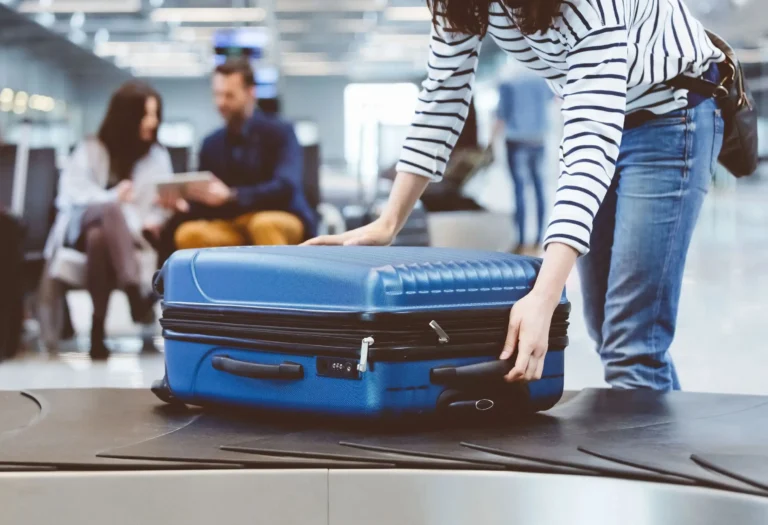
Most knives may travel in checked luggage without TSA declaration, but they must be packed safely and follow destination laws.
Do you have to declare knives in checked luggage? Usually, no—not for standard knives packed in checked baggage on a domestic U.S. flight. However, knife rules can change based on the knife type, airline, destination, customs requirements, and local weapon laws. This guide explains how to pack a knife, when to declare it, and which mistakes can cause delays or confiscation.

Do you have to declare knives in checked luggage?
For most domestic flights within the United States, you do not need to declare an ordinary knife to the Transportation Security Administration (TSA) when it is packed in checked luggage.
TSA rules generally allow knives in checked bags. The knife should be sheathed or wrapped so it cannot injure baggage handlers or inspectors. A loose blade inside a suitcase is unsafe and may lead to problems during screening.
Do you have to declare knives in checked luggage at the airline counter? Usually, no. You normally check the bag as usual. Still, an airline employee may ask about the contents if the bag is opened or if the knife appears unusual.
The answer changes in these situations:
• You are entering another country and must complete a customs declaration.
• The knife is restricted or illegal where you are traveling.
• Your airline has a stricter policy.
• The item is an automatic knife, switchblade, disguised knife, or another controlled weapon.
• You are carrying a large collection of knives for work, trade, or commercial use.
The safest approach is simple: check TSA rules, review your airline’s baggage policy, and confirm the laws at your destination before packing.
TSA rules for knives in checked baggage
TSA focuses on aviation security. Its general rule is that knives, except plastic or round-bladed butter knives, are not allowed in carry-on bags. Most knives may be placed in checked baggage.
TSA officers may inspect checked luggage at any time. If they find a knife that is not packed safely, they may remove it or leave a notice inside your bag. TSA does not decide every question about whether a knife is legal to own at your destination. That issue may belong to state, local, federal, or foreign authorities.
When you pack a knife in checked luggage:
• Place the blade inside a sheath, blade guard, or secure case.
• Wrap the knife in thick clothing, cardboard, or protective material.
• Put it in the center of the suitcase, away from the outer fabric.
• Secure folding knives in the closed position.
• Keep loose blades in a rigid container.
• Make sure the knife cannot move freely when the bag is handled.
A knife in checked luggage should be treated like a glass bottle. Even if the item is allowed, poor packing can create a hazard.
Can you pack a kitchen knife in checked luggage?
Yes. A chef’s knife, paring knife, cleaver, or other kitchen knife can usually travel in checked baggage on a domestic U.S. flight. Cover the blade well and keep the knife from shifting.
A knife block can offer extra protection, but it may take up more space. For one or two knives, a blade guard and firm wrapping are often enough.
Can you pack a pocketknife in checked luggage?
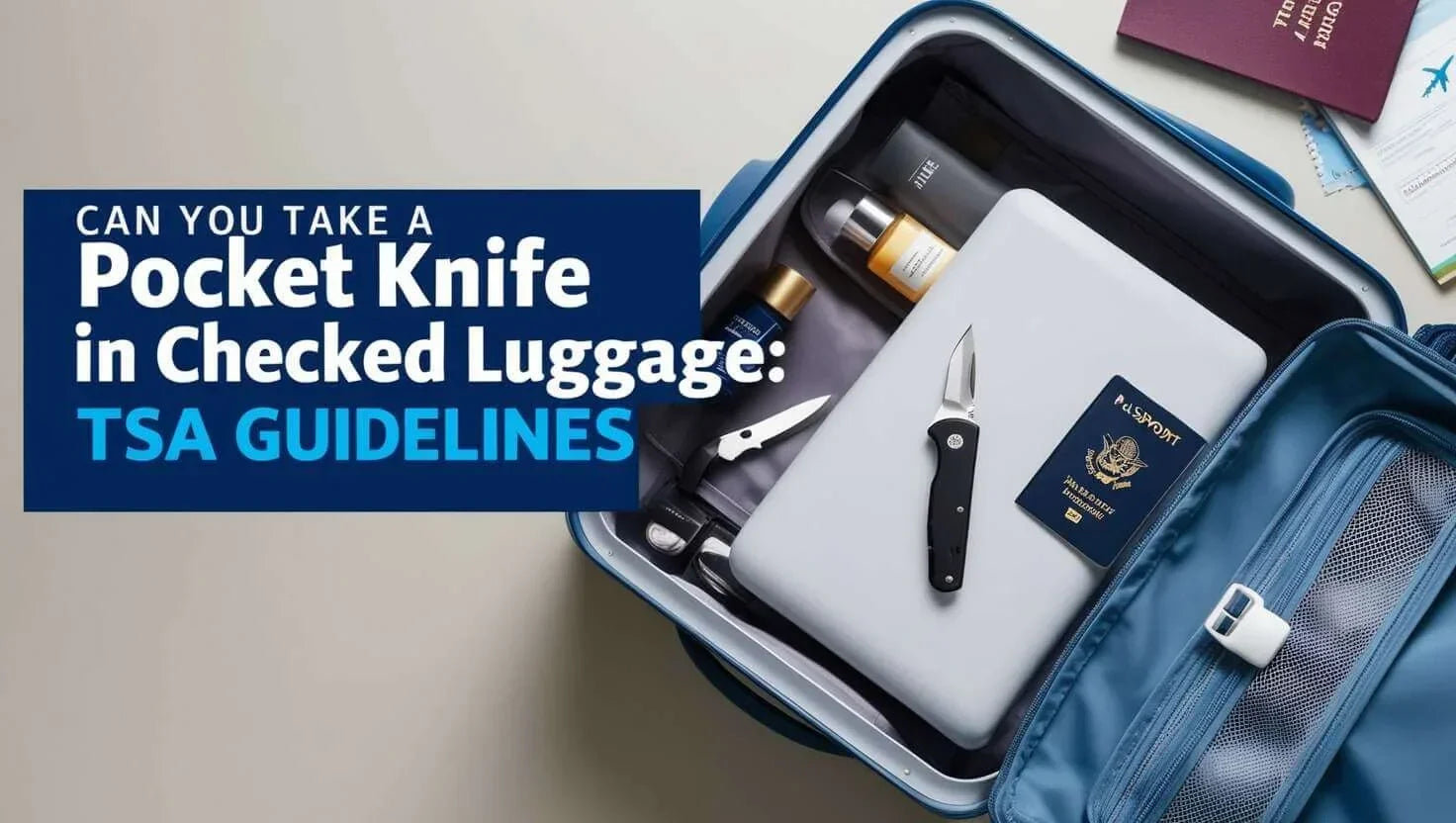
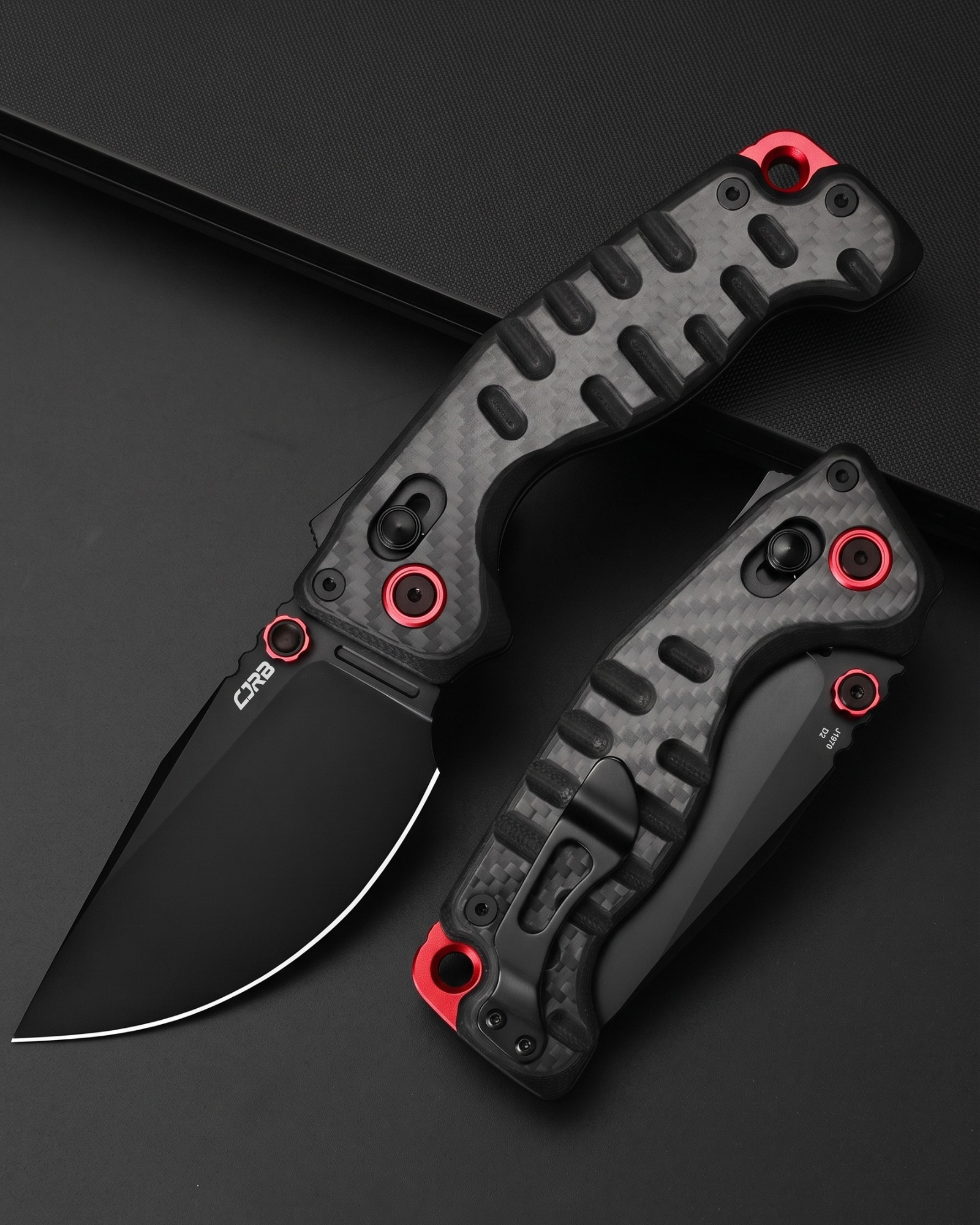
Usually, yes. A pocketknife should be closed and protected from opening. If it has a locking blade, pack it inside a case or wrap it securely.
The fact that a pocketknife is small does not make it automatically legal everywhere. Some cities, states, airports, and countries restrict blade length or knife design.

Do you have to declare knives in checked luggage on international flights?
International travel requires more caution. TSA may allow a knife in checked baggage, but the country you enter may ban or restrict it.
Do you have to declare knives in checked luggage when flying internationally? You may need to declare the knife to customs if the arrival form asks about weapons, restricted goods, or items subject to import controls. The exact answer depends on the destination country and the wording of its declaration form.
A customs declaration is different from a TSA declaration. TSA checks whether an item can travel safely by air. Customs decides whether the item may enter the country.
Before an international trip, check:
• The destination country’s customs rules.
• Import rules for knives and weapons.
• Blade-length limits.
• Rules for folding, fixed-blade, automatic, or assisted-opening knives.
• Transit-country restrictions if you have a connection.
• Your airline’s baggage rules.
Never assume that a knife legal in your home state is legal abroad. A common camping knife may be acceptable in one country but treated as a prohibited weapon in another.
If a customs form asks whether you are carrying weapons or restricted goods, answer honestly. Failure to declare a controlled item can cause fines, seizure, questioning, or criminal penalties.
When should you declare a knife?
Do you have to declare knives in checked luggage if the knife is legal and properly packed? In most domestic cases, no. But declaring or reporting it may be wise when an airline employee, customs officer, or government form specifically requires it.
You should ask for guidance when:
• The knife is automatic, spring-loaded, or disguised.
• The knife has a long fixed blade.
• You are carrying several knives.
• The knife is valuable, antique, or collectible.
• You are traveling for a trade show, sale, or professional job.
• The destination has strict weapon laws.
• Your bag contains other regulated items.
Do not hide a restricted knife under clothing or inside another object. Concealment can make a lawful item appear suspicious and may create a much bigger problem.
At a U.S. airport, the airline counter is a good place to ask about baggage handling. The airline cannot override local law, but staff can explain their own packing and check-in requirements.
How to pack knives in checked luggage safely
Safe packing protects baggage workers, security officers, your belongings, and you. It also reduces the chance that the knife will damage your suitcase.
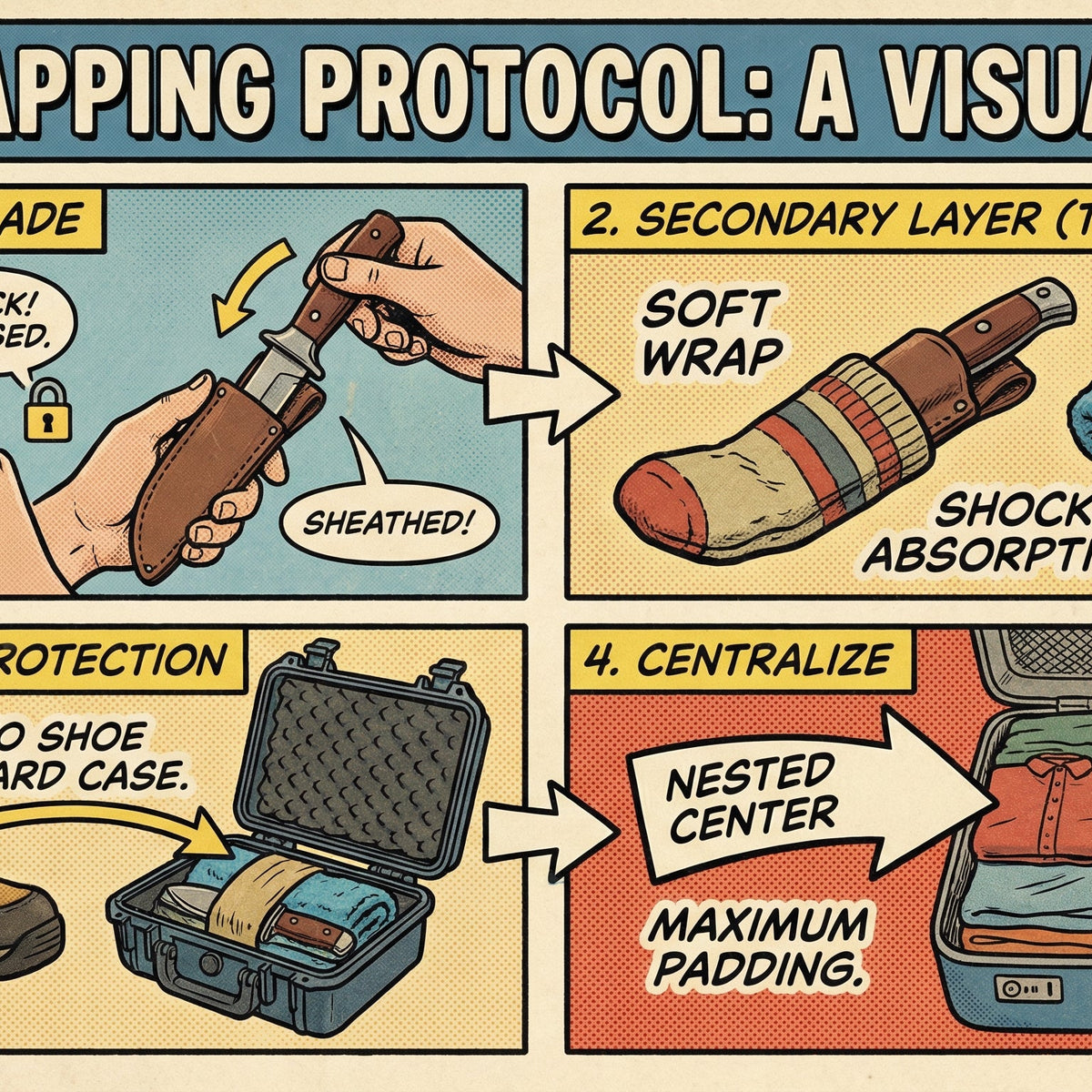
Use this method:
-
Clean and dry the knife. Moisture can cause rust, especially during long trips.
-
Close folding knives. Engage the lock if the design has one.
-
Cover the blade. Use a fitted sheath, blade guard, or strong cardboard sleeve.
-
Add padding. Wrap the protected knife in clothing, bubble wrap, or another soft material.
-
Use a hard container. A small tool case or rigid food container adds another layer of protection.
-
Place the container in the middle of the bag. Avoid the suitcase wall and exterior pockets.
-
Prevent movement. Fill empty space with clothing so the knife does not slide around.
-
Lock the suitcase if practical. Use a TSA-recognized lock when appropriate.
-
Photograph the packed item. A quick photo can help if you need to explain how it was secured.
Avoid these packing mistakes:
• Putting a knife loose in a toiletry bag.
• Wrapping only the handle while leaving the edge exposed.
• Using thin plastic that can tear.
• Placing the knife in an outside pocket.
• Packing a knife in carry-on baggage.
• Assuming a souvenir knife is exempt from weapon rules.
A personal lesson worth keeping in mind is that “allowed” does not mean “safe when loose.” Many travel problems come from poor packing, not from the knife itself.
Airline rules and checked baggage policies
Airlines may impose rules beyond the basic TSA standard. Their policies can cover sharp objects, sports equipment, tools, fragile items, and dangerous goods.
Check the airline’s official baggage page before traveling. Look for terms such as “knives,” “sharp objects,” “weapons,” and “restricted items.” If the policy is unclear, contact the airline directly and keep a written record of the answer.
Airline rules may affect:
• Whether the item must be in checked baggage.
• How sharp objects must be covered.
• Whether the bag must be unlocked for inspection.
• Whether valuable knives should travel in checked baggage.
• Whether the airline accepts certain weapon designs.
A checked bag is not a secure storage vault. Airlines may limit their responsibility for valuable, fragile, or prohibited items. If the knife has high financial or sentimental value, review the carrier’s liability terms and consider whether shipping it through a specialist service is safer.
State, local, and federal knife laws
Do you have to declare knives in checked luggage when flying between U.S. states? TSA rules may be the same, but knife laws can differ at the state and local level.
Some laws focus on:
• Blade length.
• Fixed blades.
• Bowie knives and large hunting knives.
• Automatic or switchblade knives.
• Gravity knives.
• Disguised knives.
• Carrying a knife in public.
• Carrying a knife in schools, courthouses, government buildings, or airports.
Federal law also affects some knife types and situations. For example, automatic knives and interstate commerce may involve rules that do not apply to an ordinary kitchen knife. State laws can also contain exceptions for hunters, tradespeople, collectors, or travelers.
The key distinction is this: airline permission does not equal legal permission. A knife can be accepted in checked baggage but still be unlawful to possess after you arrive.
Research the law at your destination, not just the law where your journey begins. If the rules are complex, ask a qualified attorney or the relevant government agency.
What happens if TSA finds a knife?
If TSA finds a knife in checked luggage, the result depends on the item and the circumstances. A common kitchen knife that is securely packed may simply remain in the bag after inspection.
If the knife is prohibited, poorly packed, or illegal under another applicable rule, TSA may remove it. The bag may also be delayed for additional screening. In serious cases, officers can refer the matter to law enforcement.
If TSA finds a knife in your carry-on, you may have to surrender it, return to the airline counter, place it in checked baggage, or leave the screening area. The final option depends on the airport and the situation.
Do not argue with screening staff or attempt to retrieve the item without permission. Stay calm, ask what rule applies, and follow the instructions. A small packing mistake is easier to solve when you cooperate.
Carry-on versus checked luggage
The difference between carry-on and checked baggage is central to knife travel.
Carry-on bags stay with you in the passenger cabin. Because of the risk of use against passengers or crew, most real knives are not permitted there.
Checked baggage travels in the aircraft’s cargo hold. TSA generally permits many knives in checked baggage when they are protected and packed correctly.
A simple comparison helps:
• Carry-on bag: Most knives are prohibited.
• Checked bag: Many ordinary knives are permitted when secured.
• Customs: A knife may need to be declared when entering another country.
• Local law: The knife may still be illegal to possess at the destination.
If you are unsure, do not place the knife in your carry-on. Confirm the rule before leaving home, since airport security is not the place to test an assumption.
Common examples
A chef traveling with kitchen knives
A chef can usually place kitchen knives in checked luggage for a domestic trip. A knife roll with covered blades offers good protection, but the chef should confirm the airline’s policy and destination laws.
For international work, customs and import rules become more important. Carrying many professional knives may invite questions about commercial use or import permission.
A camper carrying a hunting knife
A hunting knife should be sheathed and placed in a rigid container inside checked baggage. The traveler should also check local rules about possession after arrival.
Camping gear can contain other restricted items, such as fuel, flammable liquids, or certain tools. Review the entire bag, not just the knife.
A traveler bringing home a souvenir knife
A souvenir knife is still a knife. Pack it in checked baggage, protect the blade, and check whether the destination country permits import.
If the customs form asks about weapons or restricted goods, disclose it. A souvenir is not a reason to give an inaccurate answer.
A collector transporting an antique knife
An antique knife may have value that exceeds the cost of the trip. Take photographs, use a hard case, and carry proof of ownership when appropriate.
Collectors should check export and import rules. Some historic or culturally important items may require permits or special documentation.
Practical checklist before you fly
Use this checklist to answer do you have to declare knives in checked luggage for your specific trip:
• Identify the knife type.
• Confirm that it is legal at the destination.
• Check TSA guidance.
• Read the airline’s current baggage policy.
• Check transit-country rules.
• Review customs forms before departure.
• Cover the blade completely.
• Place the knife in a rigid or well-padded container.
• Put it inside checked baggage, never loose in carry-on luggage.
• Keep receipts or proof of ownership for valuable knives.
• Arrive early if the item may need inspection.
Rules can change, and online advice may become outdated. Official government and airline pages are the best sources for the final check.

Frequently asked questions
Do you have to declare knives in checked luggage on a domestic U.S. flight?
Usually, no. Ordinary knives may generally travel in checked baggage without a special TSA declaration, but they must be wrapped or sheathed securely.
Can I put a knife in my carry-on bag?
Most knives are not allowed in carry-on baggage. Plastic or round-bladed butter knives may be treated differently, but you should verify the current rule before traveling.
Do you have to declare knives in checked luggage to customs?
Sometimes. If a customs form asks about weapons, restricted goods, or items being imported, answer truthfully and declare the knife when required.
Can I pack a switchblade in checked luggage?
Do not assume that checked baggage makes a switchblade legal. Automatic knives may be restricted by federal, state, local, airline, or foreign laws, so verify every rule before traveling.
Should a kitchen knife be wrapped in checked luggage?
Yes. Cover the blade with a sheath, blade guard, or strong protective material, then place the knife in a rigid or padded container to prevent injury and damage.
What happens if TSA finds an improperly packed knife?
TSA may inspect the bag, remove the knife, delay the luggage, or refer the matter to law enforcement if the item appears illegal or dangerous. Proper packing greatly reduces these risks.
Conclusion
Do you have to declare knives in checked luggage? For most ordinary knives on domestic U.S. flights, you usually do not need a special TSA declaration. You do need to pack the knife securely, keep it out of your carry-on, follow airline rules, and check the laws at your destination.
International travel deserves extra care because customs and import rules may require a declaration even when TSA permits the knife. Confirm the rules before packing, answer customs questions honestly, and treat every blade as both a travel item and a possible regulated weapon.
A few minutes of research can prevent confiscation, delays, and legal trouble. Check your airline and destination’s official guidance before your next trip, and share your travel question or experience in the comments.

Zayden Halbrook is a travel enthusiast and gear researcher passionate about making every journey smoother and more enjoyable. With a keen eye for practical travel essentials and real-world tips, he helps readers choose the right gear and travel smarter. When he’s not testing travel kits or exploring new destinations, Zayden shares simple, reliable advice to make every trip stress-free.