Choose a hammock at least 2 feet longer than your height, then match its width, weight limit, and hanging space.
Learning how to size a hammock is easier when you treat it like choosing a bed, not a chair. Your height, sleeping style, hammock shape, suspension points, and total load all matter. I have seen many comfort problems come from one simple mistake: people measure the space between trees but forget to measure the hammock itself. This guide explains how to size a hammock with clear measurements, practical examples, and safe setup tips.
What Does Hammock Size Mean?
Hammock size refers to more than the fabric’s length and width. It includes the hammock body, its weight capacity, the space needed for suspension, and the amount of room you need to lie comfortably.
When people search for how to size a hammock, they usually want answers to four basic questions:
• How long should the hammock be?
• How wide should the hammock be?
• Will it fit between my trees or stand?
• Can it safely hold my weight and gear?
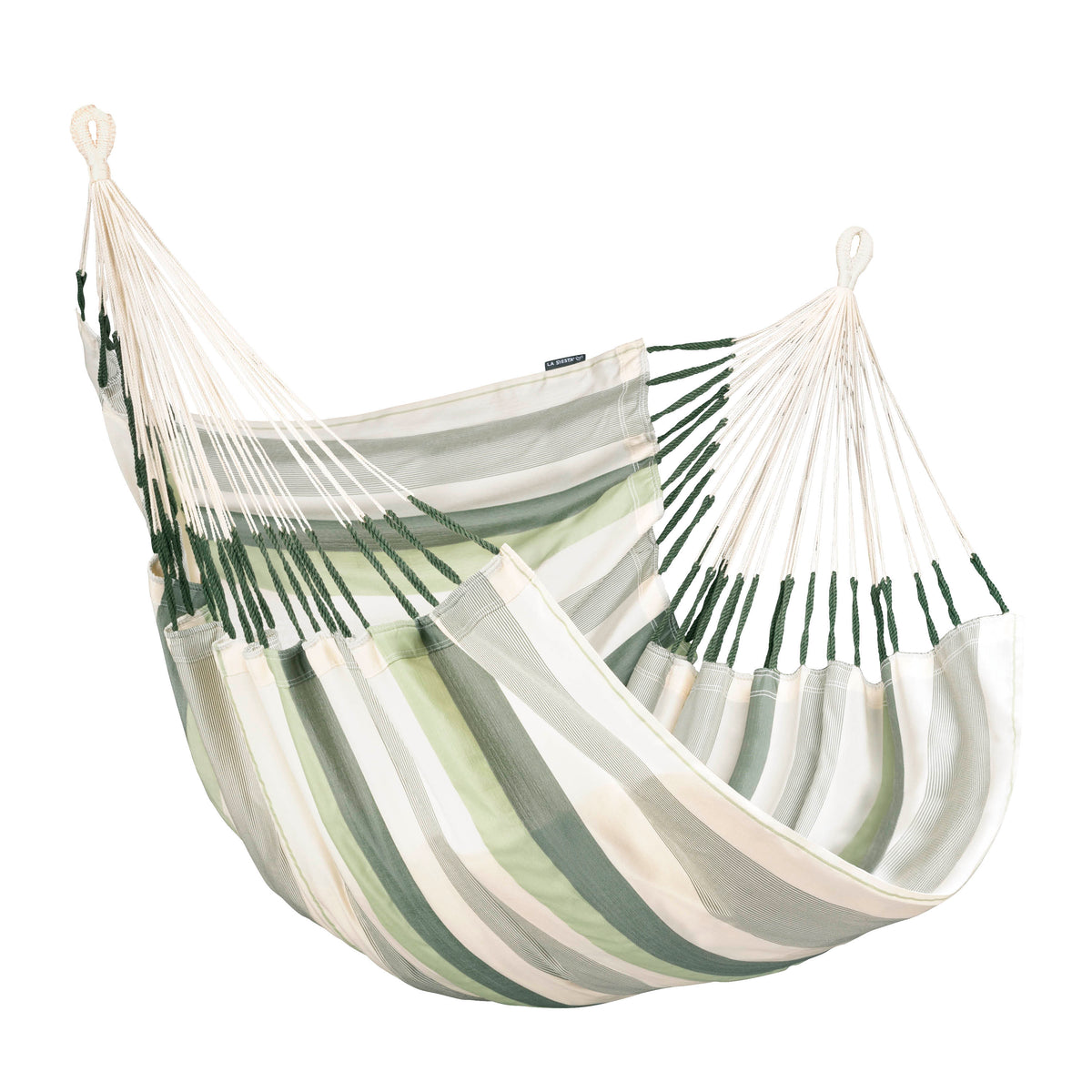
A hammock that looks large in a product photo may feel short once it is hung. Suspension straps, carabiners, gathered ends, spreader bars, and the natural curve of the fabric all reduce usable space.
A good hammock should let you lie diagonally with your knees relaxed. You should not feel squeezed from end to end. You should also have enough fabric around your body to feel stable without being buried in a deep fold.

How Long Should a Hammock Be?
The most reliable rule is simple: choose a hammock at least 2 feet longer than your height. This rule works well for most gathered-end hammocks, camping hammocks, and backyard hammocks.
For example:
• A 5-foot-6-inch person should look for a hammock at least 7 feet 6 inches long.
• A 6-foot person should choose one at least 8 feet long.
• A 6-foot-4-inch person should usually choose a hammock 8 feet 4 inches or longer.
In real-world shopping, you will often see standard lengths such as 9.5 feet, 10 feet, 11 feet, and 12 feet. If you are between sizes, choose the longer model when your space and budget allow it.
Length matters because a hammock curves when hung. The fabric does not create a flat sleeping surface from end to end. A longer hammock gives your body more room to lie at a diagonal and reduces pressure on your shoulders and calves.
Recommended hammock length by user height
| User height | Suggested minimum hammock length | Comfortable common choice |
|---|---|---|
| Up to 5 feet 6 inches | About 7 feet 6 inches | 8 to 9 feet |
| 5 feet 7 inches to 6 feet | About 8 feet | 9.5 to 11 feet |
| 6 feet 1 inch to 6 feet 4 inches | About 8 feet 4 inches | 11 to 12 feet |
| Over 6 feet 4 inches | At least 8 feet 6 inches | 12 feet or longer |
These numbers are starting points, not strict laws. Some hammocks have a short body but a wide cut. Others use a fixed ridgeline that changes the resting curve. Always compare the hammock’s body length, not only its total length with straps attached.
When learning how to size a hammock, remember that extra length usually improves comfort. Extra width can help too, but an extremely wide hammock may wrap around you and make entry harder.
How Wide Should a Hammock Be?
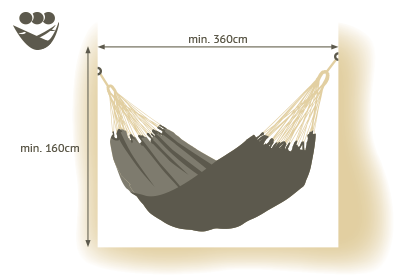
Hammock width affects comfort, stability, and how enclosed you feel. Most single hammocks are about 4 to 5 feet wide. Double hammocks are often 5 to 6.5 feet wide.
A single hammock is often the best choice for one person who wants a lighter, simpler setup. A double hammock provides more fabric and room to shift, but its higher weight rating does not always mean two adults should sleep in it.
Use these general width guidelines:
• Choose a single hammock around 4 to 5 feet wide for solo lounging or camping.
• Choose a double hammock around 5 to 6.5 feet wide for extra room and a more wrapped feel.
• Choose a wider model if you have a larger frame or prefer to sleep with more fabric around you.
• Do not assume a double hammock is safe for two people unless the manufacturer clearly approves it.
Width is partly a matter of personal taste. Some people like a narrow hammock because it is easy to position and pack. Others prefer a wide hammock because it feels more like a soft cocoon.
One mistake I often see is choosing the widest model available and expecting it to feel automatically better. A very wide hammock can fold over your shoulders. It may also make it harder to find a balanced diagonal position. Comfort comes from the relationship between length, width, fabric stretch, and hang angle.

How to Size a Hammock for Your Body Type
Your height is the main sizing factor, but body shape and sleeping habits also matter. A tall person needs more length. A broad-shouldered person may prefer more width. A side sleeper may need a longer, more flexible hammock than someone who only sits or reclines.
Consider these factors:
• Height: Add at least 2 feet to your height for the hammock’s body length.
• Shoulder width: A wider hammock may reduce pressure at the shoulders.
• Body weight: Check the complete weight rating, including clothing, sleeping gear, and accessories.
• Sleeping position: Diagonal sleeping needs enough length and width to let your legs extend.
• Mobility: A very deep or narrow hammock may be harder to enter and exit.
For example, a 5-foot-10-inch person who only lounges may be comfortable in a 9.5-foot hammock. The same person who sleeps overnight may prefer an 11-foot model because it offers a flatter diagonal position.
If you have back, hip, or joint pain, hammock sizing deserves extra care. A hammock cannot replace medical advice, and a soft, curved surface does not suit everyone. Try a similar model before buying when possible.

How to Measure a Hammock Correctly
Product listings can use different measurement methods. Some list the fabric body only. Others include end loops, gathered ends, or spreader bars. That difference can make two hammocks with the same advertised length feel very different.
To measure a hammock at home:
-
Lay the hammock flat on a clean surface.
-
Measure from the farthest fabric edge at one end to the farthest fabric edge at the other end.
-
Do not include removable straps unless the product instructions say the listed size includes them.
-
Measure the widest part of the fabric for width.
-
Record the hammock’s stated weight limit from the manufacturer.
For a spreader-bar hammock, measure from the outer end of one bar to the outer end of the other bar. Its usable length may feel different from a gathered-end hammock because the bars keep the fabric open.
For a camping hammock, check whether the listed size describes the hammock body or the entire system. Bug nets, ridgelines, suspension straps, and rain tarps may add length or require extra room, but they do not always change the sleeping area.
When deciding how to size a hammock, use the manufacturer’s body dimensions as your main reference. A product page with only “single” or “double” is not detailed enough for a confident choice.
How Much Space Do You Need to Hang a Hammock?
Your hammock needs more space than its body length. You also need room for the suspension system and a safe hanging angle.
A common starting point is to place the anchor points about 10 to 15 feet apart. Many standard hammocks work well in this range, but the correct distance depends on the hammock’s length and the manufacturer’s instructions.
Use this basic process:
-
Measure the distance between your trees, posts, or stand.
-
Measure the hammock body length.
-
Add room for straps, carabiners, and a natural sag.
-
Check the required minimum and maximum hang distance.
-
Confirm that the anchor points are strong and suitable.
A hammock should not be stretched tight like a clothesline. A mild curve is safer and more comfortable. Many hammock users aim for an approximately 30-degree angle from the anchor point to the hammock’s lowest attachment point, but this is only a setup guide. Follow the instructions for your specific system.
The lowest part of an occupied hammock is often positioned around 18 inches above the ground. This height can change with body weight, fabric stretch, suspension type, and terrain. Never assume a perfect height without testing the setup close to the ground first.
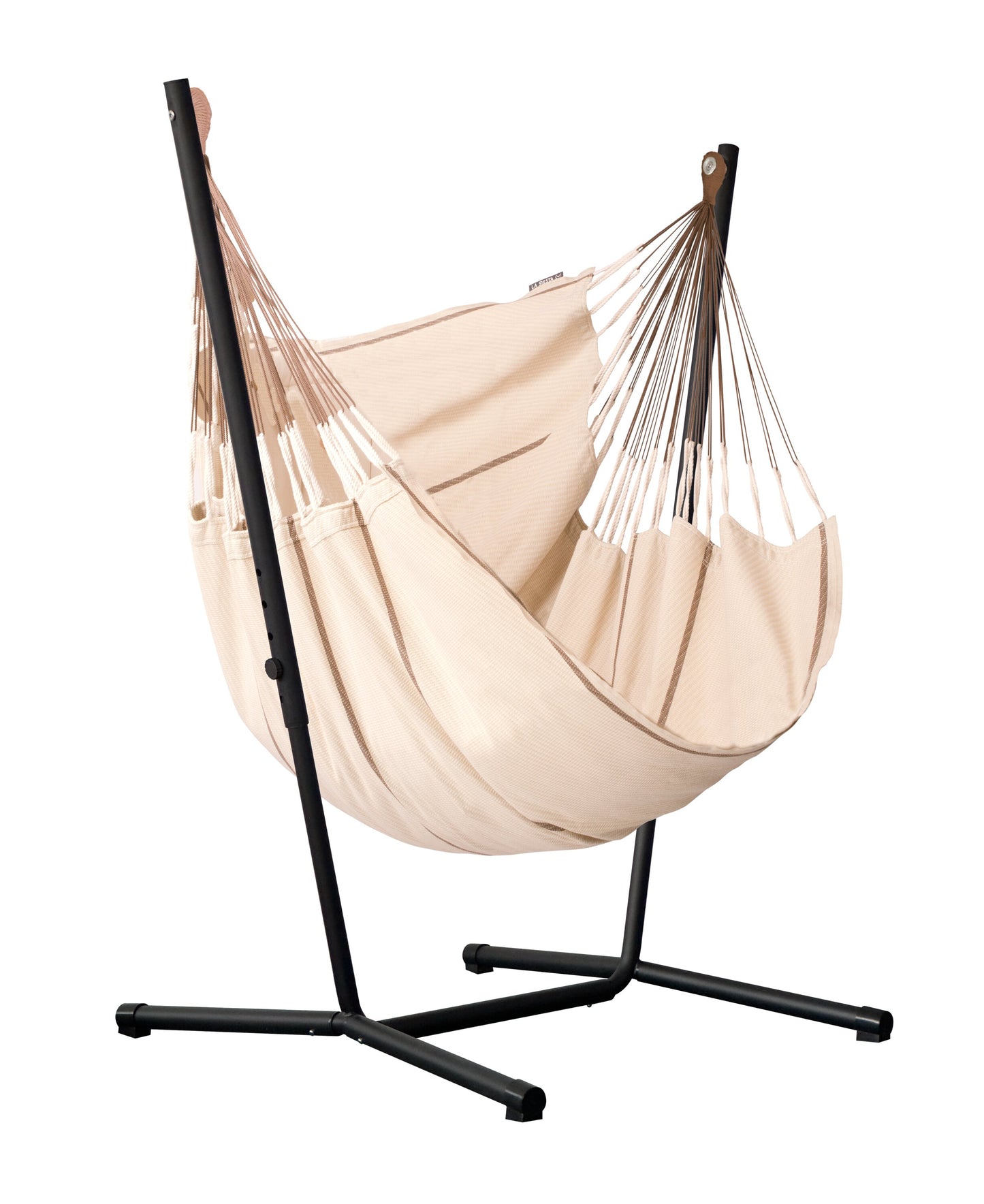
Measuring for a hammock stand
A hammock stand must match the hammock’s total hanging length and attachment style. Some stands fit only certain hammock sizes.
Check:
• The stand’s minimum and maximum hanging distance.
• The hammock’s body length.
• The distance from the hammock body to each attachment point.
• The stand’s maximum weight rating.
• Whether the stand is designed for gathered-end or spreader-bar hammocks.
A hammock that is too short for a stand may hang too tightly. A hammock that is too long may sit too low or require unsafe extensions. Never improvise with unapproved chain, rope, or hardware.
How to Choose the Right Hammock Weight Capacity
A hammock’s weight capacity is a safety limit, not a comfort suggestion. Add the weight of every person and item the hammock will support.
Use this calculation:
User weight + clothing + sleeping bag + pad + gear = minimum required capacity
For example, if you weigh 190 pounds and carry 15 pounds of camping gear, the hammock must support at least 205 pounds. A larger safety margin is wise, especially for outdoor use and dynamic movement.
Look for the manufacturer’s stated capacity. The rating may apply to:
• One person only.
• Two people together.
• The hammock body but not the suspension straps.
• The entire hammock system.
These details matter. A fabric rated for 500 pounds does not make a suspension strap rated for 250 pounds equally safe. The weakest part of the system controls the practical limit.
Avoid bouncing, jumping into the hammock, or using damaged straps. Dynamic force can be much higher than your stationary body weight. Inspect fabric, stitching, knots, carabiners, and anchor points before each use.
How to Size a Hammock for Camping
Camping hammocks need more than a comfortable fabric body. You must also allow space for a sleeping pad, underquilt, bug net, rain tarp, and personal gear.
Most adult camping hammocks fall between 9.5 and 12 feet long. A 10-foot hammock can save weight and pack smaller, while an 11- or 12-foot model often gives taller users a flatter and more comfortable lay.
Use these practical guidelines:
• Choose 10 feet for a compact setup if you are average height and value low weight.
• Choose 11 feet for a balanced option with more sleeping room.
• Choose 12 feet if you are tall, want more diagonal space, or prefer a gentler curve.
• Check the hammock’s compatibility with your sleeping pad and underquilt.
• Make sure the bug net leaves enough head and foot room.
I once tested a short camping hammock that looked ideal on paper because it was light and easy to pack. After one night, my feet pressed against the gathered end and my knees stayed bent. The extra few ounces saved in the pack were not worth the poor sleep. A longer hammock would have solved the issue without adding much complexity.
For cold-weather camping, length and width also affect insulation. An underquilt must cover the area beneath your body. If the hammock is unusually wide, a standard underquilt may leave cold gaps along the sides.
How to Size a Hammock for Two People
A two-person hammock must have enough length, width, and weight capacity for both users. Even then, sharing a hammock can feel unstable and crowded.
Add both users’ weights, clothing, and gear. Then compare the total with the hammock’s approved capacity. Do not rely on the word “double” alone.
For two adults, check:
• The manufacturer’s maximum number of users.
• The combined weight limit.
• The distance needed between anchor points.
• The strength and rating of the suspension system.
• Whether both users can enter and exit safely.
Two people also create more movement. One person turning can shift the entire hammock. A wide double hammock may work for short periods, but separate hammocks are often safer and more comfortable for overnight sleeping.
If you do share one, test it close to the ground. Sit down slowly. Keep hands and feet clear of pinch points. Never place a baby or child in an adult hammock without following specific safety guidance from a trusted child-safety authority.

How Hammock Shape Changes Sizing
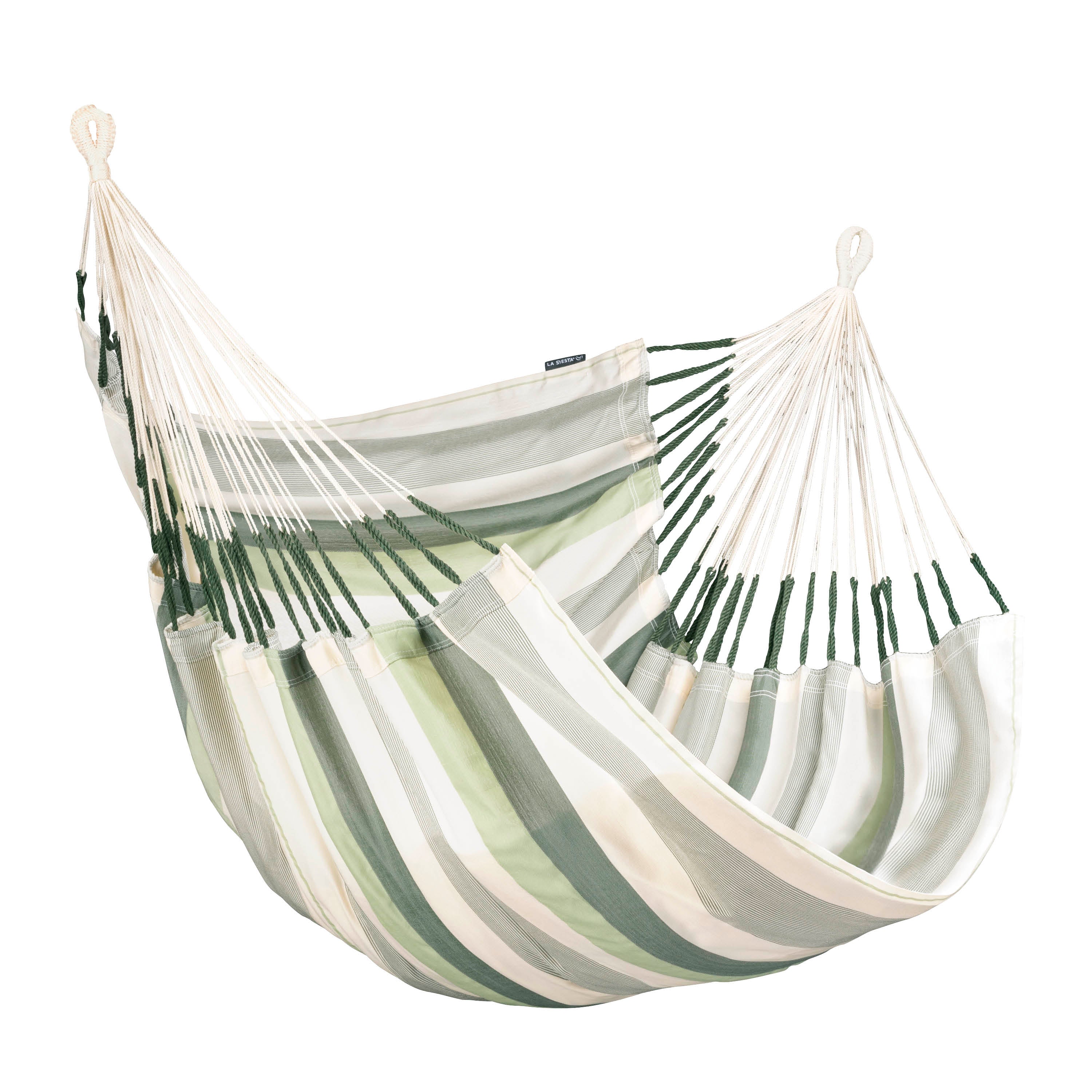
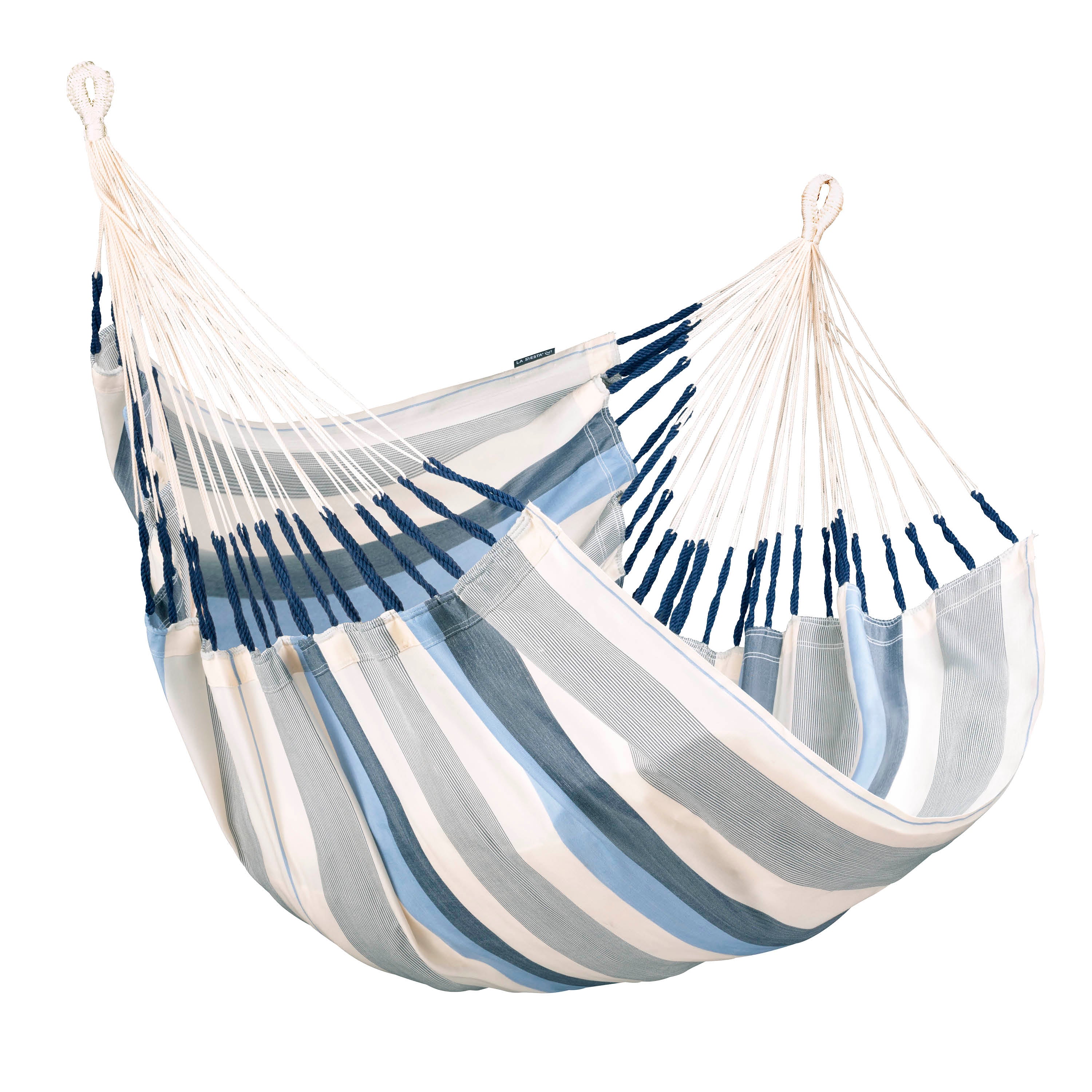
Hammock shape affects how much of the fabric you can use. The most common styles are gathered-end, spreader-bar, and chair hammocks.
Gathered-end hammocks
Gathered-end hammocks narrow at both ends. They are common for camping and backyard use. They allow a diagonal sleeping position and usually need more length than people expect.
For a gathered-end model, focus on:
• Body length.
• Fabric width.
• Ridgeline length, if included.
• Anchor distance.
• Suspension height.
Spreader-bar hammocks
Spreader bars hold each end open. These hammocks feel wide and flat, but they can be less forgiving if you shift your weight. They also need careful setup because the open ends can increase the risk of tipping.
For a spreader-bar hammock, check:
• Bar-to-bar length.
• Bar width.
• Stand compatibility.
• Weight rating.
• Stability on the intended surface.
Hammock chairs
A hammock chair is designed for sitting, not lying flat. Size it by seat width, hanging height, and weight rating rather than sleeping length. Confirm that the ceiling, beam, or stand can support the chair and the person using it.
Knowing the hammock shape makes how to size a hammock much clearer. A 10-foot gathered-end hammock and a 10-foot spreader-bar hammock do not provide the same experience.
The Best Hammock Size for Different Uses
The right size depends on what you want to do. A hammock for reading in the yard does not need the same dimensions as a hammock for winter camping.
For backyard lounging
Choose a medium or large hammock with enough width to sit sideways or recline. A 9- to 11-foot model suits many average-height adults.
For overnight camping
Choose a longer gathered-end hammock. An 11-foot model is a strong all-purpose choice for many adults, while taller users may prefer 12 feet.
For children
Use only products intended for children and follow the safety instructions closely. Adult hammocks can create entrapment and fall hazards.
For couples
Choose a model specifically rated for two people, but consider separate hammocks for better stability and sleep.
For travel
Prioritize a compact hammock with a suitable length. Do not choose a very short model only because it weighs less. Poor sleep and uncomfortable pressure can ruin an otherwise good trip.
Common Hammock Sizing Mistakes to Avoid
Small errors can lead to discomfort or unsafe setups. These are the mistakes I would avoid first.
• Buying by the word “double” instead of checking exact measurements.
• Measuring only the distance between trees.
• Choosing a hammock shorter than your body plus 2 feet.
• Ignoring the suspension system’s weight rating.
• Hanging the hammock too tightly.
• Assuming a larger width always means greater comfort.
• Forgetting the extra space needed for bug nets and tarps.
• Using a hammock stand without checking compatibility.
• Adding rope or hardware that the manufacturer does not approve.
• Testing the hammock from full height instead of starting low.
A hammock should feel supported, not stretched. If your shoulders press against the sides, your knees stay bent, or your body touches the ground, stop and reassess the size and setup.
A Simple Hammock Sizing Checklist
Use this checklist before you buy or install a hammock:
-
Measure your height.
-
Add at least 2 feet to find the minimum hammock length.
-
Choose a width that matches your body and preferred sleeping position.
-
Check the full weight capacity, including gear.
-
Measure the available anchor distance.
-
Confirm that your trees, posts, or stand are strong and suitable.
-
Check whether the hammock is gathered-end, spreader-bar, or chair style.
-
Confirm that the suspension system fits the hammock.
-
Read the manufacturer’s setup instructions.
-
Test the hammock close to the ground before regular use.
This process takes only a few minutes. It can prevent an expensive purchase from becoming a source of back pain, poor sleep, or unsafe hanging.
Frequently Asked Questions About How to Size a Hammock
How long should a hammock be for my height?
Choose a hammock at least 2 feet longer than your height. If you are tall or plan to sleep overnight, choose the longer option when your available space allows it.
Is a 10-foot hammock big enough for an adult?
A 10-foot hammock can suit many average-height adults, especially for lounging or lightweight camping. Taller users often feel more comfortable in an 11- or 12-foot hammock.
Is a double hammock better than a single hammock?
A double hammock offers more fabric and may feel roomier for one person. It is not automatically approved for two people, so check the exact weight limit and user instructions.
How far apart should hammock trees be?
Many hammocks work between trees about 10 to 15 feet apart, but the correct distance varies by hammock length and suspension system. Always follow the manufacturer’s minimum and maximum distances.
Can a hammock be too big?
Yes. A very large hammock may wrap around you, hang too low, or fail to fit your anchor points. Choose enough room for comfort without exceeding the recommended hanging distance.
How high should a hammock be off the ground?
The lowest point of an occupied hammock is often about 18 inches above the ground. Set it lower during testing, and adjust for body weight, stretch, and the manufacturer’s instructions.
What is the best hammock size for camping?
An 11-foot gathered-end hammock is a useful all-purpose choice for many adults. Taller campers may prefer 12 feet, while short trips and lightweight travel may favor a 10-foot model.
Conclusion
Learning how to size a hammock comes down to four checks: choose a body at least 2 feet longer than your height, select a width that fits your comfort needs, match the hammock to your hanging space, and respect the full weight rating. Length usually matters more than shoppers expect, while suspension and anchor strength matter just as much as fabric size.
Measure before you buy, test the setup close to the ground, and follow the product instructions. With the right fit, your hammock can become a comfortable place to rest, read, nap, or sleep outdoors. Compare your measurements with trusted product specifications, and share your hammock sizing experience in the comments.

Zayden Halbrook is a travel enthusiast and gear researcher passionate about making every journey smoother and more enjoyable. With a keen eye for practical travel essentials and real-world tips, he helps readers choose the right gear and travel smarter. When he’s not testing travel kits or exploring new destinations, Zayden shares simple, reliable advice to make every trip stress-free.