
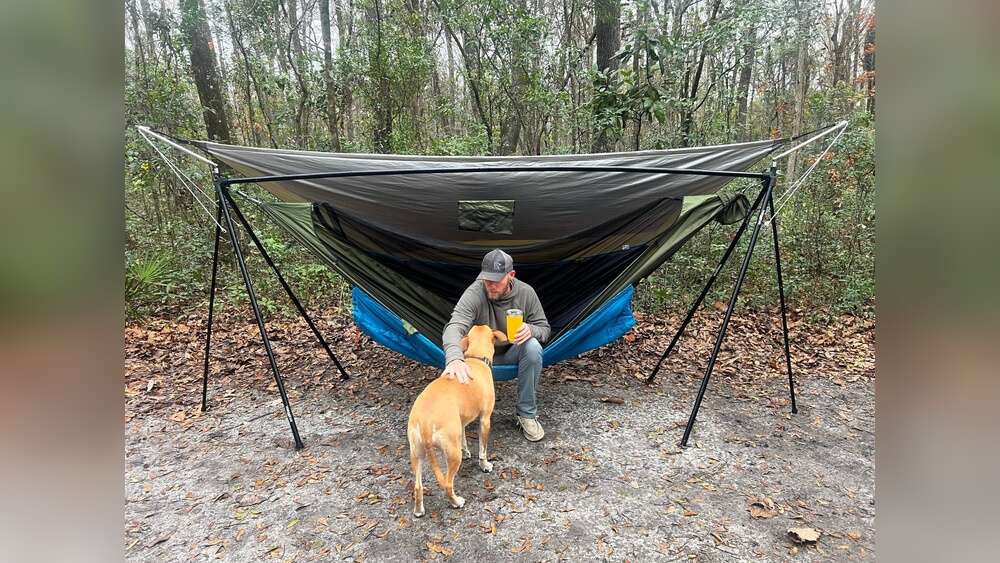
The hammock. Wet fabric can sag much more than dry fabric, sometimes by several inches. If you notice your hammock is closer to the ground after a rain, tighten the suspension or move the hooks higher on the Turtlebug stand.
Never sit in a hammock that looks too low or has water pooled in the fabric—let it dry out first for safety.
Adjusting For Cold Weather
In colder temperatures, the materials (especially nylon or polyester straps) may stiffen and contract slightly, making your hammock feel tighter. If it’s very cold, you might need to loosen the suspension a little or lower the hooks to keep your comfort level consistent.
Always check the connections for brittleness, as cold can make some materials more likely to crack.
Sun And Uv Exposure
Leaving your hammock out in the sun for long periods can weaken the fabric and straps over time due to UV damage. This can subtly change the tension and strength. If you use your stand in a sunny spot, inspect your hammock every few weeks for signs of fading, fraying, or thinning.
Consider storing the hammock indoors when not in use, or using a UV-resistant cover to protect it.
Real-world Troubleshooting Scenarios
Sometimes, things don’t go as planned. Here are a few real-life problems you might face and how to solve them:
My Hammock Sags Too Much After Sitting In
This is common, especially with new hammocks. Fabrics often “break in” and stretch during the first few uses. The fix is usually simple: move the hooks higher or shorten the suspension straps. Check if your body is closer to the ground after you lie down, and adjust accordingly. If you notice the sag increases over a few days, don’t worry—after a few uses, most fabrics settle and stop stretching as much.
The Stand Feels Unstable
If your Turtlebug stand wobbles or rocks, double-check that all frame connections are tightly secured. Make sure the base is fully flat on the ground. Sometimes, placing a thin mat or piece of plywood under the feet can help stabilize the stand on softer ground like grass or sand.
Uneven weight distribution—like sitting too far to one side—can also make the frame feel shaky. Try to center your body in the hammock every time you get in.
The Hooks Keep Slipping
Occasionally, the hooks might slide down if not properly locked or if the holes in the upright supports are worn. Make sure the hooks “click” firmly into place. If the hooks are adjustable with a pin, ensure the pin goes fully through both sides of the upright.
If you notice wear or bending on the hooks or holes, replace them to avoid any accidents.
Hammock Is Too Tight And Uncomfortable
If you feel like you’re lying on a board, the tension is too high. Lower the hooks or lengthen the straps a notch at a time. You’ll notice a big difference in comfort with even small changes. Forcing a hammock to be too flat not only feels bad but also puts extra stress on your back and the stand.
Advanced Tips For Experienced Users
Once you’re comfortable with the basics, there are a few advanced tricks to get even more from your Turtlebug stand:
Experiment With Diagonal Lying
Instead of lying straight down the middle, try positioning your body at a slight diagonal. This flattens your body’s position, especially in gathered-end or Brazilian hammocks, and can be much more comfortable for your back and shoulders. To do this, make sure there’s enough sag (30-degree angle), and adjust the width of the stand if possible.
Use Knot Techniques For Micro-adjustments
If you’re finding it hard to get the perfect tension with the standard suspension, you can use knots like the Becket hitch or slippery half hitch to make tiny changes to the rope length. This is especially helpful if your stand’s hook positions are a bit too far apart for your ideal setup.
Add A Ridgeline
For consistent sag every time, some hammock users install a ridgeline—a cord that runs from one end of the hammock to the other, just above where you lie. This keeps the curve the same, no matter how high or low you set the hooks. For most gathered-end hammocks, a ridgeline set at about 83% of the hammock’s total length works best.

Credit: www.youtube.com
Hammock Tension And Health
Believe it or not, the way you adjust your hammock can affect your body. Hanging too tight can cause pressure on your legs and back, while too much sag can make it hard to get in and out, especially for older users.
For people with back or joint issues, a gentle sag and lying diagonally is usually the most comfortable. If you have trouble getting up from low positions, set the tension so the hammock sits a little higher—about 20 inches from the ground when you’re inside.
Always listen to your body and make adjustments until you feel fully supported without any pinching or awkward angles.
Final Safety Reminders
- Always check the weight rating for your Turtlebug stand and your hammock. Don’t forget to include the weight of blankets, pillows, or gear.
- Inspect all parts of the stand and suspension regularly for wear, rust, or cracks.
- Never let children use the stand without supervision, especially if set up on a hard surface.
- If using your hammock stand indoors, place a soft mat or rug underneath as extra protection in case of slips or falls.

Credit: yobogear.com
Where To Learn More
If you want to dive deeper into hammock science, setup guides, or community tips, consider visiting [The Ultimate Hang](https://theultimatehang.com/), a well-known resource with detailed diagrams and advice for all hammock users.
Wrapping Up
Adjusting hammock tension on a Turtlebug Hammock Stand is both an art and a science. With the steps and tips above, you’ll be able to create your own perfect comfort zone, whether you’re napping, reading, or camping in the wild.
Remember, small changes make a big difference—so take your time, test often, and don’t be afraid to experiment.
Most importantly, enjoy the process. The right hammock setup can turn any day into a mini-vacation. Happy hanging!
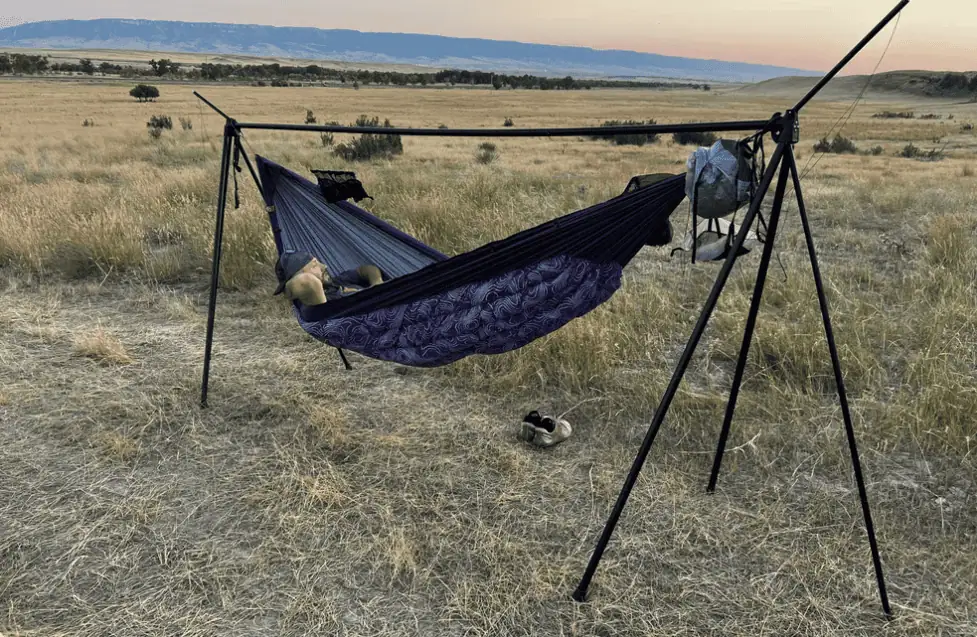
Credit: hammockgear.com

Zayden Halbrook is a travel enthusiast and gear researcher passionate about making every journey smoother and more enjoyable. With a keen eye for practical travel essentials and real-world tips, he helps readers choose the right gear and travel smarter. When he’s not testing travel kits or exploring new destinations, Zayden shares simple, reliable advice to make every trip stress-free.