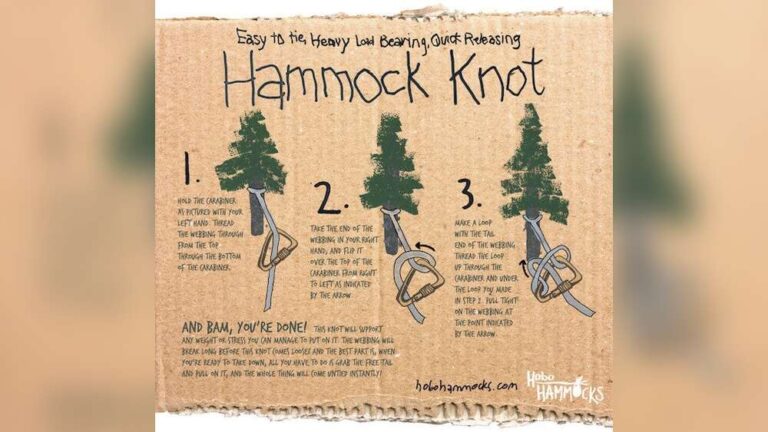

The hammock was invented by Indigenous peoples of the Americas more than 1,000 years ago.
The exact answer to “when was the hammock invented” is not known because early hammocks were made from plant fibers that rarely survived. Still, historical records, language studies, and Indigenous traditions show that hammocks were already common in the Caribbean when Christopher Columbus arrived in 1492. This article explores their origins, design, cultural role, and journey from a practical sleeping bed to a worldwide symbol of rest.
When Was the Hammock Invented?
The hammock was likely invented sometime before 1000 CE by Indigenous people in the Caribbean or nearby regions of Central and South America. No single inventor is known, and no surviving document gives an exact year.
The best answer to “when was the hammock invented” is therefore an estimated period rather than a precise date. By the late 15th century, hammocks were well established among Taíno communities in the Caribbean.
Christopher Columbus described hammock-like sleeping beds after reaching the Bahamas in 1492. His crew saw local people resting in suspended beds made from woven materials. Spanish sailors later adopted the design because it kept them above damp ground, insects, and uneven ship decks.
Historical evidence suggests that the hammock was not a recent invention in 1492. Instead, it was already the result of many generations of skill in weaving, knotting, and choosing strong local fibers.

The Indigenous Origins of the Hammock
The hammock most likely developed among Indigenous communities living in tropical climates. These areas had warm nights, wet soil, insects, and limited access to raised beds. A suspended bed solved several problems at once.
The Taíno people used hammocks made from woven bark, cotton, and other plant fibers. Some sources connect the word “hammock” to hamaca, a Spanish term borrowed from Taíno languages. This language link offers strong evidence about the hammock’s Caribbean roots.
When asking “when was the hammock invented,” it is important to avoid crediting one modern country or one individual. Indigenous technology often develops over time through shared knowledge. The hammock was likely refined by many communities that understood local plants, weather, and sleeping needs.
Hammocks also appeared in parts of mainland South America and Central America. Similar designs may have developed in more than one place, or the idea may have spread through travel and trade. Researchers cannot always separate independent invention from cultural exchange.

What Were the First Hammocks Made Of?
Early hammocks were made from natural fibers. Artisans selected materials that were flexible enough to weave but strong enough to hold a person’s weight.
Common materials included:
• Cotton, which offered softness and comfort
• Bark fibers, which were strong and widely available
• Palm fibers, which could be twisted into cord
• Vines and other plant strands, depending on the region
The first hammocks were not always shaped like the wide fabric beds sold today. Some were narrow nets or woven slings. Their ends were tied to trees, posts, or other strong supports.
This simple design was highly practical. It allowed air to move beneath the sleeper, which helped in hot climates. It also reduced contact with wet ground and made it harder for some insects and small animals to reach the person resting inside.
The answer to “when was the hammock invented” becomes clearer when we study its materials. A hammock could be made with local resources and basic hand skills. That made it useful, portable, and easy to repair.

How Did Hammocks Spread Around the World?
European sailors helped spread the hammock beyond the Caribbean. After seeing Indigenous people use them, Spanish and Portuguese crews began using hammocks aboard ships.
Ship life was crowded and uncomfortable. Wooden decks were hard, and sailors needed sleeping spaces that did not take up much room. Hammocks could be hung in rows and removed during the day, giving crews more usable space.
Hammocks also moved through European naval systems. Sailors carried the design to ports in Africa, Asia, and other parts of the Americas. Over time, local makers adapted the shape and materials to suit their own traditions.
The British Royal Navy used hammock-style sleeping systems for many years. Sailors could sleep above the ship’s deck, where the fabric moved with the waves. This was often safer and more comfortable than sleeping directly on a hard surface.
When considering “when was the hammock invented,” it helps to separate invention from global popularity. Indigenous Americans developed the basic form long before Europeans encountered it. European travel later made the hammock known across much of the world.

Why Were Hammocks So Useful?
The hammock worked because it matched the needs of its environment. Its value came from more than comfort.
Key benefits included:
• Protection from damp soil and light flooding
• Better airflow in hot and humid climates
• Less exposure to ants and other ground insects
• Easy storage when not in use
• Simple transport from one place to another
• A sleeping surface that could flex with the body
A well-made hammock also uses very little material compared with a raised wooden bed. It can be tied between two trees or posts without nails, boards, or a large frame.
That does not mean every hammock was perfect. Poorly tied knots, weak supports, or damaged fabric could cause falls. A hammock also provides less edge support than a bed, which may be difficult for infants, older adults, or people with balance problems.
Understanding “when was the hammock invented” also means understanding why it lasted. Useful inventions survive because they solve real problems. The hammock remains popular because it is light, compact, cool, and relaxing.
Hammocks in Indigenous Culture
For Indigenous communities, hammocks were more than simple camping gear. They were part of daily life, local craftsmanship, and cultural identity.
In many regions, making a hammock required knowledge of fiber preparation, weaving patterns, tension, and finishing. Skilled makers could create strong, finely balanced beds that were both practical and attractive.
Some hammocks were used in homes, while others supported travel, fishing, or outdoor work. Their design could change based on climate and purpose. A tightly woven hammock might offer more support, while a looser net could provide greater airflow.
Modern mass-produced hammocks often hide this history. They may look simple, but the design reflects centuries of Indigenous knowledge. Asking “when was the hammock invented” should therefore lead to respect for the people who created and improved it.
The exact history is not fully complete. Many early hammocks were made from organic materials, and those materials decay in tropical climates. This limits what archaeologists can recover and makes written records especially important.

The Meaning of the Word “Hammock”
The English word “hammock” came through Spanish, which used hamaca. Most linguistic research links hamaca to Taíno or another Indigenous Caribbean language.
Words can help historians trace cultural contact. When Europeans adopted both the object and its name, they recorded evidence of an encounter with Indigenous technology.
The spelling changed as the word moved through Spanish, English, French, and other languages. The object also changed. Sailors often used rope or canvas, while Indigenous makers used local fibers and traditional weaving methods.
The word does not reveal the exact date of invention. Still, it supports the view that the hammock was already established in the Caribbean before European arrival.
So, when was the hammock invented? Its name and early European descriptions point to a long Indigenous history that began well before 1492.
How Hammocks Changed Over Time
The basic hammock design has stayed surprisingly stable. Two suspension points hold a flexible surface, allowing the user to rest above the ground.
Modern versions now use cotton, polyester, nylon, canvas, and other manufactured materials. Some include spreader bars that keep the fabric open. Others use a gathered design that wraps around the body more closely.
Camping hammocks often include mosquito nets, rain covers, insulation, and strong webbing straps. These features make them more suitable for travel and outdoor sleeping than traditional leisure hammocks.
Home hammocks may use bright woven cotton and decorative fringe. Chair hammocks suspend only part of the body and are often used on porches or patios.
In my practical view, the best hammock is not always the most expensive one. The most important factors are safe suspension, strong fabric, correct size, and comfort. A beautiful hammock tied to a weak branch is still a poor choice.
What Can We Learn From the Original Design?
The early hammock offers several useful design lessons.
First, it uses materials that are light but strong. Second, it works without a rigid frame. Third, it responds to the body instead of forcing the body into one fixed position.