Hanging a hammock between two trees is one of life’s simple joys. Whether you want to relax in your backyard, read a book at the park, or sleep under the stars while camping, knowing how to hang a hammock safely and comfortably is a must-have skill.
I remember the first time I tried hanging my own hammock. It looked easy in the pictures, but I ended up too close to the ground and kept sliding to the middle! Over the years, I learned the little tricks that make all the difference.
In this guide, I’ll walk you through every step, share expert tips, and help you avoid the mistakes I made. By the end, you’ll have the confidence to hang your hammock almost anywhere, using just what you have.
Why Hang A Hammock From A Tree?
Trees offer natural strength and support. They’re free, easy to find in parks and forests, and create a peaceful setting. Hanging a hammock from trees is also better for the environment than using posts or stands, as long as you protect the bark.
Plus, nothing beats the feeling of swaying gently between two living giants. If you’re planning a camping trip, a backyard nap, or just want to enjoy nature, trees are often your best option.
Choosing The Right Hammock
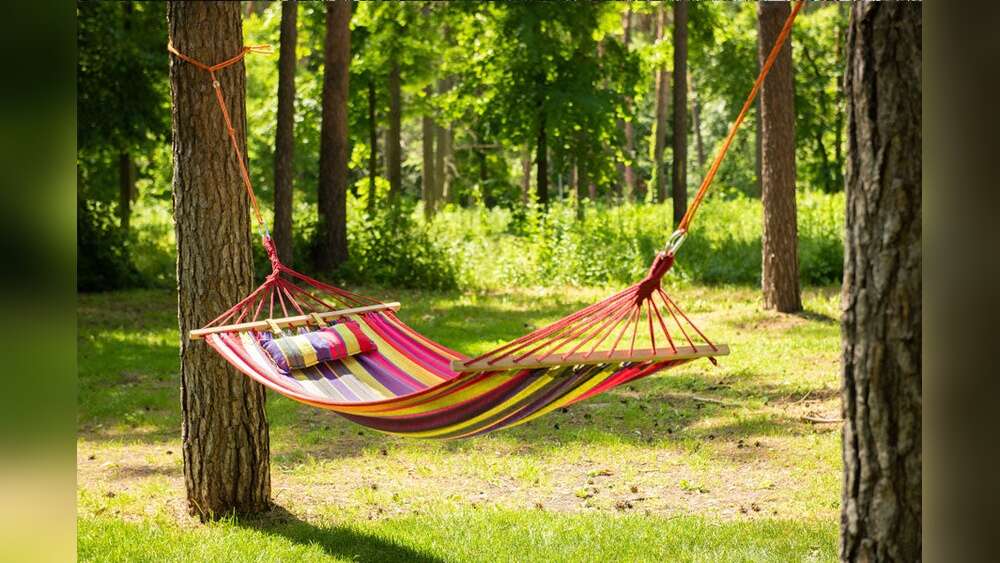
There are many types of hammocks. Some are made for sleeping, some for lounging, and some for travel. Before you hang your hammock, pick the one that fits your needs.
- Rope hammocks: Classic style, breathable, but not as comfortable for long naps.
- Fabric hammocks: Soft and colorful, good for home use.
- Camping hammocks: Lightweight, often come with their own straps, easy to pack.
- Spreader bar hammocks: Stay flat, but can tip over more easily.
When I first started, I picked a camping hammock because it was light and packed small. It worked well for both home and travel. For most beginners, a camping hammock with included straps is the easiest to start with.
What To Look For
- Length: Get a hammock at least 8 feet long for one person. For two, look for 10–14 feet.
- Weight limit: Most hammocks hold 250–450 lbs. Always check the label.
- Material: Nylon dries fast and is strong. Cotton is soft but heavy and can mold.
- Attachment points: Loops or carabiners make hanging much easier.

Credit: www.yellowleafhammocks.com
Picking The Best Trees
The trees you choose are the foundation of a safe, enjoyable hammock setup. Not all trees are safe or strong enough.
What Makes A Good Tree?
- Healthy: No dead branches, fungus, or large cracks.
- Sturdy: At least 8 inches thick (about the size of your thigh).
- Proper spacing: Trees should be 10–15 feet apart for most hammocks.
- No hazards: Avoid trees near cliffs, water, or with poison ivy.
Trees To Avoid
- Small, young trees (they can bend or break)
- Rotten or dead trees (risk of falling)
- Trees with loose bark (straps can slip)
- Trees with animal nests
When I camped in the woods last spring, I saw someone hang a hammock on a thin birch. It snapped in the night! Always check for strength—don’t risk your safety.
Popular Tree Species
Some trees are better for hammocks than others.
| Tree Species | Strength | Bark Sensitivity | Comments |
|---|---|---|---|
| Oak | Very Strong | Low | Great choice, tough bark |
| Maple | Strong | Medium | Common in parks |
| Pine | Medium | High | Bark is soft, use wide straps |
| Birch | Weak | High | Avoid if possible |
If you’re unsure, gently push the tree. If it moves, find another.
Essential Gear And Tools
You don’t need much to hang a hammock, but using the right gear makes a big difference in comfort and safety.
Main Items
- Hammock: Choose the type that fits your needs.
- Tree straps: Wide nylon or polyester straps protect the bark and hold weight. Avoid ropes if possible.
- Carabiners or hooks: Strong metal clips connect your hammock to the straps.
- Optional gear: Bug net, rain tarp, pillow, underquilt for cold nights.
Why Tree Straps Matter
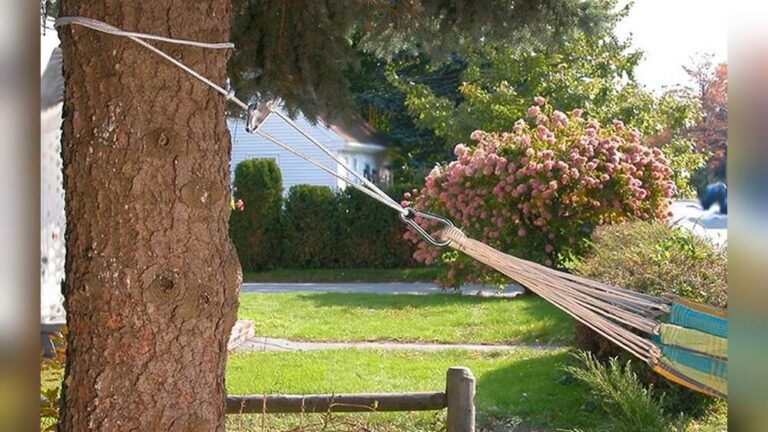
Wide straps (1 inch or more) spread the weight and keep trees healthy. Thin rope can cut into bark, harming or even killing the tree. Many parks now require wide straps.
I once used a rope in my early days, and the tree bled sap for weeks. Since then, I always use wide straps and make sure they’re flat against the bark.
Gear Comparison
Here’s a quick look at two common ways to hang a hammock:
| Method | Tree Safety | Ease of Use | Adjustability |
|---|---|---|---|
| Wide tree straps | Excellent | Very easy | High (many loops) |
| Rope | Poor | Harder (need knots) | Medium |
Go with straps if you can. They’re better for the trees and simpler for you.
Step-by-step Guide: How To Hang A Hammock From A Tree
Now, let’s get to the main event. Follow these steps for a safe, comfortable hang every time.
1. Find Two Healthy, Strong Trees
Look for trees about 10–15 feet apart. Check for signs of disease or weakness. If you see mushrooms, cracks, or peeling bark, choose another.
2. Set The Hanging Height
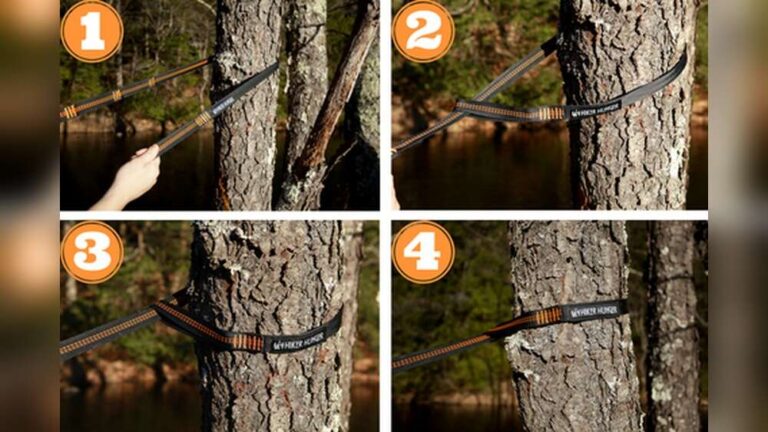
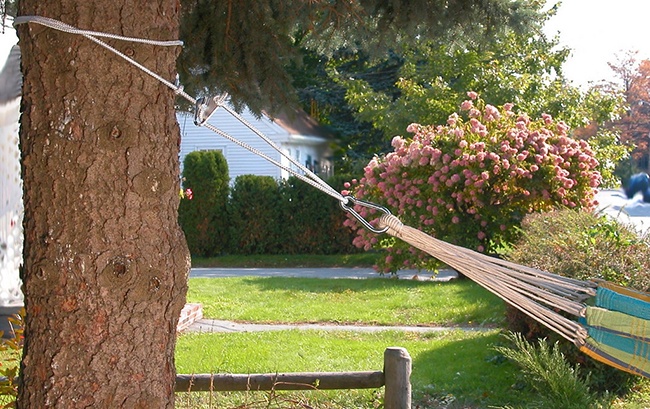
Wrap your tree straps about five to six feet up the trunk. This works for most hammocks and adults. If your trees are farther apart, go a bit higher.
3. Wrap The Straps Correctly
Lay the strap flat around the tree at the chosen height. Thread the end through the loop, then pull it snug. This keeps the strap from sliding down.
- Use tree-friendly straps at least 1 inch wide.
- Make sure the strap is not twisted.
4. Attach Hammock To Straps
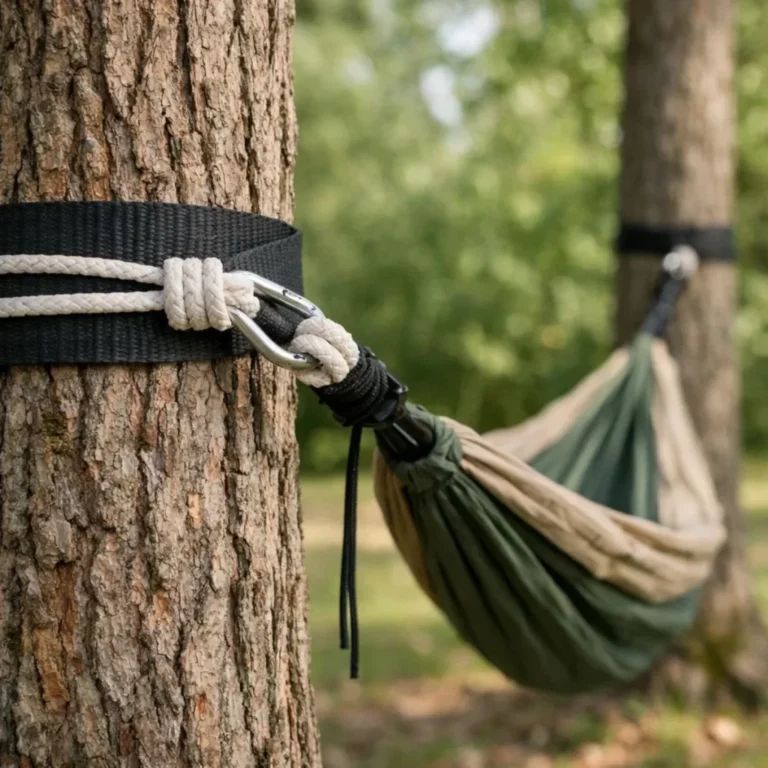
Clip your hammock’s carabiner or hook to a loop in the strap. Most straps have several loops for easy adjustment. If your hammock uses rope, tie a secure knot (I’ll cover knots later).
- Double-check both sides are even.
- If one side is higher, move the strap up or down.
5. Adjust Sag And Height
When you sit in the hammock, the lowest point should be about 18 inches off the ground (knee height). The ideal angle of the straps is about 30 degrees from horizontal. Too tight, and it’s stiff and tipsy. Too loose, and you’ll hit the ground.
A simple trick: Make a “gun” with your fingers (thumb and forefinger). Place your thumb on the strap at the tree. If the strap follows your forefinger at 30 degrees, you’re good.
6. Test Before Using
Sit gently in the hammock to test. Listen for any creaks or slipping. If it holds your weight, lie back slowly. If anything moves or slides, get out and adjust.
7. Enjoy!
Once everything feels safe, settle in and relax. You did it!
Hanging Knots And Tips
Many modern hammocks use carabiners and straps, but sometimes you’ll need knots, especially with rope hammocks. Here are the best knots for beginners:
Bowline Knot
- Make a small loop in the rope.
- Pass the end through the loop, around the standing line, and back through.
- Pull tight.
The bowline is strong and easy to untie.
Double Half Hitch
- Wrap the rope around the tree.
- Pass the end around the standing line twice.
- Pull tight.
Use this knot to adjust your hammock’s height.
Quick Hammock Hanging Tips
- Always use a wide strap to protect trees.
- Check for sharp rocks or sticks under your hammock.
- Never hang higher than you’re willing to fall.
- Don’t overload your hammock.
Credit: www.yardenvy.com
Common Mistakes And How To Avoid Them
I’ve made nearly every mistake in the book. Here’s how to avoid the most common ones:
Hanging Too Tight
A tight hammock is uncomfortable and can break. Always aim for a gentle sag.
Picking Weak Trees
Thin or sick trees can break. Look for thick, healthy trunks.
Using Rope Without Protectors
Rope can damage trees. Use straps, or add old towels under your rope.
Setting Up Over Hazards
Check for rocks, roots, or water under your hammock. If you fall, you want soft ground.
Not Checking Weight Limits
Every hammock and strap set has a weight limit. Check before using, especially if more than one person will climb in.
Adjusting For Comfort And Safety
A well-hung hammock feels like floating. If it’s not comfortable, tweak a few things:
Sag And Lay
The perfect hammock has a “smile” shape. Lie slightly diagonal for a flatter back. This reduces pressure and lets you sleep or relax for hours.
Bug And Rain Protection
Insects and rain can ruin your nap. Add a bug net or rain tarp if needed. Many camping hammocks come with these.
Cold Weather
If it’s chilly, use an underquilt or sleeping pad. Cold air under your hammock can sap heat fast.
Privacy
Hang your hammock where you feel safe and out of view. This is especially important in public places.
How To Hang A Hammock Without Harming Trees
As someone who loves the outdoors, I always want to protect trees for others to enjoy. Here’s how you can do the same:
- Use wide straps (at least 1 inch) instead of rope.
- Don’t hammer nails or screws into trees.
- Move your hammock often to avoid damaging one spot.
- Take straps down when not in use.
- Check local rules—some parks have strict guidelines.
Many parks now fine people who use rope or harm trees. Always check posted signs.
Hammock Safety Essentials
Safety comes first, always. Here’s what you need to know:
How High Should You Hang?
Never hang your hammock more than 3 feet off the ground. If you fall, this keeps you safe.
What About Kids?
Kids love hammocks, but they can tip easily. Supervise children and never leave them alone.
Night Safety
If you’re sleeping in your hammock overnight:
- Check knots and straps before bed.
- Keep your gear close (shoes, flashlight).
- Don’t hang above sharp objects.
Weather
Strong wind or rain can drop branches, so avoid hanging in storms or under dead limbs.
Hammock Hanging In Different Settings
Not every place is the same. Here’s how to adapt:
Backyard
- Use strong, mature trees.
- Keep away from fences and walls.
- Consider adding a tarp for shade.
Park
- Follow all local rules.
- Avoid crowded areas.
- Look for trees with plenty of space.
Campground
- Use designated hanging areas if provided.
- Respect nature and other campers.
Wilderness
- Choose trees away from trails and water.
- Leave no trace—pack everything out.
Caring For Your Hammock And Straps
With the right care, your hammock can last for years.
Cleaning
- Wash nylon hammocks in cold water, air dry.
- Brush off dirt before packing.
- Don’t use bleach or harsh chemicals.
Storing
- Keep your hammock dry and out of the sun.
- Store straps loosely rolled to avoid kinks.
Checking For Damage
- Inspect for tears or frayed straps before every use.
- Replace worn gear right away.
Environmental Impact And Leave No Trace
Hammock camping is low-impact if done right. Here’s how to minimize your footprint:
- Always use tree-friendly straps.
- Move your hammock often to avoid harming bark.
- Pack out all trash.
- Don’t pick or damage plants near your site.
If you’re curious about the science behind tree protection, read more at the Leave No Trace Center for Outdoor Ethics.
Quick Reference: Hammock Hanging Data
Here’s a simple summary for easy reference.
| Feature | Ideal Value | Why It Matters |
|---|---|---|
| Tree Distance | 10–15 feet | Fits most hammocks, safe sag |
| Strap Width | 1 inch or more | Protects tree bark |
| Hanging Height | 5–6 feet up tree | Good for easy entry/exit |
| Strap Angle | 30 degrees | Comfortable lay, prevents tip-overs |
| Weight Limit | Check label | Prevents accidents |

Credit: www.youtube.com
Troubleshooting: Fixing Common Problems
Sometimes things don’t go as planned. Here’s how to fix the most common issues:
Hammock Sags Too Low
- Move straps higher on the tree.
- Check for stretch in straps or ropes.
- Try a shorter hang distance.
Hammock Too Tight
- Lower the straps.
- Add more sag for comfort.
Hammock Twists Or Spins
- Make sure straps are flat, not twisted.
- Double-check attachment points.
Bark Damage
- Switch to wider straps.
- Move your hammock to a new spot.
Cold Backside
- Use a sleeping pad or underquilt.
- Add a blanket inside.
Advanced Tips For Experienced Hangers
If you want to go further, try these advanced techniques:
- Ridgeline: Add a rope above your hammock to keep sag perfect every time.
- Adjustable straps: Use daisy-chain straps for fast setup and easy changes.
- Integrated bug net: For camping in buggy areas.
- DIY gear: Make your own straps or hammock for a custom fit.
After trying many methods, I found that a fixed ridgeline makes setup much faster. I can hang my hammock perfectly every time, even between trees of different heights.
Frequently Asked Questions
How Far Apart Should Trees Be For A Hammock?
For most hammocks, trees should be 10 to 15 feet apart. This gives enough space for the hammock to hang with a gentle sag. If you have a longer hammock, you may need more space.
Can I Hang A Hammock From Any Tree?
No. Only use healthy, sturdy trees at least 8 inches thick. Avoid young, rotten, or damaged trees. Check for animal nests or hazards.
Is It Safe To Leave My Hammock Outside?
You can leave your hammock outside for a short time, but sun and rain can damage it. For longer life, store your hammock in a dry place when not in use.