
A well-packed hospital bag includes documents, comfort items, baby essentials, and useful supplies for recovery.
Knowing what to bring in hospital bag can make labor day feel less rushed and more manageable. After helping families prepare for hospital stays, I have learned that the best bag is not the biggest one. It is a simple, labeled kit with the items you may need during labor, birth, and the first day or two at home.
When to Pack Your Hospital Bag
Most parents pack their hospital bag between 32 and 36 weeks of pregnancy. Packing earlier is wise if you have a higher chance of early labor, twins, a planned cesarean birth, or a long distance to the hospital.
You may never need some items in your bag. That is fine. The goal is not to predict every detail. The goal is to avoid searching for clean clothes, an insurance card, or a phone charger during a busy moment.
Keep the bag in an easy-to-reach place. Tell your support person where it is. If you have other children, arrange child care before labor begins. Add the hospital address, your provider’s phone number, and your preferred route to your phone.
A small checklist on the refrigerator can help. Review it around 36 weeks, then add last-minute items such as daily medicines, glasses, and phone chargers when labor starts.
What to Bring in Hospital Bag for the Birthing Parent
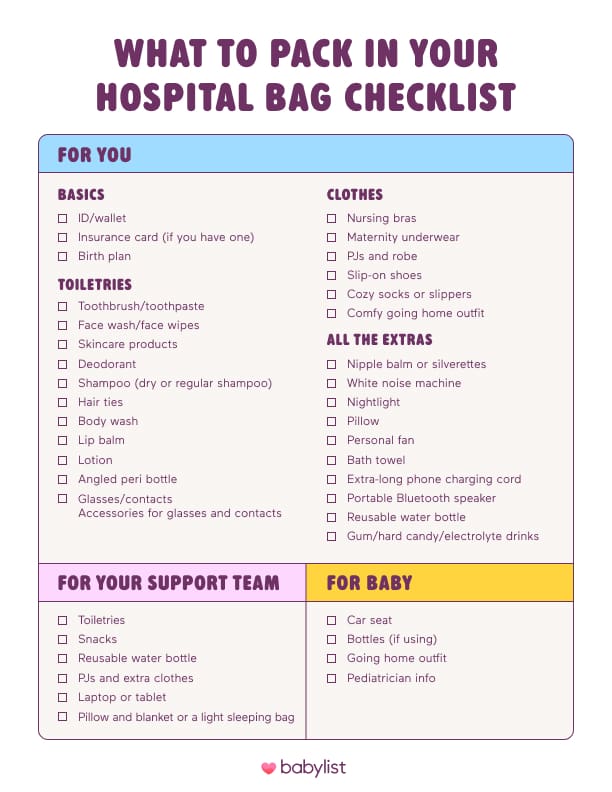
The birthing parent usually needs items for identification, comfort, hygiene, clothing, and recovery. Many hospitals provide basic gowns, mesh underwear, pads, socks, and toiletries. However, hospital supplies vary, so ask your labor and delivery unit what it provides.
Here is a practical list of what to bring in hospital bag for yourself:
• Photo ID and insurance information: Bring your driver’s license or another valid ID, insurance card, and any hospital registration papers.
• Medical information: Pack a current medication list, allergy list, blood type if known, and the contact details for your obstetric or midwifery team.
• Birth preferences: Bring a short birth plan if you have one. Keep it flexible, since medical needs can change quickly.
• Prescription medicines: Bring a list of all medicines and supplements. Do not take your own medicines in the hospital unless your care team approves them.
• Comfortable clothing: Pack loose pajamas, a soft robe, a nursing-friendly top, and clothes that will not press on a tender abdomen.
• Warm socks and slip-resistant slippers: Hospitals can feel cool, and slippers make short walks safer.
• High-waisted underwear: Choose cotton underwear that fits loosely. Some people prefer disposable underwear during the first days after birth.
• Nursing bras or soft bras: Select bras without tight underwire. Your breasts may become tender as milk comes in.
• Going-home outfit: Bring clothing that fit comfortably during about the sixth or seventh month of pregnancy. Most people do not return to their pre-pregnancy size right away.
• Hair ties or a headband: These are simple items, but they can make labor and feeding much more comfortable.
• Lip balm and moisturizer: Dry hospital air and frequent breathing through the mouth can leave your lips uncomfortable.
• Glasses and contact supplies: If you wear contacts, bring a case and solution. Glasses are often easier to use during labor and recovery.
• Personal toiletries: Pack a toothbrush, toothpaste, face wash, deodorant, shampoo, conditioner, and any skin products you use.
• Water bottle with a straw: A straw lets you drink while lying down or holding your baby. Check with your care team before drinking if a procedure is planned.
• Small comfort items: Consider a pillow with a bright pillowcase, a small blanket, an eye mask, or a calming scent if your hospital allows it.
Bring only a few valuables. Hospitals are busy places, and jewelry, expensive electronics, and large amounts of cash can be lost. Leave wedding rings and other important pieces at home if swelling is likely.

What to Bring in Hospital Bag for Labor
Labor can last for hours, or it may move very quickly. A few useful items can support comfort without filling the room with clutter.
Consider adding these labor supplies:
• Phone and long charging cable: Hospital outlets may be far from the bed. A cable that is at least six feet long is often useful.
• Portable battery pack: A charged power bank can help if the room has limited outlets.
• Headphones or a small speaker: Music, a meditation track, or a familiar podcast may help you relax.
• Massage tool or tennis ball: Your support person can use one for counterpressure on the lower back.
• Cooling items: A small fan, cooling towel, or facial mist may feel good during contractions.
• Snacks for the support person: Pack protein bars, crackers, nuts, fruit, or sandwiches. Follow hospital rules about eating during labor.
• Hard candies or ice chips: Ask your nurse whether these are allowed. Your care team may limit food and drink before certain procedures.
• Hair ties and lip balm: These deserve a second mention because they are often used again and again.
• Birth support tools: If you plan to use a labor comb, massage oil, affirmation cards, or a birth ball, confirm that the hospital allows them.
• A folder for paperwork: Use it for discharge instructions, prescriptions, birth records, and follow-up details.
One lesson I have seen many families learn is that comfort items should be easy to find. Place labor items in a small pouch inside the main bag. You should not need to unpack every shirt to find lip balm or a charging cord.
Do not pack medical equipment unless your provider recommends it. The hospital has monitors, blood pressure tools, sterile supplies, and emergency equipment. Your own items should support comfort and organization, not replace clinical care.
What to Bring in Hospital Bag for the Baby
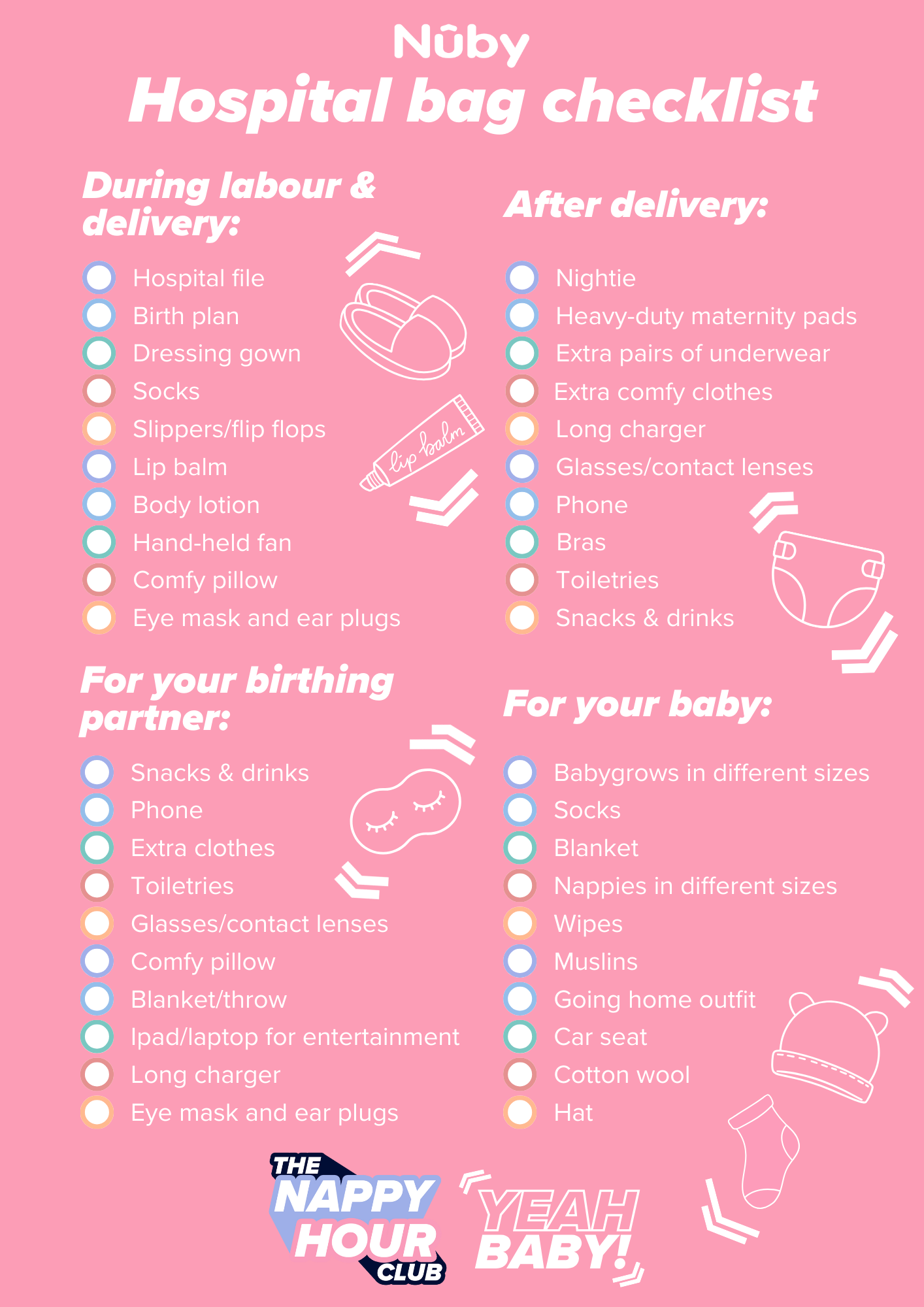
Newborns need fewer items than many stores suggest. The hospital often provides diapers, wipes, blankets, and basic clothing during the stay. Ask your hospital what is included before you buy a large supply.
Useful baby items include:
• Two or three bodysuits or sleepers: Pack sizes for newborn and 0 to 3 months. Babies vary in size, so one size may not fit.
• Going-home outfit: Choose clothing that matches the weather. Avoid complicated outfits with many buttons.
• Socks or booties: These can help keep tiny feet warm, although many sleepers already cover the feet.
• Soft hat: A hat may help your newborn stay warm right after birth, but use it only as directed by the care team.
• Receiving blanket: The hospital usually provides blankets, but a familiar blanket can be helpful for the ride home.
• Burp cloths: One or two are enough for the trip home.
• Newborn diapers and wipes: Pack a small amount only if your hospital does not provide them.
• Pacifier: If you plan to use one, bring the type you prefer. Some parents wait until breastfeeding is well established, while others use a pacifier earlier. Ask your pediatric care team for advice.
• Infant car seat: Install a rear-facing car seat before your due date. The baby cannot leave the hospital safely without an appropriate restraint.
Avoid loose blankets, pillows, stuffed animals, and sleep positioners in the car seat or bassinet. Safe sleep guidance recommends placing a baby on the back, on a firm, flat surface, with no loose items around the face.
Do not dress the baby in a bulky coat under the car seat harness. Use thin layers and place a blanket over the secured harness if the weather is cold. If you are unsure whether the straps fit correctly, ask a certified car seat technician or your hospital team.

What to Bring in Hospital Bag for a C-Section
A planned or unexpected cesarean birth may mean a longer stay and a more tender recovery. Pack clothing that is loose around the waist and easy to put on without bending.
Add these items if a C-section is possible:
• High-waisted underwear: Choose soft styles that sit well above the incision.
• Loose pants or a long dress: Waistbands should not rub the surgical area.
• Slip-on shoes: Shoes that do not require bending are easier after surgery.