Clean a luggage by emptying it, checking its material, using mild soap, drying it fully, and treating stains gently.
Learning how to clean a luggage can make an old suitcase look fresh, smell better, and last longer. The right method depends on whether your bag is made of fabric, hard plastic, leather, or a mix of materials. This guide explains safe steps, common mistakes, stain care, odor removal, and easy ways to protect your luggage before your next trip.
Why You Should Clean Your Luggage
Luggage collects more than dust. It may pick up germs, food crumbs, spills, hair, sand, and moisture from airport floors, car trunks, hotel rooms, and storage spaces.
Cleaning your suitcase helps remove dirt before it spreads to your clothes. It can also reduce musty smells and help you spot damage early.
Regular care may help protect:
• Zippers from grit and food particles
• Wheels from hair and thread
• Handles from sticky dirt
• Fabric from deep stains
• Hard shells from dull residue and scuffs
A clean suitcase is also easier to store. I have found that a five-minute wipe after a trip prevents a much harder cleaning job later. Luggage is like a pair of shoes: the more often you remove surface dirt, the better it holds up.

What to Check Before Cleaning a Luggage
Before you learn how to clean a luggage, identify its material and read the care label. A method that works on nylon may damage leather or leave marks on a soft lining.
Common luggage materials include:
• Polyester or nylon: These fabrics are usually durable and respond well to mild soap and water.
• Canvas: Canvas can absorb water and may shrink or develop water marks if soaked.
• Polycarbonate or ABS plastic: These hard shells can usually be wiped with a damp cloth.
• Aluminum: Aluminum luggage needs gentle cleaning to avoid scratches and finish damage.
• Leather: Leather requires a leather-safe cleaner and should not be saturated.
• Vinyl or faux leather: These surfaces can often be wiped with diluted soap, but strong chemicals may cause cracking.
Also check the bag’s construction. Look for electronic pockets, leather trim, metal parts, decorative coatings, and waterproof zippers.
If the manufacturer gives different instructions, follow those instructions first. Test any cleaner on a hidden area before using it on the whole suitcase.

Supplies You Need to Clean a Luggage
You do not need a large set of products. Simple tools are often safer than strong cleaners.
Gather:
• A vacuum with a crevice tool
• Two or three soft microfiber cloths
• A soft-bristled brush or clean toothbrush
• Mild dish soap or gentle laundry detergent
• Lukewarm water
• A small bowl
• Baking soda for odors
• Cotton swabs for seams and zipper areas
• A clean towel
• A melamine sponge for some hard-shell marks, used very lightly
Avoid bleach, ammonia, acetone, nail polish remover, rough scrubbers, and heavy fragrance sprays. These products can fade fabric, weaken coatings, or damage plastic and leather.
A melamine sponge can remove marks from some hard shells, but it works like a very fine abrasive. Use light pressure and test it first. It can leave a dull patch on glossy plastic.

How to Clean a Luggage Step by Step
The safest way to clean luggage is to work from dry cleaning to light wet cleaning. This keeps loose dirt from turning into muddy streaks.
1. Empty every pocket
Remove clothes, papers, chargers, toiletries, and small items. Check hidden pockets and the space between the lining and frame.
Shake the suitcase upside down over a trash can. Remove crumbs and loose sand before using a vacuum.
2. Remove detachable parts
Take off washable laundry bags, straps, covers, and removable inserts if the care label allows it. Clean these parts separately so dirt does not move back onto the suitcase.
3. Vacuum the inside
Use a low or medium setting. Move the crevice tool along seams, corners, pocket edges, and the bottom of the case.
Do not press the vacuum nozzle hard against a thin lining. Older linings can tear, especially near zippers.
4. Wipe the interior
Mix a few drops of mild soap into lukewarm water. Dip a cloth into the solution, then wring it out well.
The cloth should be damp, not wet. Wipe the lining in small sections. Focus on stains, corners, and areas that touch shoes or toiletries.
5. Clean the outside
For fabric luggage, brush away dry dirt first. Then dab the surface with the damp, soapy cloth.
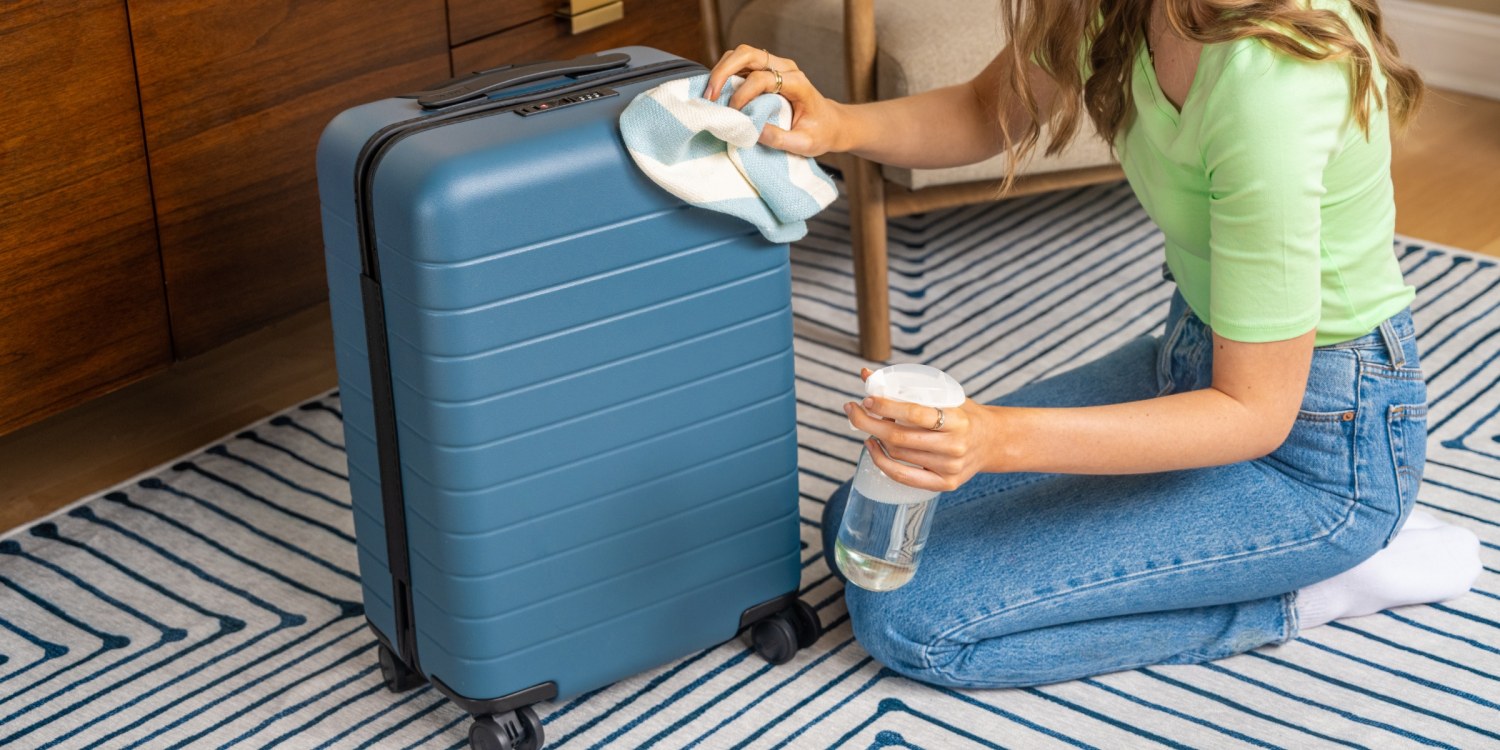
For hard-shell luggage, wipe the shell from top to bottom. Use a second cloth with plain water to remove soap residue.
6. Clean the zipper and seams
Use a dry toothbrush or cotton swab to loosen grit. Wipe the area with a barely damp cloth.
Do not flood the zipper. Water trapped near the teeth or zipper tape can cause rust, stiffness, or mildew.
7. Clean wheels and handles
Turn the suitcase on its side or upside down. Remove hair, thread, and dirt from the wheels with a brush or tweezers.
Wipe the telescoping handle, grab handles, and wheel housings with diluted soap. Pull the handle out fully so you can reach the inner sections.
8. Dry the luggage completely
Leave the suitcase open in a dry, well-ventilated room. Keep it away from direct high heat, radiators, and hair dryers.
Moisture trapped inside a closed suitcase can create a musty smell or mold growth. Allow several hours of drying time, or longer if the lining became very damp.

How to Clean Fabric Luggage
Fabric suitcases need gentle treatment because their fibers can hold moisture and stains. Never begin by soaking the whole bag.
Start by vacuuming the fabric. Then mix a small amount of mild detergent with lukewarm water. Dip a soft cloth into the mixture, wring it out, and blot the dirty area.
Work from the outside of the stain toward the center. This helps prevent the stain from spreading. Avoid hard rubbing, which can roughen the fabric or create a lighter patch.
For a greasy mark, place a little dish soap on a damp cloth and blot gently. Let it sit for a few minutes, then remove the soap with a clean damp cloth.
For a fresh drink spill, blot with a dry towel first. Do not use hot water on an unknown stain because heat can set some proteins and dyes.
If the fabric has a large stain, use a fabric-safe cleaner only after testing it on a hidden section. Professional cleaning may be safer for expensive luggage, delicate canvas, or bags with leather trim.

How to Clean a Hard-Shell Luggage
Hard-shell luggage is often easier to wipe clean. First, remove loose dust with a dry microfiber cloth.
Add a few drops of mild dish soap to lukewarm water. Wipe the shell with a damp cloth, then use a separate clean cloth to remove residue.
For scuff marks, try a soft cloth first. If the mark remains, use a melamine sponge with very light pressure on a small hidden area. Stop if the surface becomes dull.
Do not use abrasive powder or a rough sponge. These can create fine scratches that collect more dirt later.
Pay attention to the edges, corners, locks, and handle openings. Dirt often hides in these areas, but water can also collect there. Dry them with a towel after cleaning.
Hard-shell luggage may resist spills, but it is not always waterproof. Water can enter through zippers, seams, vents, and handle openings.
How to Clean Leather and Faux Leather Luggage
Leather needs a different approach. Begin by wiping away dust with a soft, dry cloth.
Use a leather cleaner made for the specific type of leather. Apply a small amount to a cloth rather than pouring it directly onto the bag.
Clean one small area at a time. Keep the cloth damp, not wet. After cleaning, let the leather dry naturally and apply a suitable conditioner if the care instructions allow it.
Never use household bleach, alcohol, acetone, or strong degreasers on leather. These products can strip color and natural oils.
Faux leather may tolerate mild soap and water, but it can crack when exposed to heat or harsh chemicals. Always test the cleaner first, especially on colored or textured finishes.
When leather trim is attached to fabric, keep water away from the trim as much as possible. Different materials can dry at different rates and leave uneven marks.

How to Remove Common Luggage Stains
The best stain treatment depends on what caused the mark. Always blot first and scrub last.
Food and drink stains
Remove solid food with a spoon or dull edge. Blot liquid with a clean towel, then use mild soap diluted in water.