
A luggage strap is a band that wraps around a suitcase. It helps hold the case closed, adds a layer of support, and makes the bag easier to spot at baggage claim. Some straps also include a label, lock, or buckle.
For travelers in the United States, a luggage strap can be useful on checked bags, carry-ons, and soft travel bags. It is not a replacement for a working zipper, strong case shell, or proper lock. Think of it as a backup layer, not a guarantee.

What does a luggage strap do?
A luggage strap gives a suitcase extra support around its outside. The strap usually runs around the case from front to back or from side to side.
Its main uses are:
- Helping keep an overfilled suitcase closed
- Supporting a weak or damaged zipper
- Making a suitcase easier to identify
- Grouping two bags in some cases
- Adding a small barrier against casual opening
- Keeping a suitcase from opening if the shell or zipper fails
A luggage strap does not make a bag theft-proof. It also does not protect the contents from rough handling, water, or impact.
Most travel straps use woven nylon or polyester. They have an adjustable slider and a plastic or metal buckle. Some models use a combination lock. Others have bright colors, printed patterns, or a name tag.
The best use depends on the type of bag and the problem you want to solve. A bright strap may help you find a black suitcase. A strong strap may help hold a packed case together. A lockable strap may add a small security barrier.
Why do people use luggage straps?
Travelers use luggage straps for several practical reasons. The most common reason is to keep a packed suitcase from opening.
1. To support a full suitcase
A suitcase can bulge when it is packed tightly. This puts stress on the zipper, seams, and shell. A strap can help hold the case together and reduce some pressure on the zipper.
Do not use the strap to force a case shut. If the suitcase will not close without extreme tension, remove items or repack them. A strap that is too tight may damage the case or buckle.
2. To identify a bag
Many suitcases look alike. A colored strap gives your bag a clear visual mark. This can help at a U.S. airport baggage carousel, where travelers may see many similar black bags.
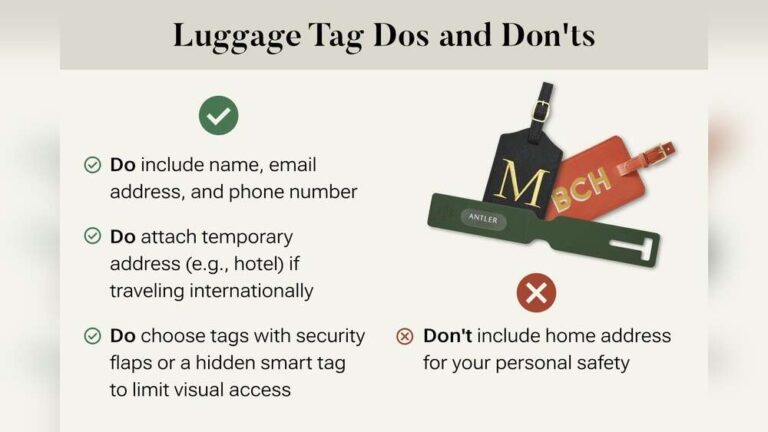
A strap is often easier to spot than a small luggage tag. You can also use both. Put your name and contact details inside the bag as well as on the outside.
Avoid placing sensitive personal details in plain view. A first name, phone number, or email may be enough. Do not display your home address unless there is a clear reason.
3. To provide backup if a zipper fails
A broken zipper can allow a suitcase to open during transport. A strap may keep the main compartment from spreading wide if that happens.
This is only a backup. A damaged zipper should be repaired or replaced. Do not check a bag that has a broken closure and rely only on a strap.
4. To discourage casual access
A strap can make a suitcase less convenient to open. A lockable strap may require an extra step. That may discourage casual tampering.
Still, most luggage straps can be cut. They are not designed to stop a determined thief. Keep valuable items in your carry-on when airline and security rules allow it.
5. To keep bags together
Some travelers use a strap to hold two small bags together. This may make it easier to move them for a short distance.
Check the airline’s baggage rules before combining bags. A strap does not change the size or weight of the bags. Do not use a strap to create one oversized bag or to avoid a baggage fee.

How to use a luggage strap correctly
A luggage strap works best when it sits flat and has firm, even tension. Follow these steps before travel.
Step 1: Close the suitcase fully
Zip or latch the case as designed. Check that no fabric or clothing is caught in the zipper.
If the case is hard to close, remove some items. The strap should support the suitcase, not compress it until the buckle or shell bends.
Step 2: Place the strap around the case
Wrap the strap around the center of the suitcase. Keep it flat. Do not twist it.
For a hard-shell case, place the strap where it crosses both halves of the shell. For a soft-sided bag, avoid placing it over loose pockets or weak fabric panels.
Some straps run vertically. Others run horizontally. A four-way strap can run in both directions. Follow the strap maker’s instructions if the design is not clear.
Step 3: Center the buckle
Place the buckle on the top or side of the bag. Keep it away from wheels, handles, and telescoping handle tubes.
A buckle near a wheel can catch or break. A buckle under a handle may make the bag hard to lift.
Step 4: Adjust the length
Pull the loose end until the strap is snug. It should not hang loose, but it should not crush the suitcase.
You should be able to slide a finger under the strap. This is a simple fit check, not a universal measurement for every strap or bag.
Step 5: Secure the loose end
Tuck away extra strap material. A loose end can catch on conveyor equipment, carts, or other bags.
If the strap has a lock, set it before arriving at the airport. Test the buckle by pulling gently on both sides.
Step 6: Take a photo
A quick photo of the bag and strap can help you identify it later. It may also help if the strap is missing when you collect the bag.

Can you use luggage straps on checked bags?
Yes, you can generally use an external luggage strap on a checked bag. But the strap may be removed during a security inspection.
The Transportation Security Administration, or TSA, may open checked baggage for inspection. TSA explains that officers may remove or break some locks when they need to inspect a bag. A luggage strap can also be cut or removed if it blocks access to the bag.
This means a strap is not guaranteed to arrive intact. Pack the bag so it remains reasonably secure even if the strap is removed.
A strap may also catch during baggage handling if it hangs loose. Keep all parts tight and flat. Do not attach items that dangle from the strap.
For checked luggage, follow these safety steps:
- Keep medicine, identification, electronics, and valuables in your carry-on when permitted.
- Do not use a strap to hold a broken suitcase together.
- Keep the strap clear of wheels and handles.
- Expect that a strap may be removed during inspection.
- Check the bag and strap before leaving the airport.
Airlines and airports can have their own baggage rules. Review the current rules for your carrier, especially when traveling with unusual luggage or sports gear.

Are luggage straps allowed on carry-on bags?
A luggage strap can be used on a carry-on bag if the bag still meets the airline’s size and weight rules. The strap counts as part of the bag’s external setup, even if it adds only a small amount of thickness.
A loose strap can also create a handling problem. It may catch on a seat, overhead-bin edge, or conveyor belt. Keep the buckle and extra length secure.
Measure the bag after adding the strap if the fit is close. The strap will not usually change the main dimensions much, but a bulky buckle or attached item can matter.
A strap cannot make an oversized carry-on acceptable. If the bag is too large, the airline may require you to check it.
Do luggage straps prevent theft?
No. A luggage strap may slow down casual access, but it is not a strong anti-theft device.
A person with a knife or scissors can cut many straps. A basic buckle can also be opened or broken. A combination lock adds a barrier, but it does not secure every zipper or pocket on the bag.
Use a luggage strap as one part of a broader travel plan:
- Carry valuables rather than checking them.
- Keep passports and identification with you.
- Use a reputable lock only where it will not interfere with inspection.
- Do not leave luggage unattended.
- Check your bag before leaving an airport or hotel.
- Report damage or missing items to the airline or carrier promptly.
A strap is best for support and identification. It should not create a false sense of security.

What type of luggage strap should you choose?
The right strap depends on your bag, trip, and main goal. There is no single best design for every traveler.
| Strap type | Best for | Main limit |
|---|---|---|
| Basic adjustable strap | Support and identification | Adds little security |
| Bright or patterned strap | Spotting a bag quickly | May get dirty or fade |
| Lockable strap | Adding a small access barrier | May be cut or removed |
| Cross-body or four-way strap | Large or heavily packed cases | More parts to adjust |
| Elastic strap | Light support on flexible bags | May provide less firm control |
| Strap with a label | Simple bag identification | Personal details may be visible |
Choose a strap with enough length for the suitcase. A short strap may not fit around a large case. A very long strap can leave loose material that may catch during handling.
Look for:
- Strong webbing
- A buckle that closes fully
- A secure adjustment slider
- A length that fits the bag
- A design that does not block handles or wheels
- Clear instructions for any lock
Metal parts may feel strong, but they can add weight and may scratch a hard case. Plastic parts are often lighter, but quality varies. The buckle should close with a firm click and remain closed during a gentle pull test.

How tight should a luggage strap be?
A luggage strap should be snug but not tight enough to bend, crush, or deform the suitcase.
Use this check:
- Close the suitcase normally.
- Wrap the strap around the case.
- Tighten it until the strap lies flat.
- Press lightly on the case.
- Confirm that the shell, zipper, and buckle are not under obvious strain.
If the case changes shape, loosen the strap. If the strap slides freely, tighten it slightly.
The correct tension also depends on the bag material. A hard-shell case may tolerate firm support. A soft-sided bag can wrinkle or compress more easily. A fabric case with an external pocket may need the strap placed away from that pocket.