What To Write On Luggage Tag
Traveling is exciting, but losing your luggage is not. Every year, millions of bags get misplaced in airports, hotels, and taxi cabs. A simple luggage tag can make all the difference in getting your bag back quickly. But what should you write on your luggage tag?
In this guide, I’ll share practical advice, personal experience, and expert tips to help you fill out your tag the right way. You’ll learn how to protect your privacy, avoid common mistakes, and make sure your bag always finds its way home.
Why Luggage Tags Matter
A luggage tag is more than a name label. It’s your bag’s voice if it gets lost. Without one, airport staff may have no way to contact you. In fact, the International Air Transport Association (IATA) reports that over 25 million bags are mishandled each year.
Most are returned only if there’s clear identification. If your bag goes missing, a well-written tag is the fastest way to reconnect.
I remember losing my suitcase during a flight to Chicago. Because I had filled out my luggage tag well, airline staff called me within hours. My bag arrived at my hotel the next day. That small tag saved me days of stress and hassle.
The Essential Details: What You Must Include
Let’s start with the basics. Certain details are necessary on every luggage tag.
1. Full Name
Write your first and last name clearly. Avoid using nicknames. If your name is common, consider adding a middle initial for extra clarity.
2. Phone Number
Always include a working phone number with your country code. This lets airlines or hotels reach you quickly. For example, if you’re from the US, write +1 before your number.
3. Email Address
An email address is useful if you’re hard to reach by phone. Use an email you check often, not a work email you rarely open.
4. Home Address Or Partial Address
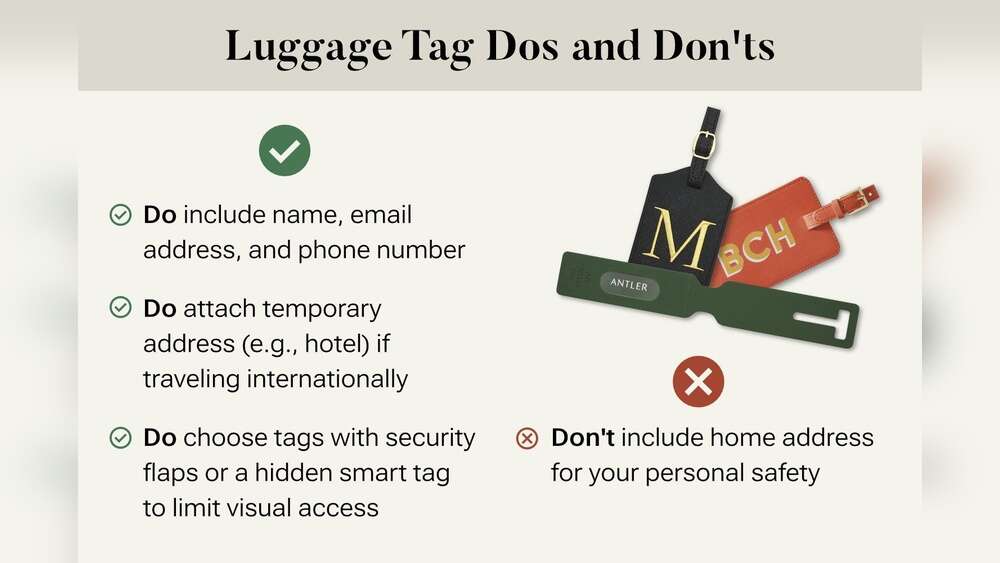
Some travelers write their full address. Others use just a city and country for privacy. Both work, but at least include your city and country. If you lose your bag, staff need to know where you live.
5. Destination Address (optional)
For long trips, you can write the address of your hotel or where you’re staying. This helps if your bag is found at your destination.
6. Secondary Contact (optional)
Sometimes you may not be reachable. Add a second phone number or the name of someone you trust.
Filling out these details gives you the best chance of getting your bag back. But don’t stop there—how you write them matters too.
What Not To Write On A Luggage Tag
It’s just as important to know what to leave off. Too much information can put your privacy at risk.
- Do not include your passport number or ID numbers.
These can be used for identity theft.
- Avoid listing your full home address if you’re worried about privacy.
Thieves sometimes check luggage tags in public places.
- No travel dates or flight numbers.
You don’t want strangers to know when your house is empty.
- Don’t write your social security number or bank information.
A simple tag is best. Only add details that help recover your bag.
The Smart Way To Format Your Luggage Tag
Clear writing makes a big difference. Here’s how to format your tag so anyone can read it fast:
- Use block letters or print clearly.
- Use a waterproof marker if you’re writing by hand.
- Avoid cursive or fancy fonts.
- Check your spelling and numbers twice.
Here’s a sample layout:
John A. Smith
+1 555-123-4567
john.smith@email.com
New York, USA
This gives enough information without revealing too much.
Comparing Luggage Tag Details
Let’s look at three common tag examples. Notice how the information changes based on privacy needs.
| Tag Type | Details Shown | Best For |
|---|---|---|
| Full Detail | Full name, phone, email, full address | Checked luggage, international travel |
| Medium Detail | Full name, phone, city/country | Carry-on bags, privacy-concerned travelers |
| Minimal Detail | First initial, phone, email | Backpacks, day bags, children’s bags |
Choose the tag that matches your comfort level and travel needs.
Privacy Vs. Recovery: Finding The Right Balance
Many people worry about strangers seeing their personal information. This is a valid concern. Here’s how to balance privacy with the need to get your bag back.
- Use a privacy cover. Some luggage tags have a flap that hides your details from casual view.
- Show only your first initial and last name if you want extra privacy.
- Use your work address or P.O. Box instead of your home address.
- List a general location (city, country), not your full address.
Once, while traveling in Asia, I used only my first initial and an email address. My bag was delayed, but the airline emailed me quickly. I didn’t have to share my full address, and I still got my bag back.

Credit: nomadlane.com
Digital Luggage Tags: Are They Worth It?
Modern travelers can use digital luggage tags. These often have a QR code or a small chip. When scanned, your contact info appears on a secure website. Here are the pros and cons:
- Pros: More privacy, can update details online, faster for airlines.
- Cons: Not all airports support QR codes, some require batteries or apps.
If you travel often, a digital tag can be a smart investment. But always add a backup paper tag in case technology fails.
Luggage Tag Materials: Which Is Best?
The type of tag you use matters. Cheap paper tags can tear off. Here’s a quick comparison:
| Material | Durability | Cost | Best For |
|---|---|---|---|
| Plastic | High | Low | All types of bags |
| Leather | Very High | Medium-High | Business or frequent travelers |
| Paper/Cardboard | Low | Very Low | Short trips, temporary use |
| Metal | Very High | High | Adventure or outdoor travel |
A sturdy tag means your details stay with your bag, no matter where it goes.

Credit: www.wikihow.com
Extra Tips For Writing Luggage Tags
Small details can make a big difference. Here are some tips I’ve learned from years of travel and talking with airline staff:
- Double-tag your bag. Put one tag outside and another inside your luggage, in case the outer one gets ripped off.
- Laminate paper tags to keep them waterproof.
- Check your tag before every trip. Make sure the contact info is up-to-date.
- Avoid using old tags from past trips—they can confuse airline staff.
- Use bright or unique tags. A colorful tag helps you spot your bag on a crowded carousel.
- Include a photo of your bag inside your luggage. If your bag is lost, showing the photo to staff helps them find it faster.
Family And Kids: Special Considerations
If you’re traveling with children or a group, each person needs a clear tag. For kids, write your name and your contact info, not the child’s. This protects their privacy and ensures staff contact you, not a minor.
For group trips, use a shared contact number and email for all bags. That way, everyone gets updates if any bag is lost.
International Travel: What To Add
Traveling abroad? Some extra details help with international recovery.
- Always use an international dialing code for your phone number.
- List your home country clearly.
- If you have a travel insurance policy, add the number inside your bag (not on the tag).
- In some countries, it’s wise to write your hotel’s local phone number as well.
International airports handle thousands of bags a day. Clear, global contact info speeds up recovery.
Business Travel: Tagging Work Bags
For work trips, avoid using your home address. Use your company’s address or a business card inside the tag. This keeps your home private and ensures your employer can help if needed.
You may also want to add your job title if you’re carrying important work documents.

Credit: mrsorganised.com.au
What To Write On Cruise, Bus, And Train Luggage Tags
Not all travel is by air. If you’re taking a cruise, bus, or train:
- Use the same basics: Name, phone, email, city/country.
- For cruises, add your cabin number if required.
- For train or bus travel, include your destination city.
Transport staff use these details to reunite you with lost bags quickly.
Lost Luggage: What Happens Without A Tag?
If your bag has no tag, recovery can be slow. Staff must check inside for clues—tickets, receipts, or anything with your name. This can take days or weeks. Most unclaimed bags go to lost-and-found or are donated after 90 days, according to the U.
S. Department of Transportation.
A simple tag speeds up the process and protects your belongings.
Real Mistakes Travelers Make
Even seasoned travelers get luggage tags wrong. Here are mistakes I’ve seen (and sometimes made myself):
- Writing in pen that smudges or fades.
- Using an address where you no longer live.
- Leaving out a country code for international trips.
- Hiding your tag inside a pocket (staff can’t see it).
- Forgetting to update contact info after changing your phone number.
Avoid these mistakes by reviewing your tag before every trip.
Luggage Tag Alternatives: Tech And Tracking
Some travelers add an AirTag, Tile, or other tracking device inside their bag. These use Bluetooth or GPS to help you find your bag if it’s lost. While helpful, they are not a replacement for a visible luggage tag. Airlines and hotels still need your contact info to return your bag.
For more about tracking technology, see the Wikipedia page on Baggage Tracking.
Comparing Tag Visibility
It’s important that staff can spot your tag easily. Here’s a quick comparison of tag visibility for different types:
| Tag Type | Visibility | Pros | Cons |
|---|---|---|---|
| Bright-colored plastic | High | Easy to spot; waterproof | Can fade in sun |
| Metal engraved | Medium | Very durable | Harder to see from a distance |
| Clear leather | Medium | Professional look | May blend with black bags |
| Paper/cardboard | Low | Cheap, easy to replace | Tears easily; not waterproof |
Choose a tag that stands out and stays attached.
Final Checklist Before You Travel
Before every trip, do a quick luggage tag check:
- Is your contact info correct?
- Is the writing clear and easy to read?
- Is the tag securely attached?
- Do you have a backup tag inside your bag?
- For international trips, did you add a country code?
Taking two minutes for this check can save you days of stress.
My Personal Best Practice
After years of flying, I always use two tags: one outside, one inside. I keep my city, country, and phone on the outer tag, and a full address inside. I also use a bright orange plastic tag for quick spotting. This simple system has helped me get my bags back every time, even when they went missing in busy airports.
Frequently Asked Questions
What’s The Most Important Thing To Write On A Luggage Tag?
The most important details are your full name and a phone number with country code. These let airline or hotel staff reach you quickly if your bag is found.
Is It Safe To Put My Home Address On My Luggage Tag?
For most people, writing just your city and country is enough. If you’re concerned about privacy or theft, avoid your full home address. You can use a work address or a P.O. box for extra security.
Can I Use Emojis Or Symbols On My Luggage Tag?
You can use simple symbols or colors to help spot your bag, but avoid anything that distracts from your contact details. Staff need clear info, not decoration.
Do I Need A Luggage Tag On Carry-on Bags?
Yes, it’s smart to tag all your bags, even carry-ons. Sometimes you have to check a carry-on at the gate, or you might forget it in a taxi or hotel.
What If I Lose My Bag And Don’t Have A Tag?
If your bag has no tag, recovery takes longer. Staff will search for clues inside your bag, but it may take days or weeks. Always attach a clear tag to speed up the process.
When you travel, a small luggage tag can make a big difference. Take time to write it well, and you’ll travel with more peace of mind. Safe travels!

Zayden Halbrook is a travel enthusiast and gear researcher passionate about making every journey smoother and more enjoyable. With a keen eye for practical travel essentials and real-world tips, he helps readers choose the right gear and travel smarter. When he’s not testing travel kits or exploring new destinations, Zayden shares simple, reliable advice to make every trip stress-free.
Similar Posts
Best Luggage Bag For Travelling: Top Picks For Every Trip
Find the best luggage bag for travelling with top picks for durability, comfort, storage, and style. Choose the perfect travel companion today.
Can You Lock Your Checked Luggage: TSA Rules & Tips
Can you lock your checked luggage? Learn TSA rules, approved locks, and smart packing tips to protect your bags without travel delays.
Best Luggage For Short Trips: Top Carry-On Picks
Find the best luggage for short trips with lightweight, durable carry-ons and smart packing features for stress-free travel.
Best Luggage For 10 Day Trip: Smart Packing Picks
Find the best luggage for 10 day trip adventures, from spacious checked bags to versatile carry-ons that make packing easier and travel smoother.