
Introduction
The safest way to clean a vintage suitcase is to identify its materials, remove loose dirt first, then use the least amount of moisture needed. Most old suitcases have a mix of paper, fabric, leather, wood, metal, or coated fiberboard. Too much water can cause swelling, stains, rust, peeling, or permanent warping.
Whether you found the case at a U.S. estate sale, inherited it from family, or pulled it from an attic, begin slowly. A vintage suitcase is often more fragile than it looks, and its age may add value. Gentle cleaning is usually better than trying to make it look brand new.
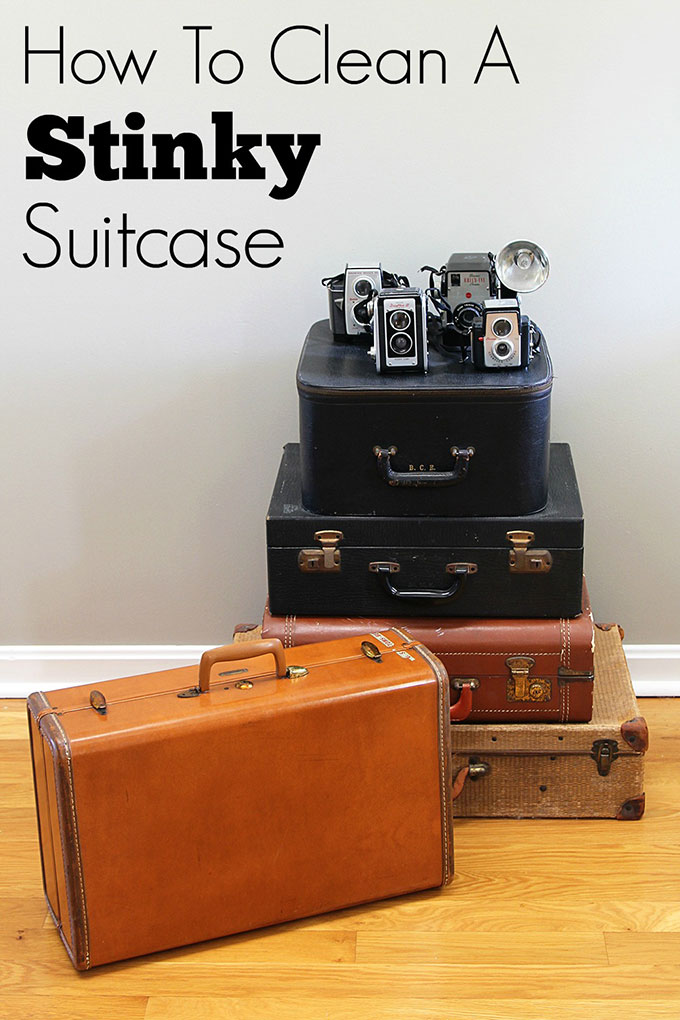
What to Check Before Cleaning a Vintage Suitcase
Inspect the suitcase before you wipe or scrub it. Look for its shell material, lining, fasteners, handles, and signs of damage.
Common vintage suitcase materials include:
- Leather: Usually soft, textured, and warm to the touch. It may have a natural grain.
- Hard fiberboard: Often covered with paper, vinyl, or a thin coating. It can look like leather but feels more rigid.
- Vulcanized fiber: A dense, layered material used in many older cases.
- Wood: Often found under fabric, paper, or leather coverings.
- Canvas or cloth: Common on soft-sided luggage and interior panels.
- Metal: May include brass, chrome, aluminum, steel, or painted hardware.
- Plastic: More common in later vintage luggage.
Also check the condition. Do not begin with wet cleaning if the suitcase has:
- Flaking paint or coating
- Loose leather or peeling paper
- A swollen or soft base
- Active mold or heavy mildew
- A strong chemical or fuel odor
- Water damage
- Insect debris or live insects
- A valuable label, stamp, or painted design
- A possible electrical or battery compartment
If the suitcase may be rare or valuable, photograph it before cleaning. Save labels, tags, stickers, and handwritten marks. These details can help with identification and may be part of its history.
A simple material test
Choose a hidden spot, such as the underside or inside a seam. Touch it with a dry cotton swab. If color transfers, stop and avoid liquid on that area.
For a moisture test, barely dampen a white cotton swab with distilled water. Touch the hidden area once, then wait until it dries. If the surface darkens, softens, stains, or transfers color, use only dry cleaning methods.
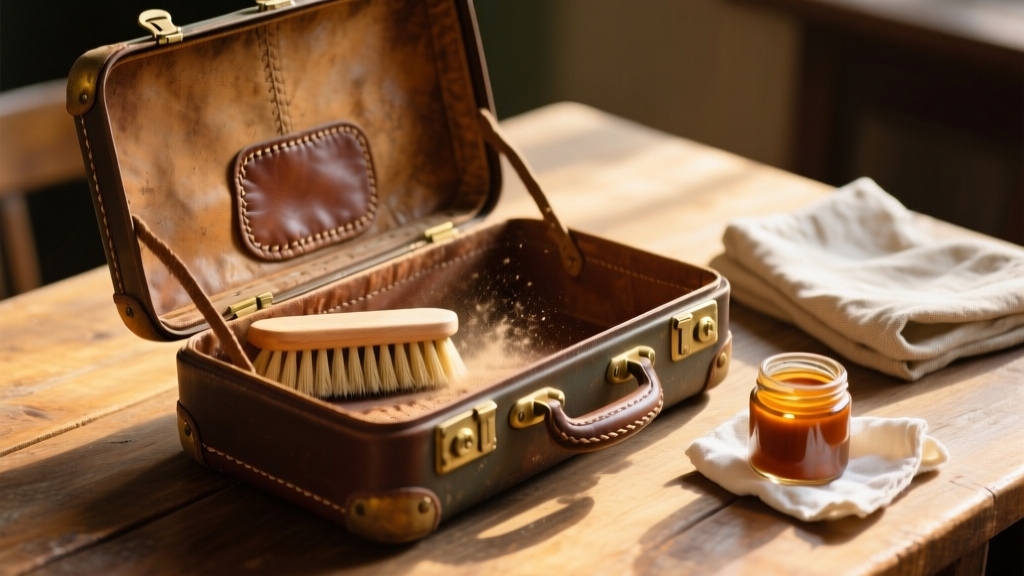
Supplies You Need
Gather your supplies before you start. Use mild tools and avoid strong household cleaners.
Basic cleaning supplies
- Soft natural-bristle brush or clean makeup brush
- Vacuum with a low-suction setting
- Mesh screen, nylon stocking, or clean cloth for the vacuum nozzle
- White cotton cloths
- Cotton swabs
- Distilled water
- Mild, fragrance-free soap
- Small bowl
- Soft toothbrush
- Microfiber cloth
- Nitrile gloves
- Protective eyewear, if the suitcase is dusty
Use white cloths because colored cloth can transfer dye. Distilled water reduces the chance of leaving mineral marks, especially on dark leather or coated surfaces.
Optional supplies
- Leather cleaner made for finished leather
- Leather conditioner suitable for antique or finished leather
- Absorbent paper
- Baking soda for odor control
- Activated charcoal odor absorbers
- Rust eraser for appropriate unpainted metal
- A small fan for gentle air movement
do not use furniture polish, bleach, ammonia, acetone, hydrogen peroxide, abrasive powder, or multipurpose spray unless a conservator has approved it for that specific material.

How to Clean a Vintage Suitcase Step by Step
1. Work in a dry, shaded place
Clean the suitcase indoors or in a covered, well-ventilated area. Avoid direct sunlight, high heat, and damp weather.
Sun and heat can fade fabric, dry leather, soften adhesives, and warp fiberboard. A garage or porch may seem convenient, but temperature swings and humidity can harm old materials.
Place the suitcase on a clean towel or sheet. Keep it away from food, pets, and children while you work.
2. Empty and document the suitcase
Open every pocket and compartment. Remove old paper, crumbs, pins, fabric scraps, and loose debris.
Do not throw away labels, tickets, letters, or other contents until you decide whether they have historical or sentimental value. Photograph anything that must be removed.
If the suitcase is stuck shut, do not force the locks. A locksmith, antiques restorer, or conservator may be able to open it without breaking the hardware.
3. Remove loose dust
Use a soft brush to lift dust from seams, corners, hinges, and pockets. Brush toward the vacuum nozzle so debris does not spread.
Cover the vacuum nozzle with a mesh screen or thin nylon stocking. Use low suction and keep the nozzle slightly above fragile surfaces. Do not drag the nozzle across peeling paper, loose fabric, or flaking leather.
Work from the top down. Clean the outside first, then the inside.
4. Clean the interior
Start with dry cleaning. Brush the lining gently and vacuum through the mesh screen.
If the lining is stable and washable, mix a small amount of mild soap with distilled water. Dampen—not soak—a white cloth. Wring it out well, then blot a small area.
Do not scrub. Scrubbing can pull threads, spread stains, or remove printed designs. Use a fresh, barely damp section of cloth for each pass. Follow with a dry cloth.
Leave the suitcase open until the lining is fully dry. Do not close it while any part feels cool or damp.
If the lining is paper
Paper lining needs special care. Use a soft brush or low-suction vacuum only. Water can cause paper to wrinkle, dissolve, bleed, or detach from the shell.
For valuable or fragile paper interiors, stop after dry cleaning. A paper conservator should handle stains, tears, and detached sections.
If the lining is fabric
Stable fabric can sometimes be lightly blotted. Test first for color loss. Do not saturate fabric because moisture may reach the wood or fiberboard underneath.
If the lining is foam-backed
Old foam often breaks down into a sticky or powdery residue. Avoid rubbing it. Remove loose pieces with a soft brush or vacuum screen, then seek professional advice if the foam is bonded to the case.
5. Clean the exterior
For a coated shell, mix a few drops of mild soap into a bowl of distilled water. Dip a cloth into the solution and wring it until almost dry.
Wipe a small section at a time. Follow each damp pass with a dry cloth. Keep moisture away from seams, edge binding, lock openings, and areas where the covering is lifting.
Do not soak a vintage suitcase. Water can travel into the layers even when the outside looks dry.
Leather exterior
First remove dust with a soft brush. If the leather passes the color-transfer test, apply a small amount of leather cleaner to a cloth, not directly to the suitcase.
Work in small areas. Stop if the leather becomes sticky, unusually dark, or begins to shed color. After cleaning, use conditioner only if the leather is dry and stable and the product is suitable for finished leather.
More conditioner is not better. Heavy oils can darken leather, soften old adhesives, or leave a surface that attracts dust.
Coated fiberboard or vulcanized fiber
Use a nearly dry cloth. Avoid soaking scratches or worn edges. If the coating is cracked, peeling, or lifting, use dry cleaning only.
Do not sand the surface. Sanding can remove original finish and may expose old adhesives, pigments, or fibers.
Canvas or cloth exterior
Brush first. If the fabric is stable, blot with a barely damp cloth and mild soap. Avoid rubbing printed graphics, painted trim, or fragile stitching.
6. Clean metal hardware carefully
Dust locks, buckles, hinges, rivets, and corner caps with a soft brush or cotton swab.
For stable, unpainted metal, use a barely damp cloth and dry it at once. A rust eraser may help with light surface rust on suitable bare metal, but test first.
Avoid polishing antique hardware aggressively. The dark surface may be an original finish rather than dirt. Removing it can reduce the suitcase’s character and value.
Keep liquid out of locks. If a lock is stiff, use a qualified locksmith or a lubricant made for the specific lock. Do not force it with pliers or a screwdriver.
7. Treat odors after cleaning
Clean first, then address odor. Covering a dirty or damp suitcase with fragrance usually makes the problem worse.
Place the open suitcase in a dry room with gentle air movement. You can put a bowl or pouch of baking soda or activated charcoal inside, but do not scatter powder directly on the lining.
Replace the odor absorber every few days as needed. Avoid perfume sprays, essential oils, and scented cleaners. They can stain fabric and may combine with existing odors.
A musty smell may point to damp materials or mold. Odor removal will not solve the source if moisture remains.
8. Dry the suitcase slowly
Leave the suitcase open in shade with good air circulation. A fan can move air across the room, but do not aim strong heat at the suitcase.
Check the seams, base, pockets, and lining. These areas can stay damp after the surface feels dry.
The suitcase is ready for storage when:
- No surface feels cool or damp
- The lining lies flat
- No new dark patches appear
- The leather is not sticky
- The smell is stable or improving
- The hardware shows no new rust
Do not close or stack the suitcase until it is completely dry.
How to Handle Mold, Mildew, and Heavy Odors
Do not clean active mold indoors without taking precautions. Mold can irritate the nose, throat, skin, and lungs. People with asthma, allergies, immune disorders, or other sensitivities may need to avoid the item.
If you see fuzzy growth, spreading spots, or heavy mildew:
- Move the suitcase away from clean belongings.
- Avoid shaking, brushing, or vacuuming mold indoors.
- Wear gloves and a well-fitting respirator if you must handle it briefly.
- Isolate the suitcase in a dry, contained area.
- Contact a textile, leather, or book conservator for valuable items.
The U.S. Environmental Protection Agency advises controlling moisture and using care with porous materials because mold can grow into materials that are difficult to clean fully. Bleach is not a reliable fix for porous vintage fabric, paper, leather, or wood, and it can cause additional damage. See the EPA’s guidance on mold cleanup in homes.
If the suitcase has been wet for a long time, has extensive mold, or has a strong sewage or chemical odor, professional evaluation is the safer choice. Some contaminated porous items cannot be restored economically.

What to Do About Common Stains
The safest stain method depends on the material. Always test first.
| Stain or problem | Safer first step | Avoid |
|---|---|---|
| Loose dust | Soft brush and low suction | High vacuum suction |
| Water mark | Leave dry; consult a conservator if valuable | More water or heat |
| Grease on coated surface | Blot, then use mild soapy water | Rubbing hard |
| Ink | Isolate the area and seek advice | Alcohol or acetone |
| Rust on bare metal | Gentle rust eraser test | Abrasive sanding |
| Mold spots | Isolate and seek professional guidance | Indoor dry brushing |
| Sticky residue | Test a hidden spot before treatment | Solvents without material testing |
| Smoke odor | Air circulation and charcoal absorber | Perfume spray |
Some stains are permanent. A faint mark may be safer than an aggressive treatment that removes the original finish.