
For travelers flying from U.S. airports, a hard-shell suitcase does not automatically hold more than a soft-sided bag of the same stated size. Capacity depends more on the suitcase’s interior shape, shell thickness, frame, wheels, and expansion system. A well-designed soft-sided suitcase may fit more flexible clothing, while a hard-shell case can offer better structure and usable space for flat or fragile items.
The best comparison is not the outside size alone. Compare the listed interior capacity in liters, the packing layout, and the airline’s size and weight limits.

The Short Answer: Do Hard-Shell Suitcases Hold More?
Hard-shell suitcases can hold more in some cases, but the shell type alone does not decide capacity.
Two suitcases may both be called “28-inch” bags, yet one may hold more because it has:
- Thinner walls
- Fewer internal dividers
- Smaller wheel housings
- A deeper main compartment
- An expansion zipper
- Less space taken by the handle system
- A more efficient rectangular shape
A hard-shell case usually opens like a book. Its two halves may make packing neat and balanced, but the center divider and compression panels use some space. A soft-sided suitcase often has one large compartment and may stretch around bulky clothing.
A simple comparison
| Feature | Hard-shell suitcase | Soft-sided suitcase |
|---|---|---|
| Basic capacity | Often similar to a soft-sided bag of the same size | Often similar to a hard-shell bag of the same size |
| Shape | Keeps its shape | Can flex and expand |
| Packing style | Two equal sides | Often one main compartment |
| Best for | Flat items, fragile goods, neat packing | Bulky clothing, flexible packing, outside pockets |
| Expansion | Common on some models | Common on many models |
| Exterior pockets | Rare or small | Usually larger and more useful |
| Space loss | Shell, divider, frame, and wheel wells | Padding, lining, pockets, and hardware |
The practical answer is simple: choose the bag with the larger usable capacity, not just the hard or soft label.
Why Suitcase Capacity Can Be Hard to Compare
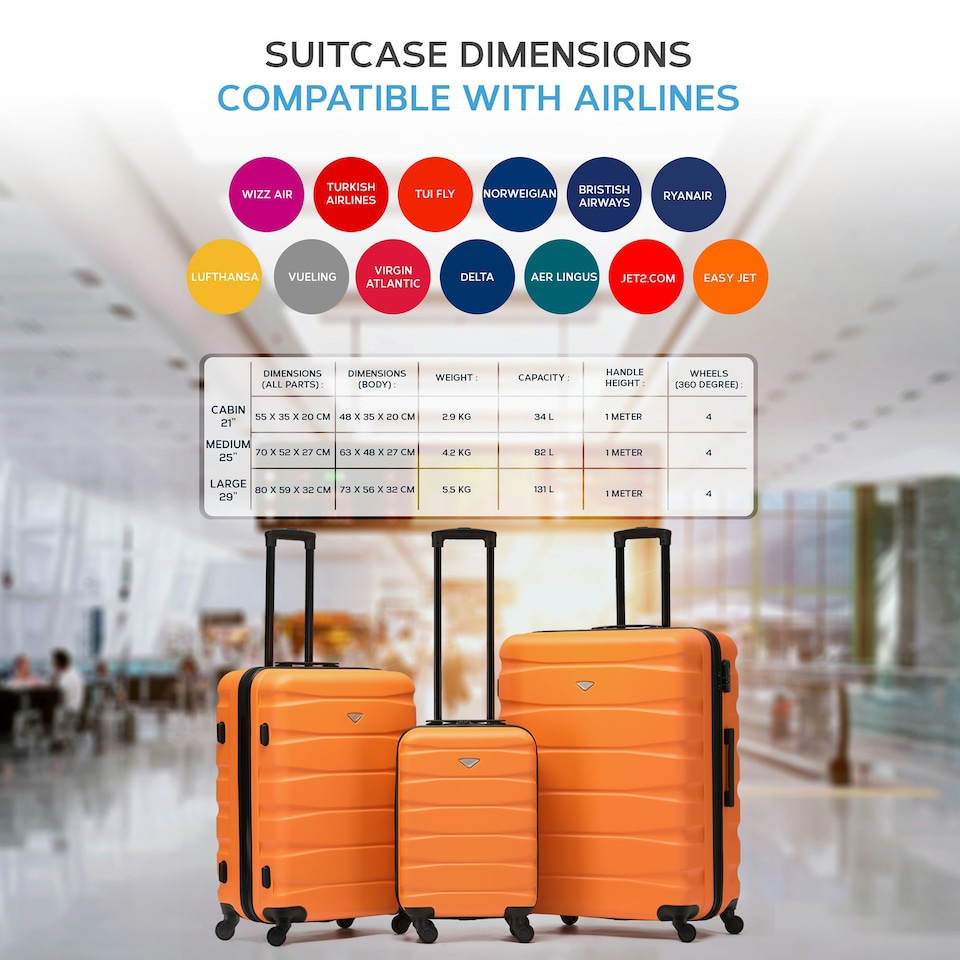
Suitcase capacity is usually listed in liters, but brands do not always measure it in the same way. Some list the volume of the main compartment. Others include expansion space or count areas that are difficult to pack fully.
A suitcase’s outside measurements also include parts that do not store clothing. These may include:
- Wheels
- Wheel housings
- Handles
- Corner guards
- Exterior pockets
- The shell or fabric wall
- Internal dividers
- Frame rails
This means a suitcase with a larger outside footprint may still have less packing space inside.
Liters are useful, but not perfect
If one case is rated at 95 liters and another at 105 liters, the second case will usually offer more room. Still, the extra 10 liters may come from expansion space that is hard to use without making the bag too large or difficult to close.
A useful capacity comparison should ask:
- Is the listed capacity expanded or unexpanded?
- Does the number include all compartments?
- Are the two cases measured in the same way?
- Do the wheel housings take up a large part of the base?
- Is the interior shape easy to pack?
When possible, compare the manufacturer’s unexpanded and expanded capacities separately.
Hard Shell vs. Soft Sided: Which One Uses Space Better?
A hard-shell suitcase often uses space well when its interior has broad, flat panels and small wheel housings. However, its rigid shape cannot adapt to odd-shaped items. A soft-sided bag can compress or stretch, which may help when packing jackets, shoes, and other soft goods.
The better option depends on what you pack.
Hard-shell suitcases may use space better for:
- Folded shirts and pants
- Packing cubes
- Flat toiletry kits
- Books and documents
- Small electronics
- Items that need protection
- Evenly divided loads
The two-sided layout can make it easier to spread clothing across the case. Compression panels may also keep items from shifting.
Soft-sided suitcases may use space better for:
- Coats and sweaters
- Shoes
- Irregular items
- Laundry bags
- Souvenirs
- Last-minute additions
- Items that need to fit around other items
The outer fabric can give slightly when the case is full. That flexibility may let you close the zipper when a hard case would not.
The key trade-off
A hard shell gives you stable shape and protection. A soft-sided case gives you flexibility and access.
Neither benefit equals more capacity in every design. A large, simple soft-sided compartment may beat a small hard-shell case. A deep hard-shell spinner with minimal interior hardware may beat a heavily padded soft-sided bag.
Does a Hard-Shell Carry-On Hold More?
A hard-shell carry-on does not inherently hold more than a soft-sided carry-on. In the United States, carry-on size limits vary by airline, so the outside dimensions matter as much as the interior capacity.
Many U.S. airlines use a maximum carry-on size near 22 by 14 by 9 inches, including wheels and handles. That is not a universal rule. Some airlines use different limits, and regional aircraft may have smaller overhead bins.
Always check the airline’s current baggage page before you fly.
Why hard-shell carry-ons can feel smaller
A hard-shell carry-on may lose space to:
- Two shell halves
- A center divider
- Compression panels
- A built-in frame
- Thick corner protection
- Wheel housings
- A telescoping handle assembly
A soft-sided carry-on may offer:
- One deeper main compartment
- A front pocket
- More flexible walls
- Easier access while open
- More room for a jacket or laptop
However, a soft bag may use padding and pocket walls that also reduce interior space.
How to compare carry-ons
Use this order:
- Check the airline’s maximum outside dimensions.
- Measure the suitcase, including wheels and handles.
- Compare unexpanded capacity.
- Check whether the suitcase expands beyond the airline limit.
- Compare the empty weight.
- Consider how the interior is divided.
An expandable carry-on can hold more, but expansion may make it too deep for an overhead bin. If you expand it, measure it again.
Does a Hard-Shell Checked Bag Hold More?
For checked luggage, a hard-shell suitcase can hold as much as or more than a soft-sided suitcase with the same outside dimensions. Large checked bags often benefit from a wide, box-like interior.
Yet capacity still varies by design. A hard-shell case with a thick frame and large wheels may hold less than a fabric case with a simpler structure.
The main limits for checked luggage are usually:
- The airline’s maximum outside size
- The airline’s weight limit
- The bag’s empty weight
- The shape of the interior
- Whether the bag expands
Weight can matter more than volume
A heavy suitcase may give you plenty of room but leave less weight available for your belongings. For example, if an airline allows a 50-pound checked bag and the empty suitcase weighs 12 pounds, you have about 38 pounds left for clothing and other items.
A lighter bag may hold slightly less by volume but let you pack more by weight.
This matters most when packing:
- Shoes
- Books
- Toiletries
- Gifts
- Electronics
- Winter clothing
- Sports equipment
A suitcase that holds more volume is not always the better choice if it reaches the weight limit before it is full.
How to Measure Usable Suitcase Capacity
You can compare suitcase space at home without special equipment.
Method 1: Compare published liters
Look for the unexpanded capacity on the manufacturer’s product page or manual. Compare bags from the same brand when possible, because measurement methods may differ between brands.
For a fair comparison, record:
- Unexpanded liters
- Expanded liters
- Empty weight
- Outside dimensions
- Interior dimensions, if available
- Number and size of interior compartments
Method 2: Measure the inside
Measure the main interior length, width, and depth. Then multiply:
Length × width × depth = approximate cubic inches
To convert cubic inches to liters:
Cubic inches ÷ 61 = approximate liters
Hypothetical example
Suppose the main compartment measures:
- 27 inches long
- 18 inches wide
- 10 inches deep
The rough volume is:
27 × 18 × 10 = 4,860 cubic inches
Then:
4,860 ÷ 61 = about 80 liters
This is only an estimate. Curved corners, wheel housings, dividers, and tapered sides reduce the real packing space.
Method 3: Use a standard packing load
For a practical test, place the same items in each suitcase:
- Seven shirts
- Three pairs of pants
- One jacket
- Two pairs of shoes
- Underwear and socks
- A toiletry bag
- One laundry bag
Pack each bag in the same way. Check which suitcase closes without force and which leaves room for small additions.
This is not a laboratory measurement, but it reflects real use better than the outside size alone.

Which Suitcase Shape Holds the Most?
A rectangular suitcase with straight sides usually uses space more efficiently than a strongly curved or tapered suitcase.
Look for:
- Broad interior panels
- A deep main compartment
- Minimal taper from top to bottom
- Small wheel housings
- A low-profile handle system
- Few bulky interior panels
- A flat base
A suitcase with a wide top but a narrow base may look large while offering less usable space. Large corner curves can also create dead zones that packing cubes cannot fill well.
Four-wheel spinners and capacity
Spinner wheels make a suitcase easy to move in many directions, but the wheel housings can take up interior room. Two-wheel bags may have more usable space near the bottom, though their recessed wheels and angled pull may affect packing in other ways.
The difference depends on the model. Do not assume that two wheels always mean more capacity or that four wheels always mean less.
Frame versus zipper closure
A framed hard-shell suitcase may feel sturdy, but its frame can occupy space along the opening. A zipper case may have a slightly more flexible opening and lower weight.
This does not mean one closure type always holds more. The frame, shell thickness, and interior design still matter.