Introduction
Most soft, unstructured backpacks can be washed in a U.S. washing machine if the care label allows it. Use cold water, a gentle cycle, a small amount of mild detergent, and air-dry the backpack fully. Never machine-wash a backpack made from leather, suede, hard materials, or one with built-in electronics unless the manufacturer clearly says it is safe.
The care label is the final authority. A backpack may look like ordinary fabric but still contain foam padding, waterproof coatings, glued parts, or a rigid frame that can be damaged by heat and strong agitation.
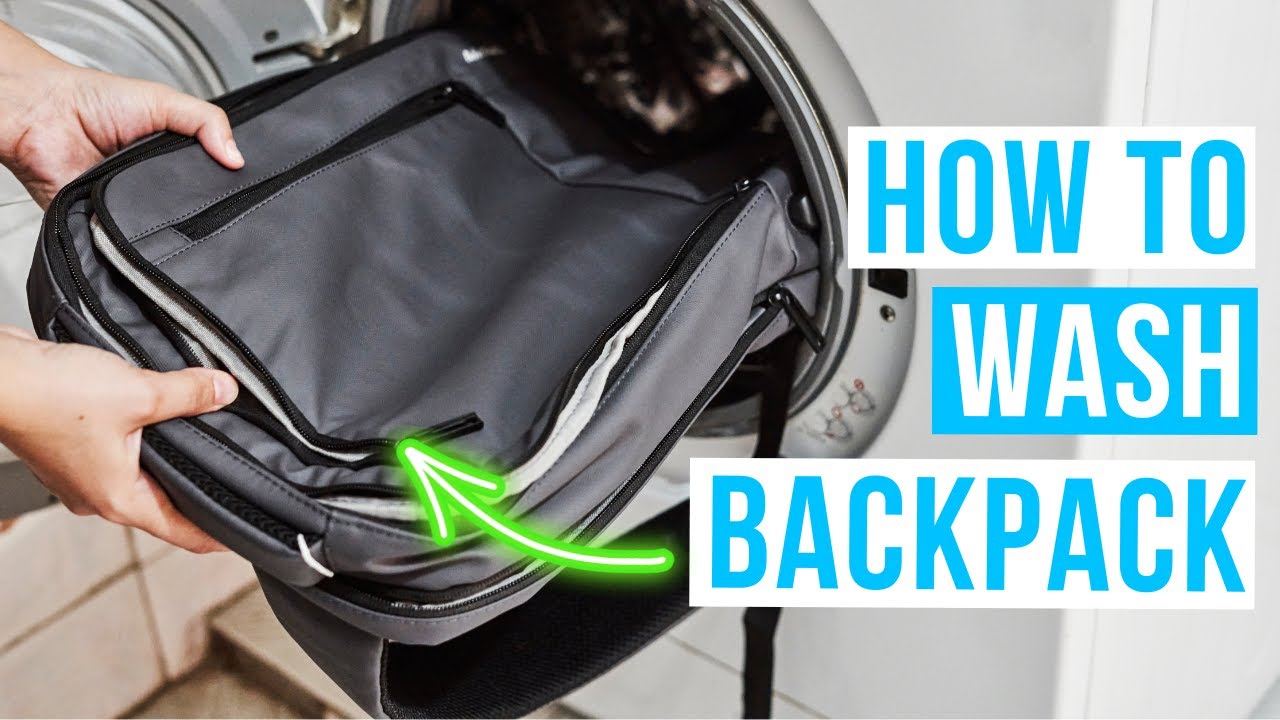
Can You Put a Backpack in the Washing Machine?
You can usually machine-wash a backpack when it is made from washable fabric such as nylon, polyester, canvas, or cotton. The bag should also be soft enough to move freely inside the washer.
Before washing, check the label or the brand’s care instructions. Look for phrases such as:
- Machine wash cold
- Gentle cycle
- Hand wash only
- Do not machine wash
- Spot clean only
- Do not tumble dry
Machine washing may be unsafe when the backpack has:
- Leather or suede panels
- A hard shell
- A built-in metal or plastic frame
- Glued decorations or patches
- Delicate embroidery
- Waterproofing that the maker says should not be washed
- Electronics, batteries, or charging parts
- Thick foam that may hold water for a long time
- A coated surface that is already peeling or cracked
If the label says “hand wash only” or “spot clean only,” follow that instruction. A washing machine can bend the bag, damage its shape, pull out stitching, or strip away a water-resistant coating.
A school backpack, gym bag, daypack, or basic nylon backpack is often a good candidate for a gentle machine wash. A technical hiking pack needs more care because it may have a frame, padded hip belt, mesh panels, and special coatings.
What You Need Before Washing a Backpack
Gather these supplies before you start:
- Mild liquid laundry detergent
- A soft brush or clean toothbrush
- A clean cloth or sponge
- A large mesh laundry bag, if the backpack fits
- A towel for blotting
- A well-ventilated place for drying
Avoid powdered detergent when possible. Powder may not dissolve well in cold water and can collect in seams or padding.
Do not use chlorine bleach. Bleach can weaken fibers, fade color, and damage synthetic coatings. Fabric softener is also unnecessary and may leave a film on the fabric.
Inspect the backpack first
Empty every pocket, including small zipper compartments. Check for:
- Pens and markers
- Food wrappers
- Coins
- Paper
- USB drives
- Headphones
- Small batteries
- Medication
- Keys
- Wet towels
- Removable inserts
Shake the backpack upside down. Then use a vacuum or soft brush to remove sand, crumbs, pet hair, and loose dirt. Grit can act like sandpaper during the wash cycle.
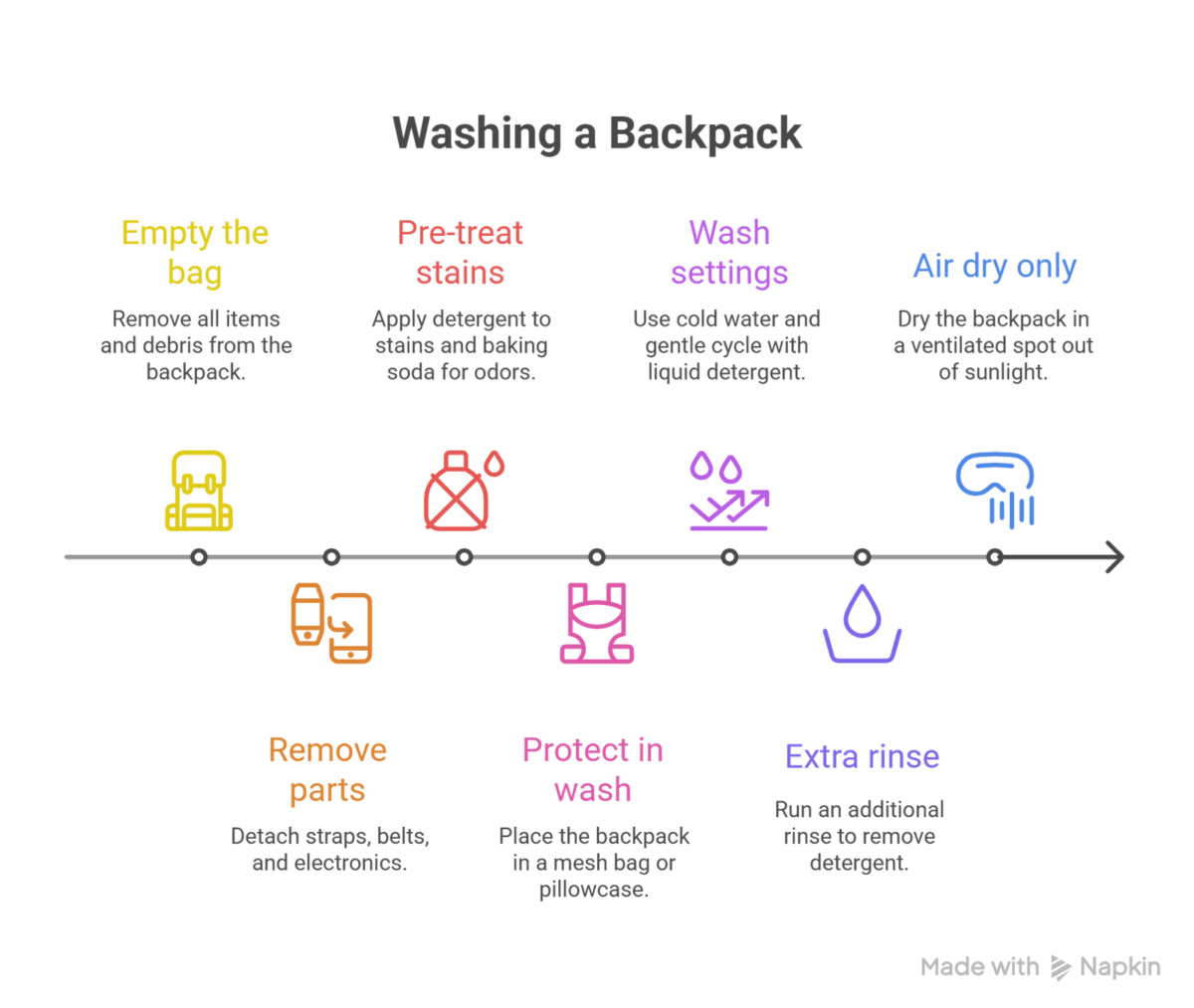
Remove anything detachable, such as:
- Pencil cases
- Removable seat pads
- Hip belts
- Chest straps
- Key clips
- Laptop sleeves
- Hard inserts
- Hydration reservoirs
Wash these parts separately only if their own care instructions allow it.
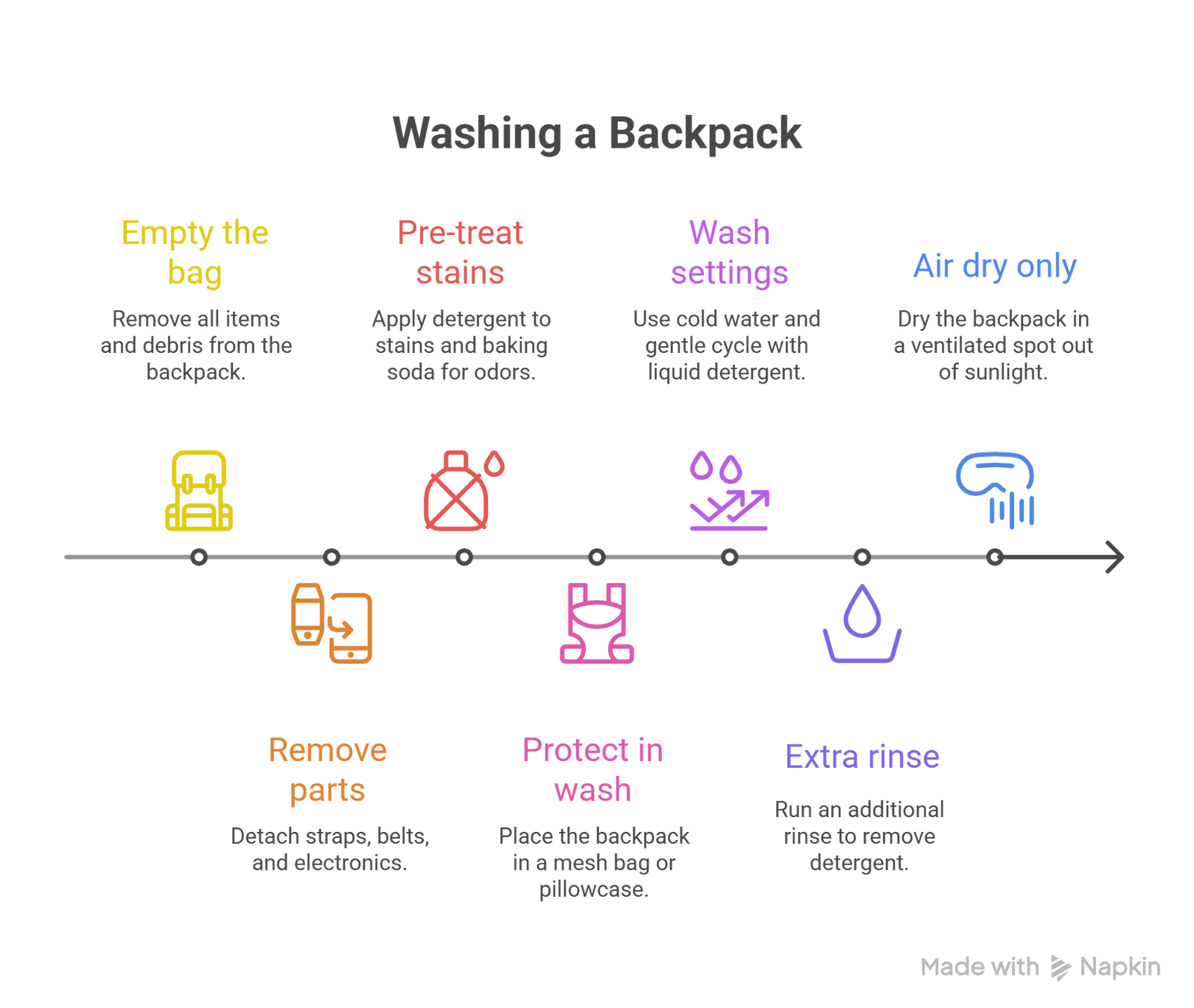
How to Wash a Backpack in a Washing Machine
Follow these steps for a washable fabric backpack.
1. Pre-treat visible stains
dab stains with a damp cloth and a small amount of mild detergent. For mud, let the dirt dry first, then brush it away.
Do not scrub hard. Aggressive scrubbing can roughen the fabric or spread the stain. Let the detergent sit for about 10 to 15 minutes unless the product label gives different directions.
Test the detergent on a hidden area if the backpack is dark, brightly colored, or coated. This helps you spot possible color transfer before the full wash.
2. Protect the backpack
Place the backpack in a large mesh laundry bag if it fits without being forced. A clean pillowcase can work for a small backpack, but do not cram a large bag into one.
A laundry bag helps reduce contact with the washer drum and keeps straps from twisting around other items. It does not remove the need for a gentle cycle.
Fasten loose buckles and straps. Leave the main zippers partly open so water and detergent can reach the inside. Do not tie straps tightly, since tight knots can hold dirt and put stress on the webbing.
3. Choose the right washer settings
Use these settings unless the care label says otherwise:
- Water temperature: Cold
- Cycle: Delicate or gentle
- Spin: Low or gentle
- Detergent: A small amount of mild liquid detergent
- Load: The backpack alone or with a few soft, colorfast items
Cold water reduces the risk of color bleeding, shrinkage, and damage to coatings. A gentle cycle uses less force than a normal or heavy-duty cycle.
Do not use the hottest setting to remove odors. Heat can warp synthetic materials, weaken adhesives, and damage foam.
4. Start the wash
Put the backpack into the washer after the drum has filled according to the machine’s cycle. Make sure it has enough room to move.
Do not wash a backpack in an overloaded machine. An overloaded drum may not rinse the bag well, and straps can become trapped or twisted.
If the backpack has a rigid frame that cannot be removed, stop and use hand washing instead. A frame can hit the drum, bend, or damage the washer.
5. Run an extra rinse if needed
Check the backpack when the cycle ends. If you can feel soap in the fabric or see suds, run an extra cold rinse.
Detergent left inside padded areas can cause a stiff feel, white marks, or skin irritation. This is especially useful for backpacks with thick shoulder straps and back padding.
6. Remove it promptly
Take the backpack out as soon as the cycle ends. Do not leave it wet in the washer for hours.
Open every pocket and turn the bag upside down to help water drain. Press it gently between clean towels to remove extra water. Do not twist, wring, or yank the straps.

How to Dry a Machine-Washed Backpack
Air-dry the backpack fully. This is the safest option for most fabric bags.
Hang it in a shaded, well-ventilated place or place it upright on a clean drying rack. Keep all pockets open so air can reach the lining and padding.
Avoid:
- A clothes dryer
- Direct high heat
- A radiator
- A space heater
- A hot car
- Strong, prolonged sunlight
- A closed closet while the bag is still damp
A dryer can shrink fabric, melt plastic parts, warp foam, loosen glue, and damage water-resistant coatings. Direct sun may also fade dyed fabric.
Do not put the backpack away until the inside padding is completely dry. Thick shoulder straps and back panels may feel dry on the outside while still holding moisture inside.
How long does a backpack take to dry?
Drying time depends on the fabric, padding, humidity, and airflow. A thin nylon daypack may dry in several hours. A padded school or hiking backpack may need a full day or longer.
Use your senses to check it:
- The fabric should not feel cool and damp.
- The padding should not feel heavy or squishy.
- The inside should not smell musty.
- Seams and pocket corners should be dry.
- No moisture should transfer to a dry towel.
If the backpack still smells damp after drying, place it in moving air and keep all sections open. Do not seal it in a plastic bin or closet while moisture remains.
When You Should Not Machine-Wash a Backpack
Machine washing is not the best choice for every backpack. Use hand washing or professional cleaning when the bag contains materials that may not tolerate a washer.
Leather or suede backpacks
Leather and suede can dry out, stiffen, stain, or lose their finish in water. Follow the maker’s leather-care instructions instead.
Hiking backpacks with frames
Many hiking packs have internal stays, aluminum bars, or other support parts. Remove the frame only if the manufacturer explains how to do so. If the frame cannot come out, clean the backpack by hand.
Laptop and camera backpacks
Padded camera bags and laptop packs often contain thick foam, dividers, molded panels, or glued sections. These parts may trap water or lose their shape. Spot clean or hand wash unless the label approves machine washing.
Remove all electronic equipment before cleaning. Never wash a battery, power bank, charging cable, or electronic device.
Waterproof or water-resistant backpacks
Cleaning may reduce the performance of a water-repellent finish. This does not mean every wash will ruin the coating, but strong detergent, bleach, heat, and fabric softener can create problems.
If water no longer beads on the outside after cleaning, the coating may need care recommended by the manufacturer. Do not apply a new waterproofing product without checking that it is suitable for the backpack’s fabric.
Backpacks with damaged fabric
A washer can make a small tear larger. Repair loose seams, broken webbing, or damaged zippers first, or wash the bag by hand with little movement.

Machine Washing Compared With Hand Washing
The best cleaning method depends on the backpack’s design and condition.
| Backpack type | Preferred method | Main reason |
|---|---|---|
| Simple nylon school backpack | Gentle machine wash, if approved | Strong fabric and simple construction |
| Polyester daypack | Gentle machine wash, if approved | Usually tolerates cold water |
| Canvas backpack | Label-approved wash or hand wash | May shrink or bleed color |
| Leather or suede backpack | Manufacturer-approved leather care | Water can damage the material |
| Framed hiking pack | Hand wash unless frame removal is approved | The frame may bend or strike the washer |
| Padded laptop backpack | Spot clean or hand wash | Foam and padding can hold water |
| Camera backpack with dividers | Spot clean or hand wash | Inserts and molded parts may lose shape |
| Backpack with electronics | Remove electronics; follow label | Moisture can create a safety risk |
Hand washing is slower, but it gives you more control. It also puts less stress on straps, padding, coatings, and seams.
To hand-wash a backpack, fill a tub with cool water, add a small amount of mild detergent, and gently work the soiled areas with a soft brush. Rinse until the water runs clear. Press out water with towels and air-dry the bag with all pockets open.
Common Mistakes to Avoid
These mistakes can damage a backpack or leave it with odors.
Using hot water
Hot water may cause shrinkage, color loss, warped foam, or weakened glue. Cold water is the safer starting point.
Adding too much detergent
More detergent does not mean a cleaner backpack. Excess soap can stay in padding and attract more dirt. Use a small amount.
Washing with shoes or heavy items
Shoes, towels, and heavy jeans can increase impact and twisting. Wash the backpack alone or with only a few soft items.
Putting it in the dryer
A dryer can harm fabric, padding, straps, and coatings. Air-drying is usually safer.
Scrubbing coated fabric too hard
Hard brushing may damage a water-resistant surface. Use light pressure and repeat the cleaning if needed.