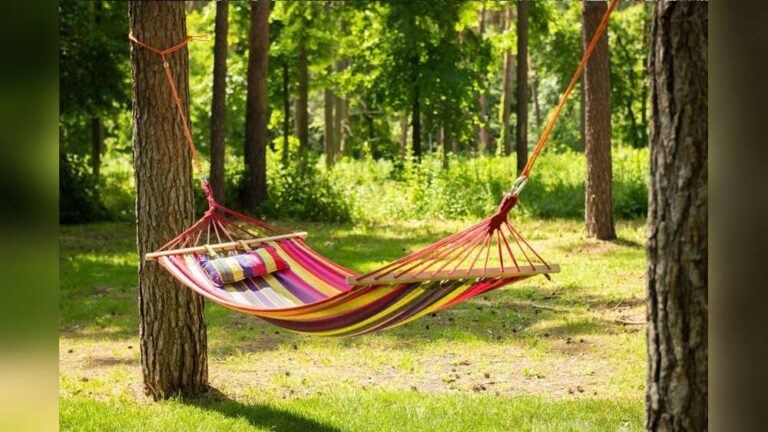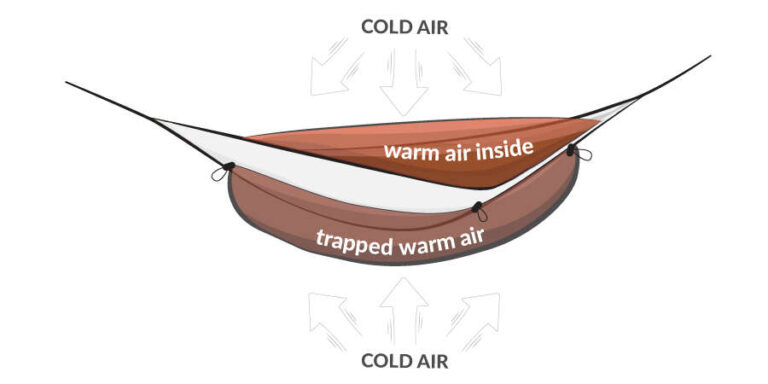
Wrap a strong strap around a healthy tree, then secure your hammock with a tested knot or rated carabiner.
Learning how to tie a hammock knot to a tree is simple once you understand load, tree protection, and knot security. The right setup keeps you comfortable, protects the bark, and helps prevent a sudden fall. This guide explains the safest method, useful knots, common errors, and simple checks you can use in a backyard or campsite.
Choose the Safest Hammock Setup
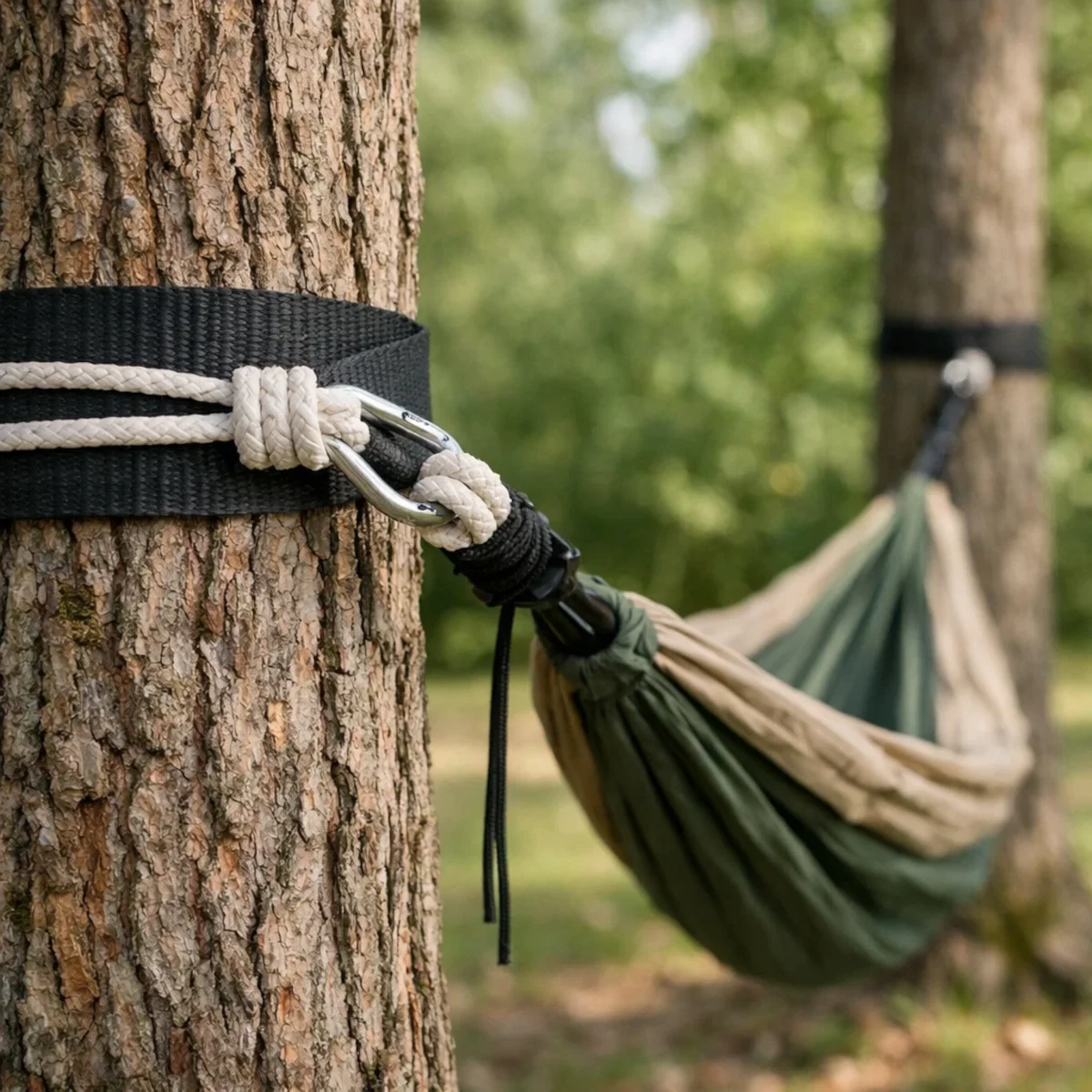
Before learning how to tie a hammock knot to a tree, choose the right suspension system. Tree-friendly hammock straps are usually safer and easier than thin rope. They spread weight over a wider area and reduce damage to the bark.
Look for straps that are:
• At least 1 inch wide
• Made for hammock suspension
• Rated well above your total load
• Long enough to wrap around the tree
• Used with rated carabiners or a manufacturer-approved buckle
Your total load includes your body, clothing, sleeping bag, gear, and another person if the hammock is shared. Never assume a small rope or hardware item can support your weight. Check the working load limit, not just the breaking strength.
Choose a living tree that is:
• Healthy and free from large cracks
• At least 6 inches in diameter, or thicker if the manufacturer advises
• Not dead, leaning, loose, or badly damaged
• Free from large dead branches above the hammock
• Far from roads, rivers, cliffs, and other hazards
Avoid young trees, soft-barked trees, and protected trees where camping rules do not allow hammock use. Some parks require tree straps and ban rope because rope can cut into bark.
The best hanging height is often about 4 to 5 feet from the ground at the tree. Once you lie in the hammock, the center should hang about 18 inches above the ground. A hammock that is too tight places more force on the trees and suspension points.

What You Need to Tie a Hammock to a Tree
The simplest way to tie a hammock knot to a tree requires only a few items. Use gear that is made for climbing, camping, or hammock suspension. Do not use worn clothesline, thin paracord, or unknown rope.
You will need:
• A hammock with strong end loops
• Two tree straps or wide webbing straps
• Two locking carabiners rated for suspension use
• A pair of hammock knots, if your system requires them
• A measuring tape, if you want to check tree spacing
A pair of 1-inch webbing straps is the best basic choice. Some straps use sewn loops. Others use buckles. Both can work when they are designed for hammock loads and used as directed.
If you use rope, select low-stretch, load-rated rope with a suitable diameter. Rope choice matters because some ropes melt under heat, slip when wet, or weaken after repeated bends. A boating or climbing shop can help you choose a proper rope.
Do not connect a hammock to a carabiner that is not rated for body weight. Decorative carabiners can bend or break. A locking carabiner should be fully closed before you load it.
A practical rule is to keep the knot outside the bark. The tree should support the strap or wide webbing, while the knot connects the strap, carabiner, or hammock loop. This reduces rubbing and makes your setup easier to inspect.
How to Tie a Hammock Knot to a Tree With Webbing
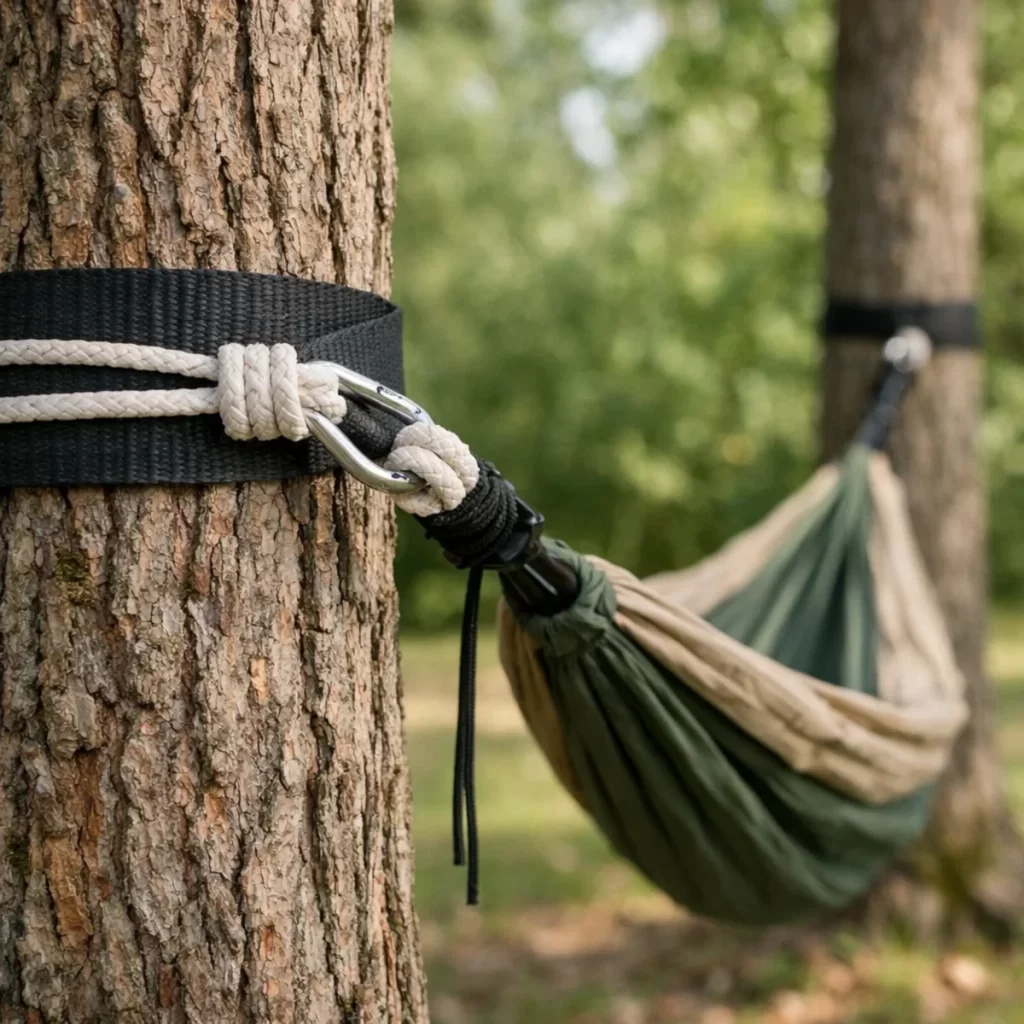
For most campers, the safest answer to how to tie a hammock knot to a tree is to use a tree strap and a simple attachment knot. The strap protects the tree, and the knot holds the hammock hardware in place.
Follow these steps:
-
Wrap the tree strap around the trunk at about 4 to 5 feet high.
-
Keep the strap flat. Do not twist it into a narrow cord.
-
Pass the sewn loop or free end through the strap’s anchor loop.
-
Pull the strap around the trunk until it sits firmly without cutting into the bark.
-
Attach a rated locking carabiner to the strap loop or approved buckle point.
-
Connect the carabiner to the hammock end loop.
-
Repeat the same process on the second tree.
-
Lock both carabiners and check that the gates are fully closed.
This method may not use a traditional rope knot. That is a benefit, not a weakness. Purpose-built straps reduce setup mistakes and allow quick adjustment.
If your straps have sewn loops, do not tie extra knots in them unless the manufacturer permits it. Threading the strap through the correct loop is usually stronger and cleaner than adding a knot.
If you need a knot with a strap or rope, use a bowline only when you know the rope is suitable and the knot is dressed correctly. A bowline creates a fixed loop that will not tighten around the tree in the same way as a noose. Leave a long enough tail and secure it with a stopper knot.
Never tie a tight loop directly around a growing tree. The loop can press into the bark as the hammock shifts, and it can damage the living layer beneath the bark.
How to Tie a Bowline for a Hammock
A bowline is one of the most useful knots for making a fixed loop. It is easy to inspect and does not slide tightly around the tree when loaded. However, it must be tied correctly and backed up with a stopper knot.
To tie a bowline:
-
Make a small loop in the rope near the end.
-
Pass the working end up through the loop.
-
Bring the working end around the standing part of the rope.
-
Pass the working end back down through the small loop.
-
Pull the knot tight while keeping the loop open.
-
Tie a stopper knot with the remaining tail.
For a hammock, the bowline can connect the rope to a strap, a rated ring, or a suitable hammock end loop. Keep the knot away from sharp metal edges and inspect it before applying your full weight.
A bowline is not a magic solution. Some modern ropes can loosen when unloaded or shaken. That is why a stopper knot matters. A properly dressed knot has clear, neat turns with no crossed strands.
If your hammock manufacturer recommends a different knot, follow those instructions. A knot that works well with a firm rope may not behave the same way with a soft, slippery cord.

How to Tie a Hammock Knot to a Tree Without Damaging Bark
The knot is only one part of a safe setup. The strap’s contact with the tree matters just as much. Thin rope can create high pressure over a narrow area, like a wire pressing into soft wood.
To protect the tree:
• Use webbing at least 1 inch wide
• Wrap the strap directly around the trunk
• Keep the strap flat and free of sharp folds
• Place the strap above rough roots or broken bark
• Avoid trees with thin, peeling, or fragile bark
• Do not hammer, nail, or screw anything into the tree
• Remove the hammock when you leave
Do not use a double wrap as a reason to use a damaged tree. A weak tree can fail even when the knot is perfect. Check for dead limbs above you, known as widowmakers, before setting up.
Tree movement is normal. Wind can make the hammock swing and rub against the bark. If you hear scraping or see the strap sliding, lower the hammock and adjust it.
Some public lands require special tree wraps or prohibit hammocks in certain areas. Follow local rules. Responsible hammock use protects both the forest and future campers.

How to Set the Correct Hammock Angle
A good knot cannot fix poor hammock geometry. The suspension angle controls how much force reaches each tree. A common target is about 30 degrees from the tree to the hammock.
The hammock should form a gentle curve, often called a banana shape. The center should sit about 18 inches off the ground when you are inside. This height makes it easier to get in and out while reducing injury risk from a fall.
Avoid pulling the hammock tight like a bedsheet. A tight hammock increases the horizontal force on the trees and suspension system. It may also make the fabric feel stiff and uncomfortable.
Use these checks:
• The straps should angle down slightly toward the hammock
• The hammock should not touch the ground when loaded
• The body should rest near the center
• The ends should not be higher than necessary
• The trees should be about 10 to 15 feet apart, depending on the hammock
The correct distance depends on your hammock’s ridgeline and manufacturer instructions. If the trees are too close, the hammock may hang too steeply. If they are too far apart, the hammock may be stretched too tight.
I have found that a slightly deeper hang is more comfortable than a tight one. It also makes the setup less demanding on the straps and trees.

How to Test a Hammock Knot Before You Lie Down
Never climb into a new hammock setup without testing it first. A careful test takes less than a minute and can reveal a loose knot, open carabiner, or slipping strap.
Use this order:
-
Inspect both trees from the roots to the branches.
-
Check every strap for cuts, melted spots, fraying, or heavy wear.
-
Confirm that both carabiners are locked.
-
Look at each knot from both sides.
-
Pull down on the hammock with your hands.
-
Sit slowly in the center while keeping one foot on the ground.
-
Shift your weight a little at a time.
-
Lie down only after the system stays stable.
The knots should tighten without rolling or coming apart. The straps should remain flat and should not slide down the trunk. If anything moves more than expected, unload the hammock and reset it.
My most useful habit is a slow sit test. It catches problems before they become falls. I once noticed a carabiner gate touching the hammock fabric during this check. The hammock was stable, but changing the connection point removed the rubbing risk.
Check the setup again after rain, strong wind, or a long nap. Wet bark can change strap friction, and repeated movement can loosen some knots.

Common Mistakes When Tying a Hammock to a Tree
Many hammock failures come from small setup errors rather than a lack of strength. Knowing the common mistakes makes how to tie a hammock knot to a tree much easier to practice safely.
Using thin rope directly on bark
Thin rope can cut into bark and may slip or dig into the trunk. Use wide tree straps or a broad webbing protector instead.
Choosing a damaged tree
A large tree is not always a safe tree. Cracks, fungus, hollow sections, and dead branches can create serious hazards.
Tying a knot you cannot inspect
If you cannot name the knot, describe how it works, or see whether it is dressed correctly, do not trust it with your body. Use a manufacturer-approved strap system.
Leaving a short rope tail
A short tail can slip through a knot as the system moves. Leave enough tail for the knot type and add a stopper knot when appropriate.
Hanging too high
A high hammock may look secure, but a fall from height can cause serious injury. A low, gentle hang is safer.
Overloading the hammock
Check the hammock’s total weight rating. Include every person and item inside it. Never exceed the lowest rating in the system.
Using a nonlocking carabiner
A gate can open against a tree, strap, or hammock loop. Locking hardware reduces this risk, but it still needs inspection.
Leaving the system in place
Long-term rubbing and moisture can damage both tree bark and equipment. Take down the hammock after use.

When a Hammock Knot to a Tree Is Not Safe
There are times when you should not set up a hammock at all. Good judgment matters more than knowing how to tie a hammock knot to a tree.
Do not use a tree when:
• The trunk moves at the roots
• Large branches hang above the setup
• The bark is badly damaged
• The tree is dead or partly dead
• The ground below is rocky, steep, or unsafe
• Storms or high winds are expected
• The tree is too small for the load
• Local rules prohibit hammock use
Do not suspend a hammock from a fence, signpost, playground structure, utility pole, or vehicle. These objects may not handle the sideways force created by a hammock.
Avoid tying a hammock near water unless you have a safe exit route. A calm river can rise fast after rain. In cold weather, falling from a hammock onto frozen or wet ground can be dangerous.
A hammock is for rest, not a replacement for a climbing system. Do not use it for aerial tricks, jumping, or activities that create sudden shock loads.
Care and Inspection Tips
A hammock suspension system needs regular care. Sunlight, dirt, moisture, and friction can weaken fabric and rope over time.
Before every use:
• Look for frayed stitching
• Check for cuts and thin spots
• Inspect carabiners for bent gates or damaged threads
• Examine straps for fading, melted fibers, or stiff areas
• Confirm that knots are clean and tight
• Check the hammock body for torn fabric
Wash straps and hammock fabric according to the manufacturer’s instructions. Let them dry fully before storage. Do not store wet gear in a sealed bag because mildew can weaken fibers.
Retire any strap or rope that has suffered a severe shock load, chemical exposure, heat damage, or major abrasion. It may look fine while its internal fibers are damaged.
Store the hammock in a cool, dry place away from fuel, solvents, sharp tools, and pets. Replace questionable gear rather than trying to repair load-bearing fabric with ordinary thread.
Frequently Asked Questions About How to Tie a Hammock Knot to a Tree
What is the best knot for tying a hammock to a tree?
A bowline can create a reliable fixed loop when tied with suitable rope and secured with a stopper knot. In most cases, a purpose-built tree strap with a rated carabiner or buckle is safer and easier than tying rope directly to the tree.
Can I tie a hammock directly around a tree?
You can use a wide, load-rated strap around a suitable tree, but avoid thin rope directly on the bark. Wide webbing spreads pressure and helps protect the tree from cuts and abrasion.
How high should I tie a hammock on a tree?
Start with the straps about 4 to 5 feet above the ground. When you sit in the hammock, the lowest point should usually be about 18 inches above the ground.
How far apart should trees be for a hammock?
Many hammocks work well with trees about 10 to 15 feet apart. Always follow the hammock maker’s guidance because the ideal distance depends on the hammock length and suspension design.
Is a clove hitch safe for a hammock?
A clove hitch can slip or adjust under changing loads, especially on smooth rope or hardware. Use the knot recommended by the hammock manufacturer, or choose a strap system that avoids uncertain knots.
How do I know if a hammock knot is secure?
A secure knot should be correctly dressed, fully tightened, and backed up when the knot requires it. Test the setup slowly, check for movement, and sit in the hammock before lying down.
Can two people use one hammock?
Only if the hammock is specifically rated for two people and the trees, straps, carabiners, and knots can support the combined load. Two people also create more movement and a greater chance of tipping or overloading the system.
Conclusion
The safest way to tie a hammock knot to a tree starts with healthy trees, wide straps, rated hardware, and a gentle hanging angle. Use a bowline only when the rope and knot are suitable, and always add a stopper knot when needed. Inspect every connection, test the hammock slowly, and keep the setup low enough to reduce injury risk.
With a few careful checks, you can create a stable and comfortable place to rest without harming the tree. Practice the knot at home, follow your hammock’s instructions, and share your favorite setup tips in the comments.

Zayden Halbrook is a travel enthusiast and gear researcher passionate about making every journey smoother and more enjoyable. With a keen eye for practical travel essentials and real-world tips, he helps readers choose the right gear and travel smarter. When he’s not testing travel kits or exploring new destinations, Zayden shares simple, reliable advice to make every trip stress-free.