Yes. You can ship luggage through UPS from one U.S. address to another, and UPS accepts many suitcases, duffel bags, and travel cases as packages. You can arrange shipment online, visit a UPS Store, or schedule a pickup.
The safest option is usually to place the luggage inside a strong shipping box. Shipping a suitcase without a box may be possible, but exposed handles, wheels, zippers, and straps can catch on conveyor systems or become damaged. Before you ship, check the suitcase size, weight, destination, delivery date, and UPS packaging rules.
For most travelers, the choice comes down to cost and timing:
- UPS may be useful when you want to avoid airport baggage lines or send luggage ahead.
- An airline checked bag may cost less for a short domestic trip, especially when the bag fits the airline’s size and weight limits.
- UPS gives you more delivery choices, but you must pack the luggage for parcel handling and allow enough time for transit.

How to Ship Luggage with UPS
To ship luggage through UPS, prepare the bag, measure and weigh it, create a shipment, attach the label, and hand it to UPS or request a pickup.
1. Check the suitcase and its contents
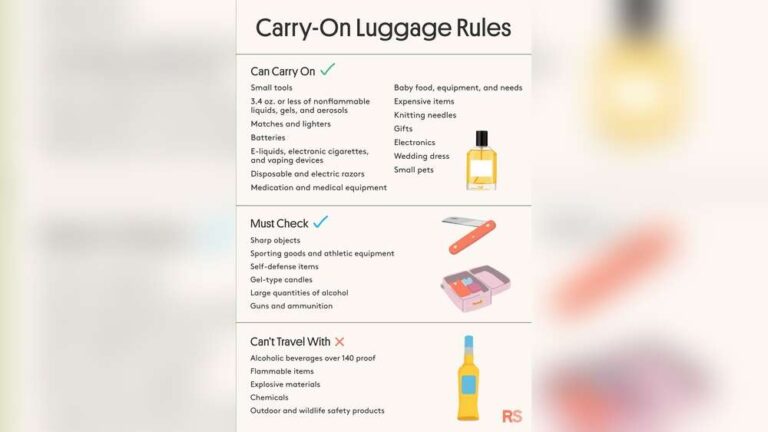
Remove items that UPS or federal law does not allow in the package. Common problem items include:
- Aerosol products
- Flammable liquids
- Fuel, camping fuel, and propane
- Firearms and ammunition
- Explosives
- Certain batteries
- Perishable food
- Alcohol, depending on the shipper and destination
- Illegal drugs and other restricted goods
Rules can vary by item, service, state, and destination. The UPS Shipping Restrictions page is the best place to check a specific item.
Do not ship passports, cash, jewelry, medication, or other essential items in checked luggage unless you understand the risks. Keep travel documents and anything you cannot replace with you.
2. Choose a shipping method
UPS offers several service levels in the United States. The exact names, delivery estimates, and availability can change by ZIP Code.
Common choices include:
- UPS Ground: Often the lower-cost option when delivery can take several business days.
- UPS 3 Day Select: A faster domestic option in eligible areas.
- UPS 2nd Day Air: Intended for delivery in two business days in covered locations.
- UPS Next Day Air: Designed for urgent shipments, but usually at a much higher price.
Ground delivery is often suitable when you ship luggage several days before your trip. Air services may make sense when the bag contains items needed soon, but a late shipment can still create a problem if the package is delayed.
UPS transit estimates generally refer to business days. Weekends, holidays, weather, remote locations, and service disruptions can affect delivery.
3. Pack the suitcase for parcel shipping
A suitcase is made for travel, but it is not always made for parcel conveyors. Put clothing and other soft items inside the bag, close every zipper, and protect fragile contents with padding.
Then choose one of these approaches:
Put the luggage in a shipping box
This is the safer method for most suitcases. Use a new, strong corrugated box that is large enough to hold the bag without forcing it inside.
Good packing steps include:
- Wrap the suitcase in a plastic bag to protect it from moisture and dirt.
- Place padding around the suitcase, especially near wheels and hard corners.
- Use a box with enough room for cushioning on all sides.
- Fill empty space so the suitcase cannot move inside the box.
- Seal every box seam with strong packing tape.
- Add a copy of the shipping address inside the box.
A UPS Store can help select a box and pack the luggage. That service adds cost, but it may be worthwhile for an expensive suitcase or a tight travel schedule.
Ship the suitcase without a box
Some luggage can be shipped as an exposed package. However, UPS may apply a handling charge or refuse a package that is poorly protected, unstable, or not suitable for its network.
If you ship a suitcase without a box:
- Secure loose straps and handles.
- Cover or protect exposed wheels.
- Do not place the label over a zipper or movable surface.
- Use a durable shipping pouch or clear protective covering.
- Keep the original luggage tag attached, but do not rely on it as the shipping label.
- Ask the UPS Store or UPS representative whether the bag needs extra packaging.
A box usually provides better protection and makes the package easier to label.
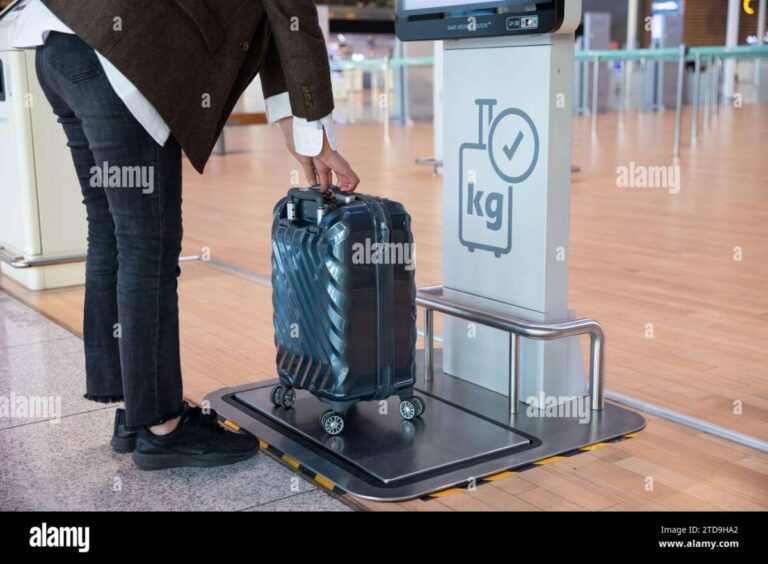
4. Measure and weigh the packed package
Measure the luggage after packing, not before. Record:
- Length
- Width
- Height
- Weight
UPS uses the package’s actual weight and dimensional weight. Dimensional weight reflects the space a package occupies. A large, light suitcase can cost more than its scale weight suggests.
A common dimensional-weight calculation is:
Length × width × height ÷ the applicable UPS dimensional divisor
The divisor and billing rules can vary by service and shipment type. UPS will calculate the billable weight when you get a quote.
UPS generally accepts packages up to 150 pounds for standard U.S. package services, subject to its current rules. Size limits and additional handling charges can apply. Oversize luggage may also qualify as a large package and cost much more than a normal suitcase.
5. Create and pay for the shipment
You can create a label through the UPS website or take the luggage to a UPS Store.
You will need:
- The sender’s name, address, and phone number
- The recipient’s name, address, and phone number
- The package weight and measurements
- The requested service
- Payment
- A return address
Compare the total quote, not only the base shipping price. The final amount may include fuel surcharges, residential delivery charges, additional handling, large-package fees, declared value charges, and packing costs.
6. Attach the label and keep the receipt
Place the label on the largest flat surface of the package. Do not cover the barcode with tape that creates glare or wrinkles. If you use a box, remove old labels and barcodes.
At a UPS location, ask for an acceptance receipt. If you schedule a pickup, keep the pickup confirmation. Use the tracking number to confirm that UPS received the package and to monitor its progress.
A shipment is not fully protected by a label alone. The tracking record and receipt help show when UPS accepted the package and where it was last scanned.
How Much Does It Cost to Ship Luggage with UPS?
The price depends on the packed size, packed weight, distance, delivery speed, package type, and extra services. There is no single UPS luggage rate.
The most useful way to estimate the price is to enter the exact shipment details into the UPS Calculate Time and Cost tool. Use the ZIP Code where the bag will be sent from and the full delivery address.
Factors that affect the price
| Factor | Why it matters |
|---|---|
| Weight | Heavier packages usually cost more |
| Dimensions | Large bags may be billed by dimensional weight |
| Distance | Longer zones usually cost more |
| Service speed | Air services cost more than Ground |
| Residential delivery | A home address may add a fee |
| Package size | Oversize or large packages may trigger surcharges |
| Packaging | UPS Store packing adds a service charge |
| Declared value | Higher declared value may add a charge |
| Pickup | A scheduled pickup may cost extra |
| International destination | Customs and duties can apply |
A simple hypothetical example
Suppose a packed suitcase weighs 45 pounds and measures 30 by 20 by 12 inches.
Its volume is:
30 × 20 × 12 = 7,200 cubic inches
UPS may compare the actual weight with the dimensional weight. If the dimensional weight is higher under the applicable divisor, UPS may bill the package at that higher weight.
This is only an example. UPS changes rates and divisors by service and shipment type, so use the live quote for the actual price.
UPS shipping versus airline baggage
Shipping is not automatically cheaper than checking a bag. Compare both options before deciding.
| Consideration | UPS | Airline checked baggage |
|---|---|---|
| Delivery | Sent ahead to an address | Travels on your flight |
| Timing | Needs advance planning | Available when you arrive |
| Handling | Parcel network | Airport baggage system |
| Cost | Based on size, weight, distance, and service | Based on airline rules and bag count |
| Risk | Delivery delay or misdelivery | Lost, delayed, or damaged baggage |
| Convenience | Avoids carrying the bag through the airport | Avoids arranging a separate shipment |
| Destination | Must have a delivery address | Goes with your ticketed itinerary |
UPS can be attractive when you are moving, attending an event, traveling with bulky equipment, or staying at one address for several days. An airline bag may be more practical when you need the luggage immediately after landing.
How to lower the cost
You may reduce the price by:
- Shipping with UPS Ground when the schedule allows
- Removing unnecessary packaging bulk
- Avoiding oversized boxes
- Comparing a UPS Store quote with an online UPS quote
- Sending the bag to a business address, when appropriate
- Shipping several bags together only if the combined package remains safe and within size limits
- Weighing and measuring the package accurately before buying the label
Do not remove protective padding just to reduce the package size. A damaged suitcase can cost more than the shipping savings.

Can You Ship a Suitcase Without a Box?
Yes, but a box is usually the more reliable choice. An unboxed suitcase can be accepted as a package if it is stable, properly labeled, and suitable for UPS handling. Acceptance can depend on the package condition and the location handling it.
A bare suitcase has several weak points:
- Wheels can break.
- Pull handles can bend.
- Straps can catch.
- Zippers can open.
- Labels can detach from fabric.
- The case can be scratched or stained.
If the suitcase is valuable, new, hard-sided, or needed for a major trip, use a box or professional packing service. If you must ship it without a box, wrap it in protective material and ask the shipping location to confirm that it meets current requirements.
Can you ship luggage inside a suitcase?
You can place clothing and permitted personal items inside the suitcase. The suitcase itself then becomes the inner container. For better protection, place that suitcase inside a shipping box.
Do not overfill the bag. Excess pressure can split seams, break zippers, or damage the shell. Fragile objects should be wrapped separately and placed away from the outer walls.
Can you ship an empty suitcase?
Yes. An empty suitcase can be shipped like other luggage. It still needs an accurate packed weight, a complete address, and protection for wheels, handles, and other parts.
Can you ship luggage to a hotel?
Usually, yes, if the hotel agrees to accept packages for you. Contact the hotel before shipping and ask for:
- The correct guest name format
- The hotel’s full shipping address
- Whether it accepts packages before check-in
- Any storage or handling fee
- The date the hotel will hold the package
- Whether the package should be marked “Hold for Guest”
Use the recipient’s name exactly as the hotel requests. A package addressed only to a guest may be returned if the hotel cannot match it to a reservation.
Can you ship luggage to a cruise port?
This requires extra planning. Cruise lines and port facilities may use specific luggage programs, deadlines, approved carriers, or receiving warehouses. A UPS delivery to a nearby port does not guarantee that the cruise line will receive or transfer the bag.
Ask the cruise line for its current delivery instructions before shipping. Confirm the final address, arrival deadline, reservation details, and accepted carrier.

UPS Luggage Shipping Rules and Important Limits
UPS rules depend on what you ship, where it goes, and which service you choose. A normal suitcase filled with clothing is usually less complicated than luggage containing batteries, liquids, food, sports gear, or medical items.
Batteries need special care
Portable electronics and spare lithium batteries can have shipping restrictions. Do not place loose spare batteries in luggage without checking the current UPS and federal requirements.
Battery rules can depend on:
- Battery chemistry
- Watt-hour rating
- Whether the battery is installed in equipment
- The number of batteries
- Whether the package travels by ground or air
- Damage or recall status
Check UPS guidance and the U.S. Department of Transportation Pipeline and Hazardous Materials Safety Administration before shipping power banks, e-bike batteries, scooters, camera batteries, or similar items.