Usually, you should not dry a backpack in the dryer because heat can damage fabric and parts.
Knowing whether you can dry a backpack in the dryer depends on its fabric, coating, frame, padding, and care label. Most backpacks are safer when air-dried, but a few simple steps can help you dry one quickly without causing shrinkage, melting, fading, or odor.
Can You Dry a Backpack in the Dryer?
In most cases, you should not dry a backpack in the dryer. High heat and constant tumbling can harm the bag’s fabric, straps, zippers, foam padding, plastic clips, and waterproof coating.
The safest answer to “can you dry a backpack in the dryer?” is usually no unless the manufacturer clearly allows it. A care label is more reliable than general advice because backpack materials vary widely.
Some lightweight nylon or polyester bags may tolerate a short, no-heat cycle. Even then, air-drying is the better choice. A dryer can turn a small moisture problem into a damaged zipper, warped base, or peeling inner coating.
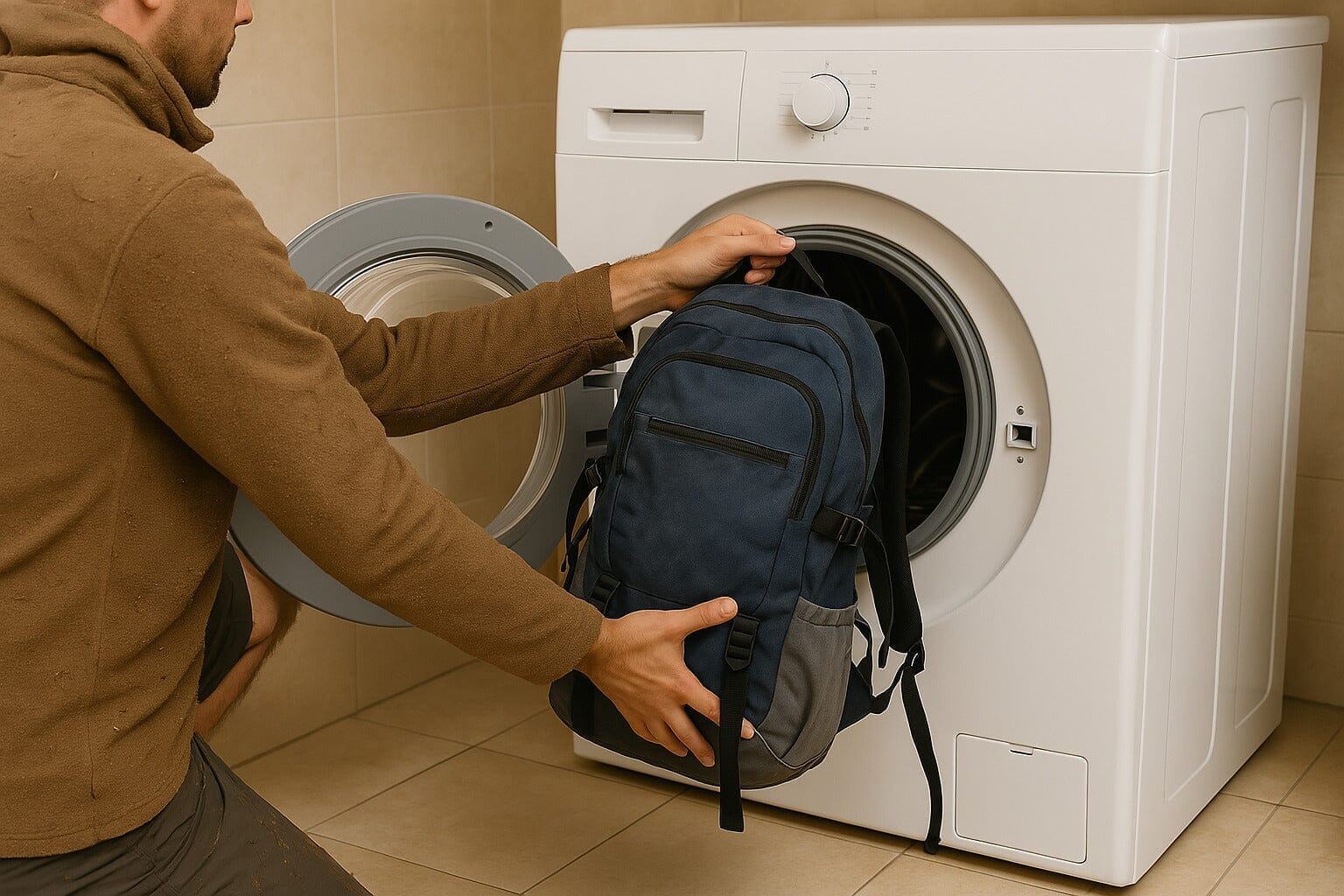
Why Dryers Can Damage Backpacks
A backpack is not built like a towel or cotton shirt. It often contains several materials joined together, and each material reacts differently to heat and movement.
Heat can weaken fabric and coatings
Many backpacks use nylon or polyester with a water-resistant coating. Heat may soften, crack, or separate this coating from the fabric. Once that happens, the bag may lose its ability to resist rain.
Very hot air can also fade dark colors and make some synthetic fibers look shiny or warped. The damage may not appear until the bag cools.
Tumbling can bend the bag
A dryer tosses clothing again and again. That movement can crush padded laptop sleeves, bend internal frames, and twist shoulder straps.
A backpack with a structured back panel may come out with permanent creases. A firm base can also become misshapen when it presses against the dryer drum.
Hardware may melt or break
Plastic buckles, cord locks, logo parts, and zipper teeth may become brittle or misshapen under high heat. Metal hardware can also bang against the drum and damage both the backpack and the dryer.
If the bag has glued decorations or reflective strips, heat may loosen them. This is one reason the answer to “can you dry a backpack in the dryer?” should be cautious.
Foam and padding may hold moisture
Thick padding can feel dry on the outside while remaining damp inside. A dryer may heat the outer fabric too quickly without fully drying the inner foam.
That trapped moisture can lead to a musty smell. It may also encourage mold if the backpack is stored before it is completely dry.
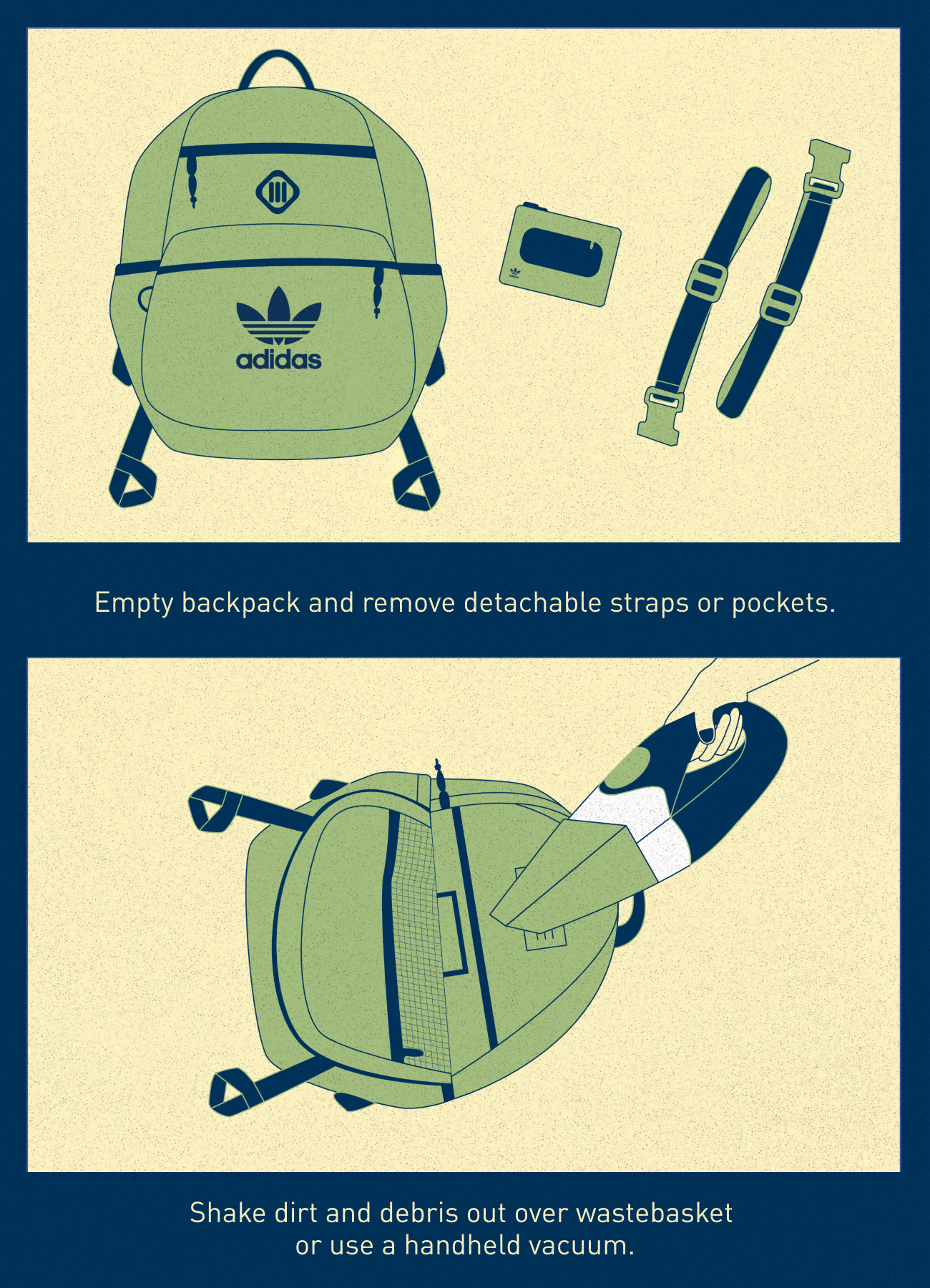
Check the Care Label First
Before deciding whether you can dry a backpack in the dryer, look inside the main compartment, along a side seam, or near the back panel. The care label may show washing and drying symbols.
A square with a circle usually represents tumble drying. One dot means low heat, while two dots generally indicate a higher heat setting. A crossed-out symbol means the backpack should not go in the dryer.
If the label is missing, treat the backpack as dryer-safe only under the mildest conditions, if at all. When in doubt, air-dry it.
Also check the product instructions on the manufacturer’s website. A school backpack, hiking pack, camera bag, and leather backpack may all need different care.
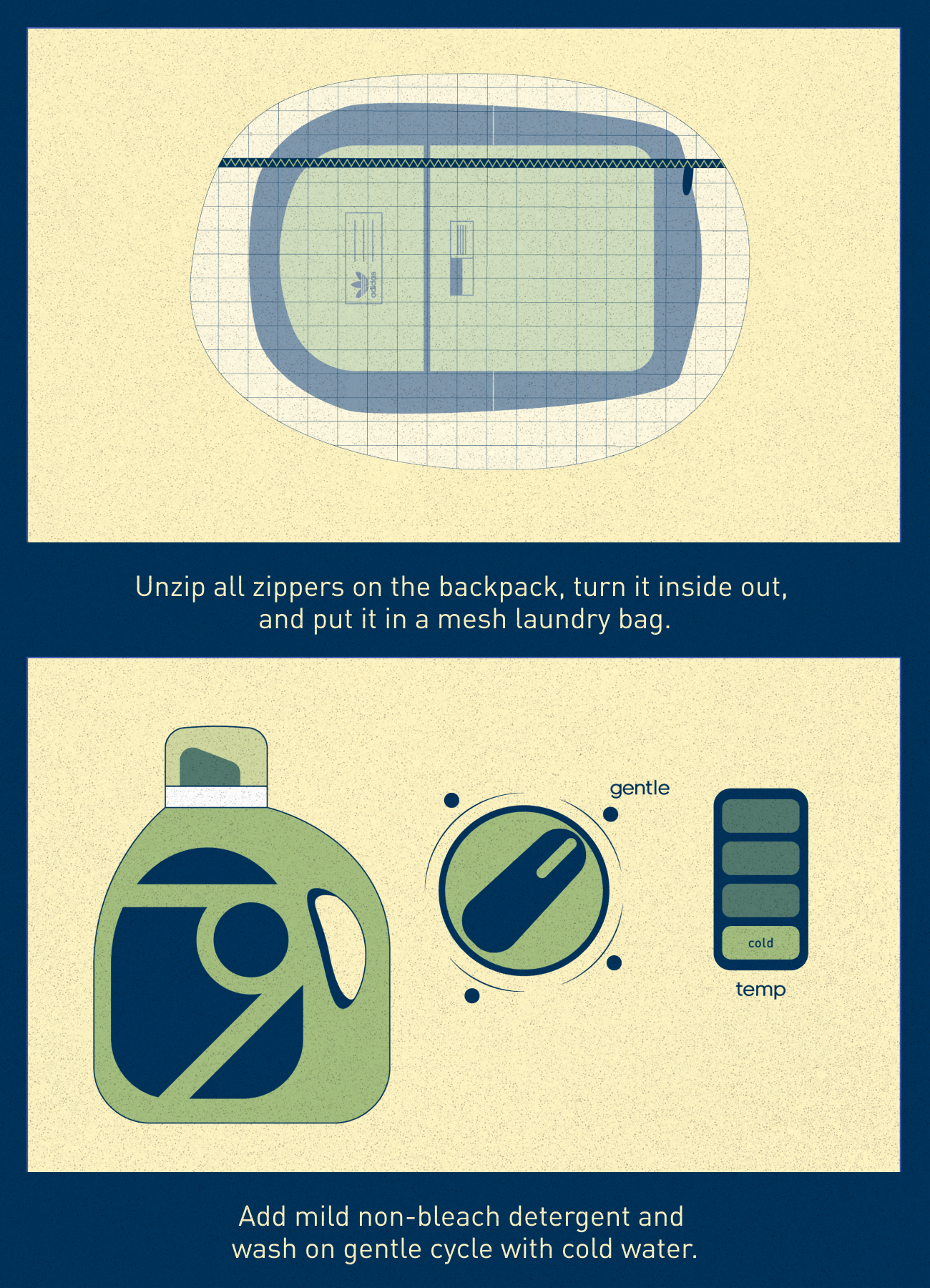
What Types of Backpacks Should Never Go in a Dryer?
Some backpacks are especially sensitive to heat and tumbling. For these bags, the answer to “can you dry a backpack in the dryer?” is a firm no.
Avoid putting these backpack types in a dryer:
- Leather or suede backpacks, which can shrink, crack, or become stiff.
- Backpacks with waxed canvas, which may lose their finish.
- Hiking packs with aluminum stays or rigid frames, which can bend or damage the drum.
- Camera bags with thick foam dividers, which may deform.
- Laptop backpacks with padded sleeves, which can lose their shape.
- Backpacks with glued patches, printed designs, or reflective panels.
- Bags with waterproof membranes or sealed seams, which may delaminate.
- Backpacks with metal frames, wooden parts, or hard-shell sections.
A simple nylon daypack has fewer risks, but it still needs care. Remove all loose items and inspect the bag before using any machine.
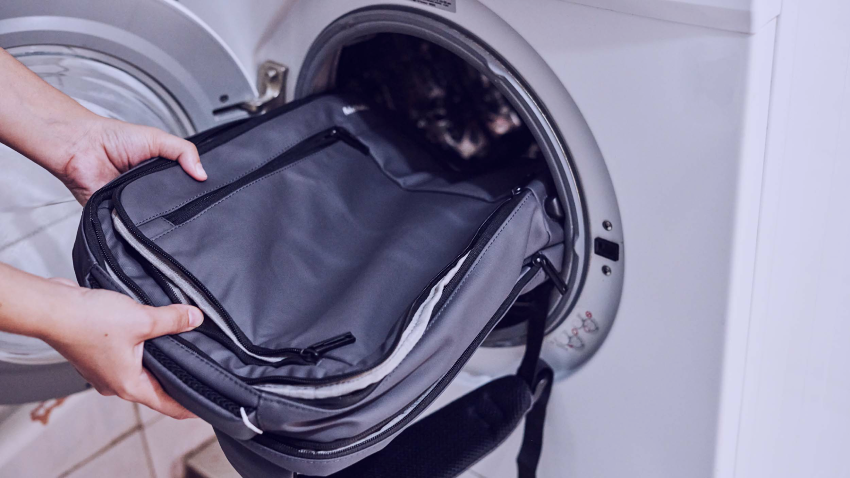
When Can You Dry a Backpack in the Dryer?
You may be able to dry a backpack in the dryer when the care label allows tumble drying. The bag should also be simple, lightweight, and free from leather, rigid parts, heavy padding, and delicate decorations.
Use the lowest heat setting or a no-heat air-fluff setting. Place the backpack in the dryer by itself or with a few clean towels to reduce harsh impact.
Stop the cycle every 10 to 15 minutes. Check the fabric, seams, straps, and hardware. If the bag feels hot, smells unusual, or changes shape, remove it at once.
Even when the label permits drying, do not assume that a full high-heat cycle is safe. Low heat and short checks are much safer than leaving the backpack unattended.

How to Dry a Backpack Safely
Air-drying is the best method for most backpacks. It takes longer, but it protects the bag’s shape, color, padding, and water-resistant finish.
Follow these steps:
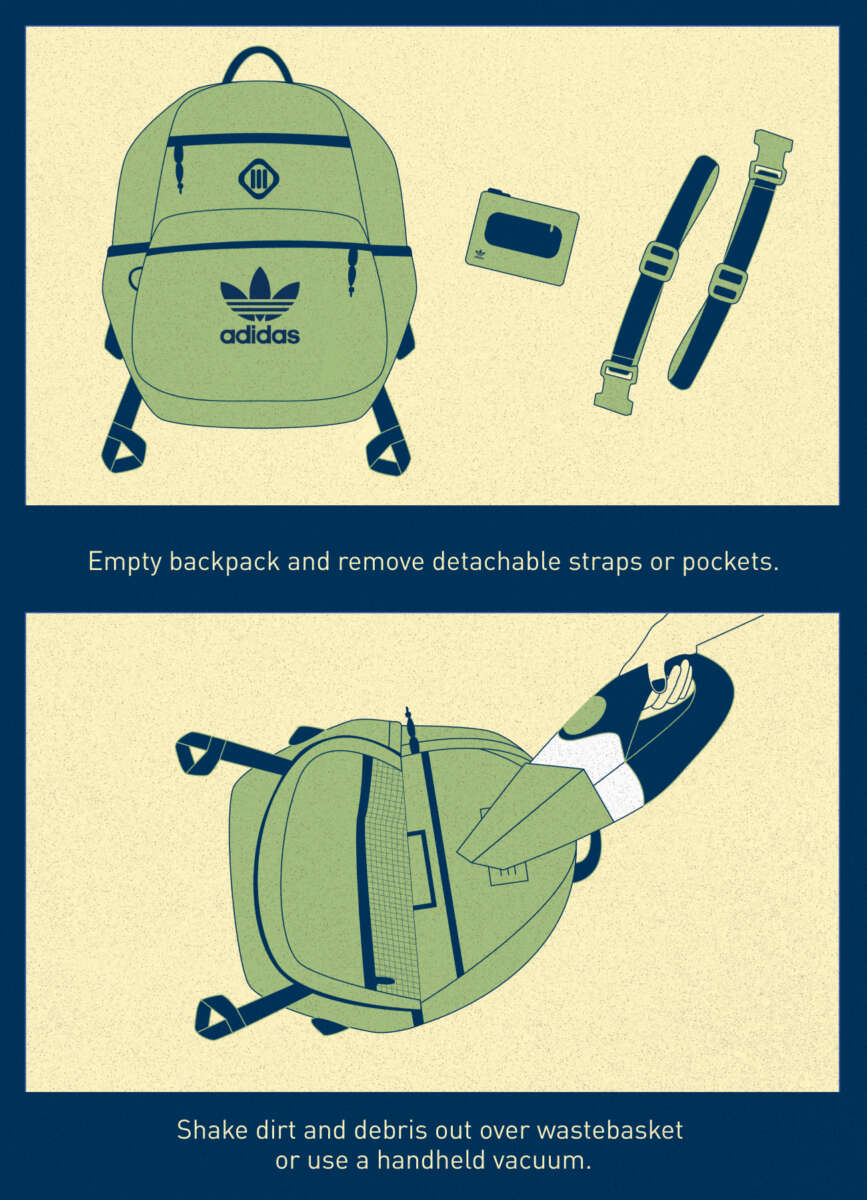
- Empty every pocket and shake out crumbs, paper, and dirt.
- Remove the laptop sleeve, hard insert, or detachable padding if possible.
- Blot wet areas with a clean towel. Do not twist or wring the backpack.
- Open every zipper and unzip each compartment.
- Hang the bag upside down or place it upright in a well-ventilated area.
- Keep the backpack away from direct sunlight, radiators, fireplaces, and heaters.
- Turn the bag every few hours so air reaches all sides.
- Use a fan nearby to improve airflow.
- Check the padding and bottom panel before storing it.
- Store the backpack only when it is fully dry.
A fan can make a major difference. Air movement removes moisture without exposing the bag to the intense heat of a dryer.
If the backpack is soaked, stuff it loosely with clean towels for the first hour. Replace the towels when they become damp. This helps the bag keep its shape while drawing out water.
A Safe Dryer Method for a Dryer-Safe Backpack
If the care label says you can dry a backpack in the dryer, follow a gentle process. Never use the hottest setting just to save time.
- Remove all accessories and open the compartments.
- Place the backpack inside a large mesh laundry bag if it fits.
- Select no heat, air fluff, or the lowest temperature.
- Add two clean, dry towels to soften the tumbling.
- Run the dryer for 10 minutes.
- Inspect the bag for heat, odor, loose parts, or changes in shape.
- Repeat short cycles only when needed.
- Finish by air-drying the backpack until every padded area feels dry.
Do not dry the backpack with shoes, coins, or other hard items. They can strike the fabric and damage the dryer drum.
From a practical care standpoint, short checks matter more than speed. A backpack that feels slightly damp is easier to save than one that has been overheated for an hour.
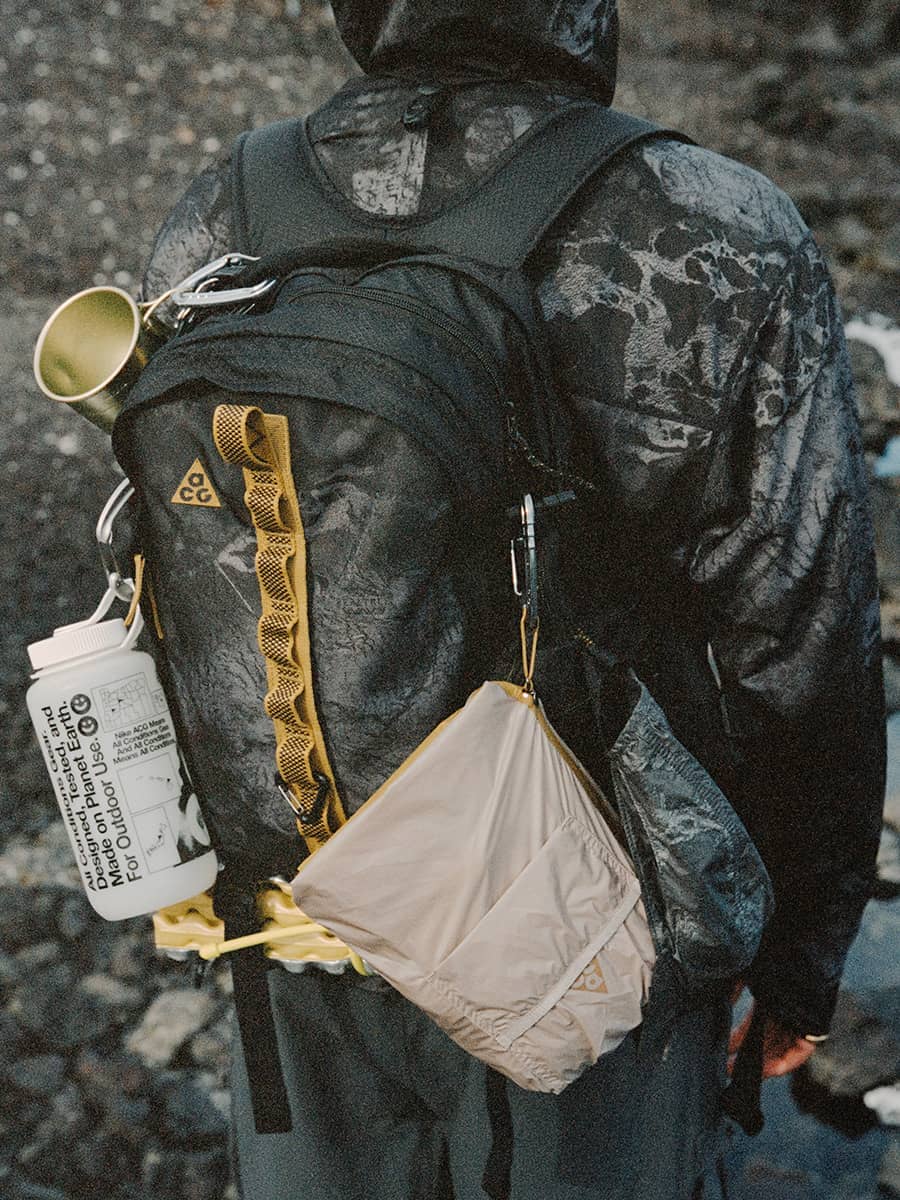
How to Dry a Backpack Quickly Without a Dryer
You do not need a dryer to dry a backpack fast. Good airflow and careful towel use often work just as well.
Try this method:
- Press a dry towel against wet panels to absorb surface water.
- Place the backpack near a fan, not directly on a hot vent.
- Open all pockets and pull out padded inserts.
- Stand the bag upright so air can enter the main compartment.
- Turn it over every few hours.
- Use a cool hair dryer from a safe distance for small wet areas.
- Avoid packing or storing the backpack until the lining is dry.
A cool hair dryer can help around zipper seams and pockets. Keep it moving, and never use high heat on one spot.
Do not place a wet backpack in a sealed plastic bag. That traps moisture and creates the warm, damp conditions that cause mildew.
What to Do If a Backpack Gets Soaked
A soaked backpack needs gentle handling. First, empty it and remove anything that could stain the lining or cause rust.
If the backpack contains a laptop, tablet, or other electronics, remove them immediately. Dry those items separately according to their own care instructions.
Next, press towels against the wet fabric. Do not wring the backpack because twisting can damage seams and padding. Let the bag drain over a tub or sink, then use a fan to move air through the open compartments.
If the backpack smells musty after drying, wash it according to the care label. A mild detergent is usually safer than bleach or strong cleaners. Test any cleaner on a hidden spot first.
Mold or widespread mildew may require professional cleaning. Do not use a dryer to “kill” the smell. Heat may damage the bag while leaving moisture and odor inside.
Common Mistakes to Avoid
Many backpack problems happen because people treat the bag like ordinary laundry. Avoid these common errors:
- Using high heat because the outside feels wet.
- Leaving every zipper closed during drying.
- Drying a leather or waxed canvas backpack in a machine.
- Ignoring a waterproof coating or sealed seam.
- Hanging a heavy, soaked backpack by one thin strap.
- Storing the bag while the bottom padding is still damp.
- Using bleach without checking the fabric.
- Placing the backpack in direct, intense sunlight for hours.
- Running a dryer cycle without checking the bag.
One mistake I would avoid in any backpack-care routine is focusing only on the outer fabric. The base, lining, foam, and pockets often dry last. Always check those hidden areas before calling the job finished.
How to Keep a Backpack Fresh and Dry
Preventing heavy moisture is easier than drying a soaked bag. A few habits can protect your backpack during daily use.
Use a rain cover for hiking or commuting in wet weather. Keep drinks in sealed bottles, and place them in a separate pocket when possible. A waterproof pouch can protect electronics and important papers.
Clean small spills right away. Let the backpack breathe after sports, travel, or a rainy commute. Do not leave it closed in a hot car, where heat and trapped moisture can create odors.
Inspect the seams, zippers, and bottom panel once in a while. Small tears can let in water and become larger during washing or drying.
Frequently Asked Questions About Can You Dry a Backpack in the Dryer
Can you dry a backpack in the dryer on low heat?
You may be able to dry a simple backpack on low heat if its care label permits tumble drying. Use short cycles, check the bag often, and stop if it becomes hot or loses its shape.
Can you dry a school backpack in the dryer?
Most school backpacks are safer when air-dried. They often contain padded sections, plastic hardware, printed designs, and coatings that can be damaged by heat.