

Hang a dog grooming hammock from a strong, secure anchor at chest height, with your dog’s paws close to the floor.
Knowing where to hang dog grooming hammock matters as much as choosing the right size. A safe setup can make nail trims, paw checks, brushing, and light grooming calmer for both you and your dog. This guide explains the best locations, safe heights, suitable anchors, common mistakes, and practical ways to create a steady grooming area at home.
The Best Place to Hang a Dog Grooming Hammock
The best place to hang a dog grooming hammock is from a sturdy overhead support that can hold more than your dog’s full weight. In most homes, this means a solid ceiling beam, a reinforced grooming arm, or a properly installed wall-mounted bracket.
Your dog should not hang freely in the air. The hammock should support the body while the feet remain near the floor or lightly lifted for access. Think of it as a soft support cradle, not a swing.
Good locations include:
• A dedicated grooming table with a secure grooming arm
• A solid ceiling joist with a rated eye bolt
• A heavy-duty wall bracket fixed into a stud
• A purpose-built pet grooming station
• A strong frame designed for pet restraint
Avoid hanging the hammock from a curtain rod, shower rod, towel bar, closet rail, or weak drywall anchor. These supports can bend, pull free, or collapse without warning.
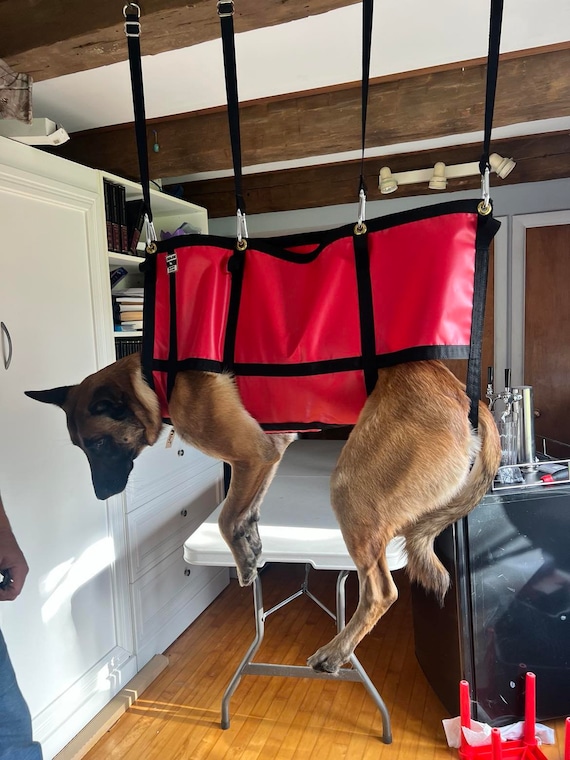
How High Should a Dog Grooming Hammock Hang?
The ideal height depends on your dog’s size, the hammock design, and the grooming task. In general, the hammock should sit around your waist to chest level when you are standing.
For nail trimming, your dog’s paws should be easy to reach without bending sharply or lifting the legs too high. The dog’s body should stay supported, while the legs remain relaxed and free enough for gentle handling.
Use these general guidelines:
• Small dogs: Keep the hammock low, with the paws close to the floor.
• Medium dogs: Position the hammock around waist height.
• Large dogs: Use a strong grooming table or low support system rather than a high overhead setup.
• Nervous dogs: Start lower so the dog feels less exposed.
Before placing your dog inside, test the height with a weighted bag that matches your dog’s weight. This test does not replace a safety check, but it can reveal poor balance or weak hardware.

Safe Anchor Points for a Grooming Hammock
A secure anchor is the most important part of learning where to hang dog grooming hammock. The anchor must be strong, stable, and suitable for repeated movement.
Ceiling Joists
A ceiling joist can provide a strong anchor when you use the right hardware. The eye bolt must pass into solid wood, not just ceiling drywall. Choose hardware with a working load limit well above your dog’s weight.
A professional may be needed if you cannot identify the joist or if the ceiling has unusual construction. Never guess where the structural support is located.
Wall Studs
A wall-mounted bracket can work well when it is fixed directly into a wall stud. Use screws and hardware made for the bracket and your wall type.
A stud-mounted support can be easier to inspect than a ceiling anchor. It can also keep the hammock closer to the wall, which may help some dogs feel more secure.
Grooming Tables
A grooming table with an attached arm is often the safest option for home grooming. These tables are made for pet handling and usually include a non-slip surface and adjustable restraint points.
Always check the table’s weight rating. A small table made for toy breeds may not safely support a larger dog.
Portable Frames
Some pet owners use portable grooming frames. These can be useful in apartments or rental homes because they do not require permanent installation.
Check that the frame sits on a level floor and does not rock. A wide base is safer than a narrow tripod, especially when a dog moves suddenly.
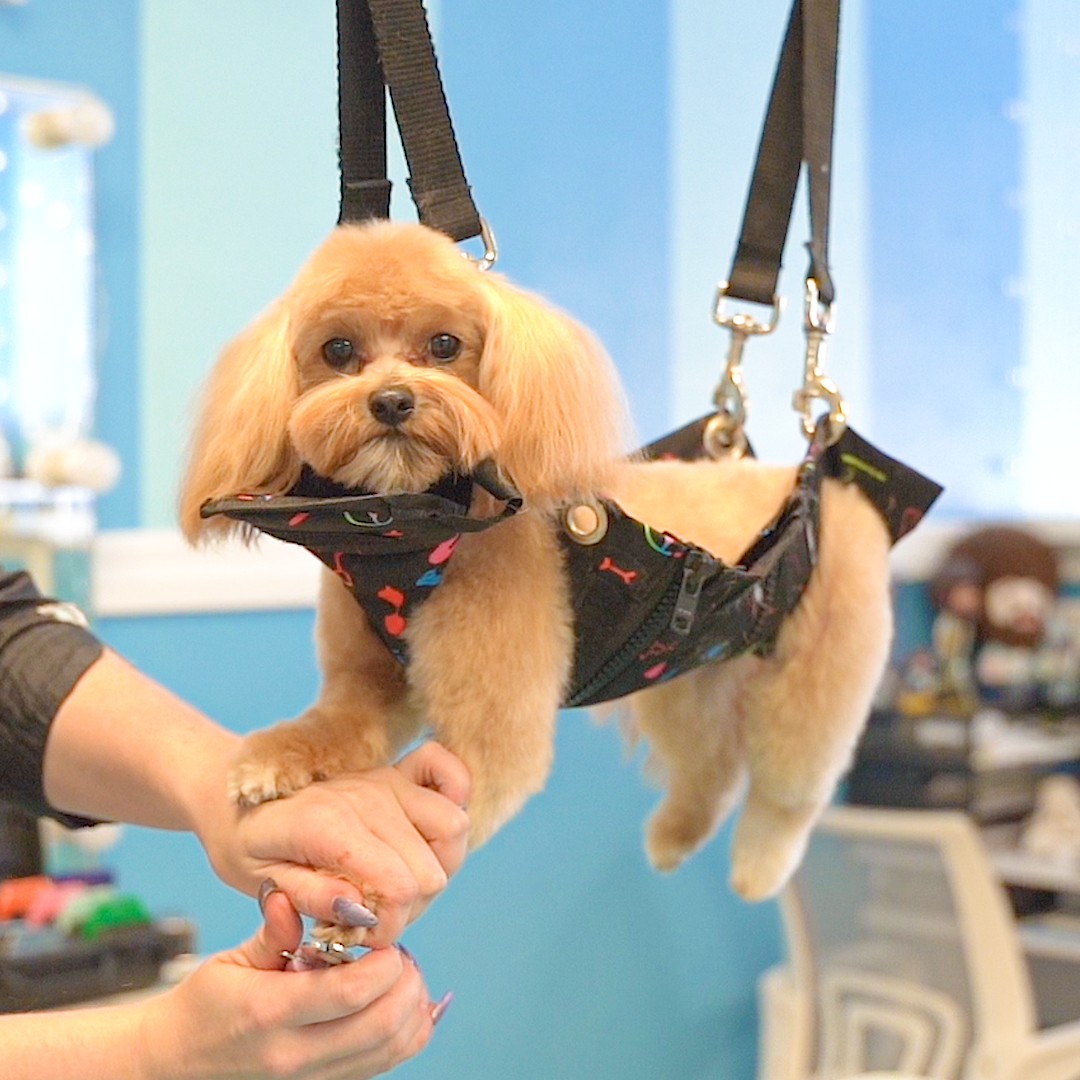
Where Not to Hang a Dog Grooming Hammock
Some household fixtures look strong but are not built to support a moving dog. Even a light dog can create a sudden load when twisting, jumping, or struggling.
Do not hang the hammock from:
• Curtain rods or tension rods
• Shower curtains or bathroom rails
• Towel bars
• Closet poles
• Door hinges or door handles
• Ceiling drywall alone
• Furniture that can tip
• Lightweight shelving
• Plastic hooks or decorative hardware
A tension rod is especially risky. It may hold a towel, but it is not designed for a dog that shifts weight or pulls against the hammock.
Also avoid placing the hammock beside stairs, sharp furniture, heaters, glass doors, or open balconies. The grooming area should have a clear floor and enough room for you to move safely.

Setting Up the Hammock Step by Step
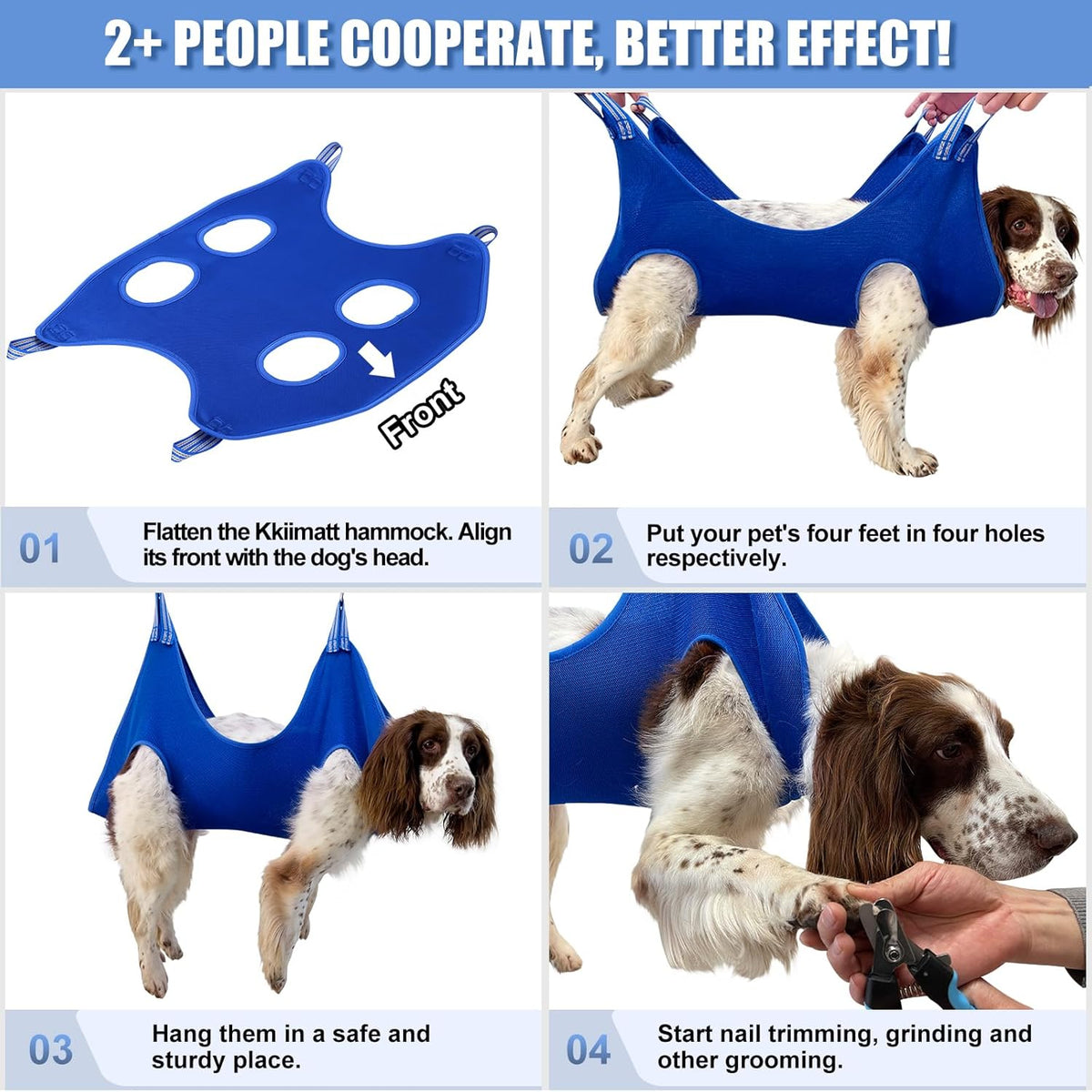
Once you know where to hang dog grooming hammock, set it up in a calm and controlled way. Do not place your dog into a new hammock without testing it first.
-
Inspect the hammock for torn fabric, loose stitching, and damaged clips.
-
Check every strap, ring, buckle, and carabiner.
-
Attach the hammock to a rated anchor or grooming arm.
-
Pull firmly on the hammock to test the connection.
-
Place a weighted bag inside and watch for slipping or twisting.
-
Add a non-slip mat under the dog if the paws may touch the floor.
-
Introduce the hammock while your dog is calm.
-
Reward your dog with treats and praise.
-
Begin with a short grooming task.
-
Keep one hand near the dog during the entire session.
The first session should be about comfort, not a full grooming job. Let your dog sniff the hammock. Touch the fabric to the body. Then remove it and try again later if your dog seems worried.
How to Keep Your Dog Safe in the Hammock
A grooming hammock should reduce strain, but it does not remove the need for supervision. Never leave a dog alone while suspended or partly supported.
Use these safety rules:
• Keep the dog’s neck free from pressure.
• Do not attach the hammock to a collar.
• Use a well-fitted harness if the product requires extra support.
• Make sure straps do not press on the throat or chest.
• Check that the legs are not trapped or twisted.
• Stop if your dog shows panic, pain, heavy panting, or weakness.
• Keep sessions short at first.
• Use a second person for dogs that struggle.
Many grooming hammocks are designed for nail trimming. They may not be suitable for bathing, drying, clipping, or long grooming sessions. Follow the product instructions and check its weight range.
Dogs with joint disease, spinal problems, breathing issues, recent surgery, or severe anxiety may need a different approach. Ask your veterinarian before using a grooming hammock with a medically fragile dog.

Choosing the Right Room
The room can affect how well your dog handles grooming. A quiet space with good light is usually better than a busy hallway or loud laundry room.
A bathroom may seem convenient, but humidity, slippery floors, and hard surfaces can increase risk. If you use the bathroom, place a thick non-slip mat under the dog and keep the hammock away from shower hardware.
A laundry room can work if the machines are off. Avoid grooming beside a running washer, dryer, vacuum, or loud fan.
A living room may be best for a nervous dog because it feels familiar. Move fragile items away and give yourself enough space to stand on both sides of the hammock.
The goal is a calm, bright, clutter-free area. A peaceful room is often more useful than a perfect-looking setup.
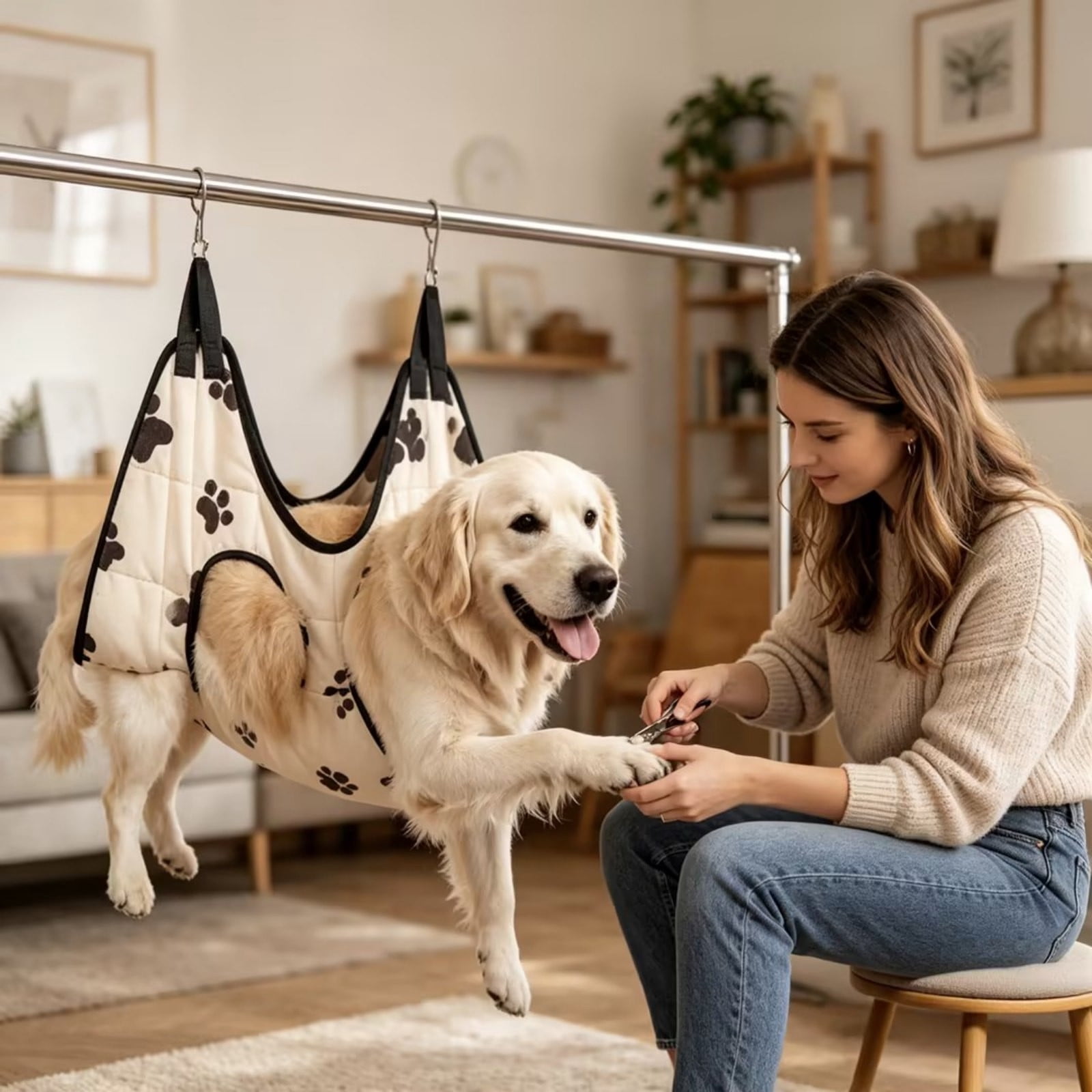
Dog Size and Hammock Position
The correct position changes with body size and shape. A long-backed dog may need more body support than a compact dog. A dog with short legs may need the hammock lower than expected.
When checking where to hang dog grooming hammock, look at these points:
• The dog’s back should rest evenly in the fabric.
• The chest should not be squeezed.
• The legs should extend naturally.
• The head should remain in a normal position.
• The dog should not slide toward one side.
• The hammock should not fold across the throat.
Small dogs can often use a fabric hammock with two support points. Larger dogs may need a wide sling, a grooming table, or full-body support. Never rely on a small hammock simply because the clips appear strong.
A dog’s weight rating is only one factor. Movement, body length, and temperament also affect the real load.

Common Mistakes to Avoid
One common mistake is hanging the hammock too high. When the feet are far from the floor, some dogs panic and twist. A lower position usually gives better confidence during early sessions.
Another mistake is using a single weak clip. Two attachment points are often more stable, but the product instructions should always guide the setup. Each point must be strong enough for the expected load.
Some owners also tighten the straps too much. A snug fit is helpful, but tight straps can rub the skin or restrict breathing. You should be able to check the dog’s body and reposition the fabric without force.
In practical grooming setups, the biggest lesson is simple: test the support before testing it with the dog. A few minutes of inspection can prevent a frightening fall or injury.
How to Help a Nervous Dog Accept the Hammock
A grooming hammock can feel strange at first. Your dog may not understand why the floor feels different or why the legs are being handled.
Use gradual training:
• Place treats near the hammock.
• Reward your dog for touching it.
• Let your dog stand on it while it rests on the floor.
• Lift one side for a few seconds.
• Practice touching the paws without trimming.
• Keep the first grooming session under a few minutes.
• End while your dog is still calm.
Do not punish growling or fear signals. These behaviors communicate discomfort. If you ignore them, the dog may escalate to snapping or biting.
For serious fear, a certified force-free trainer or professional groomer can help. A grooming hammock is a tool, not a replacement for behavior support.
What to Use for Extra Stability
A few simple items can improve the grooming area:
• A rubber non-slip mat
• A bright adjustable lamp
• Rounded grooming scissors
• A quiet nail grinder or pet nail clipper
• Treats with high value
• A first-aid kit
• A second support strap approved by the manufacturer
• A grooming table with a rated arm
Keep tools within reach but away from the dog’s paws. Do not leave sharp tools on the table edge. If your dog suddenly moves, tools can fall or cause injury.
You can also place a mirror nearby if you need to see the attachment point behind the dog. However, do not let extra equipment crowd the area.
When a Grooming Hammock Is Not the Best Choice
A hammock may not suit every dog or every task. It can be a poor choice for dogs that panic when their feet leave the ground, dogs with balance problems, or dogs that bite when restrained.
It may also be unsuitable for:
• Deep grooming sessions
• Full bathing
• Haircuts that require constant body repositioning
• Dogs recovering from injury
• Dogs with severe arthritis
• Dogs that cannot tolerate restraint
For some dogs, floor grooming with treats is safer. For others, a professional grooming table and trained handler are better options.
If your dog repeatedly struggles, do not keep increasing the restraint. Change the plan and seek help. Safety matters more than finishing the nail trim that day.
Cleaning and Inspecting the Hammock
Clean the hammock after use, especially if it touches wet fur, skin oils, dirt, or nail dust. Follow the care instructions because some fabrics can shrink or weaken with heat.
Inspect the hammock before every use. Look for:
• Frayed straps
• Loose seams
• Bent metal rings
• Cracked plastic clips
• Rust
• Stretched fabric
• Damaged stitching
Replace the hammock when the material shows wear. Do not repair a load-bearing strap with household tape or a simple knot.
The same rule applies to wall brackets and ceiling hardware. Check for movement, cracks, rust, and loose screws on a regular schedule.
Frequently Asked Questions
Where should I hang a dog grooming hammock?
Hang it from a strong, fixed anchor such as a rated grooming arm, ceiling joist, or stud-mounted bracket. Keep your dog’s paws close to the floor and avoid weak household fixtures.
Can I hang a dog grooming hammock from a door?
You should not use a standard door, door handle, or hinge as the main anchor. These parts are not normally designed to support a moving dog and may cause the dog or hardware to fall.
How high should a dog grooming hammock be?
The hammock should usually sit around waist to chest height for the handler. Adjust it so the dog’s body is supported and the paws remain near the floor without pressure on the neck or chest.
Is a dog grooming hammock safe for all dogs?
No. Dogs with joint problems, spinal conditions, breathing issues, recent surgery, or severe fear may need another method. Ask your veterinarian or a qualified groomer when health or behavior concerns exist.
Can I leave my dog alone in a grooming hammock?
Never leave a dog unattended in a grooming hammock. Stay close, keep one hand available, and stop the session if the dog shows pain, fear, weakness, or breathing trouble.
How do I know if the anchor is strong enough?
The anchor should be fixed to solid structural material and have a working load limit well above your dog’s weight. Test it with a suitable weighted load and inspect it before every use.
Conclusion
The safest place to hang a dog grooming hammock is a secure, rated anchor at a comfortable height, with your dog supported and close to the floor. Avoid curtain rods, towel bars, drywall-only anchors, and any fixture that can bend or pull free.
Start with short sessions, use rewards, inspect the equipment, and stay with your dog at all times. If your dog remains fearful or has health concerns, choose a grooming table or professional help instead. Set up your grooming space carefully, and share your own tips or questions with other dog owners.

Zayden Halbrook is a travel enthusiast and gear researcher passionate about making every journey smoother and more enjoyable. With a keen eye for practical travel essentials and real-world tips, he helps readers choose the right gear and travel smarter. When he’s not testing travel kits or exploring new destinations, Zayden shares simple, reliable advice to make every trip stress-free.