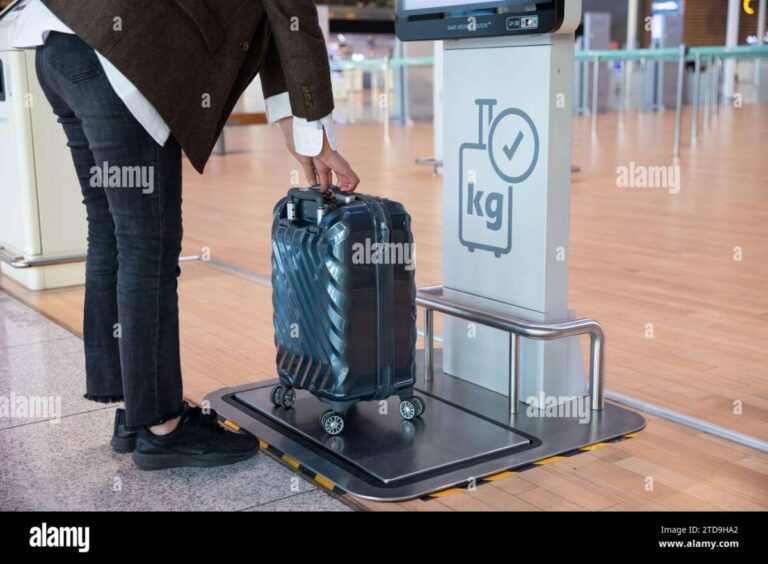
Check-in luggage, also called checked baggage, is a suitcase or bag that you give to an airline before your flight. The airline stores it in the aircraft’s cargo area. You collect it at the baggage claim area after you land.
In the United States, you usually check a bag at the airline counter or a self-service bag drop. The airline weighs it, adds a baggage tag, and sends it through the airport system. Your bag travels separately from you during the flight.

How Check-In Luggage Works
When you check a bag, the airline takes custody of it for the flight. You do not take it through the passenger screening line or into the cabin.
The usual process is:
- Go to your airline’s check-in counter or bag drop.
- Show your identification and travel details.
- Place your bag on the scale.
- Pay any checked-bag fee, if required.
- Attach the baggage tag or let an agent attach it.
- Keep the claim portion of the tag.
- Go through TSA security with your carry-on bags.
- Pick up your checked luggage at baggage claim after landing.
The baggage tag links your bag to your flight and destination. Keep the tag receipt until you have your luggage. It may help the airline find your bag if it is delayed or lost.
For a connecting flight, the airline may send your bag to the final destination. However, you may need to collect and recheck it when:
- You enter the United States from another country.
- Your airline tells you to claim it during a connection.
- You have separate tickets.
- You change airlines under rules that do not support baggage transfers.
- You change airports during the trip.
Ask the airline agent how your bag is tagged. The airport code on the tag should match your final destination when the airline checks the bag through.

Checked Luggage vs. Carry-On Luggage
The main difference is where the bag travels and when you can access it.
| Feature | Checked luggage | Carry-on luggage |
|---|---|---|
| Location during flight | Aircraft cargo area | Cabin |
| When you give it to the airline | Before security or at bag drop | You keep it until boarding |
| When you get it back | At baggage claim | When you leave the plane |
| Size rules | Usually based on total outside dimensions | Usually based on cabin size |
| Weight rules | Commonly applies | May apply, depending on the airline |
| Access during flight | Not available | Available, if stored under the seat or in an overhead bin |
| Best for | Large items and extra clothing | Valuables, medicine, documents, and travel essentials |
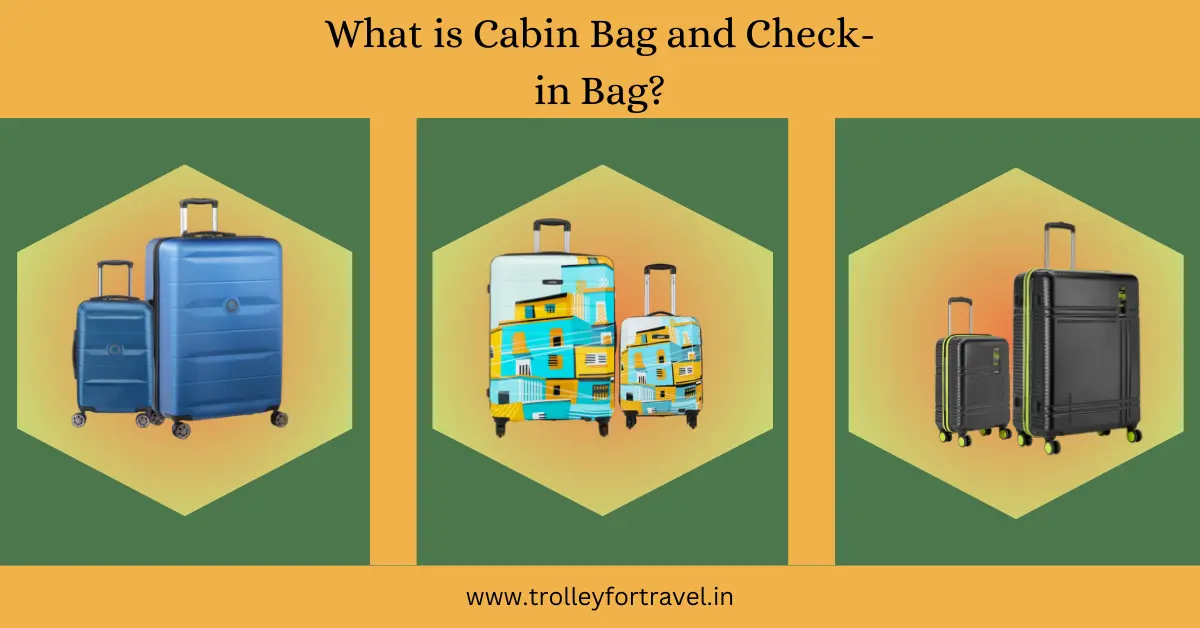
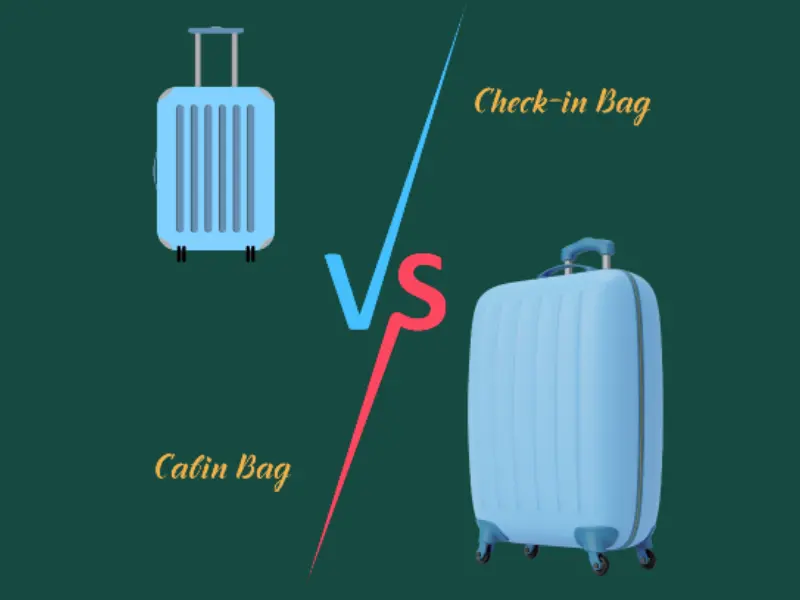
A checked bag is useful when your items are too large or too numerous for the cabin. A carry-on is better for things you may need during the flight or soon after you land.
Do not put important items only in checked luggage. Keep your passport, identification, medication, cash, electronics, keys, and important documents in your personal item or carry-on.
What Size and Weight Can Checked Luggage Be?
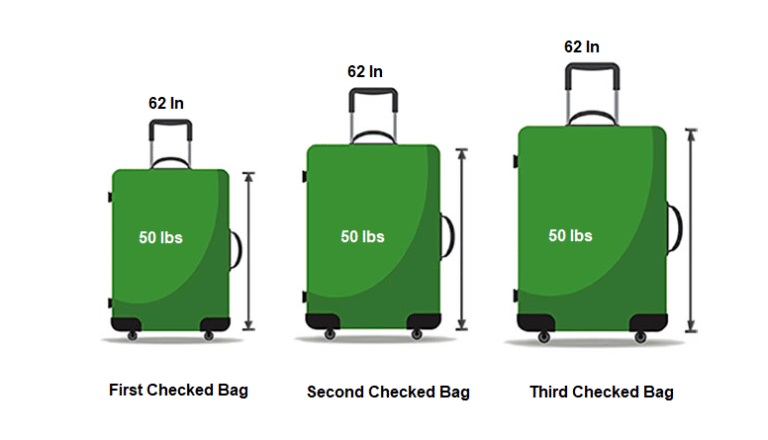
Most U.S. airlines use a checked-bag size limit of 62 linear inches. You calculate linear inches by adding the bag’s length, width, and height, including wheels and handles.
Example:
- Length: 28 inches
- Width: 18 inches
- Height: 16 inches
- Total: 62 linear inches
Many airlines use 50 pounds as the standard weight limit for a checked bag in economy class. These limits are not universal. Some airlines, routes, loyalty programs, military programs, and premium cabins may have different allowances.
A bag may cost more if it is:
- Over the airline’s free-bag allowance.
- Heavier than the standard weight.
- Larger than the standard dimensions.
- Checked after the airline’s deadline.
- Sent on a route with special baggage rules.
Always check the baggage page for your exact airline, ticket, route, and cabin. The rules on the airline’s website control your trip.
Common checked-bag measurements
| Bag type | Typical use | Common issue |
|---|---|---|
| Small suitcase | Short trip | May still cost a fee |
| Medium suitcase | Several days of clothing | Can become overweight |
| Large suitcase | Long trip or family packing | More likely to exceed size or weight limits |
| Sports equipment case | Special gear | May have separate fees and rules |
Airlines measure bags differently in some cases. A soft bag may expand when full. Wheels, pockets, and handles may count toward the total size. Measure the bag when it is packed in the way you plan to travel.

How Much Does It Cost to Check a Bag?
The cost depends on the airline and your ticket. Some U.S. airlines include one or more checked bags. Others charge for the first bag, second bag, or every bag.
The price can also change based on:
- Domestic or international travel.
- Basic economy or a higher fare.
- Airline membership status.
- Credit card benefits.
- Military benefits.
- Number of bags.
- Bag weight and size.
- Whether you pay online or at the airport.
Because fees change, check the airline’s current baggage calculator or fee page before packing. Also check the baggage rules for every airline on a multi-airline trip.
A low ticket price may not be the lowest total price after baggage fees. Compare the fare and the expected bag cost together.
Simple cost example
Suppose a ticket costs $220 and the airline charges $35 each way for one checked bag:
- Ticket: $220
- Outbound bag: $35
- Return bag: $35
- Total before taxes and other fees: $290
This is only an example. It does not represent a current fee for any specific airline.
What Can You Pack in Checked Luggage?
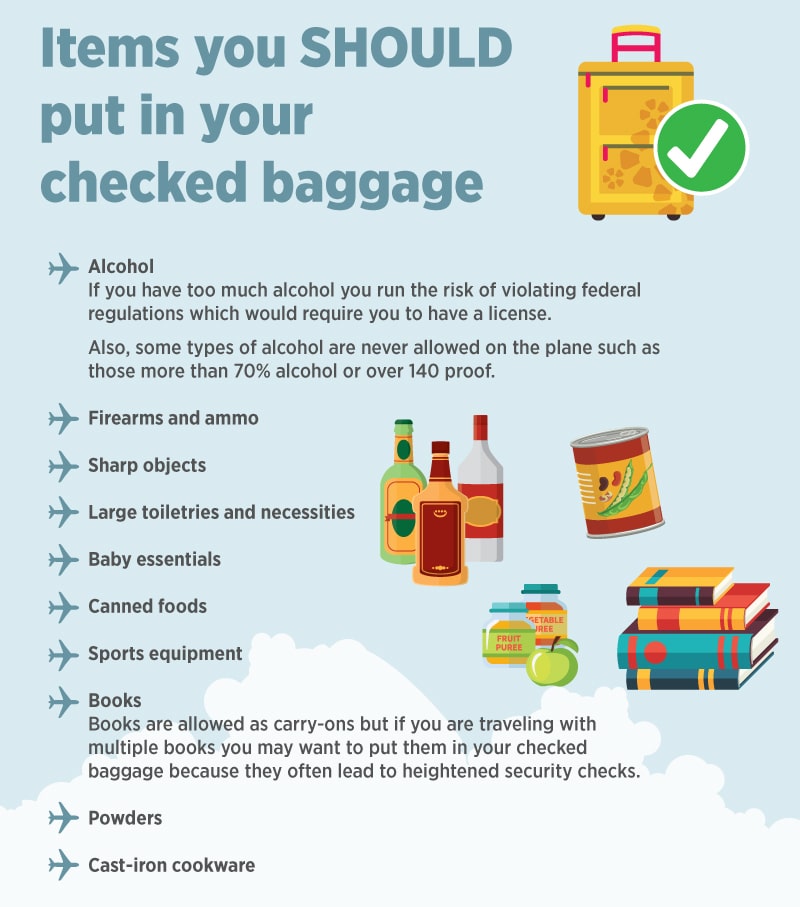
You can usually pack clothing, shoes, books, toiletries, and many ordinary personal items in checked luggage. The item must still follow airline, TSA, and federal hazardous-material rules.
The Transportation Security Administration, or TSA, controls security screening for flights in the United States. The Federal Aviation Administration, or FAA, regulates many dangerous goods that can create a fire, explosion, or chemical risk on an aircraft.
Items commonly suitable for checked luggage
These items are often better in a checked bag than in a carry-on:
- Full-size shampoo and lotion bottles.
- Large containers of nonflammable personal-care products.
- Scissors or tools that are not allowed in the cabin.
- Clothing and shoes.
- Larger sports equipment, when accepted by the airline.
- Nonvaluable household items.
TSA rules can vary by item. Use the official TSA “What Can I Bring?” tool when you are unsure.
Items that should not go in checked luggage
Keep these items with you in the cabin:
- Passport and identification.
- Prescription medicine.
- Cash and financial documents.
- Jewelry and other small valuables.
- Laptops and tablets.
- Cameras and essential electronics.
- Car keys and house keys.
- Travel documents.
- Spare lithium batteries.
- Power banks and portable chargers.
- E-cigarettes and vaping devices.
The FAA says spare lithium batteries and power banks must travel in carry-on baggage, not checked baggage. If your carry-on is taken at the gate and placed in the cargo area, remove those items first.
Rules for lithium-battery devices can depend on the battery type, size, and whether the battery is installed. Check the FAA PackSafe guidance for details.

What Cannot Go in Checked Luggage?
Some items are forbidden in both checked and carry-on luggage. Others are allowed only in one type of bag.
Do not pack common hazardous items such as:
- Fireworks.
- Explosives.
- Fuel.
- Gasoline.
- Many flammable liquids.
- Certain compressed gases.
- Strong chemicals.
- Damaged or recalled lithium batteries.
- Self-heating meals or devices that contain restricted fuel.
- Pepper spray or other defensive sprays that fail airline rules.
Some items have special rules. For example, firearms may be transported in checked baggage under specific conditions. TSA generally requires a firearm to be unloaded, locked in a hard-sided container, and declared to the airline at the check-in counter. You must also follow federal, state, and local laws.
Do not rely on a general list for a special item. Check the airline and TSA requirements before arriving at the airport. If the rules conflict, ask the airline before you pack.
How to Pack Checked Luggage Safely
Good packing protects your belongings and makes inspection easier.
Use these steps
- Check the airline limits. Confirm the number of bags, size, weight, fees, and deadline.
- Weigh the packed bag. Use a home luggage scale or another reliable scale.
- Keep valuables out. Put valuables and vital items in your carry-on.
- Protect fragile items. Wrap them well, but understand that the airline may limit liability for fragile goods.
- Seal liquids. Use leak-proof bags and leave space for pressure changes.
- Pack heavy items near the wheels. This can help the bag stand and may reduce strain on the handle.
- Remove old tags. Old airport tags can confuse the baggage system.
- Add contact details. Put your name and a phone number inside and outside the bag.
- Take a photo. Photograph the bag and its contents before handing it over.
- Keep the baggage receipt. You may need the tag number for a claim.
Do not overfill a zipper bag. A stressed zipper can open during handling. A bright strap or simple label can also help you recognize your suitcase at baggage claim.
A hard-sided suitcase may offer more protection from crushing. A soft-sided bag may fit more easily into tight spaces. Neither type guarantees that belongings will remain undamaged.
What Happens to Checked Luggage at the Airport?
After you hand over the bag, it passes through several airport systems. The bag may be screened by TSA and moved by conveyor belts or baggage vehicles. It is then loaded onto the aircraft or held for further inspection.
Security screening can cause a delay if the system detects an item that needs review. TSA may open a bag during screening. When this happens, TSA says it may place a notice inside the bag after inspection.
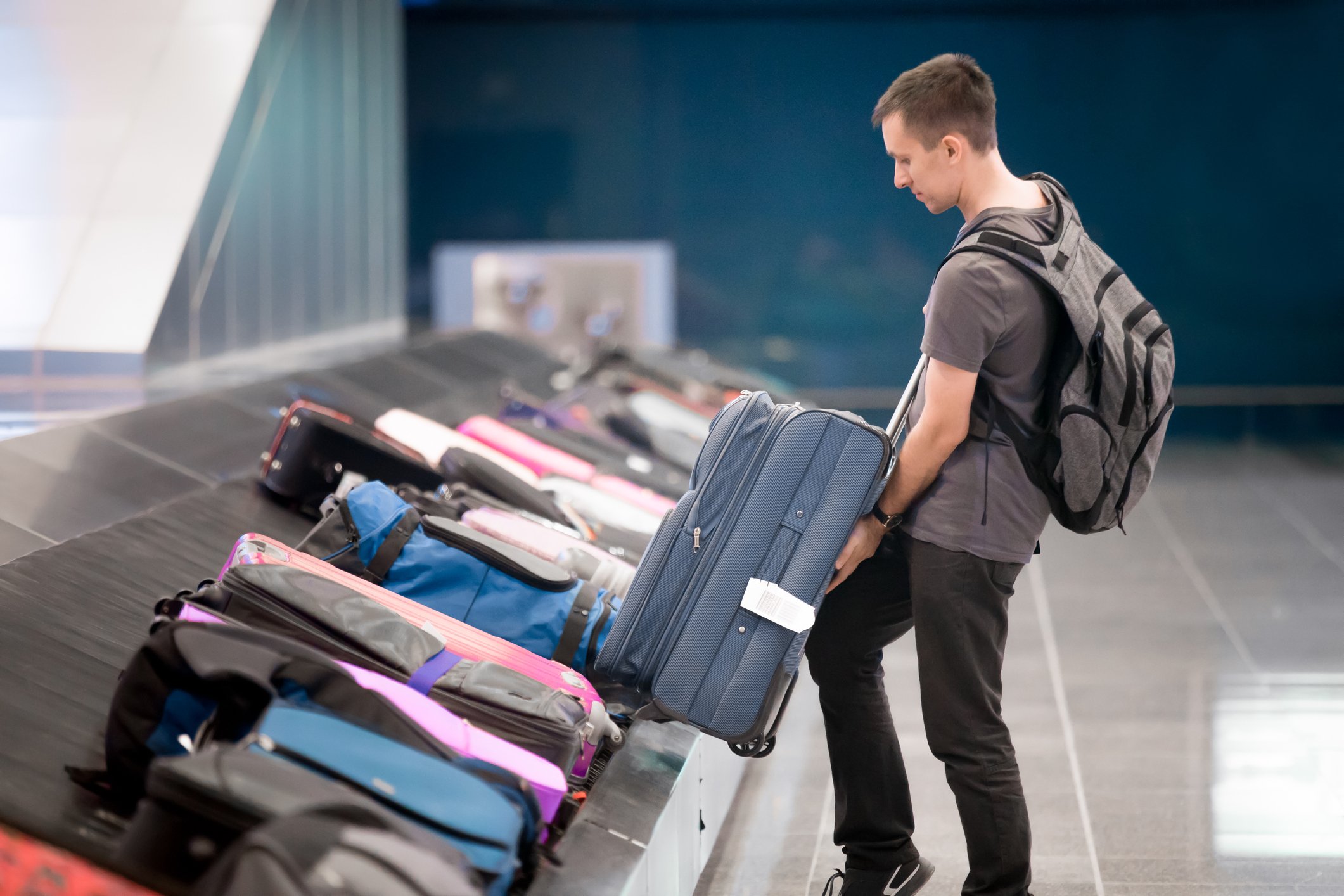
The airline then moves the bag to the aircraft. At your destination, workers unload it and place it on a baggage carousel. You identify it by the tag attached at check-in.
Baggage claim areas are usually outside the secure gate area. Once you leave the secure area, you may not be able to return to the gates without going through security again.
What Should You Do if Your Checked Bag Is Delayed or Lost?
Report a missing bag to the airline before leaving the airport. Go to the airline’s baggage service office and provide your baggage tag number, identification, flight details, and delivery address.
Ask for a case or file number. Keep records of:
- The baggage claim tag.
- Your bag’s description.
- The date and time of your report.
- Messages from the airline.
- Receipts for reasonable essential purchases.
A delayed bag is not always a lost bag. It may arrive on a later flight. The airline may deliver it to your hotel or home.
If a bag is damaged, report the damage promptly. Do not throw away the bag or damaged items until the airline gives instructions. Time limits for baggage claims can apply, and international flights may follow different rules from domestic flights.
The U.S. Department of Transportation explains passenger rights for delayed, damaged, and lost baggage in its Air Consumer guidance. Your airline’s contract of carriage may also explain the claim process.

Should You Check a Bag or Travel With a Carry-On?
Check a bag when you need more space or must transport items that cannot go in the cabin. Choose a carry-on when speed, access, and lower baggage risk matter most.
| Choose checked luggage when… | Choose carry-on only when… |
|---|---|
| You are taking a long trip | You are taking a short trip |
| You need several pairs of shoes | You can pack light |
| Your liquids exceed carry-on limits | Your liquids fit TSA cabin rules |
| You have large clothing or gear | You need to leave the airport quickly |
| You want less weight in the cabin | You want to keep key items with you |
For many travelers, the best plan is a small checked bag plus a personal item. The personal item can hold medication, documents, electronics, toiletries needed during the trip, and one change of clothes.
The right choice depends on the total fee, not just the suitcase size. A checked bag may be worth the cost for a long trip. It may be less useful for a short trip if you can pack everything safely in a carry-on.

Common Mistakes With Checked Luggage
Packing medicine in the checked bag
A delay can separate you from your medicine. Keep prescription and essential over-the-counter medicine in your carry-on. Keep it in its original labeled container when practical.