
Introduction
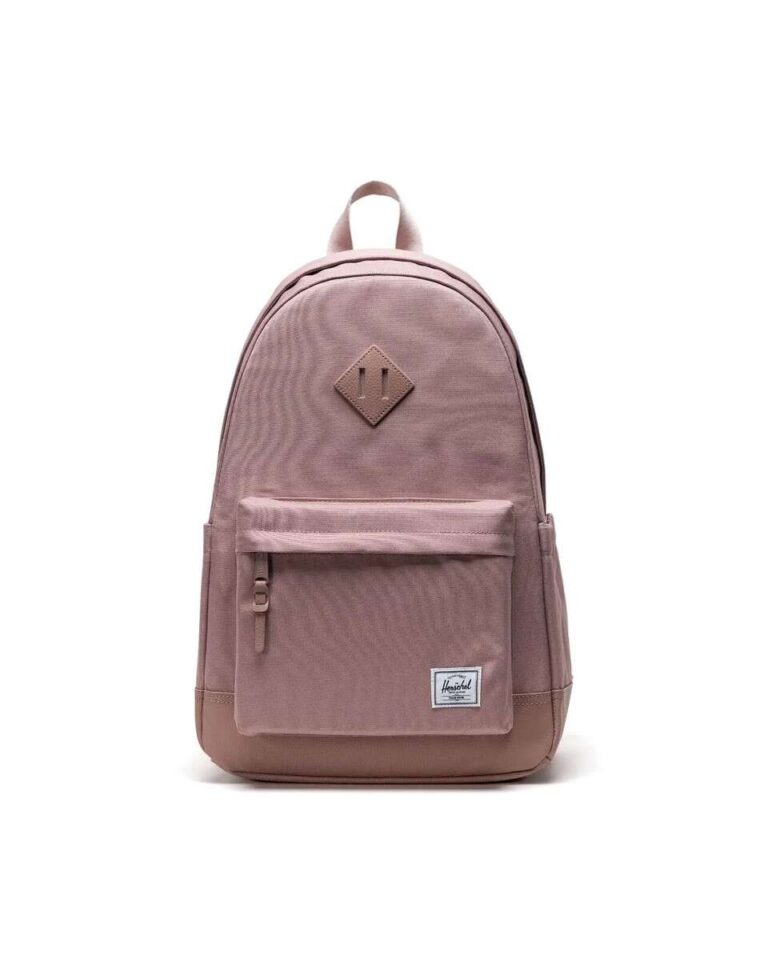
Whether you are decorating a school backpack in the United States, adding a team tag to a college bag, or marking luggage for a domestic flight, putting on a keychain is easy once you find the right attachment point. Most keychains connect to a backpack through a zipper pull, webbing loop, D-ring, or small carabiner.
The best method depends on the keychain style and how often you use the pocket. For a light charm, a zipper pull works well. For a heavier keychain or one you do not want to lose, use a sturdy loop with a closed ring or locking clip.

What You Need Before You Start
You usually need only the backpack and the keychain. A few simple tools can help with certain designs.
- Backpack attachment point: Look for a zipper pull, sewn webbing loop, D-ring, handle, or strap.
- Keychain connector: This may be a split ring, lobster clasp, spring clip, S-hook, or carabiner.
- Flat screwdriver or coin: Useful for opening a tight split ring.
- Small pliers: Helpful when a ring is stiff or slightly bent.
- Optional locking clip: A screw-lock carabiner or locking clasp adds extra security.
Check the weight of the keychain before attaching it. A small acrylic charm or fabric tag places little stress on a backpack. A large metal ornament can pull on a zipper, stretch a fabric loop, or make the bag uncomfortable to carry.
Find a strong attachment point
The strongest points are usually sewn loops, metal D-rings, and thick handle sections. A zipper pull is convenient, but the zipper itself may not be designed to carry a heavy object.
Do not attach a keychain to a loose thread, thin decorative cord, or damaged zipper pull. If the attachment point already looks weak, adding weight may cause it to break.

How to Put a Keychain on a Backpack
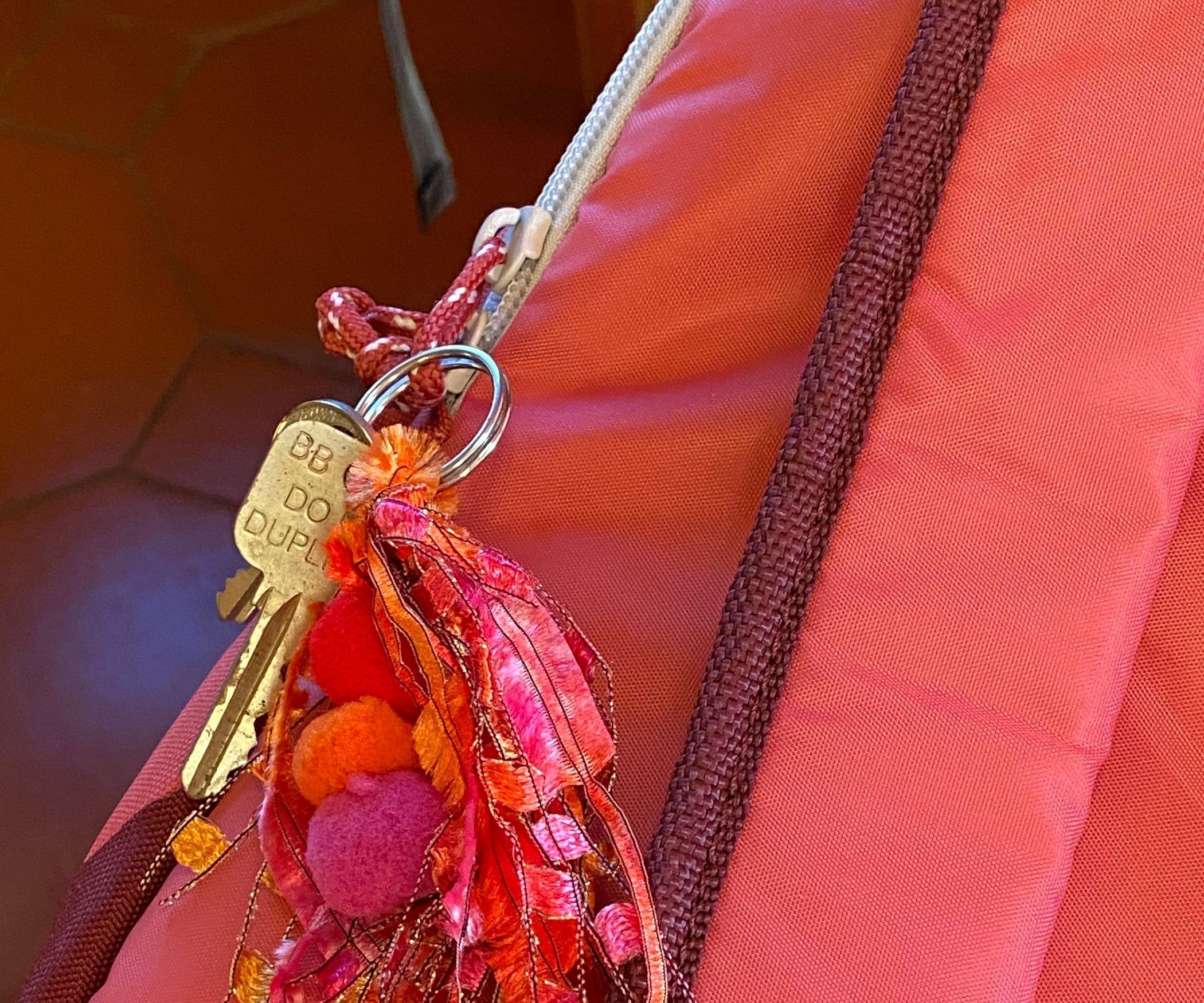
The basic process is simple: open the keychain connector, pass it through a secure backpack point, and close it completely.
Method 1: Attach a keychain to a zipper pull
This is the most common method for charms and small accessories.
-
Choose a zipper you use often.
An outside pocket is easy to reach. A main-compartment zipper gives the keychain more protection. -
Inspect the zipper pull.
Make sure the pull is firmly attached and has a hole, loop, or opening large enough for the connector. -
Open the keychain connector.
Press the spring gate on a lobster clasp or carabiner. For a split ring, slide the ring opening over the zipper pull. -
Pass the connector through the zipper pull.
Push the connector all the way through the metal or fabric loop. -
Close the connector.
Release the spring gate or rotate the split ring until the opening is fully closed. -
Test the zipper.
Open and close the pocket several times. Make sure the keychain does not block the zipper or catch on nearby fabric.
A small charm should hang from the zipper without pulling it down. If the zipper moves by itself or feels hard to pull, use a lighter keychain or move it to a sewn loop.
Method 2: Attach a keychain to a webbing loop
Many backpacks have short strips of sewn fabric called webbing loops. Some are made for gear, while others are mainly decorative.
- Find a loop that is firmly stitched to the backpack.
- Open the clasp, carabiner, or split ring.
- Pass it through the entire loop, not just one side of the fabric.
- Close the connector.
- Pull gently on the keychain to check the stitching.
A webbing loop is often a better choice than a zipper pull for a medium-weight keychain. Still, inspect the stitching from time to time. Frayed fabric means the loop may need repair or replacement.
Method 3: Attach a keychain to a D-ring
A D-ring is a metal or plastic ring sewn into the backpack. It may sit near a handle, shoulder strap, or side pocket.
- Open the keychain clasp.
- Hook it through the D-ring.
- Release the clasp.
- Confirm that the gate has closed fully.
- Lift the backpack by its handle and check whether the keychain swings into the bag or hits the ground.
A D-ring is useful when you want the keychain to stay in one place. It also keeps the accessory away from the zipper track.
Method 4: Attach a keychain with a split ring
A split ring looks like a small metal coil. It is secure, but it can be harder to use than a clasp.
- Find the split in the ring.
- Slide the edge of the ring under the backpack loop or zipper pull.
- Rotate the ring slowly.
- Keep rotating until the attachment point moves all the way around the ring.
- Check that the split is closed against the next section of metal.
If the ring is too tight, use a coin or a small flat screwdriver to open it slightly. Avoid forcing it wide, since bending the ring can leave a gap.
Confirm that the keychain is secure
A properly attached keychain should meet three checks:
- The connector is fully closed.
- The backpack material is not tearing or pulling.
- The keychain does not interfere with zippers, straps, or wheels.
Give the keychain a gentle tug. Do not yank it with full force, since that can damage the backpack even when the attachment is strong.
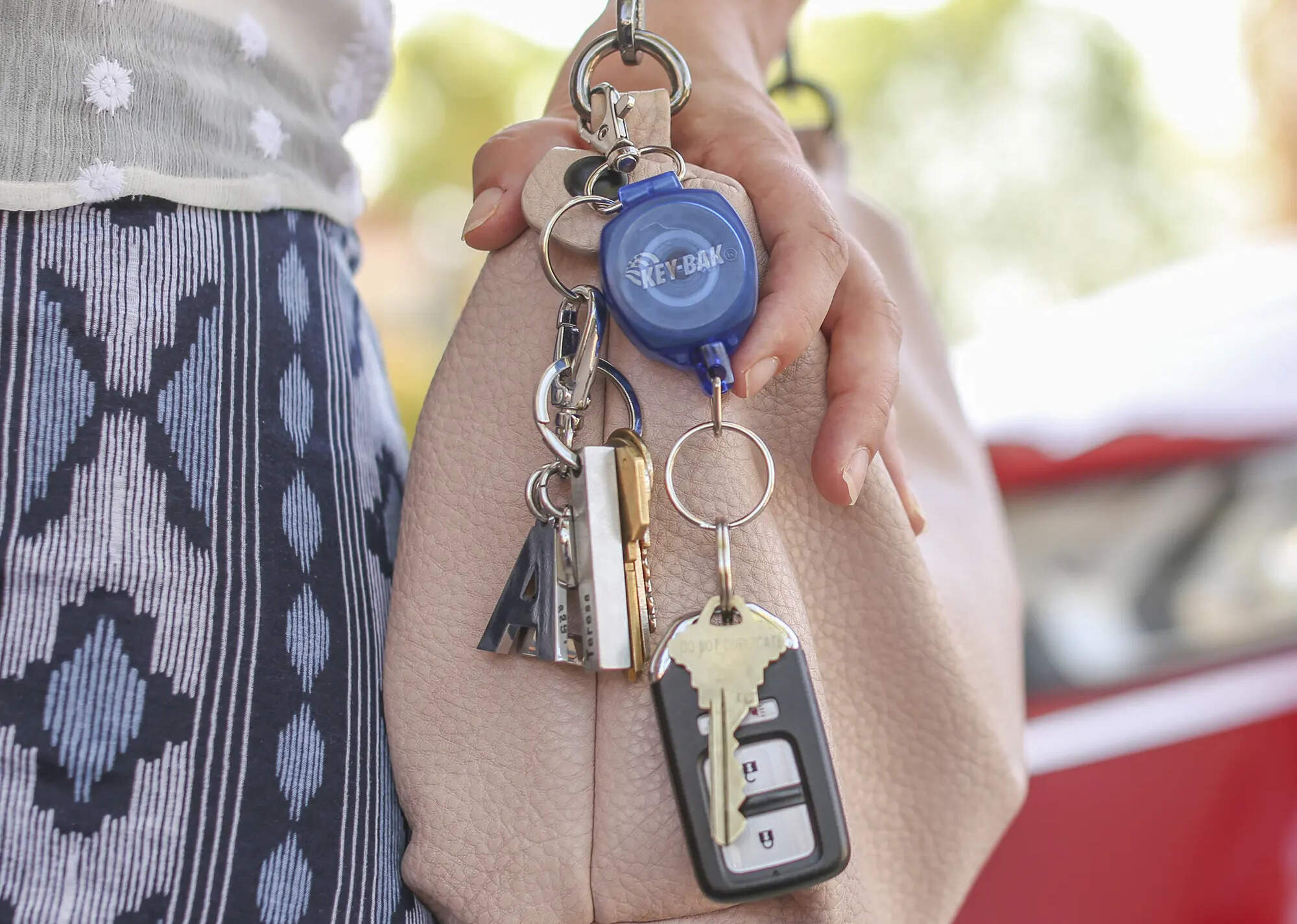
Which Backpack Attachment Method Should You Use?
Choose the method based on the keychain’s weight, the backpack’s design, and how much security you need.
| Keychain or accessory | Best attachment point | Why it works |
|---|---|---|
| Small acrylic charm | Zipper pull | Light and easy to reach |
| Fabric tag | Zipper pull or webbing loop | Flexible and low weight |
| Plush keychain | Webbing loop or D-ring | Reduces strain on the zipper |
| Metal keychain | D-ring or strong webbing loop | Better support for added weight |
| Keys you cannot afford to lose | Closed or locking connector | Reduces the chance of accidental release |
| Removable decoration | Spring clasp or carabiner | Easy to move between bags |
| Keychain with a split ring | Any strong loop | The ring can attach directly to the loop |
For daily use, a closed split ring is usually more secure than an open S-hook. A spring clasp is easier to remove. A locking carabiner is useful for keys or gear, but it should not be treated as climbing equipment unless it is specifically designed and rated for that purpose.
Zipper pull versus sewn loop
A zipper pull is convenient because it moves with the zipper. This makes it a good place for a small decoration or a pull tab.
A sewn loop or D-ring is better when the item is heavy, valuable, or likely to catch on something. It keeps the weight on the backpack body instead of the zipper slider.
Front, side, or shoulder strap?
The front of the backpack is easy to see and works well for decorative charms. A side loop may be better for an item that should stay out of the way.
A shoulder strap can hold a keychain, but avoid placing hard metal items where they can press against your neck, shoulder, or chest. Also keep anything loose away from bicycle spokes, escalators, doors, and moving equipment.

How to Keep a Backpack Keychain From Falling Off
The best way to prevent loss is to use a connector that matches the value and weight of the item.
For a decorative charm, a standard clasp may be enough. For house keys, an identification tag, or a sentimental item, use a split ring or locking connector and check it often.
Try these steps:
-
Use a closed connector.
Avoid relying on an open hook that can slide off a loop. -
Attach the keychain through the full loop.
Do not clip it onto a loose thread or a narrow edge of fabric. -
Keep heavy items close to the backpack.
Long chains swing more and can catch on handles, desks, or clothing. -
Inspect the connector regularly.
Look for a bent gate, a widening split, rust, or a damaged spring. -
Check the backpack stitching.
A strong clasp cannot prevent loss if the sewn loop is coming apart. -
Use two attachment points for valuable items.
For example, attach a key pouch to a zipper pull and add a short backup strap to a nearby loop.
A backup strap can reduce the chance of loss, but it should not create a long loose cord. Long cords may snag on doors, bike parts, or other objects.
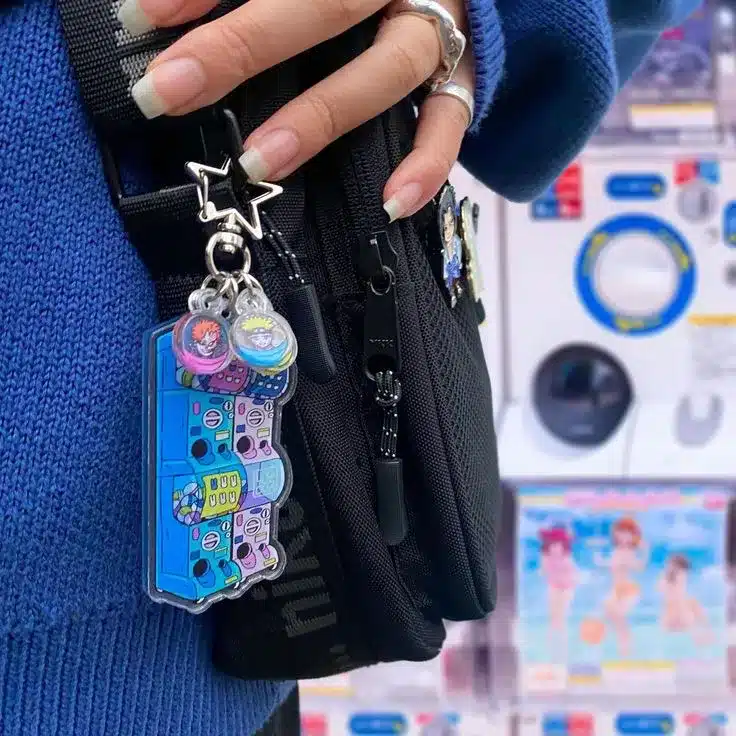
How to Put on a Keychain Without Damaging the Backpack
Use light pressure and work with the connector, not against the fabric. Do not pry a metal ring wide with excessive force.
Avoid these mistakes:
- Attaching a heavy item to a thin zipper pull
- Pulling on the backpack fabric instead of the clasp
- Using pliers directly on a painted or coated connector
- Leaving a split ring partly open
- Placing a sharp metal charm against delicate fabric
- Attaching accessories where they can catch in a zipper
- Using a decorative carabiner for safety-critical equipment
If you use pliers, cover the jaws with a cloth or tape. This can help prevent scratches, although it may not protect all finishes.
For a backpack made from thin nylon, leather, or coated fabric, choose a light accessory. Heavy metal pieces can create small tears that grow over time.
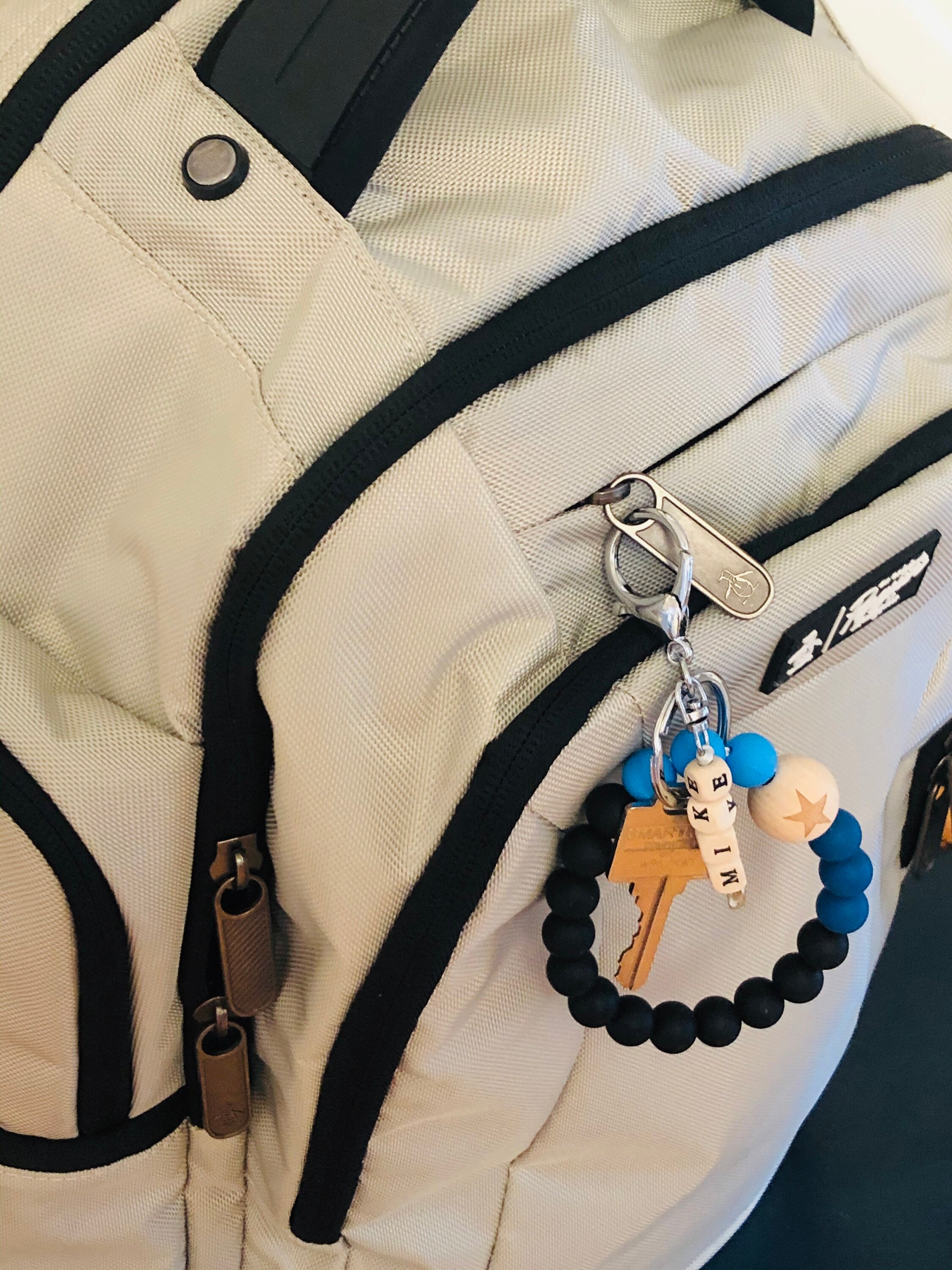
Troubleshooting: When the Keychain Does Not Stay On
Most problems come from a weak attachment point, an unsuitable connector, or a connector that is not fully closed.
The keychain keeps falling off
Possible causes:
- The clasp is too wide for the loop.
- The spring gate does not close completely.
- The split ring has a gap.
- The backpack loop is too thin.
- The keychain is catching on other objects.
What to do:
Use a closed split ring or a smaller clasp. Check the connector from the side and confirm that no opening remains.
The zipper is hard to move
Possible causes:
- The keychain is too heavy.
- The charm is rubbing against the zipper teeth.
- The connector is pressing on the zipper slider.
- The keychain is twisting around the pull.
What to do:
Move the keychain to a sewn loop or D-ring. If no strong loop is available, use a lighter charm or a short connector.
The split ring will not open
Slide a coin, fingernail, or small flat tool into the ring’s split. Turn the ring rather than bending it open. If the ring is rusted, damaged, or badly deformed, replace it.
The backpack loop is tearing
Remove the keychain at once. A torn loop may need stitching or professional repair, depending on the material and the value of the bag. Do not keep using the loop just because it still holds the accessory.
The clasp will not close
Check for lint, dirt, or a bent gate. Clean away loose debris and test the clasp again. Replace it if the spring is weak or the gate stays open.