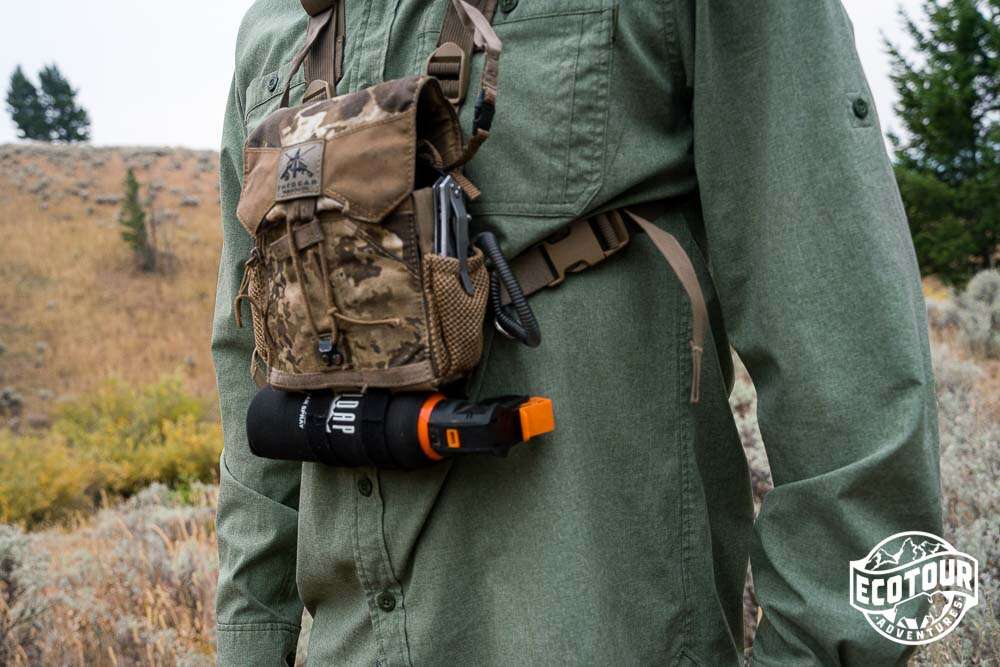
Carry bear spray high on your backpack strap or hip belt, upright, secure, and ready to reach with either hand.
Knowing how to carry bear spray on backpack can make a major difference during a tense wildlife encounter. The best setup keeps the canister protected from damage but still available in seconds, without forcing you to remove your pack or search through a pocket.
This guide explains safe carry positions, backpack attachments, clothing choices, practice drills, storage rules, and common mistakes. The advice reflects standard guidance from park agencies, wildlife experts, and bear safety programs, with practical lessons from trail use.
Why proper bear spray carry matters
Bear spray only helps when you can reach it quickly. A canister buried inside your backpack may be safe from scratches, but it is not useful during a sudden encounter. A bear can move faster than most people expect, so fumbling with zippers wastes valuable time.
The ideal carry system has three traits:
- It keeps the spray within easy reach.
- It protects the canister from falling or damage.
- It lets you draw the spray without removing your backpack.
How to carry bear spray on backpack depends on your pack design, clothing, and hiking style. A day hiker may prefer a hip belt holster, while a climber or winter traveler may need a chest mount.
Bear spray is a tool for creating distance, not a weapon for routine use. You should still make noise, keep food stored correctly, respect wildlife space, and follow local bear safety rules.
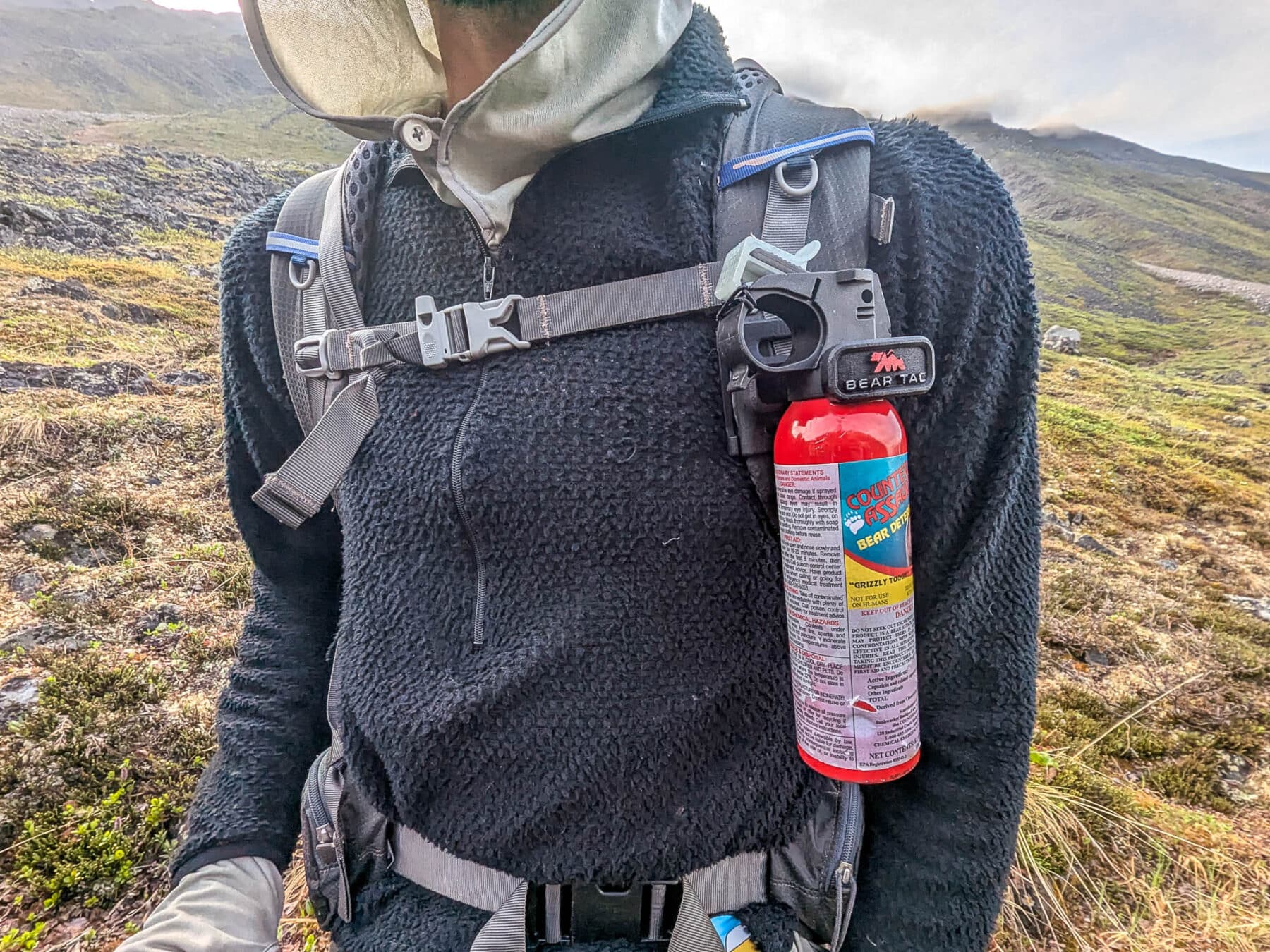
The best places to carry bear spray
Most hikers carry bear spray on the hip belt, shoulder strap, or chest strap of a backpack. These positions keep the canister outside the pack and close to your hands.
Hip belt holster
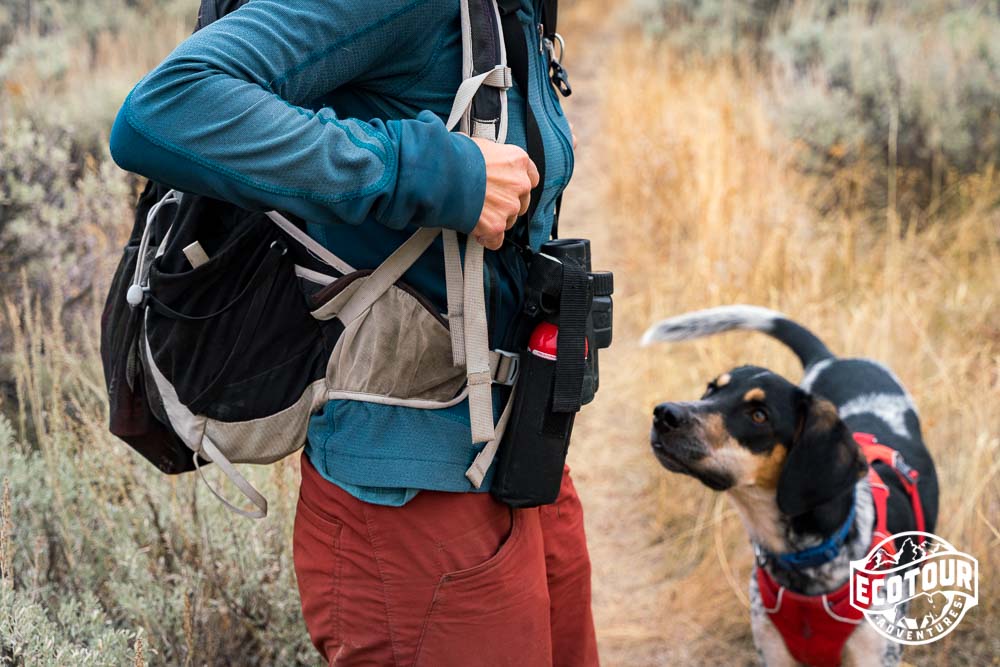
A hip belt holster is one of the most common options. It places the canister near your dominant hand and keeps it stable as you walk.
Choose a holster that:
- Fits your exact canister size.
- Holds the canister upright.
- Covers the trigger lock or safety clip without blocking it.
- Uses strong webbing, elastic, or hook-and-loop closure.
- Stays attached when you bend, run, or scramble over rocks.
A hip belt works well on most hiking backpacks. Test both sides before your trip. Many hikers prefer the side opposite their trekking pole hand, but comfort and access matter more than a fixed rule.
Shoulder strap mount
A shoulder strap mount places the spray near your chest. This position can be faster to reach, especially when your hip belt is covered by rain gear or a climbing harness.
Attach the holster to the front of the shoulder strap, not near your neck. The canister should sit below your collarbone and remain clear of your chin, pack straps, and clothing.
A shoulder strap mount is often a good choice for:
- Daypacks with narrow hip belts.
- Trail runners who carry a light pack.
- Hikers wearing thick winter layers.
- People who want access with either hand.
Make sure the canister cannot swing into your face while walking. A loose mount can become annoying and may slow you down.
Chest or sternum strap mount
A chest mount keeps bear spray in the center of your body. It can work well if the holster does not interfere with your sternum strap or breathing.
The canister must remain upright and should not press against your throat. Avoid mounting it so high that your chin or jacket can catch on the holster.
This position can be useful for people who have limited reach or who hike with large hip belts. However, it may be less comfortable when climbing, crawling, or wearing a heavy jacket.
Pack side pocket
A side pocket is better than placing bear spray inside the main pack compartment, but it is not always the safest choice. You may need to twist your shoulder or remove a trekking pole before reaching it.
Use a side pocket only when:
- The pocket is open or easy to unzip.
- The canister cannot fall out.
- You can reach it with both hands.
- The pocket does not expose the spray to sharp gear.
For most hikers, a dedicated holster is faster and more reliable than a side pocket.

How to carry bear spray on backpack safely
The basic setup is simple: mount the canister vertically, keep the nozzle pointed away from your body, and secure the holster so it cannot bounce loose.
Follow these steps:
- Check the canister before leaving. Confirm that the safety clip is in place, the trigger is not damaged, and the expiration date has not passed.
- Place the canister in a purpose-built holster. Do not rely on a loose pocket or a carabiner clipped around the handle.
- Mount the holster on the hip belt or shoulder strap.
- Sit down, stand up, bend, and walk a few steps. Check that the canister stays secure.
- Practice drawing it with your dominant hand.
- Practice again with your other hand.
- Return the canister to the same position every time.
The spray should be ready to draw without opening your backpack. Keep the safety mechanism engaged until you need to use it. Never remove or disable the safety clip just to make the canister faster to access.
A useful rule is to treat bear spray like a seat belt. It should always be in the same place, and you should know how it works before an emergency.
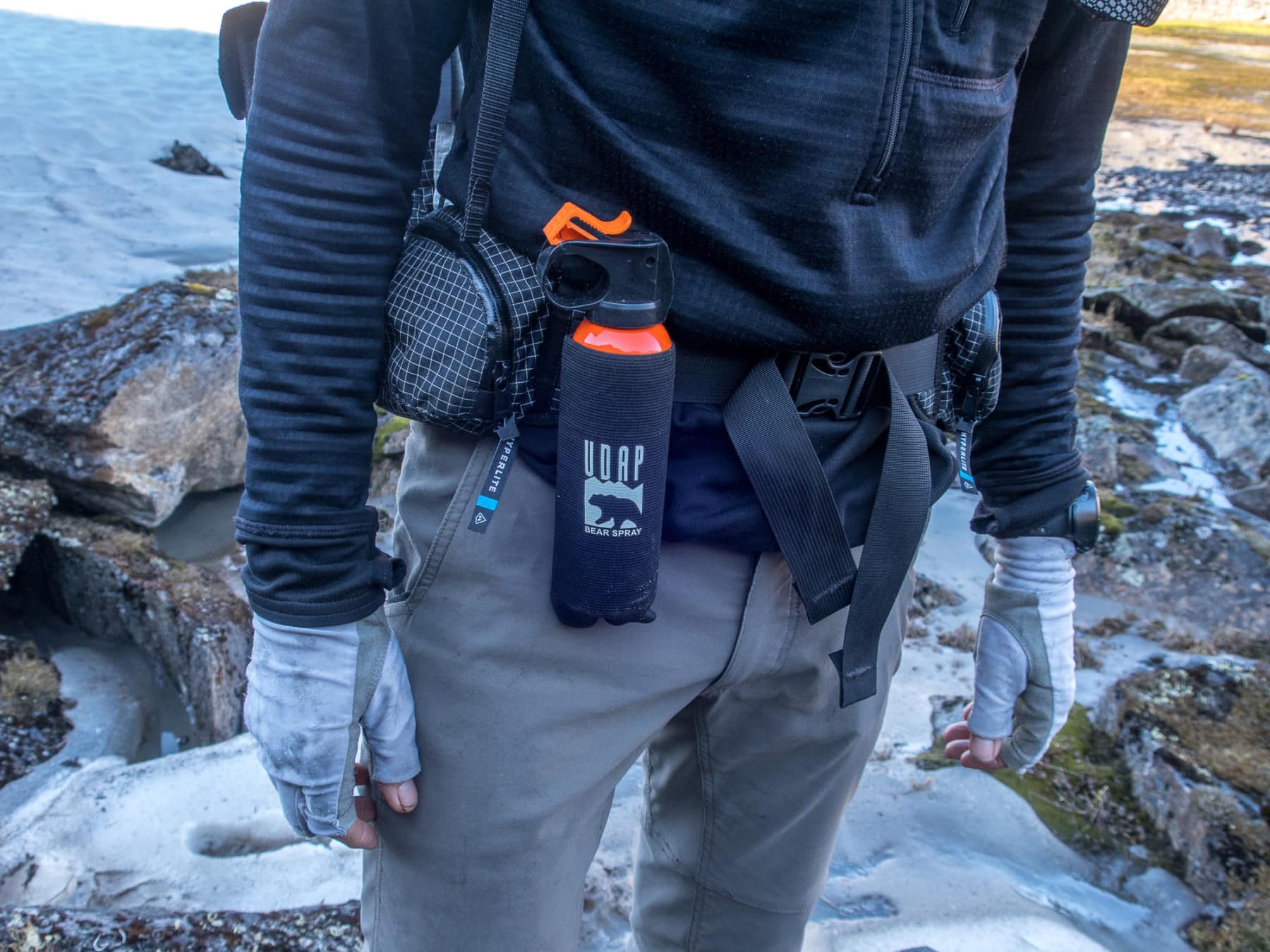
How to choose a bear spray holster
A good holster improves access, comfort, and safety. The best model is not always the most expensive one. It must fit your canister and your backpack.
Look for these features:
- A snug fit that prevents the canister from bouncing.
- A quick opening that does not require tiny buttons.
- A design that keeps the canister upright.
- Strong attachment loops or straps.
- Weather-resistant fabric.
- Enough space to use the trigger without removing the canister.
- A secure cover that prevents accidental discharge.
Avoid homemade holders made from weak tape, thin cord, or loose fabric. Bear spray canisters are pressurized, and a fall can damage the valve or trigger.
Do not clip the canister by its handle alone. A carabiner may allow it to swing, strike rocks, or come loose. It can also leave the trigger exposed to accidental pressure.
Before your trip, test the holster with the clothes you plan to wear. A setup that works with a T-shirt may fail when covered by a rain shell, fleece, or insulated jacket.

Carrying bear spray with different backpacks
Not every backpack offers the same access. Your pack type should influence how you carry bear spray on backpack trips.
Daypacks
Daypacks often have useful hip belts and shoulder straps. A hip belt holster is usually the simplest choice.
Keep the canister on the front of your body. Do not place it behind your hip, where your arm may struggle to reach it.
Large backpacking packs
Large packs often have padded hip belts. These belts usually support a dedicated bear spray holster well.
Check that the holster does not interfere with:
- Hip belt pockets.
- Water bottles.
- Pack compression straps.
- Your backpack buckle.
- Trekking pole storage.
If the hip belt is too crowded, use the front of the shoulder strap. Avoid mounting the spray on the back of the pack.
Hydration vests and running packs
A hydration vest may not have a strong hip belt. A chest or front shoulder strap holster often works better.
Check for movement before running. Bear spray should not bounce against your chest or rub your neck. A snug elastic attachment can help, but it must not cover the safety mechanism.
External-frame packs
External-frame packs may have wide straps and exposed hardware. Keep bear spray away from metal edges, saws, ice tools, and other objects that could damage the canister.
A front hip belt mount is usually safer than attaching the canister to the frame. The frame may also make a rear or side mount difficult to reach.

How to carry bear spray on backpack during winter
Winter clothing creates a common access problem. A bear spray holster that is easy to reach in summer may disappear under a thick jacket.
Place the canister over your outer layer or attach it to the front of your pack strap. Do not carry it beneath several layers of clothing. In an emergency, you may not have time to open a jacket and find the trigger.
Cold weather can also reduce pressure in some aerosol products. Follow the storage temperature range printed on the canister. Avoid leaving bear spray in a freezing vehicle for long periods unless the product instructions allow it.
Keep the canister away from:
- Camp stoves.
- Vehicle heaters.
- Direct sun.
- Campfires.
- Hot tents.
- Enclosed spaces that can become very hot.
Bear spray canisters are pressurized. Heat may increase internal pressure and damage the container. Never test the spray indoors, inside a tent, or near another person.

How to carry bear spray on backpack while traveling
Bear spray rules vary by location and transport method. Always check the rules for the park, forest, airline, or border crossing before your trip.
In general, bear spray is not allowed in carry-on luggage on commercial flights. Airline rules may also restrict it in checked luggage. Do not assume that a product sold in one state or country is legal everywhere.
For road trips:
- Keep the canister out of direct sunlight.
- Do not leave it in a hot vehicle.
- Store it where passengers can see its location.
- Keep the safety clip in place.
- Prevent it from rolling under seats or into footwells.
Some parks require a specific spray size, label, or registration. Others may restrict discharge except when necessary for defense. A product designed for dogs or people may not meet local bear deterrent requirements.
Check the label and local regulations before departure. This small step can prevent a serious safety or legal problem.

How to practice using bear spray
You should practice with an inert training canister if one is available. Training spray does not release the active irritant, so you can learn the motion without creating a cloud in your home or campsite.
Practice these actions: