Yes, you can pack aerosol sunscreen in checked luggage if it meets airline and hazardous-material limits.
The question “can you pack aerosol sunscreen in checked luggage” matters because sunscreen cans contain pressurized propellant. Most U.S. flights allow them as toiletry aerosols, but the can must be protected, within size limits, and packed so it cannot leak or spray. This guide explains the rules, safe packing steps, carry-on limits, and common mistakes to avoid.
Can you pack aerosol sunscreen in checked luggage?
Yes, you can pack aerosol sunscreen in checked luggage on most flights from the United States. The sunscreen must qualify as a personal-care toiletry item, such as sunblock, body spray, shaving cream, or hair spray.
U.S. aviation rules generally allow each passenger to carry toiletry aerosols in checked baggage when:
• Each container holds no more than 18 ounces, or about 500 milliliters
• The total amount of toiletry aerosols does not exceed 70 ounces, or about 2 kilograms, per person
• Each can has a secure cap or another feature that prevents accidental release
• The product is intended for personal use, not commercial transport
These limits come from hazardous-material rules for consumer toiletry products. Your airline may apply stricter rules, especially on international routes, so checking the airline’s baggage policy before departure is wise.
Aerosol sunscreen is different from ordinary liquid sunscreen because it is stored under pressure. Think of the can as a small container with a spring inside. Heat, impact, or a loose nozzle can create problems, even when the product is legally allowed.

How much aerosol sunscreen can you pack?
The main limits involve the size of each can and the combined amount of toiletry aerosols in your bags. A standard 5- to 8-ounce sunscreen can is usually within the per-container limit.
For checked baggage, the general U.S. limits are:
• Maximum per container: 18 ounces or 500 milliliters
• Maximum total per passenger: 70 ounces or 2 kilograms
• Cap or nozzle protection: required to stop accidental spraying
• Use: personal, medicinal, or toiletry use
The total limit includes other toiletry aerosols packed for the same trip. For example, these products may count toward the combined amount:
• Aerosol sunscreen
• Hair spray
• Spray deodorant
• Shaving foam
• Insect repellent spray
• Spray-on wound care products
A traveler with four 6-ounce cans has 24 ounces in total, which is below the 70-ounce limit. However, six 12-ounce cans equal 72 ounces, which goes over the general limit.
Product labels can also matter. A sunscreen marked “flammable” may still qualify as a toiletry aerosol, but it must follow the applicable quantity and protection rules. Do not assume that every pressurized spray is treated like sunscreen.

How to pack aerosol sunscreen in checked luggage safely
Knowing can you pack aerosol sunscreen in checked luggage is only the first step. Safe packing helps prevent leaks, broken caps, and pressure-related damage during handling.
Follow these steps:
-
Check the can before packing. Do not pack a can that is dented, rusty, leaking, or missing its cap.
-
Confirm the size. Make sure the can is no larger than 18 ounces or 500 milliliters.
-
Protect the spray button. Keep the original cap in place. If the cap is loose, place the can inside a small toiletry bag or sealed plastic bag.
-
Separate the can from sharp items. Scissors, razors, and other hard objects can puncture or crush the container.
-
Wrap the can with clothing. Place it between soft items near the center of the suitcase, rather than against the outer shell.
-
Keep it away from heat when possible. Do not leave your packed suitcase in a hot car for hours before going to the airport.
-
Pack only what you need. A smaller can reduces weight, clutter, and the chance of exceeding the total aerosol limit.
-
Keep a backup plan. If the can is rejected, you may need to discard it or buy sunscreen after security.
A plastic bag is not a substitute for the original cap. The bag can contain a small leak, but it cannot stop the spray button from being pressed. The best protection is a sound can with its cap firmly attached.

Can you pack aerosol sunscreen in a carry-on bag?
Yes, but the carry-on rule is much stricter. For flights departing from the United States, aerosol sunscreen in a carry-on container must usually follow the Transportation Security Administration’s liquids rule.
The container must be 3.4 ounces, or 100 milliliters, or smaller. It should fit inside your one-quart bag for liquids, aerosols, and gels. The rule applies to the amount the container can hold, not the amount left inside it.
For example, a half-empty 6-ounce aerosol sunscreen can is still too large for a carry-on. It must go in checked baggage or be replaced with a travel-size container.
Checked baggage may be a better choice when:
• Your sunscreen can is larger than 3.4 ounces
• You are carrying several personal-care sprays
• You want to avoid removing sunscreen at the security checkpoint
• You are traveling with a family and need more product
Carry-on rules can vary for medical or special-purpose products. If you need sunscreen for a medical reason, contact the airline and airport security agency before traveling. Do not rely on an exception unless you have confirmed it.

Why aerosol sunscreen may cause problems at the airport
Even when can you pack aerosol sunscreen in checked luggage has a “yes” answer, airport staff may inspect the item. The most common problems involve size, labeling, damage, or poor packing.
Possible issues include:
• The can is larger than the allowed limit
• The cap is missing
• The nozzle is exposed
• The can is leaking or badly dented
• The passenger has too many toiletry aerosols
• The product is not clearly a personal-care item
• The airline has a stricter policy
• The trip includes another country with different rules
Security officers and airline staff make the final decision at the airport. Rules also differ between security screening, baggage acceptance, and customs inspection. Approval in one country does not guarantee approval on the return journey.
It is also important to separate aerosol sunscreen from fuel canisters, spray paint, camping gas, and industrial chemicals. Those products may be forbidden in checked baggage even when sunscreen is allowed.
When in doubt, use a non-aerosol sunscreen. Lotion, cream, stick, and powder formulas are often easier to pack and create fewer pressure concerns.
Aerosol sunscreen versus lotion sunscreen for travel
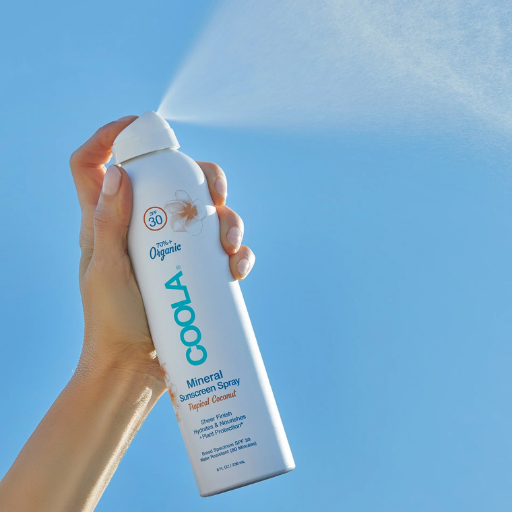
Aerosol sunscreen is popular because it feels light, dries quickly, and can cover large areas. It can also be useful when applying sunscreen to a child’s back or to hard-to-reach areas.
Still, lotion and stick sunscreen often travel better. They do not contain pressurized propellant, and a leak is usually easier to manage. A sunscreen stick is especially convenient for a carry-on because it is not treated as a liquid in the same way as a spray or lotion.
Here is a simple comparison:
| Sunscreen type | Checked bag | Carry-on convenience | Main concern |
|---|---|---|---|
| Aerosol spray | Usually allowed within limits | Limited by the 3.4-ounce rule | Pressure and accidental release |
| Lotion or cream | Usually allowed | Limited by liquid rules | Bottle leaks |
| Sunscreen stick | Usually allowed | Very convenient | Melting in high heat |
| Powder sunscreen | Usually allowed | Often convenient | Spillage and application quality |
Spray sunscreen also needs careful use. The American Academy of Dermatology advises applying enough sunscreen and rubbing spray sunscreen into the skin when needed. Spraying near an open flame or heat source is unsafe, and inhaling the product should be avoided.
International and airline rules to check
The answer to can you pack aerosol sunscreen in checked luggage may change when your itinerary includes international travel. Many countries follow similar aviation standards, but local security agencies and airlines can interpret or present the rules differently.
Before packing, check:
• Your departing airport’s security rules
• The airline’s checked-baggage policy
• The rules for connecting airports
• The regulations in your destination country
• Any restrictions for your return flight
Pay close attention to the wording. Some airlines list aerosol limits by weight, while others use volume. Some policies combine all toiletries into one total, while others explain the categories in more detail.
A practical habit is to save the airline’s baggage page on your phone. Rules can change, and airport staff may ask about the product. Keeping the sunscreen in its original packaging makes the label easier to read.
For flights outside the United States, use the official airport or airline website for that route. General travel advice is helpful, but the operating carrier’s current policy is the final guide for your trip.

Common packing mistakes to avoid
Many travelers search can you pack aerosol sunscreen in checked luggage after discovering that packing it is not as simple as placing it anywhere in a suitcase. A few small mistakes can create a delay or a damaged bag.
Avoid these errors:
• Packing an oversized can in a carry-on
• Removing the cap before placing the can in a toiletry bag
• Packing a dented or rusty container
• Placing the can beside heavy shoes or hard electronics
• Leaving the sunscreen in a hot vehicle
• Forgetting other aerosols when calculating the total amount
• Assuming an empty can is safe without checking the label
• Packing commercial quantities for resale or group distribution
Do not pierce, crush, burn, or refill an aerosol sunscreen can. These actions can release flammable propellant and create a serious safety risk.
Also avoid transferring aerosol sunscreen into another container. Aerosol cans are designed to hold pressure. A normal travel bottle is not a safe replacement.