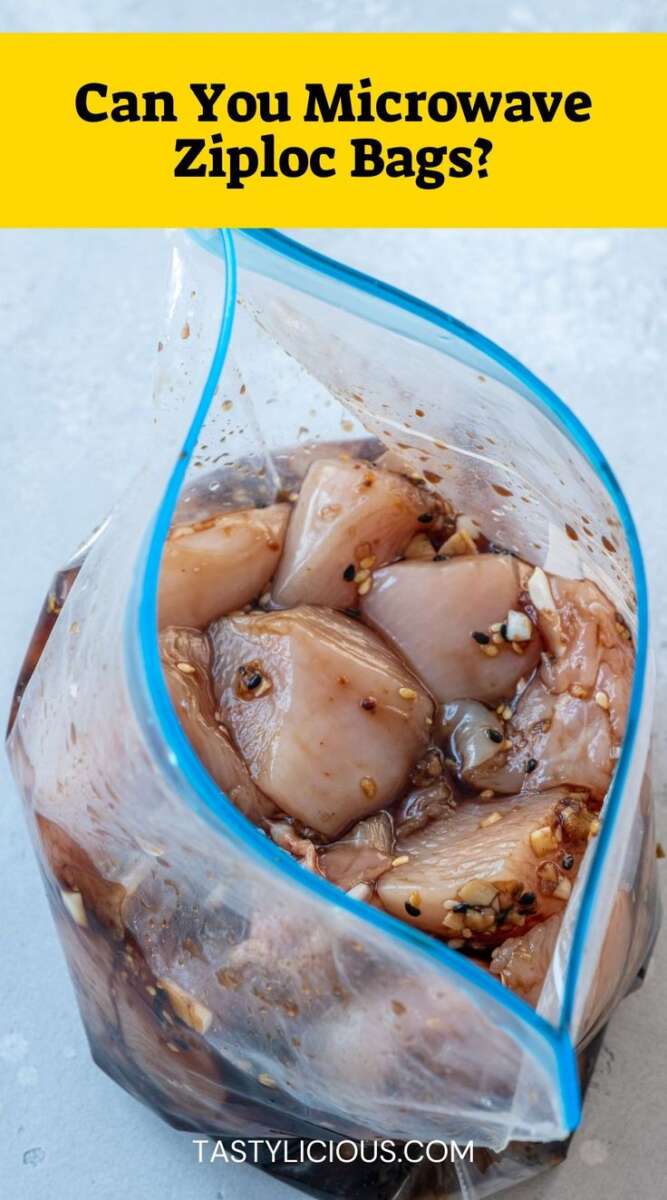
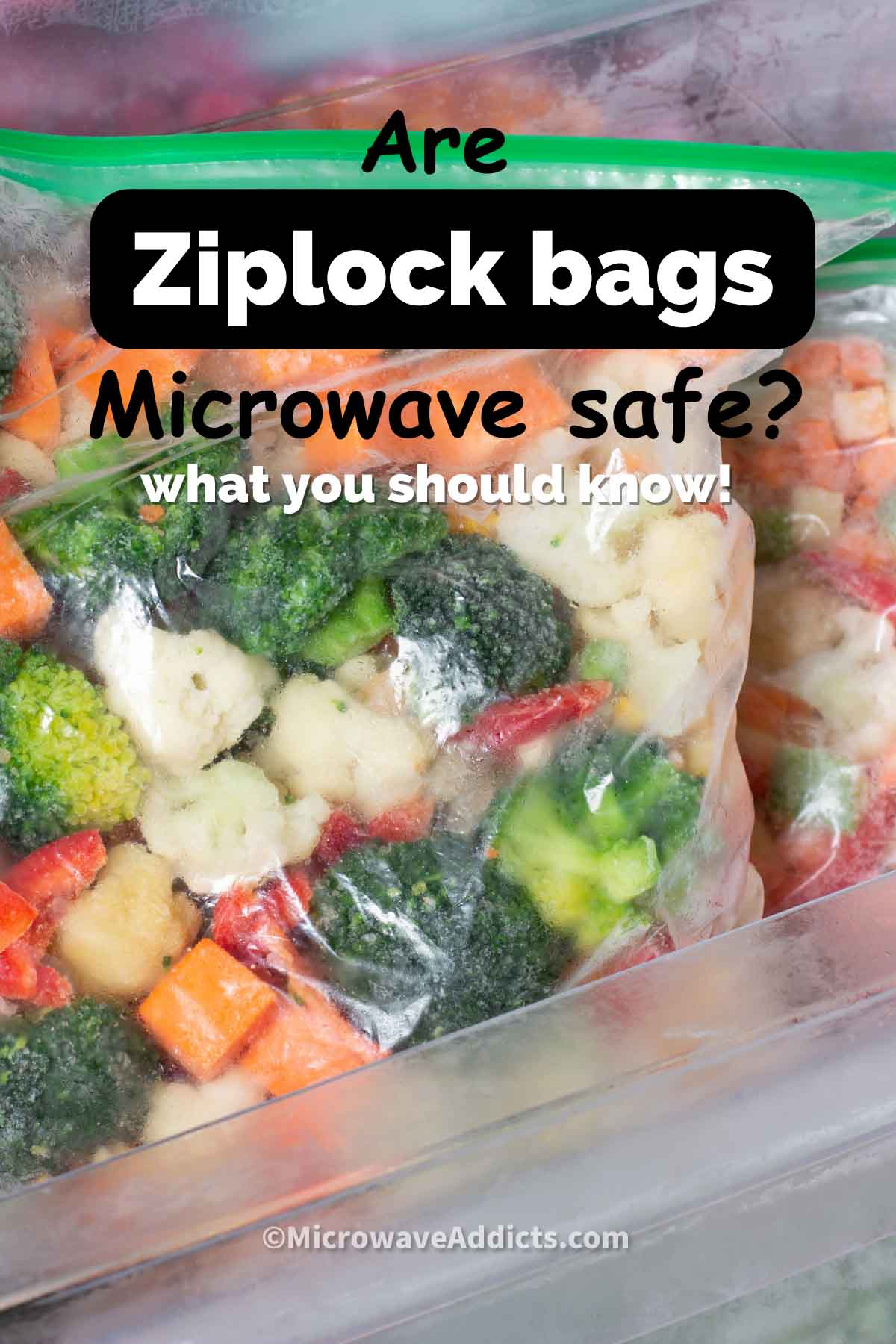
In the United States, some Ziploc® bags can be microwaved for defrosting or reheating food—but not for cooking it. Check the package label first, keep the bag open or vented, and follow the directions from the manufacturer.
Do not assume that every plastic storage bag is microwave-safe. A Ziploc bag that is safe for short reheating may still soften, leak, or fail during long cooking times or at high heat.

Are Ziploc Bags Microwave-Safe?
Some Ziploc bags are designed for limited microwave use. SC Johnson, the maker of Ziploc products, states that certain Ziploc bags may be used in the microwave for defrosting and reheating, but not for cooking food.
The key difference is temperature and time:
- Defrosting uses low heat for a limited period.
- Reheating warms food that is already cooked.
- Cooking exposes the bag to higher heat for longer periods and is not the intended use.
A package marked “microwave-safe” is the best guide. If the bag has no microwave directions, treat it as unsuitable for microwave use.
What “microwave-safe” means
Microwave-safe plastic is made and tested for a stated use under certain conditions. It does not mean the plastic can tolerate every temperature, food, or cooking method.
A microwave-safe bag may still:
- Become soft or wrinkled
- Leak when moved
- Tear under the weight of hot food
- Allow steam to build up if sealed
- Fail when used with very hot or oily food
The label applies to the product as sold. A generic zipper bag, sandwich bag, freezer bag, or food-storage bag may have different limits.
Freezer bags are not automatically microwave-safe
Freezer bags are made to help protect food at low temperatures. That does not automatically mean they are suitable for heating.
Some Ziploc freezer bags include microwave instructions for defrosting. Others may not. Read the exact package rather than relying on the word “freezer.”

How to Microwave Food in a Ziploc Bag
If the bag is labeled for microwave use, follow these steps:
- Read the package directions. Confirm that the specific bag allows microwave defrosting or reheating.
- Remove any metal. Take off twist ties, clips, foil labels, and other metal parts.
- Open the zipper. Never microwave a tightly sealed bag. Leave the opening partly open so steam can escape.
- Place the bag on a microwave-safe plate. The plate catches leaks and makes the hot bag easier to move.
- Use a low or medium setting. Defrost or reheat in short intervals instead of running the microwave continuously.
- Pause and turn the food when needed. This helps reduce hot spots.
- Check the bag and food. Stop if the plastic begins to warp, melt, split, or smell unusual.
- Let the food stand briefly. Heat may continue to spread after the microwave stops.
- Transfer the food carefully. Hot liquid and steam can burn you, even when the bag looks intact.
For liquids, leave room for expansion. A bag filled to the top can burst or spill when the contents heat.
Why the bag should not be sealed
Microwaves heat water in food. That water can turn into steam. In a sealed bag, steam has nowhere to go, so pressure may build.
The zipper is not a pressure-release valve. A sealed bag can suddenly open, split, or spray hot food. Leaving the top open reduces this risk, but it does not make the bag suitable for cooking.
Why a plate matters
A plate provides a second layer of protection if the bag leaks. It also helps support the bag as the contents become hot and less stable.
Do not place a loose bag directly on the microwave turntable if the package instructions recommend a plate. A plate is especially useful for soups, sauces, meat juices, and other foods that can cause burns.

What Can You Reheat in a Ziploc Bag?
A labeled microwave-safe Ziploc bag may be useful for short reheating or defrosting of foods with moderate moisture. The package directions control the final decision.
Possible uses may include:
- Defrosting frozen meat before cooking it by another method
- Warming frozen vegetables
- Reheating small portions of cooked food
- Softening frozen fruit
- Warming food that will be transferred to a bowl
Use extra care with foods that contain a lot of fat, sugar, or salt. These foods can become much hotter than the surrounding water-based food.
Foods that need extra caution
Avoid heating these foods in a plastic bag unless the package gives clear instructions for that exact use:
- Oil-heavy sauces
- Very fatty meats
- Syrups and candy
- Cheese
- Foods with thick, dense centers
- Large portions of soup or stew
- Foods that may swell or foam
A microwave can create uneven heat. One part of the food may remain cold while another part becomes hot enough to damage the bag.
Do not use a Ziploc bag for cooking
A Ziploc storage bag is not the same as a heat-rated cooking pouch. Do not use it to:
- Boil food
- Steam food
- Sous vide food
- Cook raw meat
- Cook rice or pasta
- Heat food for a long period
- Replace a microwave-safe cooking container
For these tasks, use cookware made for the method. A microwave-safe glass or ceramic container is often a better choice for cooking or extended heating.

What Happens If a Ziploc Bag Melts in the Microwave?
If a Ziploc bag melts, warps, splits, or sticks to food, stop using the food and the bag. Do not scrape melted plastic from the food and eat the remaining portion.
Unusual odor, smoke, discoloration, or visible plastic damage is a clear reason to stop the microwave. Unplug the appliance only if it is safe to do so, and allow the microwave to cool before cleaning it.
If the bag only softened
Softening does not always mean that plastic entered the food. However, it shows that the bag reached a condition outside the safe-use limit you should rely on.
For a cautious approach:
- Stop heating.
- Move the food away from the bag with care.
- Inspect the food and the bag.
- Discard the food if the bag is damaged or melted.
- Clean the microwave if food or plastic spilled inside.
If you are worried about possible exposure, contact Poison Control in the United States at 1-800-222-1222. For a serious injury or breathing problem, call 911.
Why melting can happen
Plastic damage may result from:
- Excessive heating time
- High microwave power
- Direct contact with very hot food
- Hot oil or sugar
- A full or sealed bag
- Uneven heating
- A bag not designed for microwave use
A bag may also fail when a person lifts it by the top after heating. The plastic can become weak, while the food inside becomes heavy.

Is Microwaving Food in a Ziploc Bag Safe?
It can be safe for the limited use stated on the label, such as defrosting or reheating. It is not safe to treat a Ziploc bag as a general-purpose cooking container.
The U.S. Food and Drug Administration explains that food-contact materials must be suitable for their intended use. That suitability depends on factors such as the material, food type, temperature, and contact time. The FDA also advises consumers to follow the manufacturer’s directions for microwave use.
The U.S. Department of Agriculture recommends using containers and materials intended for microwave heating and following the instructions supplied with the product.
About chemicals and plastic
Microwave energy does not make plastic radioactive. The main concern is whether the plastic is being used within its intended temperature and food-contact limits.
Heat can increase the movement of some substances from a material into food. That is one reason manufacturers place limits on time, temperature, and food type. A label is more useful than the general assumption that all plastic behaves the same way.
Do not rely only on a recycling number. Recycling codes identify broad plastic categories, but they do not by themselves prove that a particular bag is microwave-safe.
A safer alternative
For routine reheating, transfer food to:
- A glass container labeled microwave-safe
- A ceramic bowl without metallic trim
- A microwave-safe plastic container made for reheating
- A covered dish with a vent
A rigid container is easier to handle and less likely to collapse or spill than a hot zipper bag.

Ziploc Bag Microwave Safety Checklist
Use this quick check before heating:
| Question | Safe decision |
|---|---|
| Does the package allow microwave use? | Continue only if the answer is yes |
| Are you defrosting or reheating? | These are the usual permitted uses |
| Are you trying to cook the food? | Transfer it to proper cookware |
| Is the zipper closed? | Open or vent the bag |
| Is there metal on the bag? | Remove it |
| Is the bag full of liquid? | Leave space for expansion |
| Is the bag damaged or old? | Use a new, intact bag |
| Are you using high heat for a long time? | Choose a microwave-safe container instead |
| Can you place it on a plate? | Do so to catch leaks |
| Is the food hot and heavy? | Handle it with heat-resistant protection |
When the label and the intended use do not match, choose the more conservative option: use a microwave-safe bowl or container.

Common Mistakes to Avoid
Sealing the bag completely
A sealed bag can trap steam and burst. Keep the zipper open or follow the package’s venting instructions.
Using a sandwich bag for hot food
A small sandwich bag may be intended for storage only. Size does not determine heat safety.
Heating food directly from the freezer for too long
Frozen food may heat unevenly. Short cycles with pauses are safer than one long cycle.
Touching the bag immediately
The food, steam, and plastic may all be hot. Use care when opening the bag because steam can escape suddenly.
Microwaving oil or sugar
Oil and sugar can reach high temperatures and may damage plastic more quickly than water-based food.
Ignoring the product label
Ziploc makes several types of bags and containers. Directions can differ by product, package, and market. The exact label is more reliable than a general rule about “Ziploc bags.”
Frequently Asked Questions
Can you microwave a Ziploc freezer bag?
Only if the package says it is suitable for microwave use. Some freezer bags may be used for defrosting, while others are intended only for cold storage. Keep the bag open and use short heating periods.
Can you microwave a Ziploc bag with the zipper closed?
No. Do not microwave a sealed zipper bag. Steam can build pressure and cause the bag to split or release hot food.
Can you microwave raw meat in a Ziploc bag?
Do not use a standard Ziploc storage bag to cook raw meat in the microwave. If the label allows defrosting, you may use it for that limited purpose, then cook the meat promptly by a suitable method.
Can you microwave a Ziploc bag of soup?
A labeled microwave-safe bag may be used only as directed, but soup creates a spill and burn risk. A microwave-safe bowl is the better option. If you use the bag for permitted reheating, leave it open, leave room for expansion, and place it on a plate.
Is it better to microwave food in glass than in a Ziploc bag?
For regular reheating, yes. A microwave-safe glass container is rigid, easier to vent, and easier to handle than a hot plastic bag. It is especially useful for liquids and large portions.
Can you reuse a Ziploc bag after microwaving it?
Reuse depends on the bag’s condition and what it held. Do not reuse a bag that is warped, torn, stained with grease, or exposed to excessive heat. Never reuse a bag that held raw meat unless it can be thoroughly cleaned and the manufacturer permits reuse.