Measure a backpack from its lowest point to its highest point, then record its widest and deepest points.
Learning how to measure a backpack helps you choose the right size, check airline limits, and find a comfortable fit. The process is simple, but small details matter. A bag measured with its pockets full may look much larger than the same bag measured flat.
This guide explains how to measure a backpack at home with clear steps, practical examples, and fit tips. It also covers backpack dimensions, torso length, carry-on rules, and common measuring mistakes.

What backpack measurements mean
Most backpacks use three basic measurements:
• Height: The distance from the bottom of the bag to the highest point.
• Width: The distance across the widest part of the bag from side to side.
• Depth: The distance from the front of the bag to the back panel.
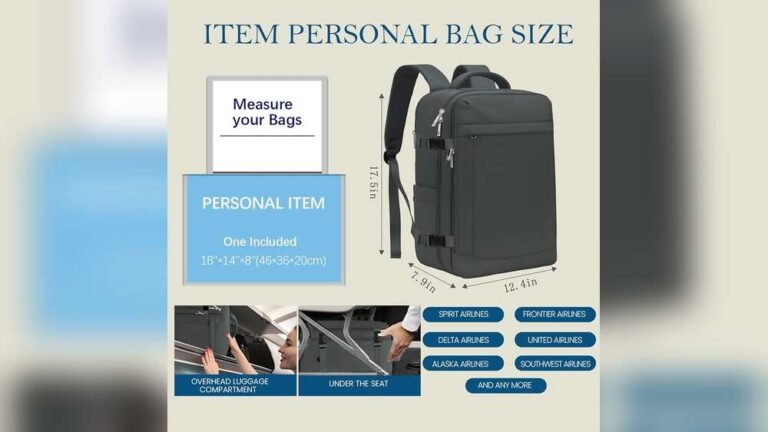
These measurements are often written as height × width × depth. For example, a backpack listed as 18 × 12 × 7 inches is 18 inches tall, 12 inches wide, and 7 inches deep.
When learning how to measure a backpack, remember that brands may measure bags in different ways. One company may include the top handle, while another may measure only the main body. Some brands also list the bag when it is full or expanded.
A backpack’s size and capacity are related, but they are not the same. Capacity is usually shown in liters. Two bags with the same outside dimensions may hold different amounts because of padding, dividers, pockets, and frame parts.

What you need to measure a backpack
You do not need special equipment. A few simple tools will give you a reliable result.
• A soft tape measure is best because it follows the shape of the bag.
• A ruler or straight measuring tape can work for a firm, box-shaped backpack.
• A flat surface helps you keep the bag steady.
• A notebook or phone lets you record each measurement.
• A book or small box can help show the widest and deepest points.
Before you begin, remove loose items from the bag. Empty water bottles, clothing, and shoes can change the shape. If you want to know the packed size, measure the backpack again after filling it with the items you normally carry.
Place the bag upright on a table or floor. Smooth out large wrinkles, but do not force the fabric flat. A soft backpack should keep a natural shape during measurement.
In my own bag tests, the most common mistake was pulling the tape too tightly. This made soft bags look smaller than they felt when packed. Let the tape touch the fabric without crushing it.

How to measure a backpack step by step
The best way to learn how to measure a backpack is to follow the same order each time. Measure the height first, then the width, and finally the depth.
1. Measure the backpack height
Stand the backpack upright with the bottom resting on a flat surface. Find the lowest point of the main bag and measure straight up to the highest point of the body.
For a roll-top backpack, measure it in the way you plan to carry it. If you roll the top down, measure the closed bag. If you leave it extended, measure the full height.
Decide whether to include the top handle. For most comparisons, record the main body height first. Then write down the total height with the handle if you need to check a storage space or airline limit.
2. Measure the backpack width
Look at the front of the backpack. Measure from the left side to the right side at the widest point.
Do not measure only the base if the bag becomes wider near the top. Also check side pockets, compression straps, and large exterior compartments. These parts may affect whether the bag fits under a seat or inside a locker.
Keep the tape level from side to side. A slanted tape can add an inch or more to the result.
3. Measure the backpack depth
Depth is the distance from the front of the backpack to the back panel. Place the bag in its normal upright position and measure across its thickest point.
Include front pockets if they are filled or permanently attached. If a front pocket is empty and folds flat, you may record two depths: the main body depth and the fully packed depth.
This step is especially important for travel backpacks. A bag that is only one inch deeper than expected may not fit under an airplane seat or inside a narrow locker.
4. Measure the backpack when packed
If you need a real-world size, fill the bag with the items you usually carry. Use normal clothing, books, a laptop, or travel gear.
Close all zippers and fasten the straps. Do not overfill the bag unless you plan to carry it that way. Measure the height, width, and depth again.
Write the results in this format:
• Empty size: 18 × 12 × 6 inches
• Packed size: 19 × 13 × 8 inches
This gives you a more useful picture than the empty measurement alone.
5. Record the measurements clearly
Write down the order used by the manufacturer or retailer. Most listings use height × width × depth, but not every brand follows this order.
If the order is unclear, label each number. For example:
• Height: 18 inches
• Width: 12 inches
• Depth: 7 inches
Clear notes prevent mistakes when comparing several backpacks.
How to measure a backpack for airline travel
Airlines usually care about the outside dimensions of a bag, not its advertised liter capacity. Rules vary by airline, aircraft, fare, and route, so always check the current policy before flying.
For an under-seat personal item, measure every part that may count. This can include:
• The main backpack body
• Full front pockets
• Side water bottle pockets
• Compression straps
• Wheels or rigid frames
• Top handles
• External laptop sections
Pack the bag as you would for the flight. A soft backpack may fit under a seat when partly compressed, but a full bag can become too tall or too deep.
Some airlines use linear inches for checked luggage. Linear inches mean height + width + depth. For example, a bag measuring 24 × 16 × 10 inches has 50 linear inches.
Do not assume that a backpack labeled “carry-on size” will meet every airline rule. That phrase is not a universal standard. A manufacturer may be using a common travel size rather than promising approval on every flight.
A practical tip is to leave a small margin below the airline’s maximum size. Seats, bins, and measuring frames are not always forgiving. A bag that matches the limit exactly may still be difficult to place.

How to measure a backpack for proper fit
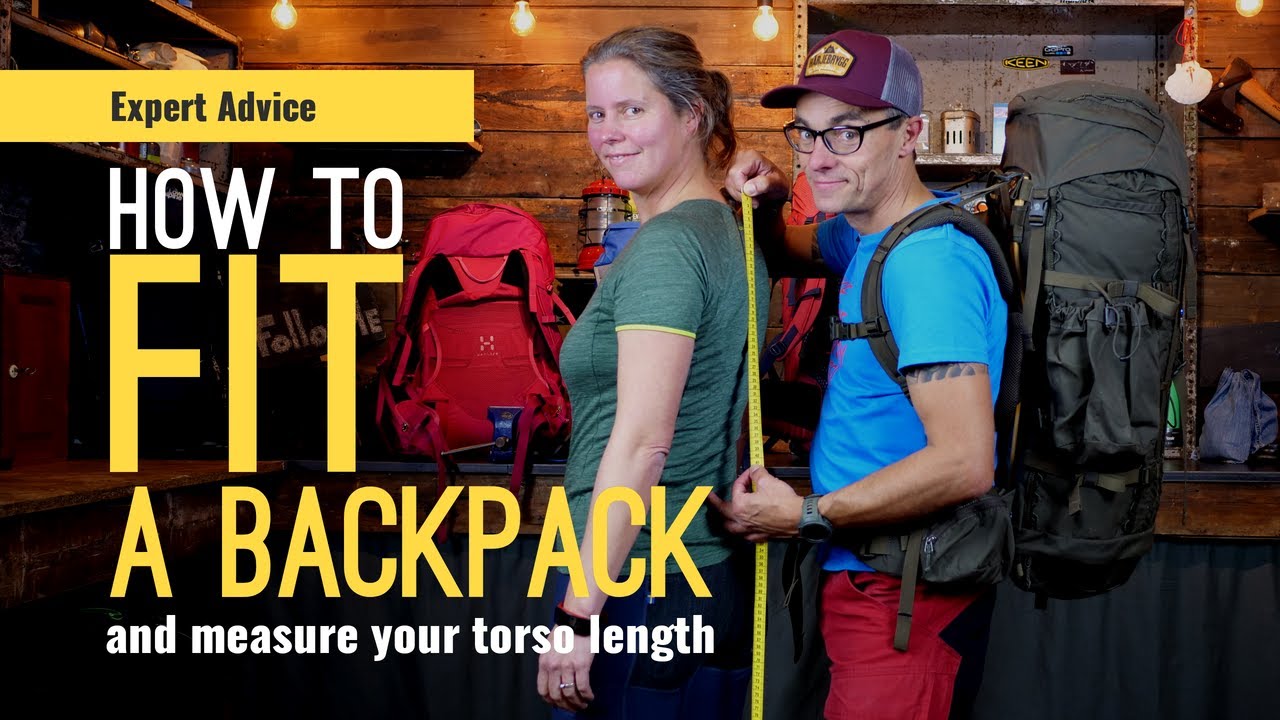
External dimensions tell you how large a backpack is. They do not tell you whether it will fit your back. For hiking and larger travel packs, torso length is often more important than the bag’s height.
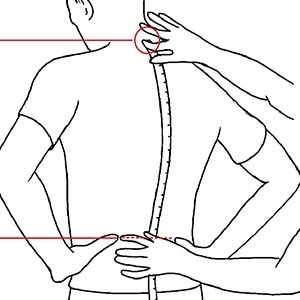
To measure torso length, find the bony bump at the base of your neck. Tilt your head forward if needed. Then locate the top of your hip bones and draw an imaginary line between them.
Measure from the neck point down to that hip line. It is easier if another person helps you keep the tape straight.
Many hiking backpacks have an adjustable torso range. Compare your measurement with the brand’s fit chart. A pack that is too long may press on your lower back. One that is too short may place too much weight on your shoulders.
A well-fitted backpack should feel balanced. The hip belt should rest over the hip bones, while the shoulder straps should curve naturally around the shoulders. The load lifters should pull the top of the pack toward your back without causing pressure.
For children, fit matters even more. Choose a light pack with straps that can be adjusted as the child grows. A large bag may encourage overpacking and can feel unstable.

How to measure a backpack for storage
Measuring a backpack for a closet, drawer, shelf, or school locker is slightly different from measuring it for fit. You need to measure the parts that take up space in storage.
Fill the backpack only if you store it full. Otherwise, empty it and shape it as it normally rests. Measure the tallest, widest, and deepest points, including handles and outside pockets.
For a locker, measure the opening rather than only the inside space. A backpack may fit inside the locker but fail to pass through the door opening.
For a luggage compartment, check both the height and depth. A bag can have a suitable total volume but still be too wide to turn or slide into place.
If you store several backpacks together, measure them as a group. Leave room for zippers, straps, and easy removal. Compressing a padded backpack for months can bend panels or damage foam.

How to measure a backpack’s capacity
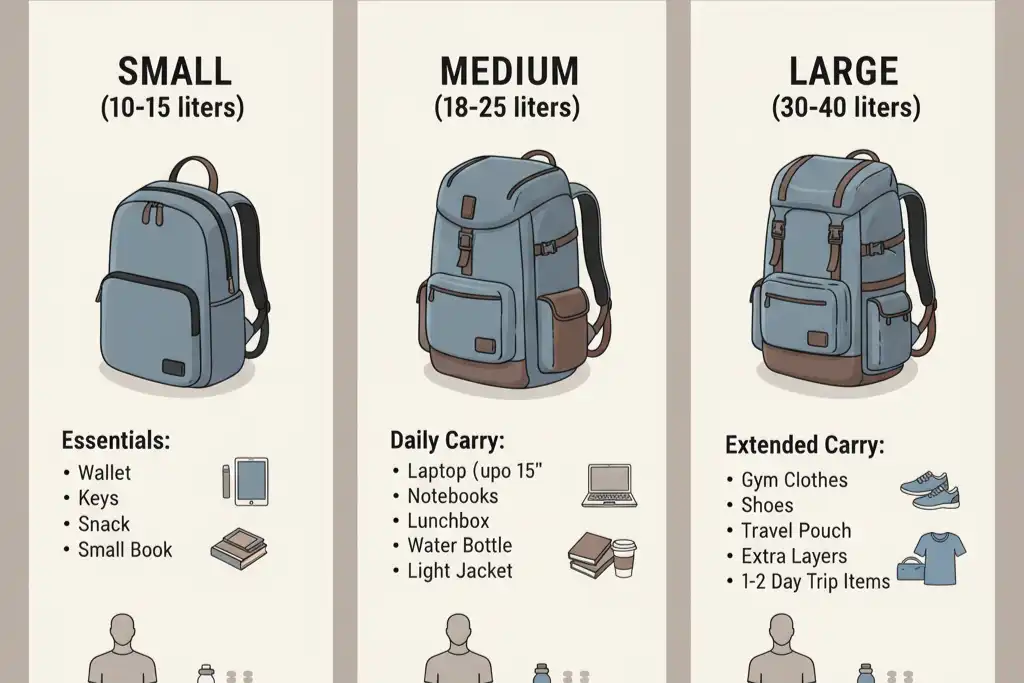
Backpack capacity is usually listed in liters. It describes the approximate volume inside the bag, not its outside dimensions.
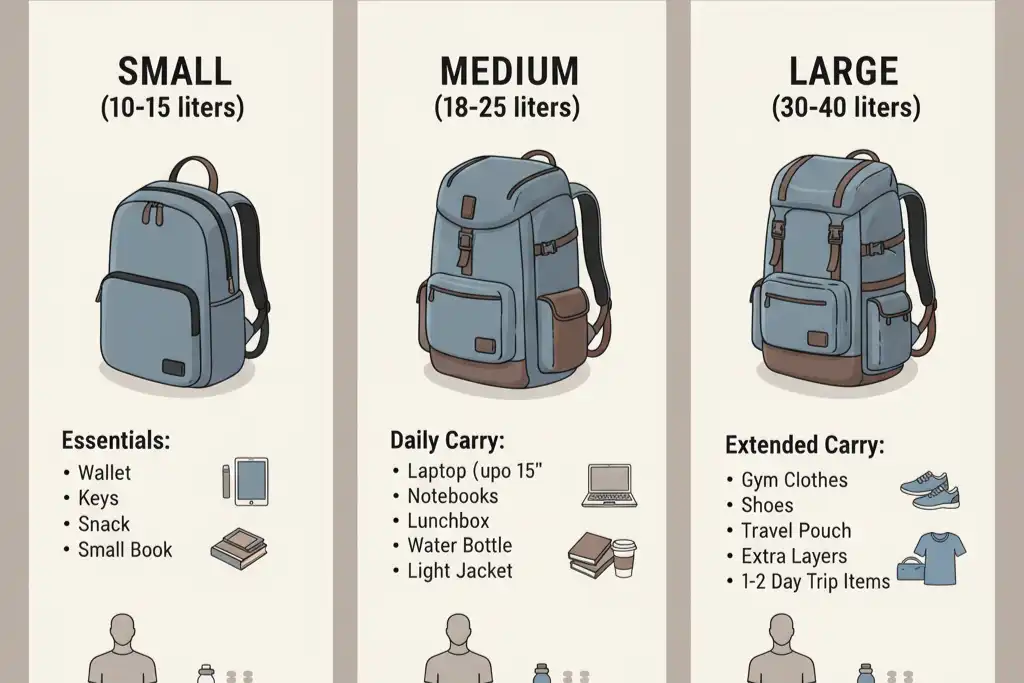
A 20-liter backpack may work for school, commuting, or a short day trip. A 30- to 40-liter pack may suit weekend travel. Larger hiking packs often range from about 50 liters to more, depending on the trip and equipment.
These ranges are general. A pack with many pockets may feel smaller inside than a simple pack with one large compartment. Thick padding and a frame also reduce usable space.
To estimate capacity at home, fill the main compartment with small soft items such as towels or clothing. Transfer those items to a container with a known volume, such as a box measured in liters. This will only provide an estimate.
Do not use outside dimensions to calculate exact capacity unless the bag is a simple box shape. Curved panels, seams, pockets, padding, and unused spaces make the mathematical estimate unreliable.
When comparing backpacks, look at both liters and layout. A 25-liter bag with a wide opening may hold more useful gear than a 30-liter bag split into many narrow sections.
Common mistakes when measuring a backpack
Knowing how to measure a backpack is useful, but the result can be wrong if the method changes from one bag to another.
Avoid these common errors:
• Measuring only the main compartment while ignoring full exterior pockets
• Including straps in the width when the retailer does not include them
• Pulling the tape tight enough to compress soft fabric
• Measuring an empty roll-top bag when it will be carried fully extended
• Confusing width with depth
• Reading dimensions without checking their order
• Assuming liters equal exact outside measurements
• Measuring the bag flat when it is designed to stand upright
• Forgetting wheels, frames, handles, or rigid laptop sections
• Comparing an expanded measurement with a compressed measurement
A useful method is to take two sets of measurements. Record the body size and the maximum packed size. This shows how flexible the backpack is and makes comparisons fairer.
If a retailer’s dimensions differ from yours, do not assume one measurement is wrong. The brand may include pockets, handles, or expansion panels. Look for a measurement diagram or contact customer service for clarification.
A practical backpack measurement example
Imagine you are choosing a backpack for a daily commute. The bag is empty at first, so you place it upright and measure the body.
The empty measurements are:
• Height: 17 inches
• Width: 11 inches
• Depth: 6 inches
You then add a 15-inch laptop, a charger, a lunch container, a notebook, and a light jacket. The packed measurements become:
• Height: 18 inches
• Width: 12 inches
• Depth: 8 inches
The packed size is the better number for checking a locker or under-seat space. The empty size is still useful for comparing the bag’s basic design.
Now suppose the bag has a padded back and thick shoulder straps. These parts may not affect the listed body dimensions, but they affect comfort and usable storage. That is why how to measure a backpack should include both size and intended use.
For a day hike, you would also check torso length, hip belt placement, back ventilation, and the weight of the empty pack. For air travel, you would focus more on packed exterior dimensions and the airline’s current limits.
Tips for getting accurate measurements
Use a repeatable process whenever you measure a backpack. The goal is not to find a perfect number to the last fraction of an inch. The goal is to create a fair and useful comparison.
Follow these tips:
• Measure on a flat surface with good light.
• Keep the backpack in its normal position.
• Use the same packing level for every bag.
• Measure the widest and deepest points, not just the center.
• Take each measurement twice.
• Round to the nearest quarter inch if needed.
• Record both empty and packed dimensions.
• Check the brand’s measurement method before comparing results.
• Leave extra space when planning for airline bins or lockers.
A soft tape measure works well for fabric bags. For rigid travel backpacks, use a straight ruler or a firm tape. If the bag has an expandable panel, measure it both closed and open.
Take photos of the measuring points if you are selling the backpack online. Buyers can better understand the size when they see the tape placed from edge to edge.
Benefits and limits of measuring a backpack
Accurate measurements can save money and time. They help you avoid buying a bag that does not fit your laptop, locker, car trunk, airplane seat, or body.
Measuring also makes online shopping safer. Product photos can make a backpack look larger or smaller than it is. A dimension chart gives you a more reliable basis for comparison.
Still, measurements have limits. They do not show how the bag feels when carried. They also do not reveal the quality of the fabric, zipper, stitching, padding, or suspension system.
Capacity listings can vary because brands use different testing methods. Some may measure every pocket, while others measure only the main compartment. Treat liters as a useful guide, not an exact promise.
For the best decision, combine dimensions with reviews, return policies, weight, materials, and the type of load you carry. A bag that looks ideal on paper may not suit your shoulders or daily routine.
Frequently asked questions about how to measure a backpack
What is the correct order for backpack measurements?
The usual order is height × width × depth. However, brands may use a different order, so check the product diagram or label each measurement yourself.
Do you measure a backpack with the straps included?
Most backpack dimensions refer to the main body and do not include loose shoulder straps. Include handles, wheels, and fixed pockets when checking whether the bag will fit in a tight space.
Should a backpack be empty or full when measured?
Measure it empty for a basic product comparison and packed for real-world use. If the backpack expands, record both its closed and expanded measurements.
How do you measure a backpack for an airline?
Pack the bag as you plan to carry it, close every pocket, and measure the maximum height, width, and depth. Then compare those numbers with the airline’s current personal-item or carry-on rules.
How do you measure backpack torso length?
Measure from the prominent bone at the base of your neck to the top of your hip bones. Use this measurement with the manufacturer’s torso-size chart to choose a suitable hiking or travel pack.
Are backpack liters the same as backpack dimensions?
No. Liters describe approximate internal capacity, while dimensions describe outside size. Padding, pockets, frames, and compartment design can make two bags with similar dimensions hold different amounts.
How accurate should backpack measurements be?
For most uses, measurements within a quarter inch are accurate enough. For airline travel or a small locker, measure carefully and allow a little extra room below the stated limit.
Conclusion
Knowing how to measure a backpack takes only a few minutes. Measure the height, width, and depth at the bag’s largest points, then repeat the process with the backpack packed as you normally use it.
For hiking packs, add a torso-length check. For travel bags, include full pockets, handles, and expanded sections. Remember that capacity, comfort, and outside dimensions are different features.
Use a soft tape, record your results clearly, and compare them with the exact space or fit chart you need. Before your next purchase or trip, measure your current backpack and use those numbers as a practical reference.

Zayden Halbrook is a travel enthusiast and gear researcher passionate about making every journey smoother and more enjoyable. With a keen eye for practical travel essentials and real-world tips, he helps readers choose the right gear and travel smarter. When he’s not testing travel kits or exploring new destinations, Zayden shares simple, reliable advice to make every trip stress-free.