Yes. Most airlines permit foot hammocks when they are used safely, stowed, and don’t block others.
I’ve spent years testing travel gear and flying frequently with compact foot hammocks. In this article I’ll answer are foot hammocks allowed on planes, explain airline and safety rules, share real-world tips from my trips, and show how to use a foot hammock without causing trouble. Read on to learn exactly when you can use one, what to avoid, and how to stay compliant and comfortable in flight.

Why travelers use foot hammocks and what they are
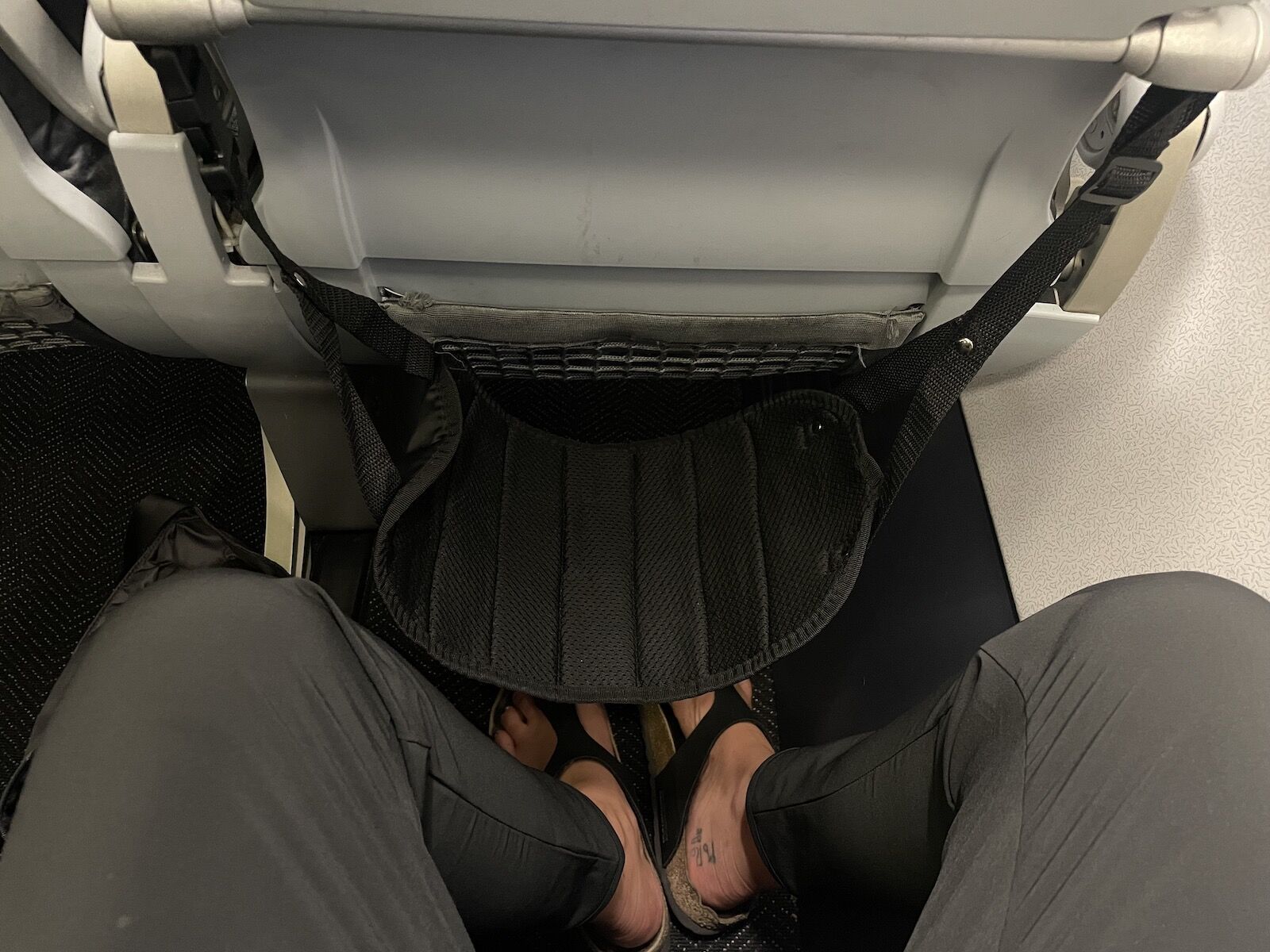
A foot hammock is a simple travel accessory. It creates a sling you attach to the seat in front or to the tray mechanism so you can elevate your feet. People use them to reduce leg swelling, improve comfort, and change posture on long flights.
Benefits include less pressure on knees, a feeling of rest, and a small way to improve sleep on a plane. Downsides include potential interference with the aisle, the person in front, and safety rules during takeoff or turbulence. Understanding these trade-offs helps answer are foot hammocks allowed on planes in practice.
Regulations and airline policies that matter
Federal and international aviation rules focus on safety. Items that block exits, aisles, or create hazards during evacuation are not allowed. Crew instructions always override personal gear rules. That means even if policy seems permissive, a flight attendant can ask you to remove a foot hammock for safety.
Airlines set their own cabin rules. Some allow soft attachments if stowed on takeoff and landing. Others ban anything that hangs from or alters seats. Security checkpoints require carry-ons, including a foot hammock, to be screened. Check your airline’s policy before you fly to avoid surprises.

Safety and comfort considerations
Safety is the top factor when deciding if are foot hammocks allowed on planes for your trip. Consider these points:
- During taxi, takeoff, and landing you must have seats upright and tray tables stowed. A hammock hooked to a tray table will need removal.
- Turbulence can cause the hammock and your legs to swing, raising injury risk. Remove it if instructed or when movement is rough.
- A hammock that blocks the space under the seat in front can impede access or emergency movement. Avoid models that extend into the aisle.
- Hygiene: foot hammocks contact shoes and feet. Use a washable cover or sock-style liner.
From my flights, the best practice is to install the hammock after takeoff and remove it when crew asks or before landing.

Types of foot hammocks and how they work
You’ll find a few common styles. Knowing which type you own helps you follow rules and set expectations.
- Hook-to-tray hammocks: attach to the tray table latch and hang under the seat. Easy to install but must be removed when the tray is stowed.
- Headrest-to-seat hammocks: loop around the headrest posts or the front-seat frame. These are more stable but may be prohibited if they alter the seat.
- Underseat slings: simple fabric slings that sit under your feet and don’t attach to the seat. These tend to be the least intrusive.
I prefer underseat slings for economy flights. They give comfort without requiring attachment to the seat structure, so they are less likely to draw an objection.

Practical tips for flying with a foot hammock
Follow these practical steps to stay compliant and comfortable.
- Check airline policy before you pack. Policies differ by carrier and cabin.
- Pack the hammock in carry-on luggage and be ready to present it at security.
- Install only after the aircraft reaches cruising altitude and the seatbelt sign is off.
- Remove and stow the hammock for taxi, takeoff, landing, and anytime crew asks.
- Communicate with the person in front before you attach something to their seat. A quick, polite ask avoids conflict.
- Keep it compact and washable. Dirty hammocks are uncomfortable and can upset nearby passengers.
From my experience, a polite approach and readiness to stow quickly prevents problems. If you travel light and are courteous, most crew members will be fine with a compact hammock.
Real-world scenarios and what to expect
Here are common situations you may encounter when asking are foot hammocks allowed on planes, and how to handle them.
- Short domestic flight: crew may be stricter. Use the hammock only if it clearly fits under the seat.
- Long-haul flight: more tolerance after takeoff. Still remove it during safety-sensitive phases.
- Full flight with limited space: avoid attaching anything that impinges on neighbors.
- International flights: rules vary widely. Confirm with the airline and the airport security guidance.
Anecdote from a 10-hour flight: I used an underseat sling, and an attentive flight attendant asked me to stow it during meal service. I complied immediately and received a friendly nod later. Being flexible keeps everyone safe.

PAA-style quick questions
Q: Will TSA confiscate my foot hammock?
A: TSA typically does not confiscate foot hammocks. They must go through screening; if they look like a potential hazard, they can be questioned or denied for carry-on.
Q: Can a flight attendant force me to remove it?
A: Yes. Crew have authority to ensure safety and can order removal at any time. Always comply to avoid escalation.
Q: Are foot hammocks allowed in business or first class?
A: Luxury cabins often have more room, and some hammocks are less needed. Policies still vary, so check with the airline and the cabin crew.
Are there alternatives to foot hammocks?
If you want leg comfort without gear, consider these options:
- Compression socks to reduce swelling and improve circulation.
- Inflatable footrests that sit on the floor and do not attach to seats.
- Frequent walking and ankle pumps during long flights.
I’ve used an inflatable footrest on overnight flights. It saved space and didn’t require attaching to the seat, avoiding most policy issues.
:max_bytes(150000):strip_icc()/tal-sunany-inflatable-foot-rest-pillow-travel-ahuang-111-1-f68ad17aed894122bb9c8544a7461346.jpeg)
Legal and practical limits to be aware of
There are limits that matter even if are foot hammocks allowed on planes in general. You cannot:
- Create obstruction of an aisle or an emergency exit.
- Attach anything that damages or alters the seat structure.
- Ignore crew instructions during safety-critical moments.
If a hammock causes complaints from other passengers, the crew may ask you to remove it. Respecting these limits keeps travel smoother.
Frequently Asked Questions of are foot hammocks allowed on planes
Are foot hammocks allowed in carry-on luggage?
Yes. Foot hammocks are usually allowed as carry-on items and must go through security screening. Pack them compactly and be prepared to remove them for inspection.
Can I use a foot hammock during takeoff and landing?
No. You must stow items and keep seats and tray tables in required positions during takeoff and landing. Remove and stow the hammock when the crew instructs.
Will an airline fine me for using a foot hammock?
Airlines typically won’t fine you for a personal hammock, but they can deny use or require stowage for safety. Noncompliance with crew instructions could lead to penalties.
Do foot hammocks violate FAA or aviation safety rules?
Not directly, but they can violate safety rules if they obstruct evacuation or create hazards. Crew and airline policies determine acceptable use.
How should I bring a foot hammock through airport security?
Place it in your carry-on bag or present it separately at the checkpoint if asked. Security officers will screen it; answer questions calmly and show how it packs down.
Conclusion
Foot hammocks can be allowed on planes, but permission depends on airline rules, crew judgment, and safety needs. Use them after takeoff, keep them unobtrusive, and be ready to stow them quickly. My experience shows that polite communication and choosing a low-profile, underseat design keep most trips smooth.
Takeaway: check your airline, pack your hammock accessibly, and prioritize safety and courtesy. Try a compact underseat model on your next trip and see how it improves comfort—then share your experience or questions below to help other travelers.

Zayden Halbrook is a travel enthusiast and gear researcher passionate about making every journey smoother and more enjoyable. With a keen eye for practical travel essentials and real-world tips, he helps readers choose the right gear and travel smarter. When he’s not testing travel kits or exploring new destinations, Zayden shares simple, reliable advice to make every trip stress-free.