Hang a hammock chair from a ceiling joist or approved structural anchor using rated hardware and careful load testing.
Learning how to hang a hammock chair from ceiling safely takes more than drilling a hole and adding a hook. You must find a strong support point, choose hardware that matches the ceiling, and account for movement as well as body weight. This guide explains each step in simple terms, including common mistakes, tools, safety checks, and options for wood, concrete, and finished ceilings.

What You Need to Know Before Hanging a Hammock Chair
A hammock chair creates both a downward pull and a sideways swinging force. A ceiling anchor may hold your weight while you sit still, yet fail when you swing, twist, or drop into the chair.
The safest support point is a structural ceiling joist, beam, or properly reinforced concrete surface. Drywall, plaster, paneling, and decorative ceiling boards are not strong enough on their own.
Before you learn how to hang a hammock chair from ceiling, check these key points:
- The chair’s maximum weight rating
- The weight of the user and any clothing, blankets, or cushions
- The working load rating of the eye bolt, carabiner, chain, rope, and chair hardware
- The type and condition of the ceiling
- The amount of space needed for movement
- The condition of the chair, suspension rope, and mounting hardware
Use the lowest-rated component as your safety limit. For example, a strong eye bolt does not make a weak rope safe.
Manufacturers often provide a maximum user weight, but that number does not always account for hard swinging or sudden loading. For regular use, choose hardware with a generous safety margin and follow the chair maker’s instructions.

Choose the Best Location
The best location gives the chair enough room to move without hitting walls, lights, windows, shelves, or furniture. A hammock chair should feel open, not squeezed into a corner.
Leave space around the chair for safe movement. A practical starting point is:
- At least 30 inches of side clearance
- At least 36 inches of clear space in front and behind the chair
- Enough height for the user’s feet to touch the floor during entry and exit
- No sharp furniture edges within the swing path
- No ceiling fan blades or hanging light fixtures nearby
The exact clearance depends on the chair design and how far it swings. A swivel chair may need more space than a fixed hanging seat.
I once helped install a hammock chair in a small reading room. The first proposed location looked ideal, but the chair swung into a bookcase. Moving the mount only 12 inches changed the whole setup. The chair became easier to enter, safer to use, and much quieter.
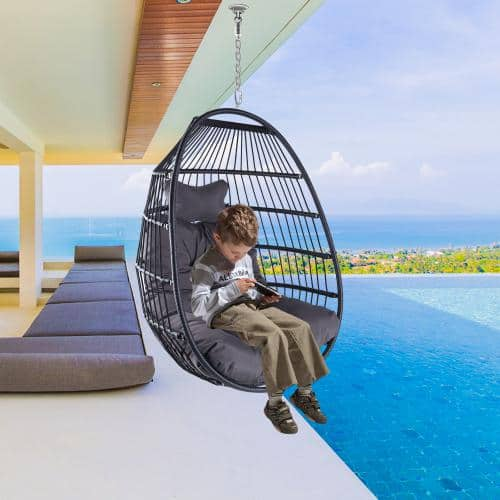
Also consider the ceiling height. Most hammock chairs work well when the seat hangs about 18 to 24 inches above the floor, but this varies by chair and user. The hanging point may need to be higher than expected, especially when using a long rope or spring.

Identify the Ceiling Structure
Finding the support structure is the most important part of learning how to hang a hammock chair from ceiling. Never rely on guesswork.
Wood joists and beams
In many homes, ceiling joists run in one direction at regular spacing. A stud finder can help locate them, but confirm the result with a small inspection hole or by checking nearby fixtures and attic access.
A joist is usually the simplest place to install a hammock chair. The mounting point should sit near the center of the joist, not near its edge. Avoid damaged, split, warped, or modified lumber.
Do not cut or notch a joist to make room for hardware. If the joist is not in the right place, use a properly engineered support system rather than weakening the ceiling.
Concrete ceilings
Concrete can provide excellent support when the correct anchor is used. However, concrete anchors must match the concrete type, thickness, and load.
Some ceilings contain steel reinforcement, electrical conduit, plumbing, or post-tension cables. Drilling without knowing what lies inside can cause serious damage. If you are unsure, ask a qualified contractor to inspect the area first.
Drywall and plaster
Drywall and plaster are finish materials, not structural supports. Toggle bolts and hollow-wall anchors may work for light items, but they are not a dependable choice for a swinging hammock chair.
If the mounting point does not line up with a joist, add structural blocking above the ceiling or use a purpose-built mounting frame. Access to the attic or ceiling cavity makes this work much easier.

Select Safe Mounting Hardware
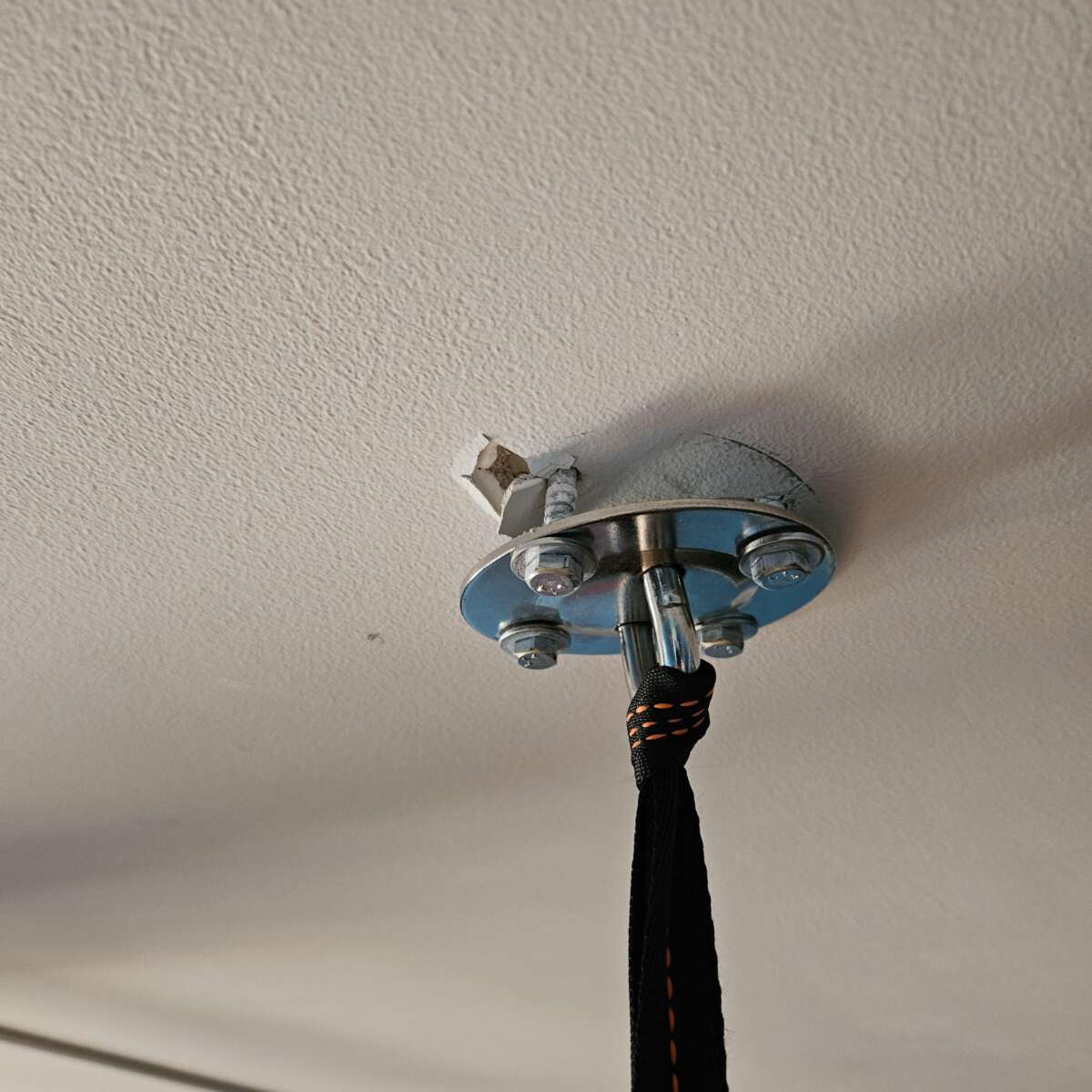
Hardware should be designed for overhead loads and rated for the expected use. A typical installation may include an eye bolt, mounting plate, carabiner, swivel, chain, rope, or hammock chair spring.
Look for hardware with a clearly stated working load limit. Avoid products that only list a breaking strength unless you understand how the manufacturer calculates the rating. Working load limits are more useful because they include a safety factor.
For a wood joist, common options include:
- A forged, load-rated eye bolt
- A heavy-duty hammock chair ceiling mount
- A lag eye screw designed for structural wood
- A mounting plate fastened with properly sized structural screws
For concrete, possible options include:
- A rated wedge anchor
- A rated sleeve anchor
- A chemical anchor system
- A manufacturer-approved concrete ceiling mount
Use the anchor maker’s drill size, embedment depth, edge distance, and installation method. Do not replace one anchor type with another without checking compatibility.
Avoid these common choices:
- Small screw eyes from craft or picture-hanging kits
- Unrated decorative hooks
- Plastic wall plugs
- Drywall-only anchors
- Bent or rusty carabiners
- Hardware with unknown origin or missing load information
- Ordinary utility rope with no load rating
The mounting hardware should be at least as strong as the chair’s stated capacity, with extra margin for movement. If the chair is used by children, older adults, or anyone with limited balance, install for stability rather than minimum capacity.
Tools and Materials Checklist
Gather everything before you start. The exact tools depend on your ceiling type and mounting method.
You may need:
- Stud finder or electronic scanner
- Tape measure
- Pencil
- Drill and drill bits
- Correct wood or masonry bit
- Socket wrench
- Adjustable wrench
- Level
- Ladder rated for your weight
- Safety glasses
- Dust mask for drilling masonry
- Rated eye bolt or ceiling mount
- Rated carabiner or quick link
- Swivel, chain, rope, or spring approved for the chair
- Chair manufacturer’s mounting hardware
- Vacuum for drilling dust
A second person is helpful. One person can hold the chair and check its height while the other adjusts the suspension.
Before drilling, compare your hardware with the manufacturer’s instructions. Some hammock chairs use a single suspension point. Others require a spreader bar, swivel, spring, or special bracket.

How to Hang a Hammock Chair From Ceiling
Follow these steps for a typical wood-joist installation. Concrete and engineered ceilings require the anchor method specified for that surface.
1. Confirm the mounting point
Locate the center of the ceiling joist. Mark the point where the chair will hang, then measure the clear space around it.
Check both sides of the ceiling if possible. An attic view can reveal wiring, pipes, insulation, and the exact joist position.
2. Inspect the joist
Make sure the joist is sound and large enough for the selected hardware. Do not mount into a thin trim board, ceiling furring strip, or cracked timber.
If you cannot confirm the structure, stop and get professional help. This is one of the most important safety rules for how to hang a hammock chair from ceiling.
3. Drill a pilot hole
Use the drill size recommended for the eye bolt or structural screw. Drill straight into the center of the joist.
The hole should not be much larger than the hardware’s shaft. A hole that is too large can reduce the grip of the wood. A hole that is too small can split the wood or make installation difficult.
4. Install the ceiling anchor
Thread the eye bolt or lag eye into the joist. Turn it with a wrench on the hardware’s approved nut or fitting. Do not force it by twisting the eye with a screwdriver unless the manufacturer permits that method.
The eye should sit firmly against the ceiling or mounting plate. Do not crush drywall or leave the hardware loose.
5. Attach the suspension system
Connect the rated carabiner, quick link, swivel, chain, spring, or rope in the order listed by the chair manufacturer.
Make sure each gate closes fully. A screw-lock carabiner should be tightened by hand. The suspension should hang straight and should not rub against a sharp metal edge.
6. Set the chair height
Place the empty chair in position. Adjust the suspension so the seat is low enough for easy entry but high enough to avoid dragging on the floor.
The user should be able to sit down without jumping. Feet should reach the floor comfortably. A chair that hangs too high can increase the risk of falls.
7. Test the installation gradually
Start with a light load. Place a weighted bag or several containers of water in the seat while standing clear of the swing path.
Then apply gentle downward pressure. Check the ceiling, anchor, rope, knots, carabiner, and chair connection. Look for movement, cracking, slipping, bending, or unusual sounds.
Only after the system passes a careful low-load test should an adult sit in it. Sit gently and remain still at first. Do not begin swinging until the mount has proved stable.

How to Hang a Hammock Chair From a Concrete Ceiling
Concrete mounting needs special care. The right anchor depends on the concrete’s strength, thickness, age, and condition.
First, check for hidden electrical lines, pipes, and reinforcement. A professional inspection is wise when you lack access above the ceiling.
Next, select an anchor made for overhead structural loads. Follow the product instructions exactly. Important details may include:
- Required hole diameter
- Minimum embedment depth
- Minimum distance from an edge
- Required hole-cleaning method
- Torque setting
- Concrete strength
- Curing time for chemical anchors
Clean the drilled hole as instructed. Dust can reduce the holding power of some anchors. Do not use a concrete anchor in lightweight block, brick, or hollow masonry unless the product specifically permits it.
If the ceiling is cracked, crumbling, unusually thin, or covered with a suspended ceiling system, do not proceed without expert advice. A concrete ceiling can be strong, but an incorrect anchor can still fail.

Installation Options for Ceilings Without an Exposed Joist
Sometimes the ideal chair location does not match a joist. You still have options, but each requires proper structural work.
Add blocking above the ceiling
A contractor can install a wood beam or blocking between joists above the mounting point. The blocking must connect securely to the surrounding structure and must be sized for the expected load.
This method works well during remodeling or when attic access is available. The anchor then attaches to the new structural support rather than to drywall.
Use a ceiling mounting plate
A wide mounting plate can spread the load across a structural beam or several approved fasteners. The plate must be engineered for a hammock chair, not just for a light fixture.
Follow the plate manufacturer’s fastener pattern. More screws do not automatically make an installation safe if they only enter drywall.
Install a freestanding stand
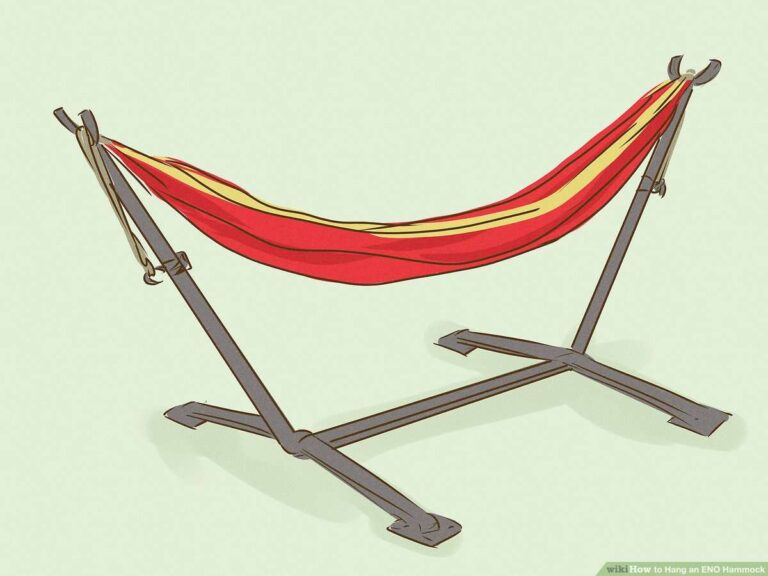
A freestanding hammock chair stand is often the safest choice for renters or homes with difficult ceilings. It avoids drilling and can be moved later.
Choose a stand with a broad base, a clear weight rating, and a stable frame. Place it on a level floor and inspect its joints often.

Common Mistakes to Avoid
Most hammock chair problems come from rushed installation rather than from the chair itself.
Avoid these errors:
- Mounting into drywall alone
- Guessing where a joist is located
- Using a decorative ceiling hook
- Ignoring the chair’s instructions
- Choosing hardware with no working load rating
- Drilling near a joist edge
- Failing to check for pipes and wires
- Hanging the chair too high
- Testing it first with a person
- Allowing the chair to strike a wall or cabinet
- Leaving a carabiner gate partly open
- Using worn rope or frayed webbing
- Assuming a concrete ceiling needs no inspection
- Forgetting that swinging creates extra force
One mistake I have seen more than once is using a strong-looking hook with a weak fastener. The hook itself may hold hundreds of pounds, but a short screw in drywall can pull out quickly. The whole system is only as reliable as its weakest connection.
How to Inspect and Maintain the Hammock Chair
Learning how to hang a hammock chair from ceiling is only the first step. Inspect the system regularly, especially during the first few weeks.
Before each use, look for:
- Frayed rope or webbing
- Bent metal
- Rust or corrosion
- Loose nuts
- Cracks in the ceiling
- Movement around the anchor
- Damaged stitching
- A carabiner that does not lock
- Unusual creaks or pops
Stop using the chair if you see a problem. Replace damaged parts with components approved by the chair or hardware manufacturer.
Recheck the installation after heavy use, seasonal humidity changes, or a move. Wood can shrink and expand. Fasteners can loosen. A quick inspection can prevent a serious fall.
Keep children from swinging aggressively unless the chair and mount are designed for that use. Never allow the chair to become a high-speed swing.
Safety Limits and When to Call a Professional
Some installations should not be treated as a do-it-yourself project. Contact a qualified contractor, engineer, or experienced installer when:
- You cannot locate a structural support
- The ceiling has cracks or water damage
- You suspect hidden wiring or plumbing
- The ceiling is suspended, plastered over lath, or unusually thin
- You need to modify a joist or beam
- You are drilling into post-tensioned concrete
- The chair will support multiple people
- The user has limited mobility and needs extra stability
- The hardware has no clear load rating
Building codes may not give a simple rule for every hammock chair installation. Local requirements can vary, and product instructions may be more specific than general advice. When in doubt, choose a freestanding stand or get a professional assessment.
Frequently Asked Questions
Can I hang a hammock chair from drywall?
No. Drywall alone is not designed to support a swinging person. Attach the chair to a structural joist, beam, properly reinforced support, or approved concrete anchor.
How high should a hammock chair hang from the ceiling?
Most chairs work well when the seat is about 18 to 24 inches above the floor. Adjust the height so the user can sit down easily and keep both feet near the floor.
Can I use a regular ceiling hook for a hammock chair?
A regular decorative hook is usually not suitable. Use a hook, eye bolt, or mounting plate with a verified working load rating for overhead and dynamic loads.
How much weight can a ceiling-mounted hammock chair hold?
The safe limit is the lowest rating among the chair, anchor, rope, carabiner, swivel, and ceiling structure. Follow the chair maker’s limit and allow extra capacity for movement.
Is a concrete ceiling safe for a hammock chair?
It can be safe when the concrete is sound and the correct rated anchor is installed properly. Hidden reinforcement, cables, pipes, and weak concrete can make professional inspection necessary.
Can I hang a hammock chair from a ceiling joist?
Yes, a sound ceiling joist is often a suitable support point. Install the anchor in the joist’s center with hardware made for structural overhead loads.
Should I use a spring or swivel?
Use a spring or swivel only if it is approved for your chair and rated for the expected load. These parts can improve comfort, but they also add connection points that must be inspected.
Conclusion
Knowing how to hang a hammock chair from ceiling means treating the installation like a small structural project. Find a real support point, use rated hardware, leave enough clearance, install the anchor correctly, and test the chair in stages.
Never rely on drywall or an unmarked hook. When the ceiling structure is unclear, a professional inspection or freestanding stand is the safer choice. Take your time, follow the chair manufacturer’s instructions, and enjoy your new seat with confidence. Share your installation experience or explore more home safety guides for practical ideas.

Zayden Halbrook is a travel enthusiast and gear researcher passionate about making every journey smoother and more enjoyable. With a keen eye for practical travel essentials and real-world tips, he helps readers choose the right gear and travel smarter. When he’s not testing travel kits or exploring new destinations, Zayden shares simple, reliable advice to make every trip stress-free.