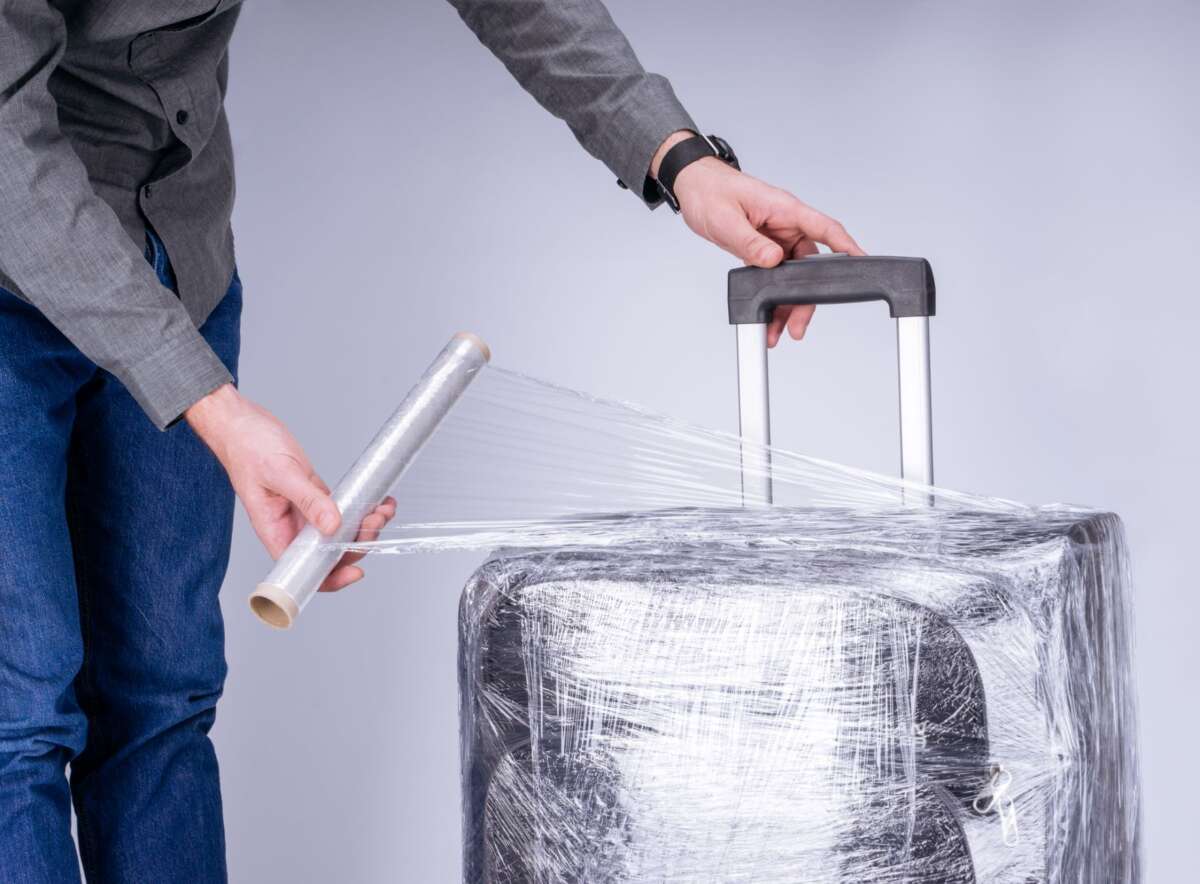
At airports across the United States, travelers may see suitcases covered in a tight layer of clear plastic film. People wrap luggage to help protect it from dirt, rain, scratches, rough handling, and casual tampering. Some also believe the wrap makes theft harder or keeps a damaged suitcase together.
Plastic wrapping can help in some cases, but it is not a security seal. The Transportation Security Administration (TSA) may remove the wrap to inspect a checked bag. The wrap can also create waste, hide damage, and block handles, wheels, baggage tags, or screening access.

The main reasons people wrap their luggage
People wrap luggage for several practical reasons. The most common are protection, privacy, and peace of mind.
1. To protect a suitcase from dirt and damage
Checked bags pass through many places before reaching the aircraft. They may move on conveyor belts, travel in carts, sit on wet pavement, or rub against other bags. Plastic wrap adds a thin outer layer that can help protect the suitcase from:
- Dirt and grease
- Rain and snow
- Scratches
- Minor scuffs
- Loose straps
- Broken zipper pulls
- Accidental spills
The wrap does not make a suitcase damage-proof. It may reduce surface marks, but it cannot stop a hard impact, a cracked shell, or a broken wheel.
2. To keep a damaged bag together
A traveler may wrap a suitcase because it already has a weak zipper, torn fabric, or a cracked outer shell. The plastic can hold loose parts in place for a short time.
This is only a temporary measure. A tight layer of film cannot replace a repair, luggage strap, or a new bag. If the suitcase is badly damaged, tell the airline before checking it. The airline may record the condition and explain what help is available.
3. To discourage casual tampering
A layer of plastic can make a bag harder to open quickly. Someone would need to cut or tear the film before reaching the zipper or opening.
That may discourage casual handling, but it does not provide true security. A person with a blade can remove the wrap in seconds. Plastic also cannot replace a strong zipper, a sturdy lock, or careful packing.
TSA officers can open checked baggage when screening requires it. The agency says travelers should use TSA-recognized locks if they want to lock checked bags. A standard lock may be cut or broken during inspection.
4. To hide the contents of the bag
Clear plastic does not hide much by itself, but some luggage-wrapping services use colored or opaque film. This can make the suitcase less visible and may cover worn areas, stickers, or identifying marks.
However, a covered bag can also be harder to identify on a baggage carousel. Add a clear name tag and a distinct, non-sensitive marker before checking the bag.
5. To prevent spills from spreading
Travelers sometimes wrap bags that contain liquids, toiletries, food, or other items that could leak. The outer film may limit the spread of a small spill.
It should not be the main protection. Put liquids in sealed containers, use leak-resistant bags, and follow the airline and TSA rules for liquids. Plastic wrap around the outside of a suitcase cannot stop a bottle from breaking inside.
Does wrapping luggage make it safer?
Wrapping luggage may make opening less convenient, but it does not make the bag secure. Think of it as a cover, not a lock.
The wrap can show visible damage. If the film is cut or torn, the traveler may notice that someone handled the bag. Yet the damage may also occur during screening, loading, or unloading. A torn layer does not prove theft or tampering.
Plastic wrap also has limits that matter in US airports:
- TSA may remove it for inspection.
- Airline staff may need access to baggage tags or handles.
- The wrap may cover an existing tear that should be documented.
- A wrapped bag may be harder to open during an emergency.
- The film may catch on equipment if applied poorly.
- It can make a bag look unusual or oversized.
For stronger protection, keep valuables, medication, passports, identification, and important documents in your carry-on when airline and TSA rules allow it. Do not place irreplaceable items in checked luggage.

How airport luggage wrapping works
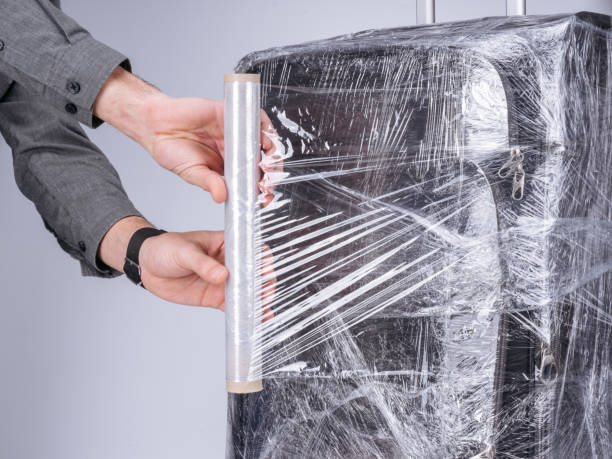
Many large airports offer paid luggage-wrapping services. A worker places the suitcase on a platform, then wraps it with stretch film. The worker may wrap the bag several times and leave openings for the handle or wheels.
The exact service differs by airport and provider. Some services may offer thicker film, colored film, straps, or limited damage coverage. Read the terms before paying. A service label does not mean the bag is insured against loss or damage.
Some travelers wrap luggage at home. If you do this, leave key parts easy to see and use:
- Attach the airline baggage tag first.
- Keep handles, wheels, and straps clear.
- Do not cover barcodes or old tags that could confuse baggage systems.
- Use enough film to hold the surface, not so much that the bag becomes bulky.
- Check that zippers, vents, and expansion panels are not under unsafe pressure.
- Add your contact details inside and outside the bag.
Do not wrap a bag so tightly that it changes the bag’s shape or prevents airline staff from handling it. If the bag becomes too large or heavy, you may face an oversize or overweight fee.
When wrapping your luggage may make sense
Wrapping may be useful in a few situations. The decision depends on the bag, the trip, and the risk of damage.
| Situation | Possible benefit | Main limitation |
|---|---|---|
| Soft-sided suitcase | Helps protect fabric from dirt and rain | Does not stop tears or crushing |
| Bag with a loose strap | Holds the strap close to the bag | Staff may still need to remove it |
| Damaged zipper | May keep the zipper closed for one trip | It is not a reliable repair |
| Wet or dirty travel route | Adds an outer barrier | Water can still enter through gaps |
| Bag with a distinctive finish | Reduces surface scuffs | Film may hide the bag’s features |
| Concern about casual opening | Makes access less quick | It is not a security device |
Wrapping has less value for a hard-shell bag with working locks, strong zippers, and no loose parts. It also has less value when you are traveling with a carry-on that stays with you.
The best approach is to fix the real weakness first. Replace a broken zipper. Remove a loose strap. Pack liquids in sealed bags. Use a luggage strap if the suitcase needs support. Use plastic only when it adds a clear benefit.

Why some travelers should avoid plastic wrapping
Plastic wrapping is not right for every trip. It can create problems at the airport and after landing.
It may interfere with TSA inspection
TSA officers may need to inspect checked baggage. If plastic blocks access, they may cut it away. You may arrive with less wrap than you started with, or with no wrap at all.
A traveler should never rely on plastic to prevent an authorized inspection. Keep prohibited items out of checked and carry-on baggage by checking the current rules on the official TSA travel security website.
It can cover important baggage information
Airlines use tags and barcodes to route bags. A plastic layer should not cover the current tag, barcode, or other required information.
Remove old airline tags before each trip. Put your name and a phone number inside the bag, too. Avoid printing sensitive information where anyone at the airport can easily read it.
It may hide existing damage
If a suitcase has a crack, tear, or broken wheel, wrap it only after documenting the condition. Take clear photos before leaving for the airport.
Airlines often have rules about reporting damaged baggage. Do not assume plastic wrapping will protect you from those rules. Report damage as soon as possible after collecting the bag and keep your bag receipt.
It creates single-use plastic waste
Most luggage wrap is a thin plastic film used once and removed soon after the flight. Recycling options vary by location. Many local curbside programs do not accept plastic film because it can jam sorting equipment.
The US Environmental Protection Agency recommends checking local recycling guidance rather than placing uncertain plastic in the recycling bin. Some stores and special drop-off sites accept certain types of clean plastic film, but acceptance rules vary.
It may cause problems with some bag features
Plastic can cover:
- Air vents on special cases
- External pockets
- Wheels
- Telescoping handles
- Built-in straps
- Battery compartments on smart luggage
If you use a battery-powered suitcase, follow the airline’s rules. Some lithium batteries must be removed from checked luggage. Plastic wrapping does not change that requirement.
Better alternatives to plastic wrap
For most travelers, a few simple steps offer better protection with less waste.
Use a luggage strap
A strong luggage strap can help keep a suitcase closed if a zipper fails. Choose a strap that does not cover the baggage tag. A bright color can also make the bag easier to spot.
A strap is not a lock. It can be removed, and it may not protect the bag from rain or dirt.
Use a washable luggage cover
A reusable fabric or flexible cover can reduce scuffs and dirt. It creates less single-use waste than airport wrap when used many times.
Check the cover before each trip. It should not block the luggage tag, handle, wheels, or airline inspection points. It must also fit without making the bag too large.
Pack inside the suitcase
Use small reusable bags for shoes, dirty clothes, toiletries, and fragile items. Put liquids in secure containers and seal them separately.
Place heavy items near the suitcase’s wheels. Keep fragile items away from the outer shell. Do not overfill the bag, since excess pressure can stress the zipper and seams.
Choose durable luggage
A suitcase with strong wheels, reinforced corners, and a working zipper may need no outer covering. Check the bag before every trip:
- Pull the zipper from end to end.
- Test the handle.
- Spin each wheel.
- Look for cracks or tears.
- Remove old tags.
- Confirm that the baggage label is secure.

What to do if wrapped luggage arrives damaged
If the suitcase arrives with torn film, a broken zipper, missing contents, or new damage, act before leaving the airport if possible.
- Take photos of the bag, wrap, tags, and damage.
- Keep the baggage claim tag and boarding pass.
- Visit the airline’s baggage service office.
- Report the problem and request a written case number.
- Keep receipts for necessary repairs or replacement items.
- Follow the airline’s deadline for a claim.
A torn plastic layer alone does not prove that property was stolen. Check the bag carefully and compare its contents with what you packed. If you suspect theft or find a dangerous item, ask airport or airline staff for help.
For a missing bag, use the airline’s baggage process first. TSA handles security screening, but airlines generally manage checked-baggage tracing and delivery.
Common mistakes to avoid
Travelers often wrap luggage with good intentions but create new problems. Avoid these mistakes:
- Covering the airline tag or barcode
- Wrapping over wheels or handles
- Using so much film that the bag becomes oversized
- Treating plastic as theft protection
- Packing valuables in checked luggage
- Covering a damaged bag before taking photos
- Forgetting to remove old baggage tags
- Assuming the wrap will stay on after TSA screening
- Placing liquids in the bag without leak protection
- Putting a lithium battery in checked luggage when the airline requires removal
A simple rule works well: the wrap should protect the bag without preventing people or machines from identifying, inspecting, or moving it.
Frequently asked questions
Is it worth wrapping luggage at the airport?
It can be worth it if you need a temporary barrier against dirt, rain, loose straps, or minor scuffs. It is less useful for a sturdy suitcase with no damage. Consider the cost, waste, and chance that TSA will remove the wrap.
Can TSA open plastic-wrapped luggage?
Yes. TSA may remove or cut plastic wrapping when an inspection requires access to the bag. Plastic wrap does not prevent lawful screening.
Does plastic wrapping stop luggage theft?
No. It may discourage quick or casual access, but it is not a secure lock. Keep valuables, medication, identity documents, and other essential items in your carry-on when permitted.
Can I wrap my luggage at home?
Yes, but keep the baggage tag, barcode, handles, and wheels accessible. Do not make the bag too large or hard to handle. Check the airline’s baggage rules before traveling.
Is plastic luggage wrap recyclable?
Sometimes, but rules vary. Thin plastic film is often handled differently from bottles and rigid containers. Check your local recycling program or a store-based film recycling site before placing it in a bin.
Conclusion
People wrap luggage in plastic mainly to protect it from dirt, rain, scratches, loose parts, and casual tampering. The wrap can help in limited cases, but it is not a security device and may be removed during TSA screening.