What To Pack In Hospital Bag For Labor: Essential Checklist

Pack ID, birth preferences, comfort items, baby clothes, and practical supplies for you, your support person, and your newborn.

Knowing what to pack in hospital bag for labor can make the final weeks of pregnancy feel calmer and more organized. After helping families prepare for birth, I have learned that the best hospital bag is not the largest one. It is a small, well-planned kit with items that support comfort, communication, recovery, and your baby’s safe ride home.

When to Pack Your Hospital Bag

Most people pack a hospital bag around 36 or 37 weeks of pregnancy. Labor can begin earlier, though, so ask your healthcare provider when you should be ready based on your health and pregnancy.

If you are having twins, have a high-risk pregnancy, or have a planned induction or cesarean birth, your provider may suggest packing sooner. Keep the bag in an easy-to-reach place, such as near the front door or in your car.

The goal of what to pack in hospital bag for labor is simple: bring useful items without creating clutter. Hospitals often supply gowns, mesh underwear, pads, blankets, diapers, and basic toiletries. Call your labor and delivery unit before packing so you know what it provides.

A helpful plan is to use three bags:

• A small labor bag for items needed during contractions and birth

• A main overnight bag for recovery and personal care

• A separate baby bag for clothing and discharge items
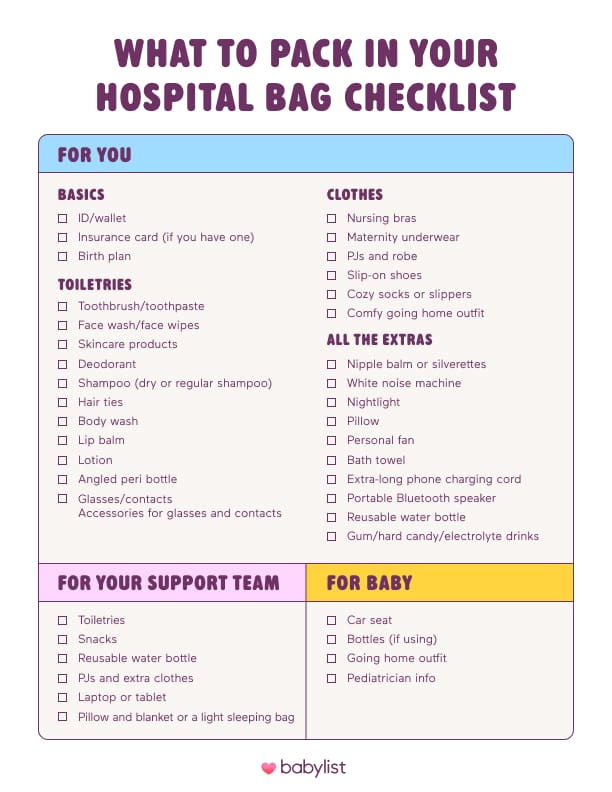
When to Pack Your Hospital Bag
Source: babylist.com

What to Pack in Hospital Bag for Labor: Essential Items

Your labor bag should hold items that help you communicate, stay comfortable, and manage long hours. Pack these items where you can reach them without digging through clothes.

Identification and medical information

Bring the documents your hospital requires. Requirements vary by location, so check before your due date.

• Photo identification

• Insurance card

• Hospital registration forms

• Prenatal records, if your provider asks you to bring them

• A list of allergies

• A list of medicines and supplements

• Your healthcare provider’s phone number

• Emergency contact information

• Birth preferences or a birth plan

A birth plan is useful as a communication tool, not as a promise that every detail will happen. Labor can change quickly. A short, flexible plan helps your care team understand your wishes about pain relief, movement, monitoring, skin-to-skin contact, and feeding.

Phone and power supplies

Your phone may help you time contractions, contact family, play music, take photos, and receive updates from your care team. Pack a long charging cable because hospital outlets may be behind the bed or across the room.

Include:

• Phone charger with a long cord

• Portable battery pack

• Earbuds or headphones

• A small notebook and pen

• Contact details for your support team

Protect your privacy by checking photo and video rules with the hospital. Ask before recording staff or other patients.

Comfort items for labor

Comfort is personal. Some people want music and massage tools. Others prefer a quiet room and very little stimulation. Choose items that are easy to clean and simple to use.

• Lip balm

• Hair ties or a headband

• A water bottle with a straw

• Socks with grips

• A lightweight robe

• A small fan, if allowed

• Massage oil, if approved by your care team

• A tennis ball or massage tool

• An eye mask

• A small pillow with a brightly colored pillowcase

The hospital may offer ice chips, a birthing ball, blankets, and other comfort aids. Ask what is available before bringing large equipment. Do not bring anything with a strong scent if you or your roommate may be sensitive to smells.

Snacks and drinks

Ask your hospital about eating and drinking during labor. Some people may eat light foods during early labor, while others may need to avoid food because of a planned procedure or medical concern.

If permitted, pack:

• Crackers

• Applesauce pouches

• Granola bars

• Dried fruit

• Hard candy

• Electrolyte drinks

• Clear drinks

Avoid packing a large amount of food. Your support person will likely need snacks more than you will, especially during a long induction.

What to Pack in Hospital Bag for Labor: Essential Items
Source: graceobgyntx.com

What to Pack in Hospital Bag for Labor for the Birthing Parent

The birthing parent often needs fewer clothing items than expected. Hospitals usually provide a gown, but your own clothes can make recovery feel more comfortable.

Clothing

Pack loose, soft clothing that is easy to put on. Choose pieces that can handle stains.

• Two nursing-friendly tops

• One loose dress or soft pants

• A front-opening shirt or robe

• Two or three pairs of high-waisted underwear

• A comfortable nursing bra

• Warm socks

• Slip-on shoes or shower sandals

• An outfit for going home

Your going-home outfit should fit comfortably around your abdomen. Many people still look several months pregnant after birth because the uterus needs time to shrink. High-waisted, soft clothing is often more comfortable than jeans or fitted pants.

Pack clothing for the season, but avoid overpacking. A hospital room may feel warm, and your temperature may change after birth.

Toiletries

Bring travel-size versions of the products you use every day.

• Toothbrush and toothpaste

• Face wash

• Deodorant

• Shampoo and conditioner

• Body wash

• Hairbrush

• Moisturizer

• Glasses and contact lens supplies

• Unscented products if possible

Do not bring expensive jewelry. Remove rings before labor if your fingers are swollen. If you wear contacts, bring glasses because contacts may become uncomfortable during a long stay.

Postpartum comfort

Your hospital will usually provide pads, disposable underwear, a peri bottle, and other recovery supplies. You may still prefer your own products after you go home.

Consider packing:

• Comfortable, full-coverage underwear

• Breast pads

• Nipple cream

• A small toiletry bag

• Stool softener only if your healthcare provider recommends it

• Any prescribed medicine

Do not start supplements, herbal products, laxatives, or pain medicine without asking your healthcare provider. Some products can affect bleeding, breastfeeding, or other medicines.

Feeding supplies

If you plan to breastfeed, you do not need to pack a full feeding kit. Hospitals often provide lactation support and may supply basic breast pumps or supplies when medically needed.

You may want:

• A nursing bra

• Breast pads

• Nipple cream approved for breastfeeding

• A nursing pillow, if you find it helpful

If you plan to formula-feed or combine feeding methods, ask the hospital what it provides. Some hospitals supply ready-to-feed formula, while others have specific policies.

What to Pack in Hospital Bag for Labor for the Birthing Parent
Source: babycenter.com

What to Pack in Hospital Bag for Labor for the Baby

Newborns need surprisingly few items in the hospital. The hospital usually provides diapers, wipes, blankets, and sometimes a hat. The most important baby item is a properly installed rear-facing car seat.

Baby clothing

Pack clothes that are soft, loose, and easy to fasten.

• Two or three bodysuits

• Two sleepers

• One hat for going home, if the weather is cool

• Socks or booties

• A weather-appropriate blanket

• A going-home outfit

Avoid outfits with tight neck openings or many small buttons. Zippers and wide snaps make dressing a newborn much easier. Pack one outfit in a newborn size and one in a 0 to 3-month size because birth weights vary.

Car seat

Install the rear-facing car seat before labor begins. The American Academy of Pediatrics recommends rear-facing travel for infants from their first ride home.

Check that:

• The seat is installed in the back seat

• Harness straps sit at or below the baby’s shoulders

• The chest clip rests at armpit level

• The harness is snug

• The seat is not expired or damaged

• No bulky coat is under the harness

Many hospitals check the car seat before discharge. A local child passenger safety technician can inspect the installation.

Items you can leave at home

Avoid bringing too many baby products. You usually do not need:

• A full diaper bag

• Large boxes of diapers

• Baby toys

• Baby shoes

• Bottles, unless your care team requests them

• Heavy blankets

• A breast pump, unless arranged with your provider

A newborn’s first hospital stay is not a vacation. Simple items are safer and easier to manage.

What to Pack in Hospital Bag for Labor for the Baby
Source: hd-wert.de

What to Pack for Your Support Person

Support people often focus so much on the birthing parent that they forget their own needs. A comfortable support person is better able to offer calm, practical help.

Pack:

• Photo identification

• Phone and charger

• Comfortable clothes

• A sweatshirt or light jacket

• Toiletries

• Prescription medicines

• Snacks and a refillable water bottle

• Small cash or a payment card

• A pillow and blanket, if permitted

• Entertainment for quiet periods

• A change of clothes

Your support person may spend many hours walking, standing, or helping with position changes. Comfortable shoes matter more than stylish shoes.

It also helps to agree on roles before labor. One person may handle communication with relatives. Another may track supplies, manage the phone, or help record questions for the care team.

What to Pack for Your Support Person
Source: monganmoments.com

What Not to Pack in Your Hospital Bag

Knowing what to leave behind is part of what to pack in hospital bag for labor. Too many items can make the room crowded and make it harder to find what you need.

Leave these items at home unless your hospital gives different instructions:

• Valuable jewelry

• Large amounts of cash

• Irreplaceable family items

• Strong perfumes or scented candles

• Large speakers

• Too many outfits

• Unapproved medicines

• Bulky pillows or blankets

• A large number of baby products

Hospitals may have limited storage. You are also responsible for your personal property, and staff may not be able to secure it.

If you bring a camera, laptop, or tablet, label it and keep it in a safe place. Ask your support person to watch personal belongings during tests, walking, or transfers.

What Not to Pack in Your Hospital Bag
Source: infinibandta.org

How to Organize Your Hospital Bag

Good organization saves time when labor feels intense. Put frequently used items in outside pockets or clear pouches.

Try this system:

  1. Place identification, insurance details, and your birth preferences in a front pocket.

  2. Put labor comfort items in a small tote that can sit beside the bed.

  3. Pack postpartum clothing and toiletries in a separate pouch.

  4. Place baby clothes in labeled bags by size.

  5. Keep the car seat out of the hospital bag and ready in the vehicle.

  6. Add a simple list of emergency contacts.

  7. Tell your support person where each item is located.

Use clear labels such as “labor,” “recovery,” “baby,” and “going home.” If you have a cesarean birth, your care team may provide different instructions. Loose clothing and easy-to-reach supplies are still helpful, but your hospital stay may be longer.

A small checklist on the refrigerator can help you remember last-minute items, such as glasses, phone chargers, and daily medicines.

How to Organize Your Hospital Bag
Source: waterwipes.com

A Practical Hospital Bag Checklist

This checklist brings the main recommendations together. Adjust it to your hospital’s rules and your own needs.

Labor bag checklist

• Identification and insurance card

• Medical records, if requested

• Birth preferences

• Phone and long charger

• Lip balm

• Hair ties

• Socks with grips

• Water bottle

• Approved snacks

• Glasses

• Comfort tool or massage item

Recovery bag checklist

• Loose going-home outfit

• Nursing bra

• High-waisted underwear

• Toiletries

• Robe

• Shower sandals

• Breast pads

• Prescribed medicines

• Small laundry bag

Baby bag checklist

• Two or three outfits

• One or two sleepers

• Hat, if needed

• Socks or booties

• Weather-appropriate blanket

• Rear-facing car seat

Support person checklist

• Clothing

• Toiletries

• Phone charger

• Snacks

• Water bottle

• Medicines

• Pillow or blanket, if allowed

A Practical Hospital Bag Checklist
Source: co.uk

Mistakes to Avoid When Packing

One common mistake is packing based on social media photos rather than hospital policy. A beautifully styled bag may contain items you never use, while missing basic things such as a charger or comfortable shoes.

Another mistake is waiting until contractions begin. Labor can make simple tasks feel difficult. Packing early gives you time to wash clothes, install the car seat, and ask questions.

Other mistakes include:

• Packing only tight clothes

• Forgetting glasses or daily medicine

• Bringing a car seat that is not installed

• Packing strong scents

• Assuming every hospital provides the same supplies

• Not preparing the support person

• Forgetting a plan for dirty clothes

A lesson many families learn is that comfort beats appearance. A soft robe, slip-on shoes, and an easy outfit often matter more than extra accessories.

Mistakes to Avoid When Packing
Source: koalababycare.com

Hospital Bag Tips for Different Birth Plans

Your basic bag works for vaginal birth, induction, and cesarean birth. Your recovery needs may differ, so discuss your plan with your healthcare provider.

Planned induction

An induction may take many hours. Bring extra snacks for your support person, entertainment, and a long charger. You may also want an eye mask and headphones for rest between checks.

Planned cesarean birth

Pack loose, high-waisted clothing that will not rub against the incision area. Slip-on shoes can help because bending may feel uncomfortable after surgery.

Follow your hospital’s instructions about food, drinks, showers, and medicines. Do not apply products near the incision unless your care team approves them.

Unplanned changes

Birth does not always follow the original plan. A vaginal birth may require surgery, or a planned vaginal birth may involve extra monitoring. Flexible packing helps you focus on care instead of belongings.

The safest approach is to prepare preferences, not rigid expectations. Your medical team will guide decisions based on your health and your baby’s condition.

When to Call Your Healthcare Provider

Packing a bag does not replace medical advice. Contact your healthcare provider or labor and delivery unit if you have signs of labor or concerns about your pregnancy.

Seek urgent care for symptoms such as:

• Heavy vaginal bleeding

• Severe or constant abdominal pain

• A severe headache with vision changes

• Trouble breathing

• Chest pain

• Sudden swelling of the face or hands

• Decreased fetal movement

• Fluid leaking from the vagina

• Regular contractions that concern you

Your provider may give you specific instructions about when to go to the hospital. Keep the phone number saved and make sure your support person has it too.

Frequently Asked Questions About What to Pack in Hospital Bag for Labor

When should I pack my hospital bag for labor?

Pack your hospital bag by about 36 or 37 weeks, unless your healthcare provider recommends an earlier date. People with planned inductions, cesarean births, multiples, or pregnancy complications may need to pack sooner.

What should I pack in hospital bag for labor if I plan to breastfeed?

Bring a nursing bra, breast pads, and approved nipple cream if you want them. The hospital often provides feeding support, and a lactation consultant may help you learn comfortable positions and feeding techniques.

Does the hospital provide diapers and pads?

Many hospitals provide newborn diapers, wipes, blankets, postpartum pads, and disposable underwear during your stay. Policies differ, so call your labor and delivery unit before deciding what to pack in hospital bag for labor.

Do I need to bring my own hospital gown?

No, you usually do not need to bring one. The hospital normally provides a gown, but you may pack a washable robe or your own gown if it is approved and easy to remove.

What clothes should I pack for going home after birth?

Choose loose, soft clothing with a high waist and easy access for nursing if needed. Pack for your current body shape, not your pre-pregnancy size.

Does the baby need a car seat at the hospital?

Yes, you need a properly installed rear-facing car seat for the ride home. Install it before labor and have it checked by a certified child passenger safety technician when possible.

How many outfits should I pack for the baby?

Two or three outfits are usually enough, plus one larger size in case the newborn outfit does not fit. Choose simple sleepers or bodysuits with wide openings and easy fasteners.

Can I bring food and drinks during labor?

Hospital rules vary, and medical conditions can affect what you may eat or drink. Ask your healthcare provider or labor unit before packing snacks for yourself.

Conclusion

The best hospital bag is practical, flexible, and easy to use. Pack your identification, medical information, phone charger, comfort items, loose clothing, basic toiletries, baby outfits, and a properly installed car seat. Check with your hospital because supplies and policies vary.

Pack early, label each bag, and review the list with your support person. A well-prepared bag cannot control how labor unfolds, but it can remove small worries when your attention belongs elsewhere. Save this checklist, share it with your support team, and ask your healthcare provider any questions before your due date.

Similar Posts

Leave a Reply

Your email address will not be published. Required fields are marked *