

The biggest suitcase size is usually 32 inches, but airline limits often make a 28 to 30-inch bag more practical.
Knowing what is the biggest suitcase size can save you from surprise fees, forced gate checks, and a bag that is hard to move. The answer depends on more than the height printed on the label. You also need to check the suitcase’s total linear dimensions, weight, wheel design, and your airline’s oversized baggage rules.
What Is the Biggest Suitcase Size?
The biggest suitcase size sold for normal travel is usually 32 inches. This measurement refers to the suitcase height, often measured from the floor to the top of the case or handle housing.
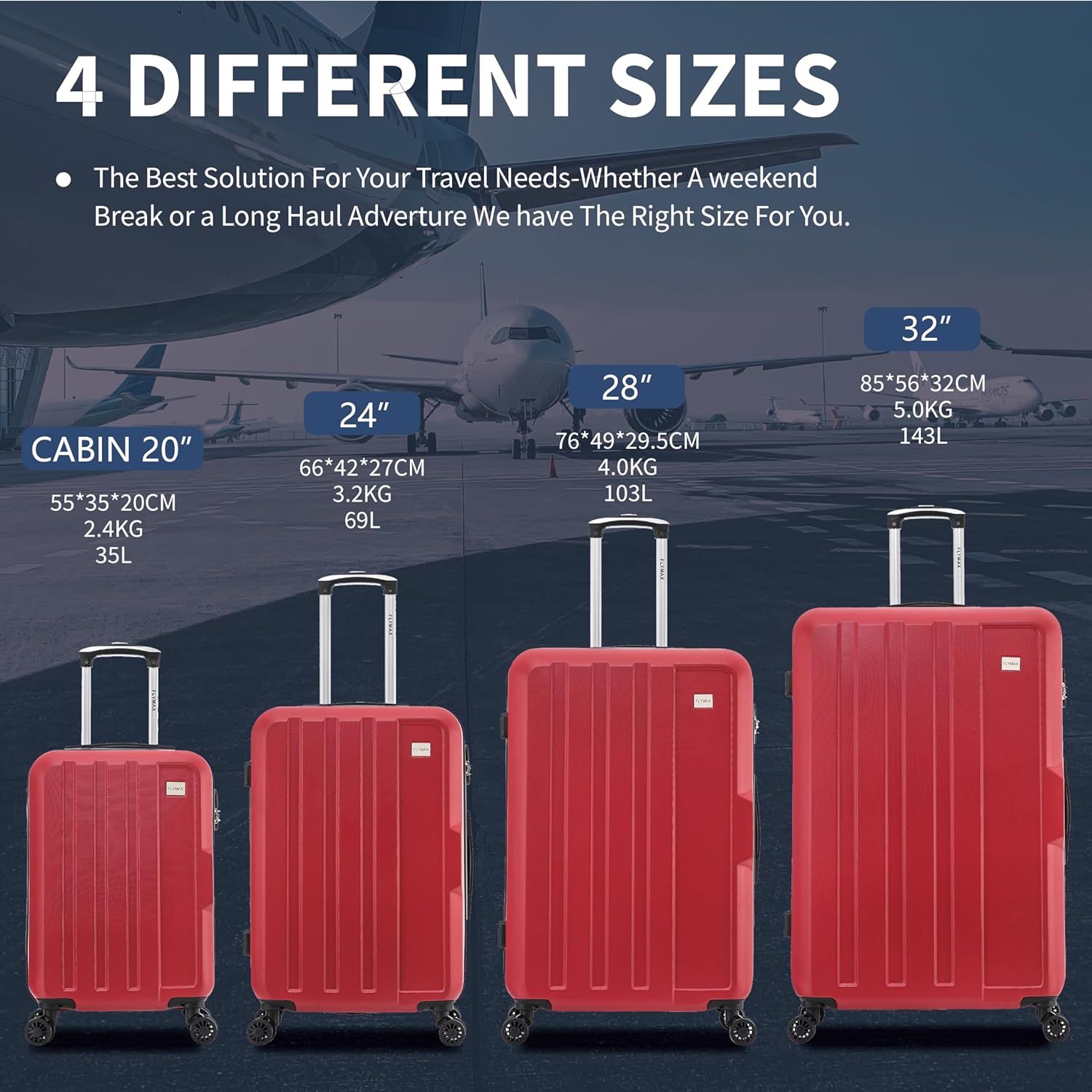
A 32-inch suitcase may measure about 32 x 13 x 11 inches. That adds up to 56 linear inches. However, sizes vary by brand, so a “32-inch suitcase” is not always the same size in practice.
For most airlines, the standard checked baggage limit is 62 linear inches. To calculate linear inches, add:
- Length
- Width
- Height
For example:
• A suitcase measuring 30 x 20 x 12 inches equals 62 linear inches.
• A suitcase measuring 32 x 14 x 13 inches equals 59 linear inches.
• A suitcase measuring 32 x 16 x 14 inches equals 62 linear inches.
A very large suitcase may exceed 62 linear inches. Airlines can classify it as oversized baggage, charge an extra fee, or refuse it if it exceeds their maximum size.
The practical answer to what is the biggest suitcase size is simple: 32 inches is often the largest common suitcase, but the largest airline friendly size is usually 28 to 30 inches.
Common Suitcase Sizes Explained
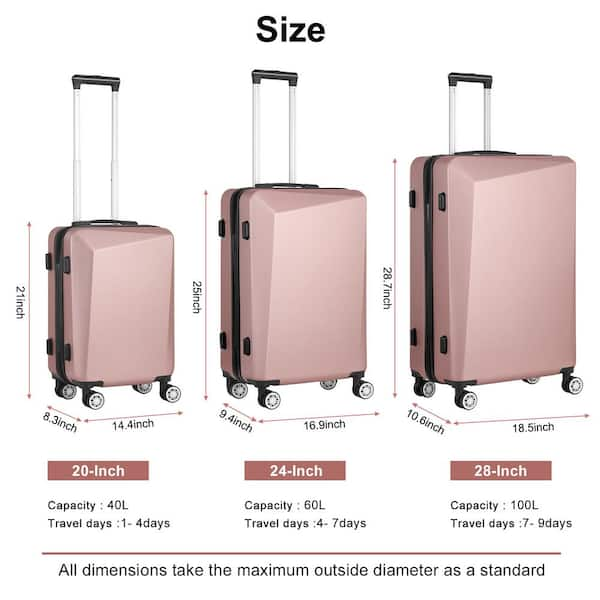
Suitcase sizes are often grouped by height. These labels are useful, but they are not perfectly standardized. One company’s 28-inch bag may be wider or deeper than another company’s 28-inch bag.
Carry-on suitcases
Carry-on bags usually measure between 18 and 22 inches tall. Many U.S. airlines use a maximum size close to 22 x 14 x 9 inches, including wheels and handles.
Carry-on rules differ by airline. Some airlines allow a larger bag, while smaller aircraft may have tighter limits. Always measure the full outside size, not only the packing area.
Medium checked suitcases
Medium bags are often 24 to 27 inches tall. They usually offer enough space for several days to one week of clothing.
This size is easy to handle and often stays below the 62-linear-inch limit. For many travelers, a 26-inch suitcase gives the best balance between storage, weight, and control.
Large checked suitcases
Large bags usually measure 28 to 30 inches. They are popular for longer trips, family travel, and bulky clothing.
A 28-inch suitcase can hold a lot without becoming too difficult to lift. A 30-inch suitcase offers more room, but it can become heavy before it is full.
Extra-large suitcases
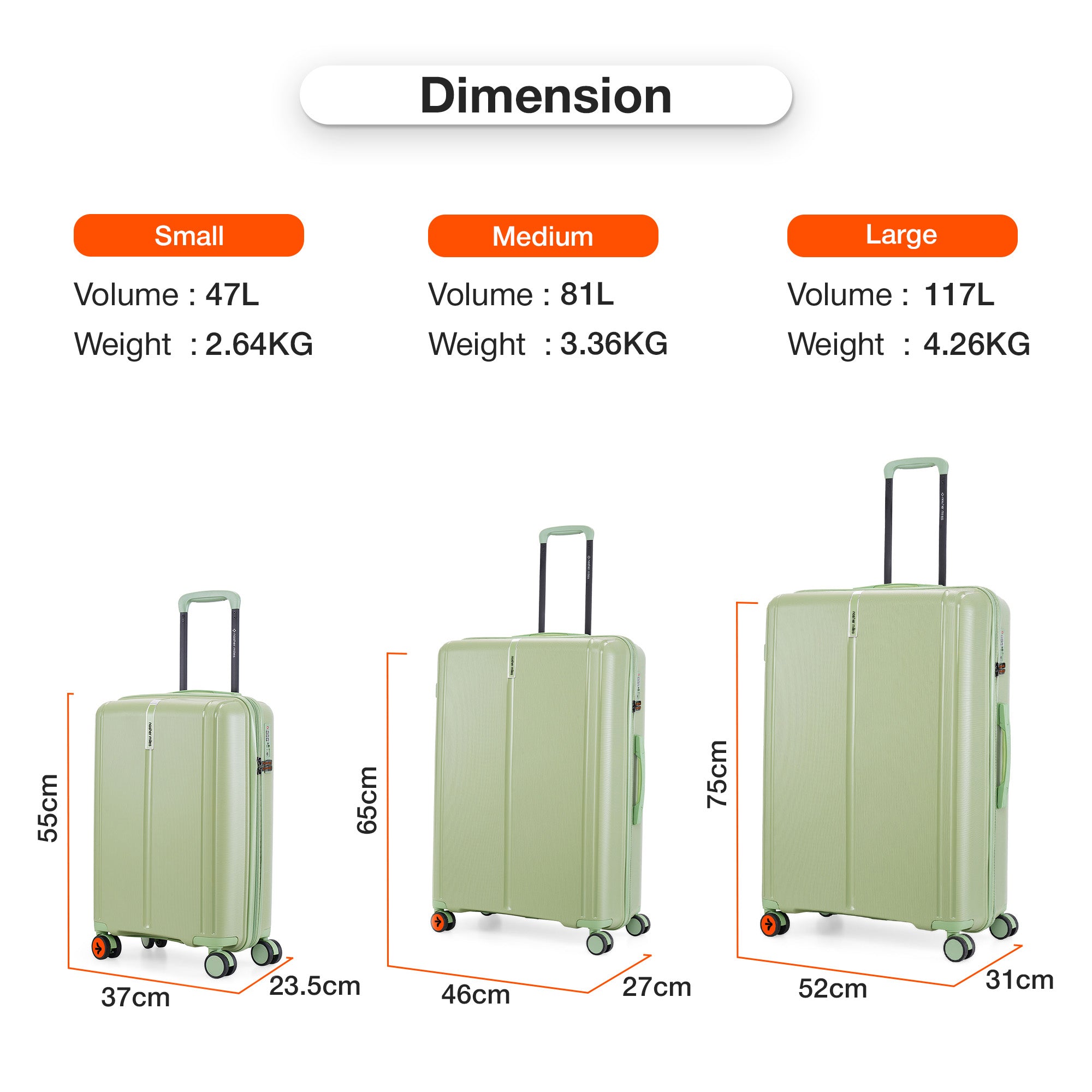
Extra-large suitcases are usually 31 to 32 inches. Some are even larger, but these bags may exceed common airline size limits.
They can work well for road trips, moving, sports equipment, or travel where baggage rules are flexible. They are less convenient for regular air travel.
How Suitcase Size Is Measured
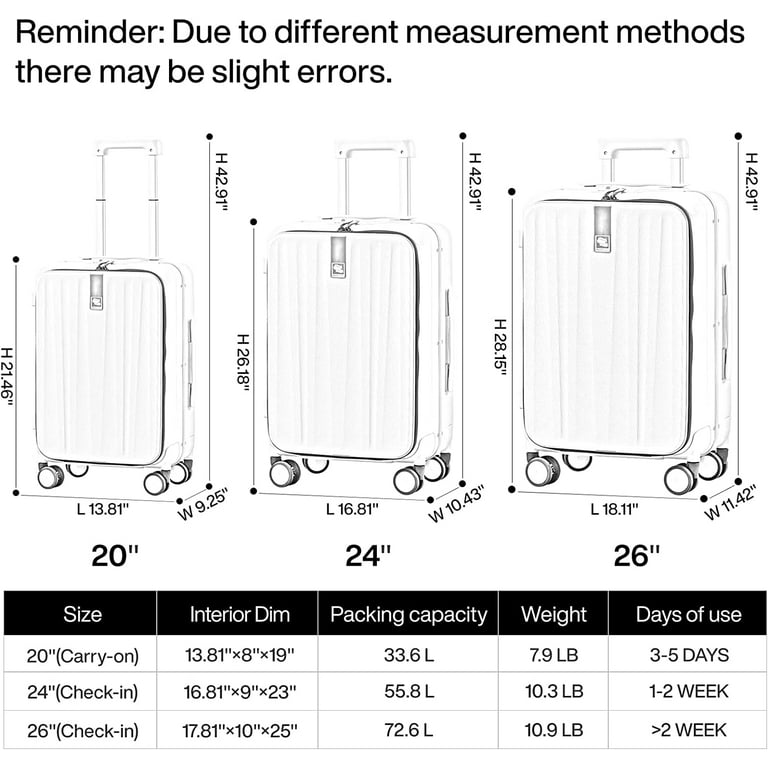
The height printed on a luggage box may not tell the full story. You should measure the suitcase from its widest and longest points.
Include these parts:
• Wheels
• Fixed handles
• Side handles
• Exterior pockets
• Hard shell curves
• Expandable sections when open
Some luggage brands list packing dimensions. These exclude wheels and handles. Airlines usually care about the total outside dimensions, so this difference matters.
To find the linear size, use this formula:
Length + width + height = total linear inches
For example, a bag measuring 30 x 19 x 13 inches has 62 linear inches. A bag measuring 32 x 20 x 14 inches has 66 linear inches and may be oversized.
This is one reason the answer to what is the biggest suitcase size cannot rely on the number printed on the suitcase alone. Two bags with the same height can have very different airline measurements.
Is a 32-Inch Suitcase Allowed on an Airplane?
A 32-inch suitcase may be allowed as checked baggage, but it is not automatically accepted as a standard checked bag. The answer depends on its full dimensions and your airline’s policy.
Many airlines use 62 linear inches as the standard checked bag limit. Bags above that size may face an oversized fee. Some airlines also set a hard maximum, often near 80 linear inches, though policies vary by route and carrier.
Weight is another major concern. A large suitcase can hold far more than the usual 50-pound checked baggage limit. If the bag weighs too much, you may need to remove items, pay an overweight fee, or repack it.
Before flying, check:
- The airline’s checked baggage size limit
- The maximum weight
- Oversized baggage charges
- Whether the route has special rules
- Whether the airline accepts bags above its normal limit
A 32-inch bag is most useful when you know the rules before arriving at the airport. The check-in counter is a poor place to discover that your suitcase is too large.

What Size Suitcase Is Best for Most Travelers?
For most air travelers, a 26 to 28-inch suitcase is the safest choice. It offers useful packing space while remaining easier to lift, roll, and fit within common airline limits.
A 24 to 26-inch bag works well for:
• One-week vacations
• Travelers who pack lightly
• Trips with easy laundry access
A 27 to 28-inch bag works well for:
• Trips lasting one to two weeks
• Cold-weather clothing
• Couples sharing one checked bag
• Travelers who need extra shoes or equipment
A 30 to 32-inch bag may suit:
• Long international trips
• Family travel
• Bulky winter clothing
• Moving personal items
• Road travel
The biggest suitcase size is not always the best suitcase size. More space can encourage overpacking. It can also make the suitcase heavy, awkward, and expensive to check.
A smaller bag acts like a helpful fence. It limits what you bring and often makes the trip easier.
Advantages of a 32-Inch Suitcase
An extra-large suitcase has clear benefits when used in the right setting.
More packing space
A 32-inch bag can hold bulky jackets, boots, gifts, and other large items. It may replace two smaller bags for some travelers.
Useful for family travel
Parents may use one large suitcase for children’s clothes, diapers, toys, and shoes. This can simplify packing and reduce the number of bags to track.
Good for long trips
If you will travel for several weeks, a larger suitcase may give you more comfort. This is especially true when you need different clothes for changing weather.
Helpful for moving
An extra-large case can transport bedding, soft goods, and personal items when you are moving between homes or countries. It is also useful when traveling by car or train.
Easier organization
Large luggage can provide room for packing cubes, shoe bags, and laundry pouches. Good organization can make a large case feel less like a closet and more like a neat drawer.

Disadvantages of the Biggest Suitcase Size
The biggest suitcase size also creates practical problems.
It can become overweight
A 32-inch suitcase can hold more than 50 pounds. Many airlines use 50 pounds as the standard economy baggage weight limit. Overweight fees can cost more than the suitcase itself.
It may exceed airline limits
A large bag can pass the height limit but fail the linear-inch rule. Oversized baggage charges vary, and some flights have stricter limits.
It is harder to move
Large suitcases are difficult to lift into a car trunk, hotel room, train luggage rack, or airport shuttle. Stairs can turn a simple transfer into a tiring task.
It may be less durable
A wide suitcase receives more stress on its wheels, corners, zipper, and frame. If it is packed heavily, the wheel system may wear faster.
It can be difficult to store
A 32-inch case may not fit well in a small closet. It may also be too large for some hotel luggage racks and compact rental cars.
It increases the risk of overpacking
Extra space often feels like an invitation. Many travelers fill it with items they do not really need.
How to Choose the Right Large Suitcase
Choosing the right large suitcase requires more than looking for the biggest interior.
Check the outside dimensions
Measure the bag yourself if the listed dimensions are unclear. Include wheels, handles, and pockets.
Compare the empty weight
A heavy suitcase leaves less room for your belongings. A lightweight 28-inch case may carry nearly as much as a heavier 30-inch case while staying below the weight limit.
Look for strong wheels
Four spinner wheels make movement easy on smooth floors. Two-wheel designs may perform better on rough sidewalks and uneven ground.
Inspect the handle
The telescoping handle should feel firm and should lock at more than one height. A loose handle can make a large suitcase hard to control.
Choose useful expansion
An expandable suitcase gives you extra room, but opening the expansion panel may push the bag beyond airline limits. Treat expansion space as a backup, not a reason to overpack.
Consider the shell material
Hard-shell luggage protects fragile items and resists moisture. Soft-sided luggage often offers more flexible storage and outside pockets.
Review the warranty
A strong warranty can help with manufacturing problems involving wheels, handles, zippers, and frames. Read the exclusions before buying.
Match the bag to your trip
A road trip, cruise, and international flight may require different luggage. The biggest suitcase size is useful only when the travel method can handle it.
Packing Tips for a Very Large Suitcase
A large bag needs a plan. Without one, clothes shift, shoes crush items, and the case becomes heavier than expected.
Use these methods:
-
Place shoes along the edges of the suitcase.
-
Put heavy items near the wheels and bottom.
-
Use packing cubes to separate outfits.
-
Roll soft clothing to save space.
-
Fold structured items to reduce wrinkles.
-
Put toiletries in sealed bags.
-
Keep fragile goods in the center.
-
Leave a little space for souvenirs.
-
Weigh the suitcase before leaving home.
-
Remove items that you packed “just in case.”
A luggage scale is one of the most useful travel tools you can own. Weigh the bag after it is fully packed, and then weigh it again after adding gifts or purchases.
One practical lesson is worth remembering: never pack a large suitcase to its maximum physical capacity. You may need space for expansion, airport repacking, or items that do not compress well.
Airline Rules and Oversized Baggage
Airline baggage rules are not universal. They may change based on the airline, ticket type, destination, aircraft, and frequent flyer status.
Many U.S. carriers use these general limits:
• Standard checked bag size: about 62 linear inches
• Standard checked bag weight: often 50 pounds in economy
• Overweight range: commonly above 50 pounds and below a higher safety limit
• Oversized range: often above 62 linear inches
These figures are common guidelines, not a promise. Some airlines charge separate fees for size and weight. Others may not accept very large bags on small aircraft or certain routes.
The U.S. Department of Transportation requires airlines to publish baggage policies, but each airline sets its own fees and conditions within applicable rules. The safest approach is to review the current baggage page for your exact flight.
Do not rely on a luggage store label that says “airline approved.” That phrase may refer to general design, not approval by every airline.
Biggest Suitcase Size for International Travel
International travel often makes suitcase size more complicated. Airlines may use inches, centimeters, or a combined dimension limit.
A common international checked baggage limit is close to 158 centimeters, which equals about 62 linear inches. Some airlines use a different allowance, especially on economy, premium economy, business, or long-haul tickets.
For an international trip, check:
• The operating airline, not only the booking website
• Each flight segment
• The baggage allowance for your fare
• Weight limits in kilograms
• Transit airport rules
• Fees for oversized or overweight luggage
A suitcase that is accepted on one flight may cause a problem on another. This can happen when separate airlines operate a connecting itinerary.
For most international travelers, a 26 to 28-inch suitcase is easier to manage. It usually gives enough space without pushing the outer limits of size and weight.
Biggest Suitcase Size for Cruises and Road Trips
Cruise lines often have different luggage needs from airlines. A large suitcase may work well because porters handle the bags and cabins often have space under the bed.
Still, cruise cabins can be small. Two medium bags may fit better than one huge case. Check the cruise line’s limits for luggage count, size, alcohol, and prohibited items.
Road trips offer the most freedom. A 30 or 32-inch suitcase can be useful when your vehicle has enough trunk space. You also avoid most airline size and weight fees.
Train travel falls between air and road travel. Some trains have tight luggage racks or narrow aisles. A very large suitcase may be legal but difficult to store.
The best answer to what is the biggest suitcase size changes with the journey. A bag that feels perfect in a car may feel frustrating in a crowded train station.
Common Mistakes to Avoid
Travelers often focus on capacity and forget control. These mistakes can create stress before the trip begins.
Buying by height alone
A suitcase marked 32 inches may exceed the airline’s linear measurement once wheels and handles are included. Check all three dimensions.
Ignoring empty weight
A large case that weighs 15 pounds empty gives you less packing room under a 50-pound limit.
Trusting the expansion zipper
Expanded luggage can become too deep for standard airline limits. Measure it in the form you plan to use.
Waiting to weigh the bag
Airport scales can reveal a problem when it is too late to pack calmly. Weigh the case at home.
Using one huge case for two people
One large suitcase may be harder to lift and more difficult to manage than two medium bags. It also creates a bigger problem if the airline delays it.
Packing without a backup plan
Keep medication, documents, valuables, electronics, and one change of clothes in your personal item or carry-on. Checked luggage can be delayed.
How to Find the Biggest Suitcase Size You Can Safely Use
Use this simple process before buying or packing.
-
Find your airline’s baggage page.
-
Check the maximum linear dimensions.
-
Check the weight limit for your ticket.
-
Measure the suitcase from its outermost points.
-
Weigh the empty suitcase.
-
Pack it and weigh it again.
-
Leave room below the limit for measurement differences.
-
Confirm the rules for every airline on your route.
If your bag is close to the limit, choose a smaller model. Airline staff may measure luggage differently, and soft bags can bulge when packed.
A safe target is often a suitcase below 62 linear inches and below the weight limit by a small margin. This gives you room for imperfect scales and last-minute additions.
Frequently Asked Questions About What Is the Biggest Suitcase Size
Is a 32-inch suitcase the biggest suitcase size?
A 32-inch suitcase is usually the largest common suitcase sold for general travel. Some brands make larger bags, but they may exceed airline size limits and become difficult to handle.
Is a 30-inch suitcase too big for checked baggage?
Not always. A 30-inch suitcase may fit within the 62-linear-inch limit if its width and depth are modest, so measure the full outside dimensions before flying.
What is the largest suitcase size allowed on most airlines?
Many airlines use 62 linear inches as the standard maximum for checked baggage. Bags above that size may be accepted with an oversized fee, but the exact rule depends on the airline and route.
Can a 32-inch suitcase weigh less than 50 pounds?
Yes, but only if you pack carefully and use a lightweight model. Its large capacity makes it easy to exceed the common 50-pound economy baggage limit.
Is a 28-inch suitcase better than a 32-inch suitcase?
For many air travelers, yes. A 28-inch suitcase usually offers strong capacity while being easier to keep within airline size and weight rules.
How do I measure suitcase size for an airline?
Measure the outside length, width, and height, including wheels, handles, and pockets. Add the three numbers to calculate linear inches.
Can I use a large suitcase as a carry-on?
No. A 30 or 32-inch suitcase is far too large for normal carry-on rules. Large suitcases must usually be checked.
Conclusion
The biggest suitcase size commonly available is about 32 inches, but the best choice for air travel is often 26 to 28 inches. A suitcase’s true size includes its wheels, handles, and pockets, so always calculate the full linear dimensions.
Before your next trip, check the airline’s current rules, weigh your packed bag, and choose space you can control. The right suitcase is not the one that holds the most; it is the one that gets you there without extra fees or unnecessary stress. Explore your airline’s baggage policy today, then share your favorite suitcase size and packing tip.

Zayden Halbrook is a travel enthusiast and gear researcher passionate about making every journey smoother and more enjoyable. With a keen eye for practical travel essentials and real-world tips, he helps readers choose the right gear and travel smarter. When he’s not testing travel kits or exploring new destinations, Zayden shares simple, reliable advice to make every trip stress-free.