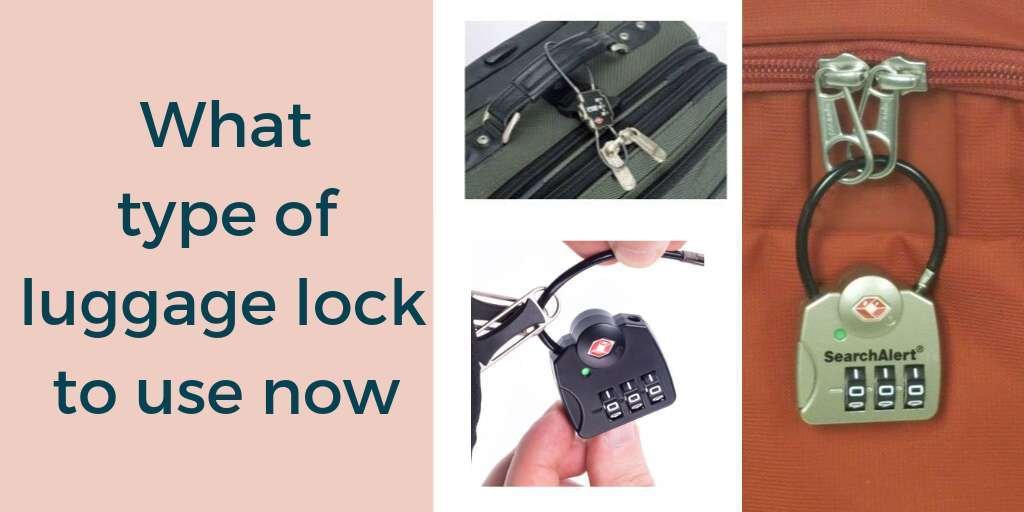
For travelers flying from U.S. airports, the best luggage lock is usually a TSA-recognized combination lock with a strong body, a simple reset process, and a shackle that fits your bag’s zipper pulls. You do not need a lock for every trip, and the Transportation Security Administration (TSA) does not require one. However, the right lock can help deter casual access while allowing authorized airport screening when needed.
The key choice is where you will use the lock:
- Checked luggage: Choose a TSA-recognized lock.
- Carry-on luggage: A standard combination lock may work, but check the rules for your airline and destination.
- Hostels, gyms, and lockers: A small keyed or combination padlock is often enough.
- International travel: Select a lock recognized by screening agencies in the countries you visit, not only in the United States.

Quick answer: Which luggage lock should you choose?
For most U.S. air travelers, choose a TSA-recognized, resettable combination lock made from metal or reinforced materials. A three-digit model is compact and easy to use. A four-digit model offers more possible combinations and may be a better choice if you want added resistance to casual guessing.
Look for these features:
- A Travel Sentry or Safe Skies recognition mark
- A combination you can reset without special tools
- A shackle that fits through both zipper pulls
- A body that does not feel loose or fragile
- Clear instructions printed by the manufacturer
- A design that is easy to open in low light or while traveling
A lock is a deterrent, not a guarantee. It will not stop every form of theft, and airport screeners may open, inspect, cut, or remove it if required.
What does “TSA-approved” mean?
“TSA-approved” is common shopping language, but TSA-recognized is more precise. A TSA-recognized luggage lock has a screening mechanism that authorized personnel can use to open the lock without breaking it in ordinary circumstances.
The TSA does not endorse one brand as the best. It recognizes certain lock systems and marks. Travel Sentry locks usually display a red diamond symbol. Safe Skies locks use a red torch symbol. Check the current marks and guidance on the official TSA travel security page.
A TSA-recognized lock does not mean:
- TSA will never open your bag.
- The lock is theft-proof.
- The lock is approved for every country.
- Your bag will receive special handling.
- The lock will always be returned in perfect condition.
The practical benefit is simple: if your checked bag needs inspection, an authorized screener may be able to open and relock it instead of cutting a regular lock.
The TSA does not require passengers to lock checked luggage. If you use a lock that screeners cannot open, the lock may be cut or removed during inspection.
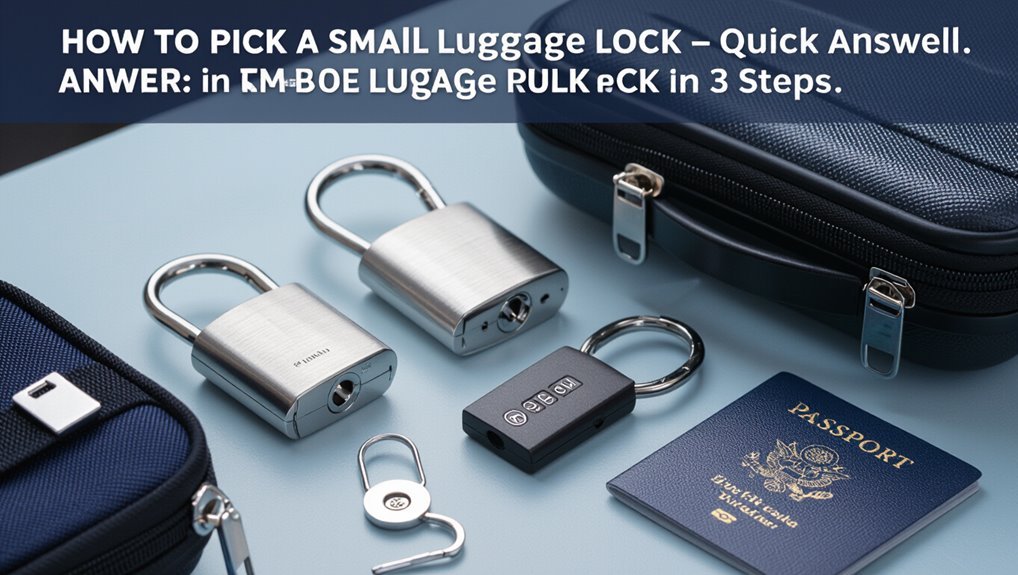
Compare the main types of luggage locks
The best lock type depends on how you travel, how often you use it, and how much convenience you want.
| Lock type | Best for | Main benefit | Main limitation |
|---|---|---|---|
| Three-digit combination lock | Most travelers | Easy to use and no key to lose | Fewer combinations than a four-digit model |
| Four-digit combination lock | Frequent travelers | More possible codes | Slightly slower to set and use |
| Keyed padlock | Lockers and personal bags | Simple design and no code to remember | You must protect the key |
| Cable lock | Bags with awkward zipper pulls | Flexible fit | The cable may be easier to cut than a solid shackle |
| Smart or Bluetooth lock | Tech-focused travelers | App features and activity alerts on some models | Battery, app, and airline-rule concerns |
| Built-in suitcase lock | Matching luggage | Clean design and no loose lock | It may be harder to replace or repair |
Combination locks
Combination locks are usually the easiest choice for checked bags. You do not have to carry a key, and you can set the code to something memorable.
A three-digit lock has 1,000 possible combinations, from 000 through 999. A four-digit lock has 10,000 possible combinations. These figures describe the number of codes, not the lock’s real-world security. A weak lock can still be vulnerable if its parts are poorly made.
Choose a four-digit model if you travel often or want more resistance to casual code guessing. Choose a three-digit model if small size and quick use matter most.
Keyed locks
A keyed lock can be reliable and simple. It may suit a gym locker, backpack, or personal suitcase that will not go through airport screening.
For checked baggage in the United States, a normal keyed lock can create a problem. If the screener cannot open it, the lock may be cut. If you prefer a keyed lock, select one designed for authorized airport access and verify the recognition mark.
Cable locks
Cable locks work well when zipper pulls, cases, or compartments do not line up with a traditional shackle. The cable bends around the bag and can pass through several zipper pulls.
Their trade-off is strength. A thin cable may be easier to cut than a thick metal shackle. Use one when flexibility matters more than maximum resistance to forced entry.
Smart locks
Smart luggage locks may use Bluetooth, a phone app, a fingerprint sensor, or a hidden backup key. They can be useful for travelers who want alerts or do not like memorizing codes.
They also add failure points. A dead battery, lost phone, app problem, or damaged sensor can prevent access. Before using one on checked luggage, confirm that it has a manual opening method and the required airport-recognition system.
How to choose the right luggage lock step by step
Use this sequence before buying a lock. It helps you avoid paying for features that do not match your bag or trip.
1. Decide where the lock will be used
Start with the bag and travel setting.
- For checked luggage, prioritize airport recognition.
- For a carry-on, prioritize size and quick access.
- For a backpack, check whether the zipper pulls have lockable holes.
- For a hard-shell case, confirm that the lock can reach both closure points.
- For a locker, measure the opening before buying.
A lock that fits a suitcase may be too large for a gym locker. A small lock may not reach two wide zipper pulls.
2. Check whether the lock is recognized for airport screening
Look for a current recognition symbol on the product and its packaging. Do not rely only on a product title that says “TSA-approved.”
Check:
- The symbol itself
- The lock maker’s instructions
- The current TSA guidance
- Whether the lock is intended for checked baggage
- Whether the lock has a visible keyhole or screening port for authorized access
Recognition systems and product models can change. Verify the mark before purchase, especially if the product is old, imported, or sold by an unknown seller.
3. Measure the zipper pulls or latch
Fit matters more than many shoppers expect. The shackle must pass through both zipper holes and close fully.
Measure:
- The diameter of each zipper-pull hole.
- The distance between the holes when they meet.
- The space above the holes.
- The thickness of the hard case latch, if applicable.
A shackle that is too thick will not fit. One that is too short may not close around both pulls. A cable lock gives you more room when the zipper layout is unusual.
4. Choose a combination style
Pick a three-digit model for basic travel use. Pick four digits if you want more possible combinations.
Avoid codes based on:
- Your birth year
- Your address
- A repeated number
- The last four digits of your phone number
- A number printed on your luggage tag
Use a code you can recall but that another person cannot easily infer.
5. Check the reset method
Read the instructions before setting the lock. Reset systems vary. Some use a small lever, a button, or a shackle-turn position.
A good reset process should:
- Require the current combination before changing the code
- Give clear instructions
- Avoid tiny parts that are easy to lose
- Work without unusual force
- Leave the new code set firmly
Set the code at home, not at the airport gate. Test the lock several times before packing.
6. Inspect build quality
A luggage lock does not need to be massive. It should, however, feel solid and operate smoothly.
Look for:
- A shackle that does not wobble excessively
- Buttons and wheels that move without sticking
- A body with no sharp edges
- A latch that closes completely
- A reset mechanism that does not move by accident
- Corrosion-resistant metal or a protected finish
A heavier lock is not automatically stronger. Weight can add bulk without improving the parts that matter.

What makes a luggage lock secure enough?
A luggage lock should mainly deter casual access. It cannot provide the same protection as a high-security door lock because luggage can be cut, opened around, damaged, or removed.
Security depends on several parts:
The shackle
The shackle is the metal loop or cable that passes through the zipper pulls. A thicker shackle may resist cutting better, but it must still fit the bag.
The lock body
The body holds the internal mechanism. A strong body with a weak shackle is still a weak lock. Look for tight construction and smooth operation.
The combination mechanism
A combination lock can be defeated if its wheels are loose or its release button is poorly made. Do not assume that four digits always means better physical security.
The luggage itself
Zipper locks do not prevent someone from cutting the fabric or opening the bag beside the zipper. A lock protects the zipper pulls, not the whole suitcase.
Your travel habits
Keep valuable items, medicine, identification, and electronics in your carry-on when allowed. A luggage lock should support good packing habits, not replace them.
Should you use a luggage lock on a carry-on bag?
You can use one if the lock fits and does not slow you down during screening. A carry-on may be opened at a security checkpoint, so a lock that cannot be opened by the screener can cause delays or removal.
A small TSA-recognized combination lock is the simplest option. You can also use zipper pulls with built-in locking holes, but test them before travel.
Before departure, check:
- Your airline’s carry-on rules
- TSA rules for your destination and route
- Whether the lock blocks access to required documents
- Whether you can open it quickly when asked
Never place required identification, medication, or urgent travel documents inside a locked checked bag.

Common mistakes when choosing or using a luggage lock
Avoiding basic errors often matters more than buying an expensive lock.
Choosing a lock that does not fit
A lock can be well made and still be useless if the shackle cannot pass through the zipper pulls. Test the fit before your trip.
Forgetting the combination
Write the code in a secure place before leaving. Do not attach the code to the lock or place it on the luggage tag.
Setting the code incorrectly
Many locks require the shackle to be turned or a reset button to be held. Follow the instructions exactly. After resetting, scramble the wheels and reopen the lock several times.
Using a non-recognized lock on checked baggage
The lock may be cut during screening. Use a recognized model or leave the bag unlocked if you are comfortable doing so.
Buying based only on the lowest price
Very cheap locks may have stiff wheels, fragile shackles, or unclear reset instructions. Price alone does not prove quality, but unclear construction and poor instructions are warning signs.
Assuming a lock prevents theft
A lock is a visible barrier. It is not a vault. Do not pack high-value items in checked luggage simply because the bag is locked.