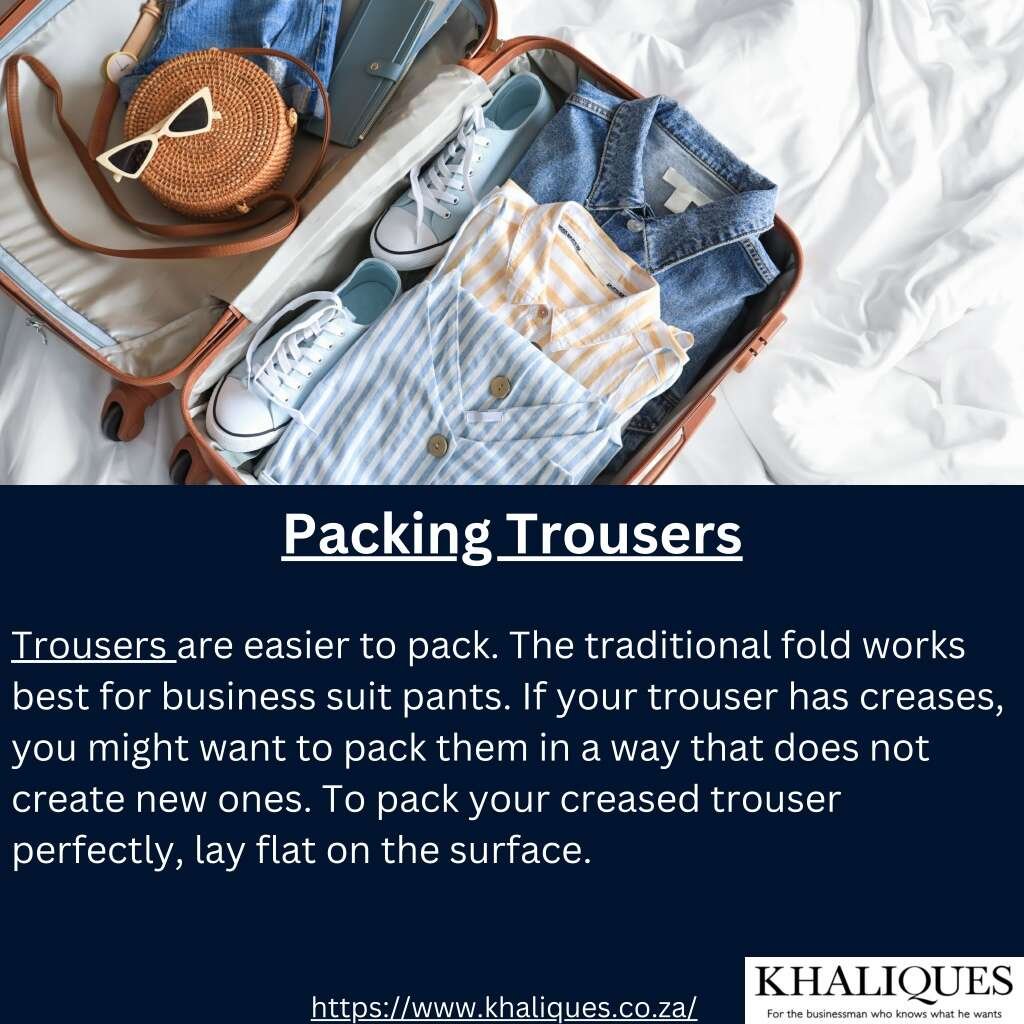
The best way to pack trousers in a suitcase is to fold them along their natural seams, place them near the top of your bag, and avoid tight pressure. For most U.S. trips, this method works well for jeans, chinos, dress pants, and casual trousers. Use a garment folder or dry-cleaning bag when you need extra crease control.
Packing trousers well is not hard. The key is to reduce sharp folds, keep heavy items away from delicate fabric, and leave enough room for the trousers to lie flat.

What You Need Before Packing Trousers
Before you pack, check the fabric, the trip length, and the type of luggage you will use. Cotton chinos, denim jeans, wool dress pants, and linen trousers each react to folds in different ways.
You will need:
- A clean, dry suitcase
- A flat packing surface
- One or more packing cubes, if you use them
- Tissue paper or thin clothing paper for dress trousers
- A garment folder for business clothes, if available
- A small laundry bag for worn clothes
Do not pack damp trousers. Moisture can lead to odor, mildew, and deeper creases. Empty the pockets, close zippers, and fasten buttons before folding.
For U.S. air travel, check your airline’s current carry-on and checked-bag size rules before you pack. Bag limits can differ by airline, ticket type, and route.

The Best Way to Fold Trousers in a Suitcase
The basic fold is the best choice for most trousers. It keeps the fabric aligned and limits the number of hard creases.
Standard fold for jeans, chinos, and casual trousers
- Lay the trousers flat on a bed or table.
- Close the zipper and button.
- Shake the trousers once to remove loose wrinkles.
- Match the legs so the outer seams line up.
- Fold the trousers in half lengthwise.
- Smooth the fabric with your hands.
- Fold the trousers once across the knees or lower legs.
- Place them flat in the suitcase.
For thick jeans, one crosswise fold is often enough. Extra folds create more pressure points and may leave visible lines.
How to fold dress trousers
Dress trousers often have a clear pressed crease. Use that crease as your guide.
- Hold the trousers by the waistband.
- Let the legs hang so the fabric falls into place.
- Match the waistband, seams, and existing crease.
- Lay the trousers flat.
- Fold them lengthwise along the crease.
- Place a sheet of tissue paper between large folded areas.
- Fold once across the middle, unless the suitcase is too small.
- Put the trousers on top of softer clothing.
The goal is not to remove every fold. The goal is to keep folds wide, smooth, and aligned.
The lay-flat method for fewer wrinkles
If your suitcase has room, lay trousers across the full width of the bag. Place the waistband near one side and let the legs extend toward the other side. Add other clothing, then fold the legs over the top layer.
This method creates fewer sharp bends than a small square fold. It works especially well for wool trousers, linen pants, and tailored clothing.

Should You Roll or Fold Trousers?
Fold trousers when crease control matters. Roll trousers when saving space matters more than a smooth finish.
Rolling works best for:
- Stretch pants
- Travel pants
- Soft cotton trousers
- Sweatpants
- Pajama bottoms
- Casual synthetic-blend pants
Folding works best for:
- Suit trousers
- Wool pants
- Linen trousers
- Pleated trousers
- Pressed dress pants
- Structured or tailored clothing
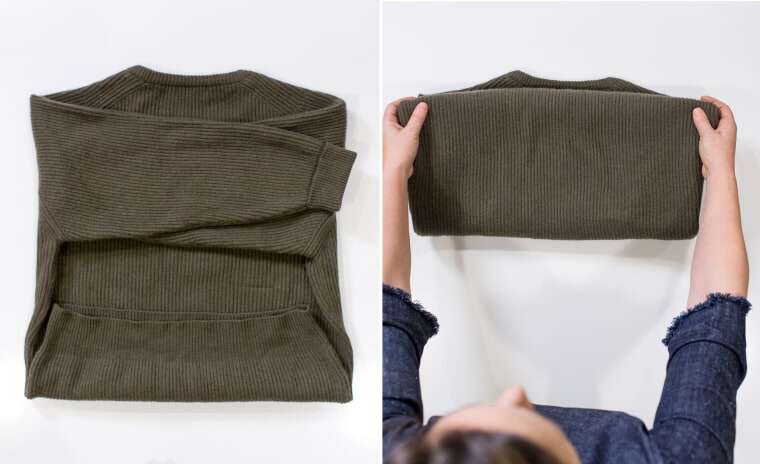
To roll trousers, fold them lengthwise first. Then roll from the cuffs toward the waistband with light, even pressure. Do not make a tight roll. A loose roll reduces hard lines and makes the fabric easier to unpack.
A common mistake is rolling thick denim or formal trousers tightly to save a small amount of space. This can create a firm cylinder that presses wrinkles into the cloth.
Quick packing decision table
| Trousers | Best method | Main reason |
|---|---|---|
| Jeans | Fold or loose roll | Thick fabric hides small creases |
| Chinos | Fold | Keeps the legs smooth |
| Wool dress pants | Fold along the crease | Protects the pressed shape |
| Linen pants | Loose fold or lay flat | Limits sharp lines |
| Stretch travel pants | Loose roll | Saves space |
| Suit trousers | Lay flat or use a garment folder | Reduces deep creases |
| Sweatpants | Roll | Soft fabric handles rolling well |
The right method depends on the fabric and the event. A beach trip allows more flexibility than a wedding, interview, or business meeting.

Step-by-Step: How to Pack Trousers in a Carry-On
Use this order when packing a U.S. carry-on suitcase. It keeps trousers protected while leaving room for shoes, toiletries, and smaller items.
1. Plan the outfits
Decide which trousers you will wear more than once. Neutral colors such as black, navy, gray, khaki, and denim often work with several tops.
Do not pack one pair for every day unless the trip requires it. For a short trip, two or three pairs may cover several outfits, depending on weather and activities.
2. Pack shoes first
Place shoes near the wheels or along the suitcase edges. Put each shoe in a shoe bag or clean plastic bag. This keeps dirt away from clothing.
Fill the inside of shoes with socks, belts, or small items. Do not use hard objects that could stretch or mark the shoe.
3. Add heavy clothing
Place jeans, sweaters, and jackets near the bottom or wheel end of the suitcase. Heavy items can press into lighter trousers if you place them on top.
Keep sharp buckles, hard toiletry cases, and shoe soles away from dress pants.
4. Add folded trousers
Lay folded trousers flat over the main clothing layer. If you must stack them, place the least delicate pair at the bottom and dress trousers near the top.
Alternate the direction of the waistbands in a stack. This can reduce one large lump at one end of the suitcase.
5. Use the suitcase straps
Fasten the built-in straps over the clothing without pulling them too tightly. The straps should hold items in place, not crush them.
If the straps leave deep lines, place a thin shirt or towel between the strap and the trousers.
6. Fill gaps carefully
Use socks, underwear, or soft shirts to fill empty spaces. Avoid forcing items into gaps. Uneven pressure can create wrinkles that are harder to remove.
7. Close the suitcase without force
If the suitcase will not close easily, remove one item or rearrange the layers. Do not sit on the case or pull the zipper over an overfilled bag. Excess pressure can damage both the clothing and the suitcase.

How to Pack Suit Trousers With a Jacket
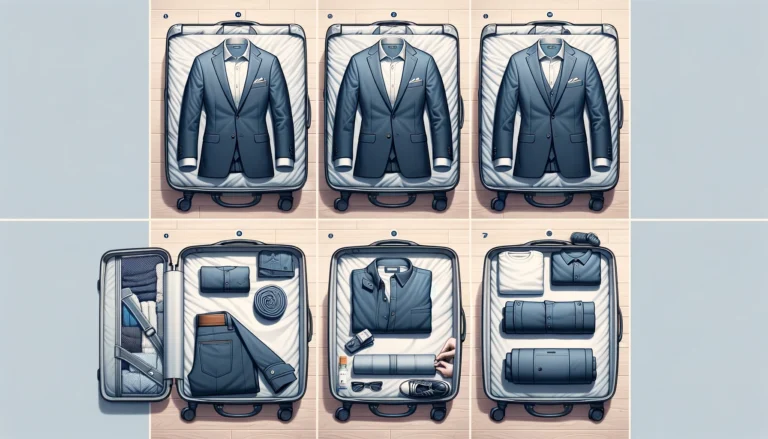
Pack suit trousers with care because sharp creases can show quickly on tailored fabric. If possible, use a garment bag or a suitcase with a built-in suiter section.
If you use a regular suitcase:
- Turn out the pockets.
- Close the fly and button.
- Match the leg seams.
- Align the pressed crease.
- Fold the trousers lengthwise.
- Wrap them in tissue paper or place them in a thin garment bag.
- Lay them on top of other clothing.
- Add the suit jacket last, if the suitcase allows.
Do not place shoes, belts, or toiletry bags on top of suit trousers. Hard edges can leave marks.
For a full suit, a garment bag may protect the shape better than a tightly packed suitcase. Check your airline’s current carry-on policy before bringing a separate garment bag, since baggage rules vary.
Packing trousers for a wedding or business trip
Pack the trousers several hours before leaving. This gives you time to inspect the fabric and change your method if the suitcase is too full.
When you arrive, remove the trousers right away. Hang them from the waistband or belt loops, smooth them by hand, and let gravity relax small folds. For major wrinkles, use a hotel iron, steamer, or laundry service according to the care label.

How to Pack Linen Trousers Without Making Them Worse
Linen wrinkles easily. The goal is not to keep linen perfectly smooth. The goal is to create soft, natural folds instead of sharp, pressed lines.
Use this method:
- Lay the linen trousers flat.
- Smooth them gently without stretching the fabric.
- Fold them lengthwise along the seams.
- Add one wide crosswise fold.
- Place them above heavy clothing.
- Remove them soon after arrival.
- Hang them in a bathroom while a warm shower runs, if the care label allows moisture exposure.
Do not tightly roll linen trousers. A loose roll may work for casual linen, but a tight roll can leave many small creases.
Linen blends may resist wrinkles better than pure linen, but the label and fabric construction matter more than the name alone.

How Many Pairs of Trousers Should You Pack?
Pack based on trip length, weather, activities, and access to laundry. More trousers also mean more weight and less space.
A simple guide:
| Trip length | Typical number of trousers |
|---|---|
| Weekend | 1–2 pairs |
| Four to seven days | 2–3 pairs |
| One to two weeks with laundry | 3–4 pairs |
| Formal event plus casual activities | 3–4 pairs with at least one formal pair |
These are planning examples, not strict rules. A cold-weather trip may require heavier pants. A warm-weather trip may need fewer pairs but more lightweight clothing.
Choose trousers that can work with more than one top and shoe. This reduces the total number of items you need to carry.

How to Prevent Wrinkles After Packing
Good packing reduces wrinkles, but no suitcase method can prevent every crease. Fabric, suitcase pressure, travel time, and handling all affect the result.
Use these steps after you arrive:
- Unpack trousers as soon as possible.
- Hang them from a sturdy hanger.
- Smooth the legs and waistband with your hands.
- Give them time to relax before wearing them.
- Use a steamer only if the care label permits it.
- Use an iron at the correct temperature for the fabric.
- Place a clean cloth between the iron and delicate fabric when needed.
Never apply high heat to an unknown fabric. Heat can cause shine, shrinkage, melting, or permanent damage. Follow the garment care label, especially for wool, synthetic fibers, and blended fabrics.
If you do not have an iron or steamer, hang the trousers in the bathroom during a warm shower. Keep them away from direct water. Steam may soften light wrinkles, but it will not fix deep creases in every fabric.

Common Mistakes When Packing Trousers
Avoid these mistakes if you want trousers to arrive in good shape.
Folding against the natural crease
For dress trousers, folding across the existing crease can create a second line. Align the legs and use the crease already built into the garment.