Fold, roll, or layer dress shirts carefully to reduce wrinkles and protect their shape during travel.
Knowing how to pack dress shirts in suitcase can save time, money, and stress before an important meeting, wedding, or dinner. The best method depends on your shirt fabric, suitcase space, and access to a hotel iron, but a few proven steps work well in nearly every case. I have packed shirts for work trips and formal events, and the biggest lesson is simple: preparation prevents most wrinkles.

How to Pack Dress Shirts in Suitcase: Start With the Right Preparation
Good packing starts before the shirt reaches your suitcase. A clean, dry, fully pressed shirt is easier to pack and less likely to develop deep creases.
Use a flat surface, such as a bed or table. Make sure the surface is clean and free from crumbs, dust, or moisture.
Before folding, check each shirt for:
• Stains or food marks that may become harder to remove later
• Damp areas from washing or steam
• Loose buttons or damaged seams
• Wrinkles that should be removed before packing
If the shirt is damp, let it dry first. Trapped moisture can create a musty smell and may weaken some fabrics over time.
Fasten the top button and one or two middle buttons. This helps the shirt keep its shape without making the fabric too tight. Do not button every button, because that can create stress around the placket.
For best results, pack dress shirts near the end of your packing routine. This gives them less time to sit under heavy clothing.
Choose fabrics that travel well
Some fabrics resist wrinkles better than others. Cotton dress shirts feel crisp and breathable, but they can crease more easily. Linen wrinkles quickly, while synthetic blends and wrinkle-resistant cotton often hold a smoother finish.
This does not mean you should avoid cotton or linen. It simply means you may need extra care and a quick steam after arrival.
The Best Folding Method for Dress Shirts
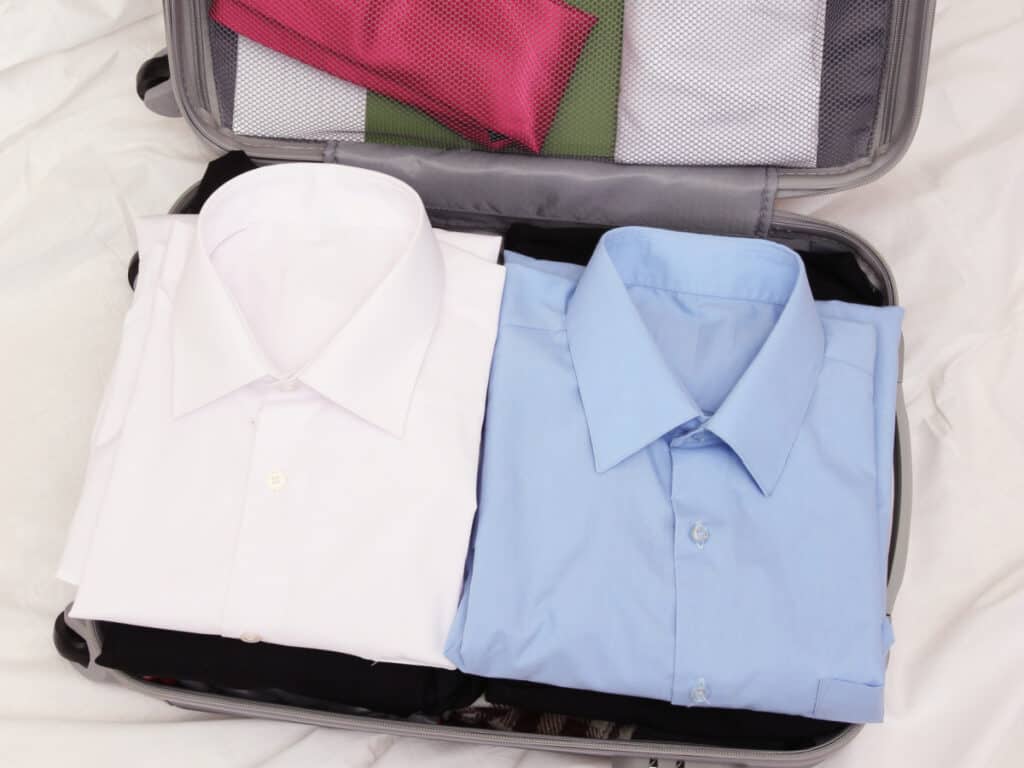
The classic fold is one of the safest methods for most travelers. It keeps the collar supported and prevents the sleeves from forming sharp, messy creases.
Follow these steps:
-
Lay the shirt face down on a flat surface.
-
Spread the collar and smooth the back of the shirt.
-
Fold one sleeve and part of the shirt inward along the shoulder seam.
-
Fold the sleeve back down in a straight line.
-
Repeat the process on the other side.
-
Fold the bottom of the shirt upward once or twice, depending on its length.
-
Turn the shirt over and gently smooth the front.
The key is to fold along natural seams. A fold placed across the middle of a sleeve can leave a strong line that is hard to remove.
Keep the collar flat. You can place a rolled pair of socks inside the collar to help it hold its shape. Avoid placing heavy objects on top of the collar.
When learning how to pack dress shirts in suitcase, many travelers fold too tightly. A firm fold is useful, but pressing down hard creates more permanent creases. Treat the shirt like a soft document, not a towel.
How to Pack Dress Shirts in Suitcase With Tissue Paper
Tissue paper creates a thin layer between parts of the shirt. This reduces friction and gives the fabric room to move as the suitcase shifts.
Place one sheet of clean tissue paper across the back of the shirt before folding. Add another sheet inside the shirt if the fabric is delicate or very prone to wrinkling.
You can also place tissue paper:
• Between the sleeves
• Across the chest
• Inside the folded collar
• Between two folded shirts
Use plain white tissue paper. Colored paper may transfer dye if it becomes damp. Avoid newspaper because ink can stain light fabrics.
A thin plastic dry-cleaning bag can also reduce friction, but it is not always the best long-term choice. Plastic can trap moisture, especially if the shirt is not fully dry. For a short trip, a breathable garment bag or packing cube is often more practical.
In my experience, tissue paper works best when the shirt is folded loosely and placed in a flat part of the suitcase. It is less useful when the suitcase is overfilled and the shirt is squeezed under shoes or toiletry bags.
The Rolling Method: When It Works and When It Does Not
Rolling saves space, but it is not ideal for every dress shirt. A tight roll can create curved wrinkles across the chest and sleeves.
If you want to roll a shirt, use a loose roll:
-
Button the collar and one or two body buttons.
-
Lay the shirt face down.
-
Fold the sleeves inward without pressing them flat.
-
Fold the shirt lengthwise once.
-
Roll from the bottom toward the collar.
-
Stop when the roll feels secure but not tight.
Place the roll near the top of the suitcase. Do not put shoes, books, or electronics on it.
Rolling may work well for wrinkle-resistant shirts, casual button-downs, and short trips. It is less suitable for formal cotton shirts, linen shirts, or shirts with a structured collar.
A helpful rule is to roll soft fabrics and fold structured fabrics. Dress shirts with stiff collars usually travel better when folded flat.
How to Pack Dress Shirts in Suitcase Without Wrinkles
Wrinkle prevention depends as much on suitcase arrangement as on folding technique. Even a perfectly folded shirt can crease if heavy items press against it.
Use these packing principles:
• Place shoes at the bottom or along the suitcase edges.
• Put heavier pants and sweaters below the shirts.
• Keep belts around the suitcase edge instead of on top of folded shirts.
• Place shirts near the top of the main compartment.
• Leave a small amount of room so the shirts are not compressed.
• Use a packing cube with a light compression feature, not extreme pressure.
A shirt folder can help maintain a flat shape. These folders usually include a thin board or panel that supports the garment. They can be useful for business trips, but they may take up more space than a simple fold.
Do not fill the suitcase to its limit. Overpacking is one of the main causes of wrinkled clothing because the fabric has nowhere to move.
For extra protection, place a lightweight sweater or clean scarf over the shirts. This creates a soft barrier without adding much weight.