Introduction
Packing an Away suitcase is easiest when you use its built-in compression system, place heavy items near the wheels, and leave space for the case to close without strain. For U.S. flights, also check your airline’s current size and weight rules, follow TSA liquid limits, and remove any battery that cannot travel in checked baggage.
Away makes several suitcase sizes and versions. Features can vary between models, including the standard Carry-On, Bigger Carry-On, checked bags, and Flex models. Use this guide as a practical method, then confirm the details for your exact suitcase and airline before you leave.

Know Your Away Suitcase Before You Pack
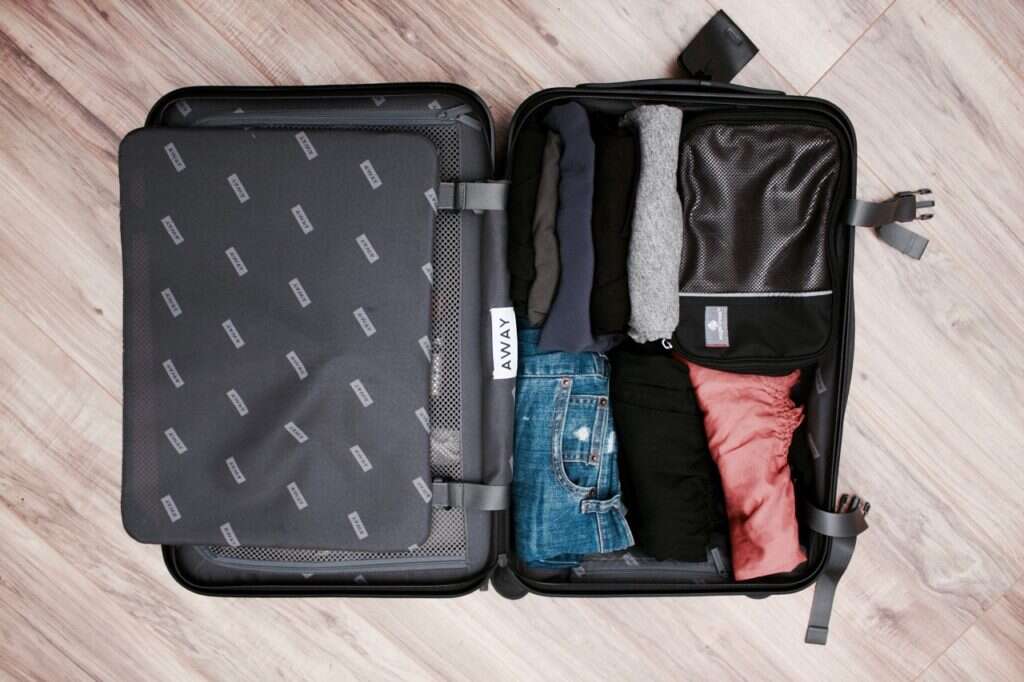
Start by opening the case and identifying each part. Most Away suitcases use two packing areas divided by a zippered panel. One side has a compression pad or compression system. The other side has a flat zippered compartment.
Your suitcase may also include:
- A laundry bag
- A built-in combination lock
- Interior compression straps or a compression panel
- A removable battery on some older or special models
- A front pocket on selected versions
- A built-in handle system
- Spinner wheels
The suitcase model affects how much you can pack. A standard U.S. carry-on has less room than a checked suitcase. A Flex model may expand, but expansion can make the case too large for some airline carry-on limits.
Before packing, check:
- The model name printed on the suitcase or order record.
- The outside dimensions, including wheels and handles.
- The empty weight.
- Whether the suitcase has a battery.
- Whether the case is designed for carry-on or checked travel.
- Your airline’s size and weight limits.
Airlines set their own baggage rules. The Transportation Security Administration, or TSA, controls security screening in the United States, but TSA does not set every airline’s baggage size or weight limit.

Prepare Your Items Before They Go in the Case
Lay everything out before you pack. This simple step helps you spot duplicates and prevents the common mistake of filling the suitcase with clothes before adding shoes, toiletries, or electronics.
Group your items into small piles:
- Clothing
- Shoes
- Toiletries
- Electronics
- Documents
- Medications
- Laundry
- Accessories
Then remove anything you will not use. For most trips, packing less works better than trying to fill every corner. A suitcase that closes with light pressure is easier to carry and less likely to strain its zipper.
Use a basic trip formula:
- One outfit for each full day
- One extra top
- One extra pair of underwear and socks
- One warm layer
- Sleepwear
- Travel shoes
- Toiletries
- Any required medication
- Weather-specific items
Adjust this plan for the trip. A business trip may need dress clothes. A beach trip may need swimwear. A winter trip may require bulky layers that take more space.
Do not pack prescription medicine in checked baggage if you may need it during the flight. Keep essential medication in your personal item, in its original labeled container when possible.
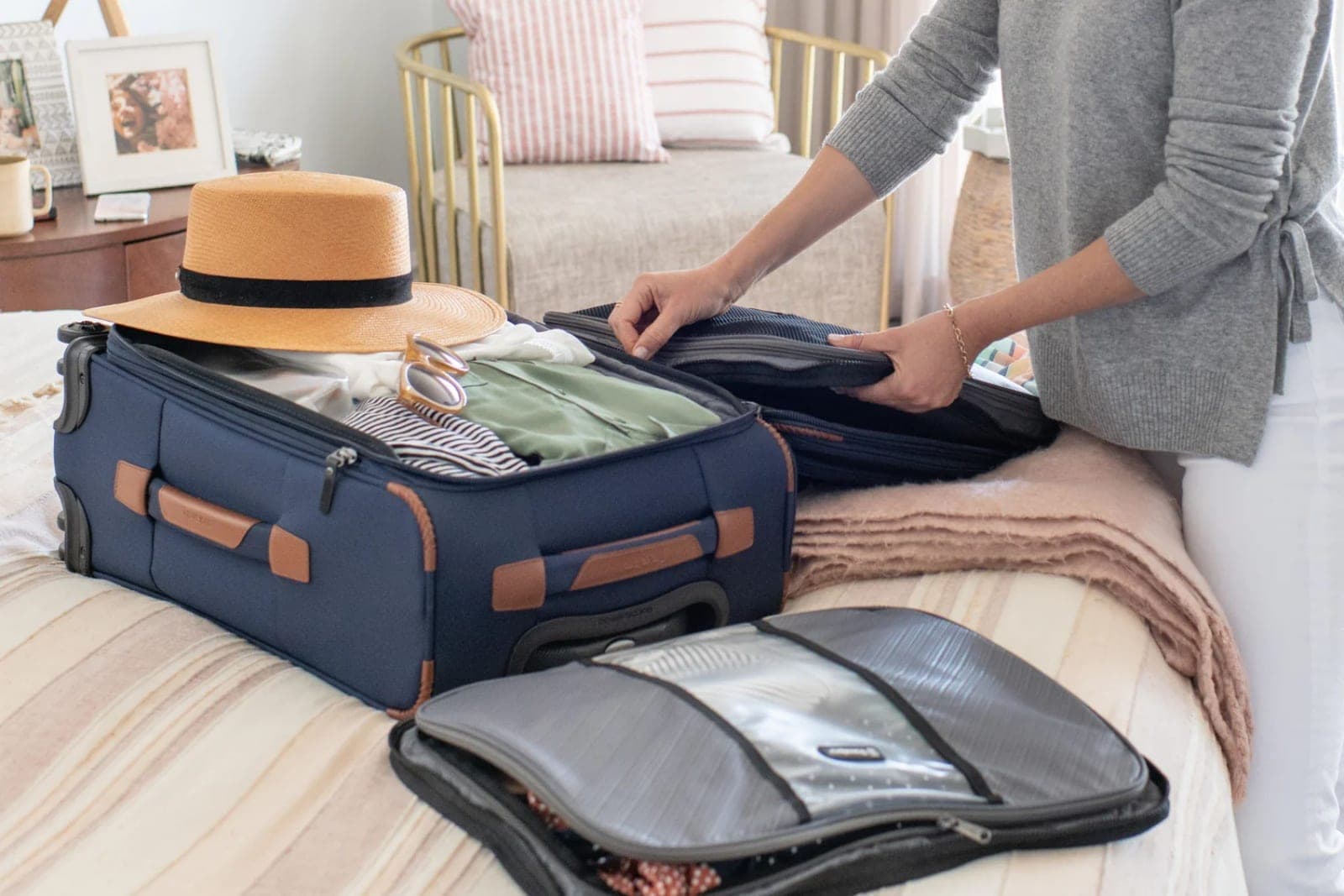
How to Pack an Away Suitcase Step by Step
1. Pack shoes first
Place shoes along the outer edges of the suitcase or near the wheel end. Shoes are often among the heaviest items, so this position helps keep the center of gravity low.
Put socks, belts, or small items inside your shoes. Use a shoe bag or a clean plastic bag to keep dirt away from clothing.
For a carry-on, two pairs of shoes may be enough:
- The shoes you wear during travel
- One spare pair packed inside the case
Wear the heaviest shoes on the plane when practical. This saves space and reduces suitcase weight.
2. Place heavy clothing near the wheels
Pack jeans, sweaters, jackets, and other heavy items near the wheel end of the suitcase. This arrangement can make the case feel more stable when you pull it behind you.
Keep fragile items away from the hard outer shell. The shell helps protect the contents, but it does not make the suitcase crush-proof. Do not place glass bottles, cameras, or delicate items beneath heavy shoes.
3. Roll soft clothing or fold it flat
Rolling works well for soft items such as T-shirts, workout clothes, pajamas, and casual shorts. Fold structured clothing, such as dress shirts, trousers, and blazers, to reduce creases.
A useful method is to create small clothing bundles:
- Lay a larger item flat.
- Add smaller items on top.
- Fold the larger item around the smaller pieces.
- Place the bundle in the suitcase.
Do not roll every item simply because rolling is popular. Tight rolls can create bulky tubes and waste space. Use the method that keeps each item compact.
4. Use the zippered compartment for small items
Place underwear, swimwear, scarves, and charging cables in the zippered section. Smaller items are easier to find there than when buried under large clothing.
You can use packing cubes, but they are optional. Soft cubes can help separate outfits and keep the suitcase tidy. They may reduce usable space if they are rigid or overfilled.
Keep one small pouch for items you may need soon after arrival, such as:
- A phone charger
- Earplugs
- A toothbrush
- A change of underwear
- Basic medicine
- Travel documents
5. Use the Away compression system carefully
Place clothing on the side with the compression panel. Fill the space evenly, then close the compression panel or straps.
Compression helps reduce empty air between clothing items. It does not reduce the actual weight of the suitcase. A compressed bag can still exceed an airline’s weight limit.
Follow these rules:
- Do not overfill the panel.
- Keep the zipper track clear.
- Close the panel slowly.
- Press down on clothing as you zip.
- Stop if the zipper resists strongly.
- Do not use the compression panel to force extra items into the case.
If the case needs force to close, remove items. A strained zipper can fail during handling.
6. Pack toiletries in a leak-resistant way
For a U.S. carry-on, TSA generally limits liquids, aerosols, gels, creams, and pastes to containers of 3.4 ounces, or 100 milliliters, per item. These items should fit in one quart-size bag for screening.
Pack toiletries in a sealed pouch even when they are inside a checked suitcase. A shampoo bottle can leak because of pressure, movement, or a loose cap.
To reduce leaks:
- Tighten each lid.
- Place plastic wrap under screw-top lids.
- Keep bottles in a sealed bag.
- Choose solid toiletries when suitable.
- Pack large liquid containers in checked baggage when permitted.
TSA rules include exceptions for some medicines and infant or toddler items. Check the current guidance at TSA.gov before your trip.
7. Pack electronics and valuables in your personal item
Keep passports, wallets, laptops, cameras, jewelry, and other valuable items with you. A personal item is usually easier to access and should remain under the seat or within your control.
Power banks and spare lithium batteries generally belong in carry-on baggage, not checked baggage. If your Away suitcase includes a removable battery, check the battery instructions and your airline’s policy before flying.
Some airlines require a suitcase battery to be removed before the suitcase is checked. If the battery cannot be removed, the airline may refuse the bag. Do not assume that a charging port means the suitcase can travel in every way.
8. Fill gaps without creating pressure points
Use small soft items to fill open spaces:
- Socks
- Underwear
- Swimsuits
- Belts
- Scarves
- Soft accessories
Keep sharp objects away from the shell and zipper. Do not place heavy items on top of a fragile object. If you pack a bottle, wrap it in clothing and place it in a sealed bag.
9. Close, lock, and inspect the case
Zip the suitcase closed without forcing it. Set the combination lock only after the zipper pulls are fully in place.
Before leaving, check:
- The zipper is fully closed.
- The lock is set correctly.
- The handle retracts.
- The wheels turn freely.
- No strap or fabric is caught in the zipper.
- The suitcase has an identification tag.
- Your name and contact details are not visible to everyone nearby.
Take a photo of the suitcase and its contents before checking it. For valuable or high-cost items, keep receipts or serial numbers separately.

How to Pack an Away Carry-On for a U.S. Flight
A carry-on should contain the items you cannot easily replace or risk losing. Do not pack only clothes. Use the bag for essentials needed during the flight and during the first day of the trip.
A practical carry-on layout looks like this:
| Suitcase area | Best use |
|---|---|
| Wheel end | Shoes and heavy clothing |
| Main clothing area | Folded or rolled outfits |
| Compression side | Soft clothing |
| Zippered panel | Underwear, accessories, and small items |
| Top layer | Jacket, book, or items needed soon |
| Personal item | Passport, electronics, medication, and valuables |
Keep your personal item separate from the suitcase plan. If the airline asks you to gate-check the carry-on, you should be able to remove medication, electronics, documents, and batteries quickly.
Do not rely on the suitcase label alone. “Carry-On” in the product name does not guarantee that the bag fits every U.S. airline or every aircraft. Measure the packed case and compare it with the airline’s published limits.
Regional aircraft can have smaller overhead bins. In that situation, even a bag that normally works as a carry-on may need to be gate-checked.

How to Pack an Away Checked Suitcase
A checked Away suitcase gives you more room, but it needs a different packing plan. The bag may pass through conveyor systems and experience rough handling, so pack for movement.
Place sturdy items around the outside and soft items around fragile objects. Keep valuables, vital medicine, important documents, and spare batteries out of the checked bag.
Use these habits:
- Distribute weight across both sides.
- Keep the suitcase below the airline’s weight limit.
- Put liquids in sealed bags.
- Wrap breakable items in clothing.
- Avoid leaving empty space around glass containers.
- Do not pack prohibited items.
- Add an external luggage tag.
- Photograph the bag before handing it over.
A checked suitcase can become overweight even when it closes easily. Use a luggage scale before going to the airport. Check the airline’s current limit because fees and allowed weights differ by airline, route, cabin, and frequent-flyer status.
If your suitcase has an expansion zipper, expand it only when necessary. Expansion increases volume, but it may also change the outside dimensions enough to trigger an oversized-bag fee.

What Not to Pack in an Away Suitcase
Some items should not go in checked baggage, and some cannot go in either type of luggage.
Avoid packing these in a checked suitcase:
- Passports and identity documents
- Cash and valuable jewelry
- Essential medication
- Irreplaceable items
- Laptops and cameras
- Spare lithium batteries and power banks
- Items you may need during a delay
Check current TSA and Federal Aviation Administration guidance for restricted items. Common problem items include flammable substances, fireworks, fuel, certain tools, and some sporting equipment.