Measure a suitcase’s length, width, and height, then add the three numbers to find its linear inches.
Knowing how to measure linear inches of a suitcase can save you from surprise baggage fees, denied check-in, or a rushed repack at the airport. The rule sounds simple, but details such as wheels, handles, and bulging pockets can change the final size. This guide explains the correct method, shares practical packing tips, and shows how to compare your suitcase with airline baggage limits.
What Are Linear Inches?
Linear inches are the total of a suitcase’s three outside dimensions:
Length + width + height = linear inches
Airlines use this measurement for checked bags because it gives one number for the bag’s overall size. For example, a suitcase that measures 28 inches long, 18 inches wide, and 12 inches high has:
28 + 18 + 12 = 58 linear inches
The order of the measurements does not matter. You only need to identify the three largest outside dimensions and add them together.

How to Measure Linear Inches of a Suitcase
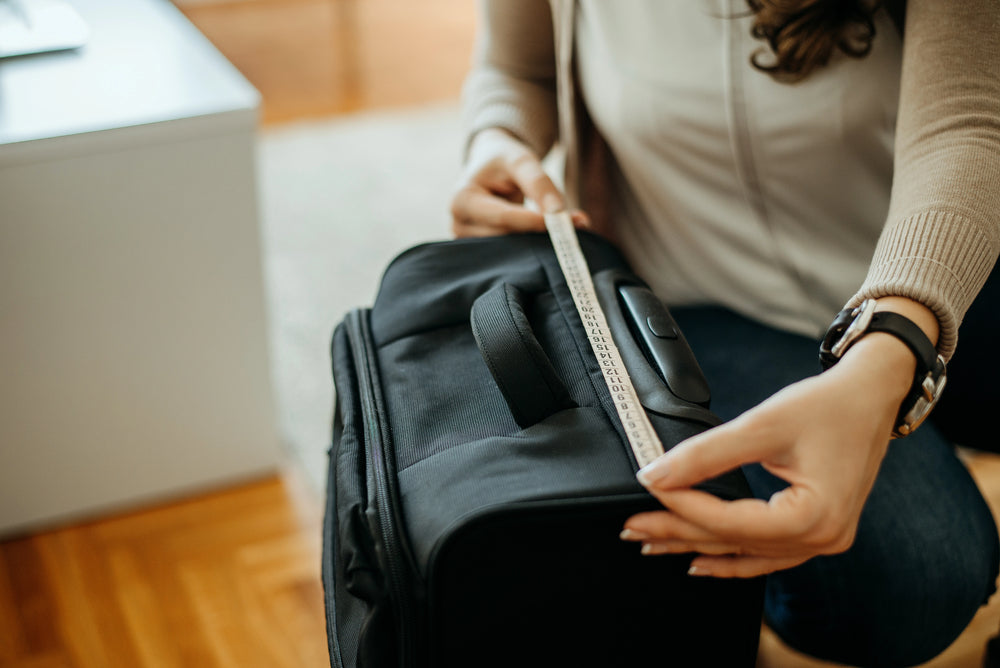
You can measure linear inches of a suitcase in a few minutes with a tape measure. A soft tape works best because it can follow rounded corners and flexible fabric.
What You Need
Gather these simple tools:
• A flexible tape measure
• A flat floor or table
• A notebook or phone for recording numbers
• A calculator, if needed
Measure the suitcase when it is packed as you plan to travel. A full front pocket or expanded section may make the bag wider or deeper.
Step-by-Step Method
-
Place the suitcase upright or flat on the floor. Keep it in its normal travel shape. Do not press down on soft sides.
-
Measure the length or height. Measure from the floor to the highest fixed point. Include wheels, feet, and any attached handle housing.
-
Measure the width. Measure from the left side to the right side at the widest point. Include side handles and rounded sections if they extend beyond the main shell.
-
Measure the depth. Measure from the front of the suitcase to the back. Include outside pockets, expansion panels, and wheels if they extend in that direction.
-
Write down all three numbers. Round up to the nearest whole inch when the measurement falls between marks.
-
Add the measurements. Use this formula:
Height + width + depth = total linear inches
For example:
• Height: 30 inches
• Width: 20 inches
• Depth: 12 inches
• Total: 30 + 20 + 12 = 62 linear inches
This suitcase measures 62 linear inches.
Which Parts of the Suitcase Should You Include?
The safest approach is to measure the suitcase as the airline will see it at the baggage counter. That usually means measuring the complete outside size, not only the hard case.
Include these parts:
• Wheels and wheel covers
• Fixed handles
• Side handles
• Pull handle housings
• Outside pockets
• Expansion sections when opened
• Feet and corner guards
• Bulging fabric or overfilled compartments
Do not measure only the packing space inside the suitcase. Interior dimensions show how much you can pack, but airlines use the outside dimensions.
There is one area where airline rules can differ: some carriers state that handles and wheels are included, while others describe a specific measurement method. Always check the baggage policy for the airline operating your flight. If two airlines are involved, check both policies.

How to Measure a Hard-Shell Suitcase
Hard-shell bags are often easier to measure because their sides stay firm. Place the case on a flat surface and measure the outer shell at its widest points.
For a hard-shell suitcase:
• Measure from the bottom of the wheels to the top edge.
• Measure across the widest side, including fixed handles.
• Measure front to back, including wheel units and any raised pockets.
• Do not follow the inside curve of the shell. Use the farthest outside points.
A hard case may look smaller than it measures because its wheels and corner guards add several inches. This is a common reason travelers get a higher total than the product listing suggests.

How to Measure a Soft-Sided Suitcase
Soft luggage can change size based on how much you pack. Measure it after packing, not while it is empty.
Lay the suitcase flat or stand it upright. Find the widest point on each side and measure without squeezing the fabric. If the bag has an expansion zipper, measure it in the condition you will use during the trip.
A soft suitcase may pass a size check when lightly packed but exceed the limit when full. In my own packing checks, an overstuffed front pocket was often the biggest problem. Removing a pair of shoes or moving items inside the main compartment could reduce the depth enough to meet the limit.

A Practical Example of Linear-Inch Measurement
Suppose you have a checked suitcase with these measurements:
• Height, including wheels: 29 inches
• Width, including side handles: 19 inches
• Depth, including the outer pocket: 12 inches
The calculation is:
29 + 19 + 12 = 60 linear inches
The suitcase is 60 linear inches. That number is commonly used as a standard checked-bag limit, but the exact allowance depends on the airline, fare, route, and travel class.
Now imagine you open the expansion zipper and the depth grows to 14 inches:
29 + 19 + 14 = 62 linear inches
Opening the expansion section adds two linear inches. That small change may affect whether the bag qualifies as standard checked luggage.

How to Check Your Suitcase Against Airline Rules
Finding the linear inches is only half the task. You must compare the result with the airline’s current baggage policy.
Look for these details:
• Maximum linear inches
• Maximum weight
• Extra fees for oversized bags
• Rules for domestic and international flights
• Different limits for basic, standard, business, or premium fares
• Fees for each direction of travel
• Special rules for sports equipment or oversized items
Airlines may use similar wording but apply different limits. A suitcase that fits one carrier’s allowance may cost extra on another. Codeshare flights can also create confusion because the operating carrier may apply a different baggage rule.
Check the policy shortly before departure. Airline rules can change, and airport staff may measure a bag that looks unusually large. Keep a photo of your measurements and the relevant baggage page on your phone if you are close to the limit.
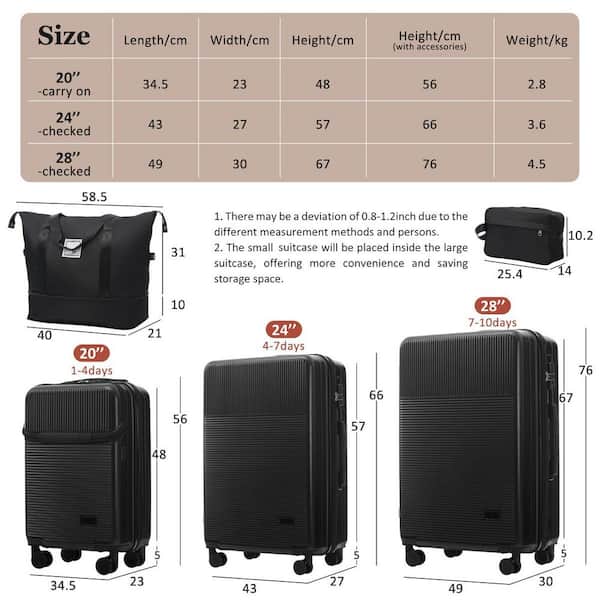
Common Mistakes When Measuring Linear Inches
Many baggage problems come from small measurement errors. Avoid these common mistakes:
Measuring the Case Without the Wheels
Wheels can add two to four inches to the height of a suitcase. Measure from the lowest point on the wheels to the highest point on the bag.
Ignoring the Handles
A side handle or fixed pull handle may extend beyond the shell. Include it if it is part of the suitcase and cannot be removed for travel.
Measuring an Empty Bag
Soft luggage becomes larger when filled. Pack it first, then measure it in travel condition.
Forgetting Outside Pockets
A full pocket can increase the depth. Measure the farthest outside point, not the flat fabric beneath the pocket.
Compressing the Bag
Do not push down on a fabric suitcase while measuring. Compression can make the bag seem smaller than it will be at check-in.
Rounding Down
If a side measures 29.5 inches, do not record it as 29 inches. Round up or use the airline’s stated measurement method.