Cat pee can soak into a suitcase lining, padding, seams, and wheels. The fastest fix is to clean it before it dries, use an enzyme-based pet urine cleaner, and dry the suitcase fully. Soap may remove the surface smell, but it often does not break down the urine residue that causes the odor to return.
This guide works for most suitcases used in the United States, including soft-sided carry-ons, checked luggage, hard-shell cases, and fabric travel bags. Before cleaning, check the suitcase care label and test every cleaner on a hidden spot.

What You Need Before You Start
Gather the supplies before you begin. You will need:
- Disposable gloves
- Paper towels or old white towels
- A vacuum cleaner, if the suitcase is dry
- Mild dish soap or unscented laundry detergent
- An enzyme-based cleaner labeled for cat urine
- Cool or lukewarm water
- A soft brush or clean sponge
- A spray bottle
- Baking soda, if needed
- A fan or well-ventilated drying area
- A trash bag for used towels
Choose an enzyme cleaner made for pet urine. These products are designed to break down urine compounds instead of only covering the smell with fragrance. Follow the product label. Some cleaners need to stay wet for a set time to work.
Avoid mixing cleaning products. Never combine bleach with ammonia, vinegar, or other cleaners. Cat urine can contain ammonia-like compounds, and mixed chemicals may create irritating or dangerous fumes.
Check the suitcase material first
The cleaning method depends on the suitcase design.
| Suitcase type | Main concern | Best approach |
|---|---|---|
| Soft-sided fabric | Urine may reach padding and seams | Treat the fabric and underlying layers |
| Hard-shell plastic | Liquid may collect in seams or corners | Wipe the shell and clean the lining separately |
| Leather or faux leather | Water and enzymes may damage the finish | Use only a cleaner approved for that material |
| Suitcase with foam padding | Odor can remain inside the foam | Saturate carefully or replace the affected insert |
| Suitcase with cardboard stiffeners | Water can warp the frame | Use minimal moisture and avoid soaking |
Remove clothing, packing cubes, shoe bags, and other contents. Wash anything that smells like urine separately. If the odor is strong, place the empty suitcase outdoors or near an open window until you can clean it.
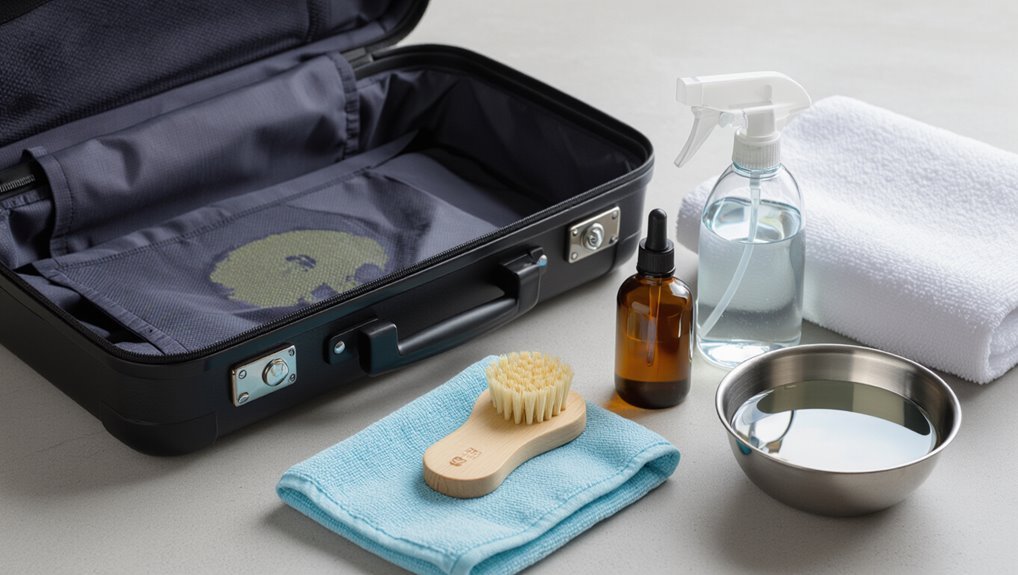
How to Get Fresh Cat Pee Out of a Suitcase
Fresh urine is easier to remove because it has not had as much time to dry into the fibers. Start by absorbing as much liquid as possible.
-
Blot the wet area. Press paper towels or a clean white towel onto the spot. Do not rub. Rubbing can push urine farther into the fabric.
-
Find the full affected area. Check nearby seams, pockets, corners, the underside of the lining, and the area around the suitcase wheels. Cat urine may spread beyond the visible wet spot.
-
Apply the enzyme cleaner. Use enough to reach the material that contacted the urine. On a thin fabric lining, a light application may be enough. On thick padding, the cleaner may need to reach deeper.
-
Keep the area wet for the label’s stated time. Enzyme products cannot work well if they dry at once. Do not add another cleaner during this step.
-
Blot away extra liquid. Use a fresh towel to lift moisture after the required contact time.
-
Rinse only if the product label says to rinse. Some enzyme cleaners are designed to air-dry. Others call for wiping with clean water.
-
Dry the suitcase completely. Open all pockets and compartments. Place the suitcase in moving air, but keep it out of strong direct heat.
Do not close the suitcase while it is damp. Trapped moisture can lead to mildew and may make the odor worse.

How to Remove Dried Cat Urine Smell
Dried cat pee often needs more than one treatment. As urine dries, some compounds can remain in the fibers and become noticeable again when humidity rises.
-
Vacuum loose dirt first. Vacuum the dry lining, seams, and pockets. Skip this step if the area is still wet.
-
Pretest the cleaner. Apply a small amount to a hidden area. Wait until it dries and check for color loss, stiffness, or surface damage.
-
Apply enzyme cleaner to the odor source. Treat the visible stain and the material beneath it. Pay close attention to seams, zipper tracks, and padded areas.
-
Allow the cleaner to work. Keep the area damp for the time listed on the label. A light mist may not reach dried urine in thick padding.
-
Blot and repeat if needed. Let the suitcase dry fully before deciding whether the smell is gone. One treatment may not be enough for an old stain.
-
Use baking soda only after cleaning and drying. Sprinkle a thin layer on a dry fabric lining, leave it for several hours, and vacuum it up. Baking soda may absorb some surface odor, but it does not replace enzyme treatment.
-
Check the suitcase in warm, humid air. If the smell returns, urine residue may remain deeper in the lining or padding. Treat the affected area again.
A fragrance spray can make the suitcase smell better for a short time, but it does not prove the urine has been removed. The real test is whether the odor stays gone after the suitcase dries and remains closed for a day.

Step-by-Step Cleaning Method for a Soft-Sided Suitcase
Soft-sided luggage needs careful cleaning because urine may pass through the outer fabric and into foam or backing material.
1. Empty and inspect the suitcase
Remove every item, including objects in hidden pockets. Use a flashlight to inspect the lining and seams. Mark the areas that smell so you can treat the whole source, not only the visible stain.
2. Remove washable parts
If the lining or inserts are removable, check the care label. Wash them separately with detergent. Do not put them in a dryer until the odor is gone, because heat can make some stains and smells harder to remove.
3. Blot or vacuum
Blot fresh urine. Vacuum dry residue. Use a crevice tool around zippers, seams, and wheel housings.
4. Apply the enzyme cleaner
Spray the affected fabric and the layer beneath it. Do not flood the suitcase if it contains cardboard supports, glued seams, or metal parts that may rust.
5. Give the cleaner time to work
Follow the label’s contact time. Keep the suitcase open. If the surface dries too quickly, apply only enough additional product to keep the treated area damp, provided the label permits it.
6. Remove residue as directed
Some products can air-dry. Others need a clean-water wipe. Follow the label rather than guessing.
7. Dry with airflow
Stand the suitcase open near a fan. Turn it so air reaches each pocket and panel. Wait until the lining, padding, and seams feel completely dry.
If the smell remains after two or three careful treatments, the urine may have reached foam or a hidden structural layer. A luggage repair shop may be able to replace the lining or padding. If the suitcase has a low value, replacement may cost less than professional odor treatment.

How to Clean Cat Pee From a Hard-Shell Suitcase
Hard-shell luggage is usually easier to clean because the shell does not absorb much liquid. The lining and seams still need attention.
- Wipe the outside with a damp cloth and mild soap.
- Clean the handle, wheels, corners, and shell seams.
- Open the suitcase fully and remove the lining or divider if it is detachable.
- Treat fabric panels with an enzyme cleaner after a hidden-spot test.
- Use a damp cloth on plastic areas rather than soaking them.
- Dry all seams and hardware with a clean towel.
- Leave the suitcase open until no moisture remains.
Avoid pouring cleaner into telescoping handle openings, wheel housings, vents, or zipper channels. Liquid trapped inside these parts can cause corrosion or a lingering smell.
If the urine reached a removable cloth divider, clean that divider outside the suitcase. This prevents excess moisture from collecting around the shell frame.

What Not to Use on Cat Urine in Luggage
Some common cleaning methods can damage luggage or make the odor harder to remove.
Do not use bleach
Bleach may discolor fabric, weaken fibers, and damage plastic or metal parts. It is also unsafe to mix with other household cleaners.
Do not use ammonia-based cleaners
Ammonia has a sharp smell that may resemble part of the odor profile of cat urine. It can also encourage repeated marking in some situations. More importantly, mixing ammonia-containing products with bleach can produce toxic gas.
Do not use steam or high heat first
Heat may set some stains and can drive moisture deeper into padding. Steam can also warp adhesives, foam, cardboard stiffeners, and synthetic linings.
Do not scrub hard
Aggressive scrubbing spreads urine and roughens fabric. Blotting and controlled application work better.
Do not seal the smell in
Avoid placing the suitcase in a plastic storage bin or closing it while damp. Give it airflow until it is dry.
Do not rely on perfume
A scented spray masks odor but does not remove the source. It can also combine with the urine smell and create a stronger, unpleasant odor.

How to Tell Whether the Cat Pee Is Really Gone
A suitcase is clean when the odor does not return after it has dried completely and stayed closed for a reasonable period.
Use this check:
- Let the suitcase dry for at least several hours, or longer if the padding is thick.
- Close it for about 24 hours.
- Open it in a well-ventilated area.
- Smell the lining, pockets, seams, and padding.
- Check again after the suitcase has been in a warm room.
If the odor returns only when the suitcase becomes humid, residue may still be trapped in the fabric or foam. Repeat the enzyme treatment and allow a longer drying period.
If the suitcase smells clean but has a visible stain, the stain may be cosmetic. If it looks clean but still smells, the source is likely deeper than the visible surface.

When You Should Replace the Suitcase
Cleaning is usually worth trying first, but replacement may make sense when:
- Urine soaked into non-removable foam.
- The case has a cardboard frame that became wet or warped.
- The lining remains strongly odorous after repeated treatment.
- Mold or mildew appears.
- The suitcase has corrosion around zippers, wheels, or metal supports.
- The cleaning cost is close to the cost of a comparable replacement.
- The suitcase will hold clothing, medical supplies, or other items that must stay odor-free.
Do not discard a suitcase solely because it smells immediately after cleaning. Enzyme products may need time to work, and deep padding can take longer to dry. Make the decision after the case is fully dry and has passed the closed-suitcase odor test.

What to Do if the Smell Keeps Coming Back
A returning smell usually points to one of four causes: