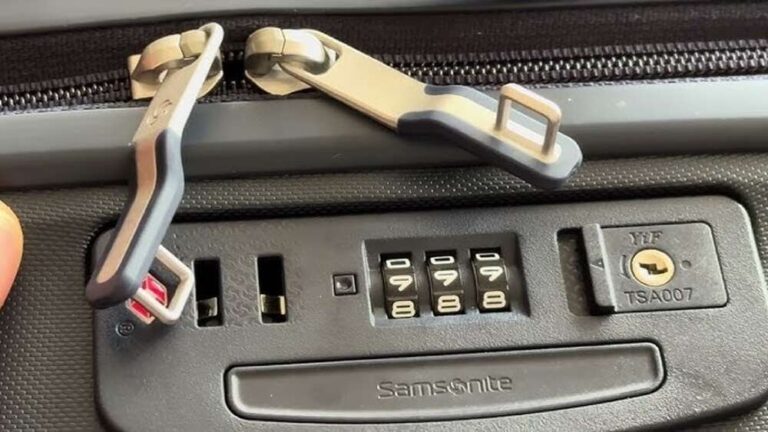
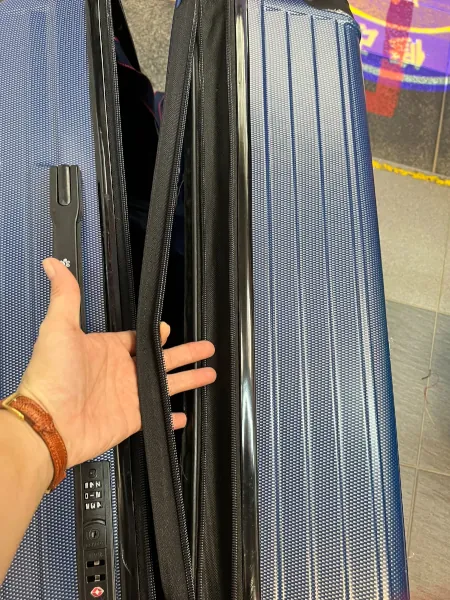
Fix a stuck or split luggage zipper by realigning the slider, lubricating teeth, and replacing parts.
I’ve repaired dozens of suitcases and backpacks for friends and family, so I know what works and what wastes time. This guide walks you through how to fix luggage zipper problems step by step. You’ll get clear explanations, simple tools, and practical fixes for common issues like stuck sliders, separated teeth, missing pulls, and broken stops. Read on to learn reliable, tested methods to restore your luggage and travel with confidence.

How luggage zippers work and why failures happen
Zippers are simple machines made of three parts: teeth or coils, a slider, and stops. The slider brings the teeth together or separates them. On luggage, sliders see heavy use, dirt, and strain. That wear causes most failures.
Common causes of zipper failure
- Dirt and grit that jam the slider
- Worn or bent slider that won’t close teeth
- Missing or broken teeth on metal or coil zippers
- Fabric or thread caught in the slider
- Broken stops or detached pull tabs
Understanding these parts helps you know what to do. If you want to learn how to fix luggage zipper issues fast, the next sections list tools and clear steps.

Tools and materials you'll need
Having the right items speeds repairs and prevents extra damage. Keep a small kit in your travel toolbox.
Essential tools
- Needle-nose pliers for bending or replacing stops and pulls
- Flathead screwdriver or pick for cleaning and lifting fabric
- Lubricant such as paraffin, candle wax, or zipper lubricant
- Sewing kit with heavy thread and needle for fabric repairs
- Replacement sliders, stops, and pulls (available online or at sewing stores)
- Scissors and tweezers for removing debris
Optional helpful items
- Super glue for fixing split sliders briefly
- Small file for smoothing rough teeth
- Seam ripper for removing lining to access the zipper track
With these tools, you can handle nearly every common problem. Keep them handy and choose gentle methods first.

Step-by-step fixes for common zipper problems
This section shows clear steps for the usual zipper failures. Follow the order from easiest to more advanced. If one fix doesn’t work, try the next.
H3 Stuck zipper (slider won’t move)
- Inspect the track for fabric or debris. Remove with tweezers or a pick.
- Apply a small amount of lubricant on the teeth. Move the slider gently back and forth.
- If it’s still stuck, try pushing the fabric out from the inside with a flat tool while sliding.
H3 Slider won’t close zipper (teeth separate behind slider)
- Check the slider for loosened sides. Use needle-nose pliers to gently squeeze the slider body. Do small squeezes and test.
- Run the slider up and down to seat the teeth.
- If the slider is cracked or bent, replace it using a replacement slider kit.
H3 Slider came off one side or both sides
- Remove the top or bottom stop with small pliers or a flat screw driver. Keep the stop for reuse if possible.
- Realign the teeth. Insert both sides into a replacement slider and gently pull through.
- Reattach the stop by crimping it back with pliers or sewing a new stop using heavy thread.
H3 Broken or missing teeth
- For a few missing teeth near the end, move the stop up past the damage and crimp a new stop in place. This shortens the usable length but works.
- For long or central damage, replacing the zipper tape is usually required. This is a sewing job or a luggage repair shop task.
H3 Pull tab or zipper tab broken
- Attach a key ring, paperclip, or small cord to the slider hole for a quick fix.
- For a lasting fix, replace the pull with a new tab or a spare pull replacement.
H3 When a slider splits the teeth after repair
- Replace the slider if squeezing didn’t help.
- Use a quality replacement slider that matches the zipper type (coil vs. metal) and size.
Practical tips while fixing
- Work in good light. Small parts hide easily.
- Test fixes gently. Forcing parts can break teeth.
- Keep removed stops and pulls in a small container to avoid loss.
These steps cover the typical fixes for how to fix luggage zipper problems. If a fix seems beyond your tools or skills, consider professional repair.

Preventive maintenance and travel tips
A little care prevents most zipper breaks. Do these things before and during travel.
Easy preventive steps
- Clean zippers regularly with a soft brush to remove sand and dirt.
- Lubricate zipper teeth lightly before long trips.
- Don’t overpack. Excess strain damages teeth and sliders.
- Close zippers completely to avoid catches.
- Use luggage straps to reduce stress on the zipper track.
Packing and handling tips
- Keep sharp or pointed items in protective pouches.
- Avoid throwing or dropping luggage when possible.
- Check zippers at security points and fix issues early.
These habits reduce the need to learn how to fix luggage zipper problems in a rush. They save you time and money.
When to replace the zipper or call a professional
Some problems need a full replacement or a pro’s tools. Know when to ask for help.
Signs you should replace or seek a repair shop
- Many missing teeth across a long section
- Zipper tape is torn or detached from the fabric
- The slider consistently fails after multiple fixes
- You need a waterproof or high-security zipper replaced
Cost and time considerations
- DIY fixes cost little and take 10–30 minutes.
- Full zipper replacement can cost more and needs sewing tools or shop labor.
- Professional repair is faster for complex cases and preserves luggage warranty in some brands.
If you value your luggage or the zipper sits under heavy load, a pro repair can be worth it.

PAA-style quick questions
H3 Why does a luggage zipper get stuck?
Dirt, sand, or fabric caught in the teeth often jams the slider. Lubricant and careful cleaning usually free it.
H3 Can I use soap or oil instead of zipper lubricant?
Mild soap or a tiny dab of household oil can work in a pinch, but dedicated zipper lubricant or wax lasts longer and attracts less dirt.
H3 How long will a squeezed slider last?
A gently squeezed slider can work for months, but it may need replacement if it loosens again or cracks.
Frequently Asked Questions of how to fix luggage zipper
H3 How do I fix a zipper that keeps coming undone?
Gently squeeze the slider to tighten it. If that fails, replace the slider or move the stop to shorten the track.
H3 Can I replace a luggage zipper myself?
Yes for many zippers if you have basic sewing skills and the right replacement parts. Complex replacements may need a professional.
H3 What lubricant is safe for zipper teeth?
Wax, paraffin, or a specialty zipper lubricant is safe. Use a tiny amount and wipe excess to avoid dirt build-up.
H3 How do I fix a zipper that’s off the track?
Remove the stop, realign both sides into a compatible slider, then reattach or crimp a new stop.
H3 Is it worth repairing cheap luggage zippers?
Often yes for small fixes like stuck sliders or pulled fabric. For repeated failures, replacement or a better bag may be more cost-effective.
Conclusion
Fixing luggage zippers is mostly about the right steps and gentle tools. Clean the track, lubricate, realign or squeeze the slider, and replace small parts when needed. With practice, you can handle most problems in minutes and avoid costly replacements. Try the fixes above the next time a zipper fails, and keep a small repair kit with you when you travel. If a repair looks too big, seek a professional to save time and avoid further damage. Leave a comment below if you want help diagnosing your zipper problem or to share a repair win.

Zayden Halbrook is a travel enthusiast and gear researcher passionate about making every journey smoother and more enjoyable. With a keen eye for practical travel essentials and real-world tips, he helps readers choose the right gear and travel smarter. When he’s not testing travel kits or exploring new destinations, Zayden shares simple, reliable advice to make every trip stress-free.