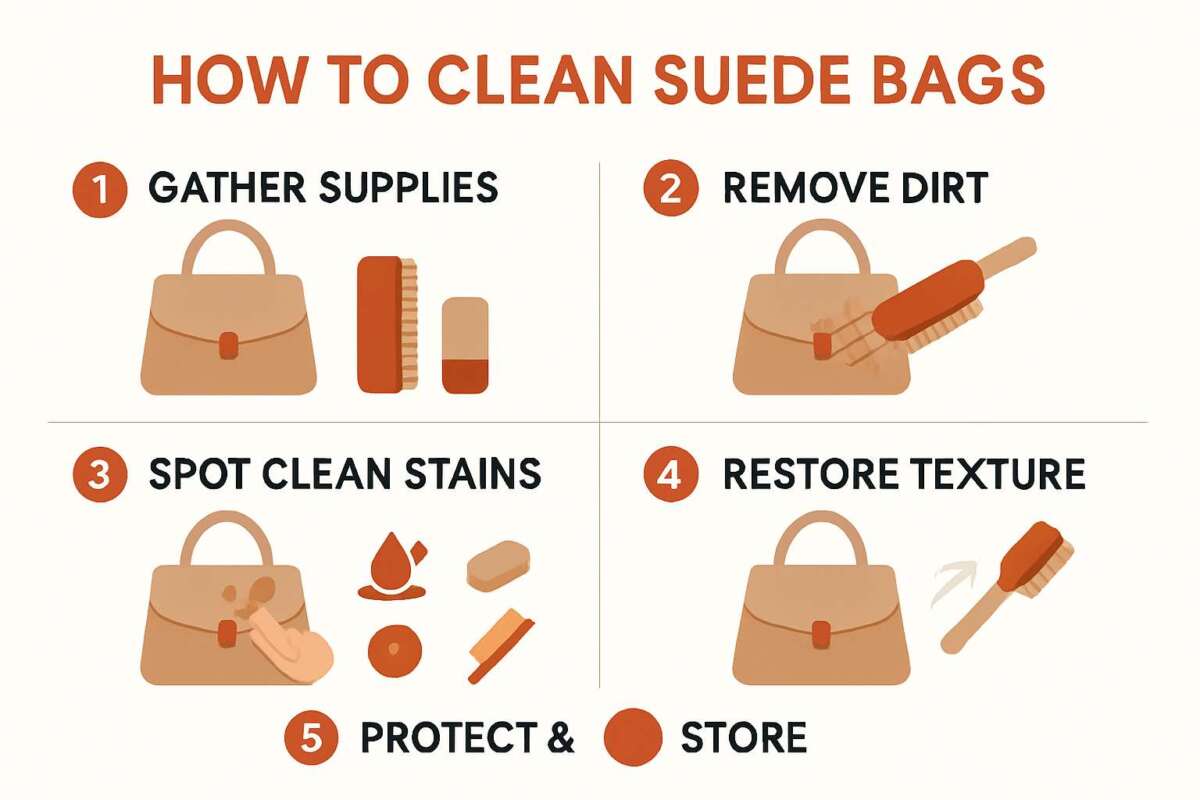
Clean a suede bag by brushing it dry, treating stains gently, and keeping moisture to a minimum.
Suede looks soft and rich, but its open fibers can trap dust, absorb oil, and show water marks quickly. Learning how to clean suede bag materials the right way helps protect the nap, color, and shape without causing permanent damage. This guide explains safe home methods, stain solutions, common mistakes, and signs that your bag needs professional care.
Before You Clean a Suede Bag
Before learning how to clean suede bag surfaces, identify the material. Genuine suede is made from the inner layer of animal hide and has a soft, raised nap. Nubuck feels similar but comes from the outer hide and usually has a finer, stronger surface.
Some bags use faux suede, microfiber, or synthetic fabric. These materials may tolerate more water, but the care label is still the best guide. Never assume that a synthetic suede bag can be cleaned like a cotton bag.
Check these details first:
• Read the care label and the brand’s cleaning instructions.
• Look for a small material sample or hidden area for testing.
• Remove loose items from every pocket.
• Take off detachable straps, charms, or metal pieces when possible.
• Check the bag for fading, peeling, cracks, or loose stitching.
A simple test can prevent a major mistake. Rub a clean white cloth lightly over a hidden area. If color transfers, stop and use a professional cleaner.

What You Need to Clean Suede
The right tools make how to clean suede bag care much safer. Suede does not respond well to rough scrubbing, strong soap, or soaking. Think of the nap as a short, delicate lawn: brush it gently instead of pressing it flat.
Gather these supplies:
• A suede brush or soft crepe brush
• A clean, white microfiber cloth
• A suede eraser or clean white pencil eraser
• Distilled water in a small bowl
• White vinegar or rubbing alcohol for selected stains
• A soft towel
• Tissue paper or a clean cloth for reshaping
• A fan or cool, dry room for air-drying
Avoid colored cloths because dye can transfer to the bag. Skip paper towels when possible, as they may leave lint behind.
Do not use bleach, ammonia, acetone, household detergent, hair spray, or oily leather conditioner. These products can strip color, flatten the nap, or leave a dark patch.

How to Clean Suede Bag: Step-by-Step Method
The safest way to clean suede bag surfaces is to start with dry methods. Use liquid only when dry cleaning methods do not solve the problem.
1. Empty and Protect the Bag
Empty the bag completely. Shake it gently over a trash can to remove crumbs and loose dirt. Use a soft brush or a vacuum with a brush attachment to clean the lining.
Do not push the vacuum nozzle directly against the suede. Strong suction can pull at the fibers and create a shiny, worn patch.
Stuff the bag loosely with white tissue paper or a clean towel. This helps it keep its shape while you work. Avoid newspaper because ink can transfer through damp areas.
2. Brush Away Surface Dirt
Use a suede brush with short, gentle strokes. Brush in one direction first, then lightly change direction to lift dust from the nap.
For a very dirty bag, work in small sections. Do not press hard. Heavy pressure can polish the suede and make it look uneven.
This dry brushing step often solves more than people expect. In routine bag care, regular brushing is usually safer than frequent wet cleaning.
3. Remove Light Scuffs With a Suede Eraser
Rub a suede eraser gently over dry scuff marks. Use short strokes and stop often to check your progress.
If you do not have a suede eraser, a clean white pencil eraser may help with a small mark. Do not use a colored eraser, as its pigment may stain the bag.
Brush away the eraser crumbs when finished. If the nap looks flat, lift it lightly with the suede brush.
4. Treat a Small Water Mark
Water can leave a ring when only one area becomes wet. The best approach is often to dampen the full panel lightly and evenly, not to add more moisture to one tiny spot.
Dampen a white cloth with distilled water. Wring it until it feels almost dry, then wipe the entire affected panel with even strokes. Do not soak the suede or allow water to pool.
Let the panel dry naturally. Once dry, brush the nap back into place. This method may reduce the ring, but it cannot guarantee complete color recovery, especially on dyed or older suede.
5. Dry the Bag Correctly
Place the bag in a cool room with good airflow. Keep it away from radiators, hair dryers, direct sunlight, and heated vents.
Heat can shrink suede, harden the fibers, and cause uneven fading. Allow several hours for drying, depending on the bag’s thickness and the amount of moisture used.
Never store the bag while it is damp. Trapped moisture can lead to odor, mildew, or color transfer.
6. Brush the Nap Again
When the bag is fully dry, brush it gently. This restores the soft texture and removes any remaining residue.
If the surface feels stiff, use several light brushing sessions instead of one aggressive session. Suede often improves slowly, like a crushed carpet recovering after furniture is moved.

How to Remove Common Suede Bag Stains
Different stains need different treatments. Before you clean a suede bag, identify the stain if possible. Using the wrong product may spread it or push it deeper into the fibers.
Dry Dirt and Dust
Let muddy dirt dry fully before removing it. Brushing wet dirt can spread the stain and drive particles deeper into the nap.
Once dry, break away loose pieces with your fingers or a soft brush. Finish with a suede eraser if a faint mark remains.
Grease and Oil
Oil stains are among the hardest stains to remove from suede. Blot fresh grease with a clean, dry cloth. Do not rub.
Cover the mark with cornstarch or talcum powder and leave it overnight. The powder may absorb some oil from the fibers. Brush it away the next day and repeat once if needed.
Avoid kitchen flour, wet cleaners, and oily conditioners. If the mark remains dark, professional cleaning is the safer choice.
Ink
Ink can spread quickly. Blot the edge of a fresh mark with a dry white cloth, but do not rub toward the center.
A small amount of rubbing alcohol may help with some suede items. Apply it to a cotton swab and test a hidden area first. Touch the stain lightly, allow it to dry, and brush the nap afterward.
Alcohol can fade or change some dyes. If the bag is valuable, bright-colored, or sentimental, take it to a leather and suede specialist instead.
Water-Based Drinks
Blot coffee, tea, juice, or soda as soon as possible. Use a dry cloth and press down gently to absorb the liquid.
Do not scrub. Do not add soap right away. After blotting, treat the panel with a barely damp cloth only if the care label allows it, then let the bag air-dry.
Sugary drinks may leave a sticky residue. A professional cleaner may be needed if the fabric feels stiff after drying.
Salt or Winter Marks
Salt can leave pale rings on suede. Remove loose salt with a dry brush first.
For a small mark, dab lightly with a cloth barely moistened with equal parts distilled water and white vinegar. Test first, use very little liquid, and allow the area to dry fully.
Vinegar has a strong smell at first, but the odor usually fades with ventilation. Never combine vinegar with bleach or other cleaning chemicals.
Mold or Mildew
Do not brush heavy mold indoors. Spores can spread through the air and affect people with allergies.